Have you ever seen a bird in a nest, a fish in water, or a flower reaching up to the sun? Nature is full of living things in just the right places. Those places are not random. Plants and animals live where they can get what they need to stay alive.
A habitat is a natural home where a plant or animal lives. A habitat gives living things what they need, as [Figure 1] shows. In a habitat, living things can find food, water, air, light, and a safe place to live.
A pond is a habitat. A forest is a habitat. A desert is a habitat too. Each one is different, but each one helps living things survive.
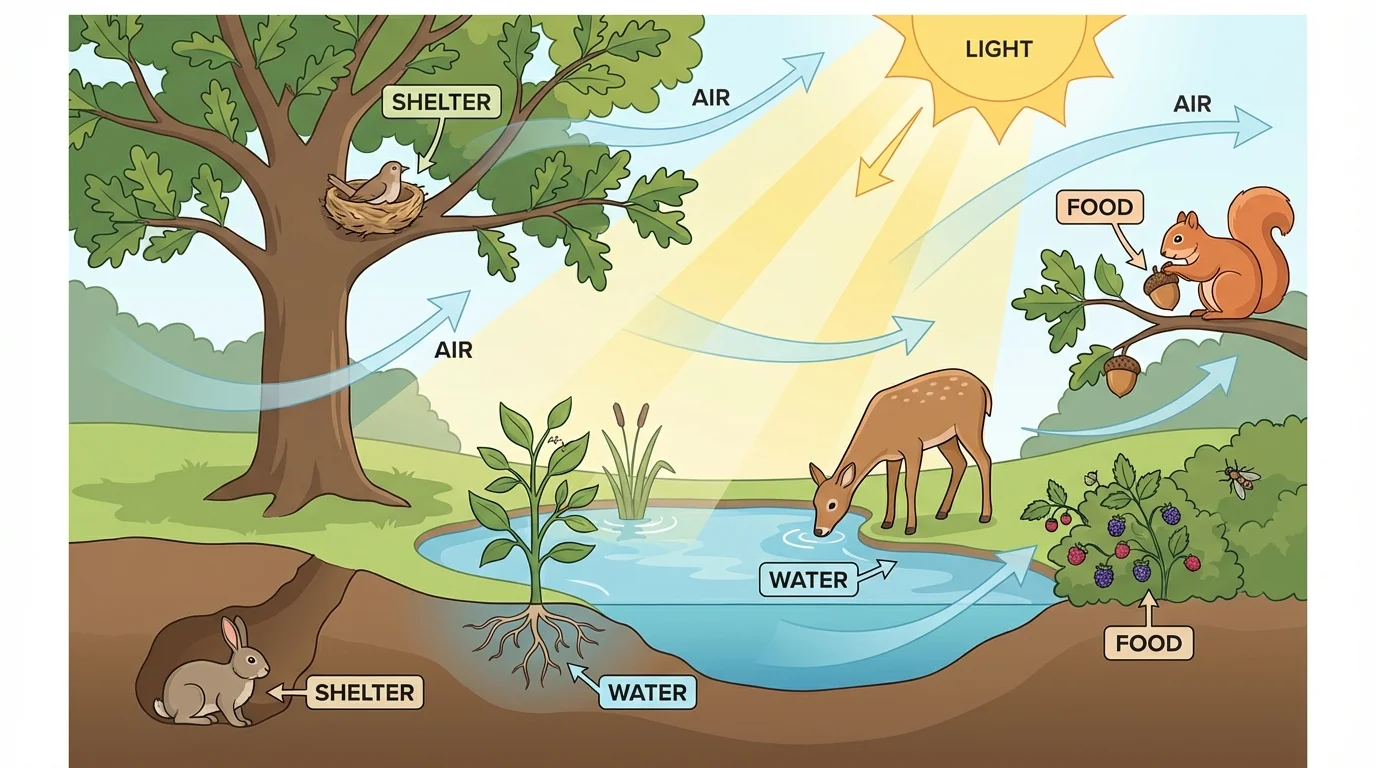
Habitat means the natural place where a living thing lives and finds what it needs.
Shelter is a safe place to rest or hide.
Light from the sun helps plants make food and helps many animals see and stay warm.
Some habitats are wet. Some are dry. Some are shady. Some are bright and sunny. A habitat must match the needs of the living thing that lives there.
Plants and animals are living things. Living things need basic things to stay alive. The five basic needs we will look at are shelter, food, water, air, and light.
Shelter keeps living things safe. A bird may live in a nest. A rabbit may hide in a hole. A plant may be protected by growing between rocks or near other plants.
Food gives energy. Animals eat plants or other animals. Plants make their own food using sunlight, water, and air.
Water is needed by both plants and animals. Animals drink water. Plants take in water through their roots.
Air is all around us. Animals breathe air. Plants need air too. They use parts of the air to help make food.
Light is very important, especially for plants. Sunlight helps plants grow. Many animals also need light to find food and move around.
Some animals, like frogs, begin life in water and later live on land too. That means their needs can change as they grow.
Even though plants and animals both need these basic things, they do not all get them in the same way. A cactus stores water, but a water lily lives floating in water. A bird shelters in a nest, but a deer shelters among trees.
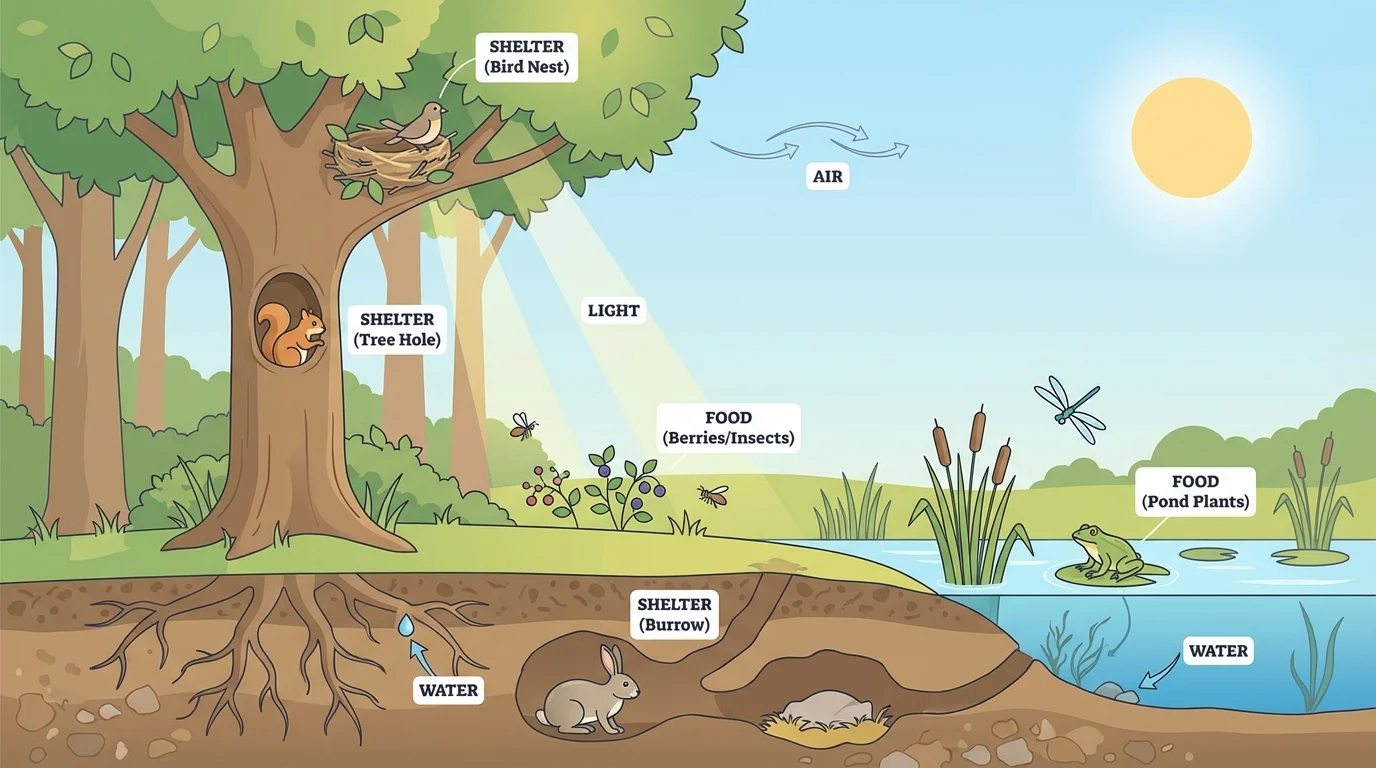
[Figure 2] shows that animals live in places that help them find what they need. In many animal habitats, different animals use different shelters even in the same area. One tree can help a bird, a squirrel, and insects all at once.
In a forest, squirrels find food like nuts and seeds. Birds may build nests in branches. Deer can hide among bushes and trees. The forest gives shelter, food, air, water from streams or puddles, and light through the leaves.
In a pond, frogs, fish, turtles, and ducks find water all around them. Some animals eat plants in the water. Some eat insects or tiny animals. Reeds, mud, and rocks can be shelter.
In a desert, animals must live where water is hard to find. Lizards may hide under rocks. Desert foxes may rest in burrows. These shelters help them stay safe and cooler.
Real-world example: A bird in a tree
Step 1: The bird uses the tree for shelter.
Step 2: The bird may find food nearby, such as seeds, berries, or insects.
Step 3: The bird drinks water from a puddle, stream, or rain.
Step 4: The bird breathes air and uses daylight to look for food.
The tree habitat helps meet many of the bird's needs.
Later, when we compare habitats, we can still think back to [Figure 2], which illustrates that nearby animals may share a place but use it in different ways.
[Figure 3] shows that plants do not move from place to place, so they must grow where their needs can be met. Different plant habitats provide different amounts of water and sunlight.
A flower in a meadow grows well where it gets sunlight, air, water, and space. Its roots take in water from the soil. Its leaves use light from the sun to help make food.
A cactus lives in a hot, dry habitat. It can survive with less water than many other plants. Thick stems help it store water.
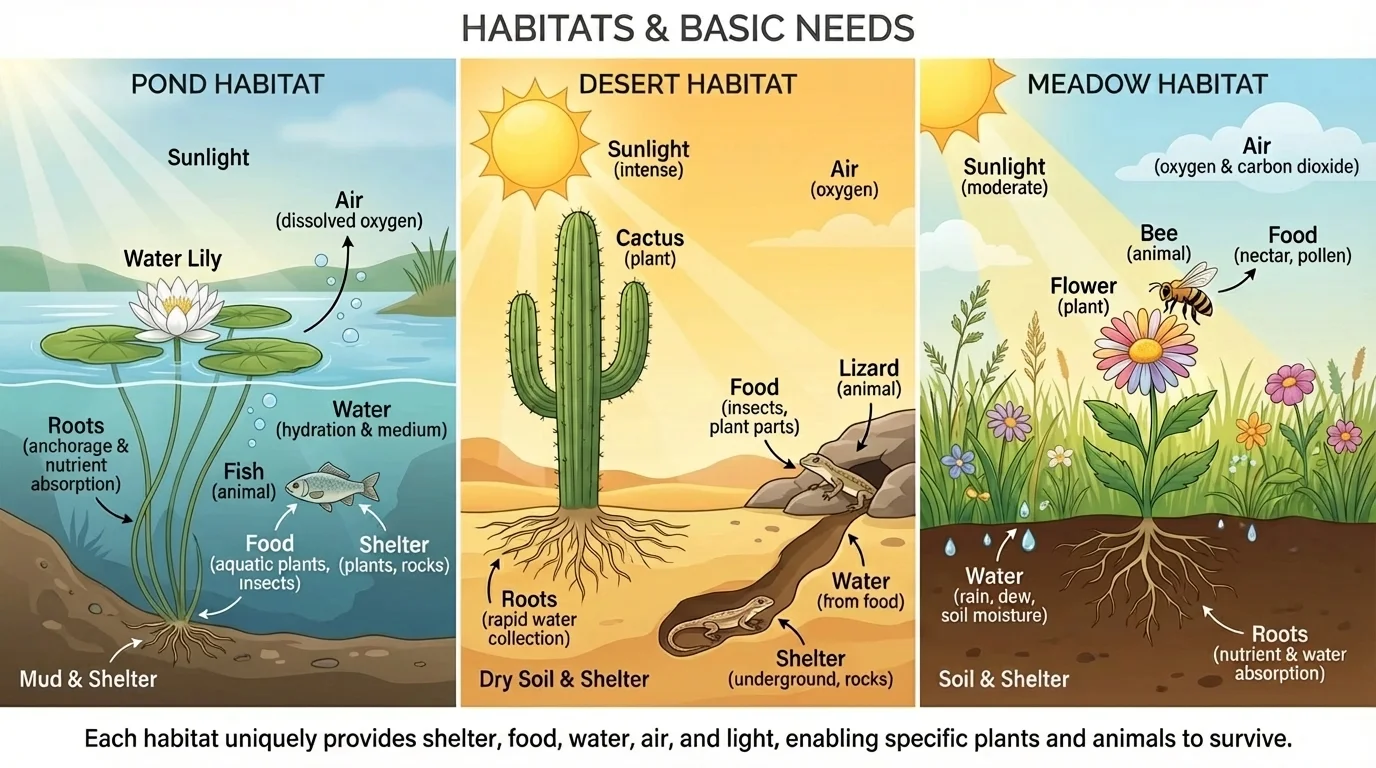
A water lily grows in water. Its habitat is very wet. It gets water easily, but it still needs light and air.
Plants need the right place to grow
Plants need water, air, and light, but not all plants need the same amount. Some plants like lots of sunlight. Some grow better in shade. Some need very little water, while others need wet soil or ponds.
When you look again at [Figure 3], you can see that each plant lives in a habitat that matches its needs. That is why a cactus does not grow well in a pond, and a water lily does not grow in dry sand.
We can compare habitats by asking simple questions. Is there water? Is there sunlight? Is there a place to hide? Is there food to eat? Is the air clean enough to breathe?
| Habitat | What it gives | Living things that may live there |
|---|---|---|
| Forest | Trees, shade, food, water, shelter | Birds, deer, squirrels, ferns |
| Pond | Lots of water, plants, mud, shelter | Fish, frogs, ducks, water lilies |
| Desert | Strong sunlight, little water, rocky shelter | Lizards, snakes, cacti |
Table 1. Examples of habitats, what they provide, and living things that may live there.
A forest has many trees and plants. A pond has lots of water. A desert has very little water. Even though these habitats are different, each one can still meet the needs of the living things that belong there.
Living things grow, change, and need resources from their surroundings. Nonliving things like water, air, sunlight, rocks, and soil are important parts of habitats.
If a habitat changes too much, living things may have trouble surviving. If a pond dries up, fish and frogs lose water. If trees are cut down, birds may lose shelter.
People can help protect habitats. We can keep water clean, plant trees, leave nests and burrows alone, and put trash in the right place. When habitats stay healthy, plants and animals can keep getting the things they need.
You may notice habitats close to home. A park has birds and insects. A garden has flowers, soil, water, air, and sunlight. Even a small patch of grass can be a habitat for tiny living things.
