A tiny seed can become a tall flower. A small puppy can grow into a big dog. Living things change, grow, and need care. When children look closely at nature, they begin to learn like scientists. Some things are alive and some are not, as [Figure 1] shows, and we can learn the difference by watching what they do and what they need.
A living thing is something that is alive. Plants, animals, and people are living things. A rock is not alive. A toy is not alive. Living things can grow. They need water, food, or other things to live. Many living things also move on their own, or parts of them move and change.
A flower can open. A cat can run. A tree can grow taller. These changes help us know they are alive. We can look for signs of life such as growing, moving, eating, drinking, and needing care.
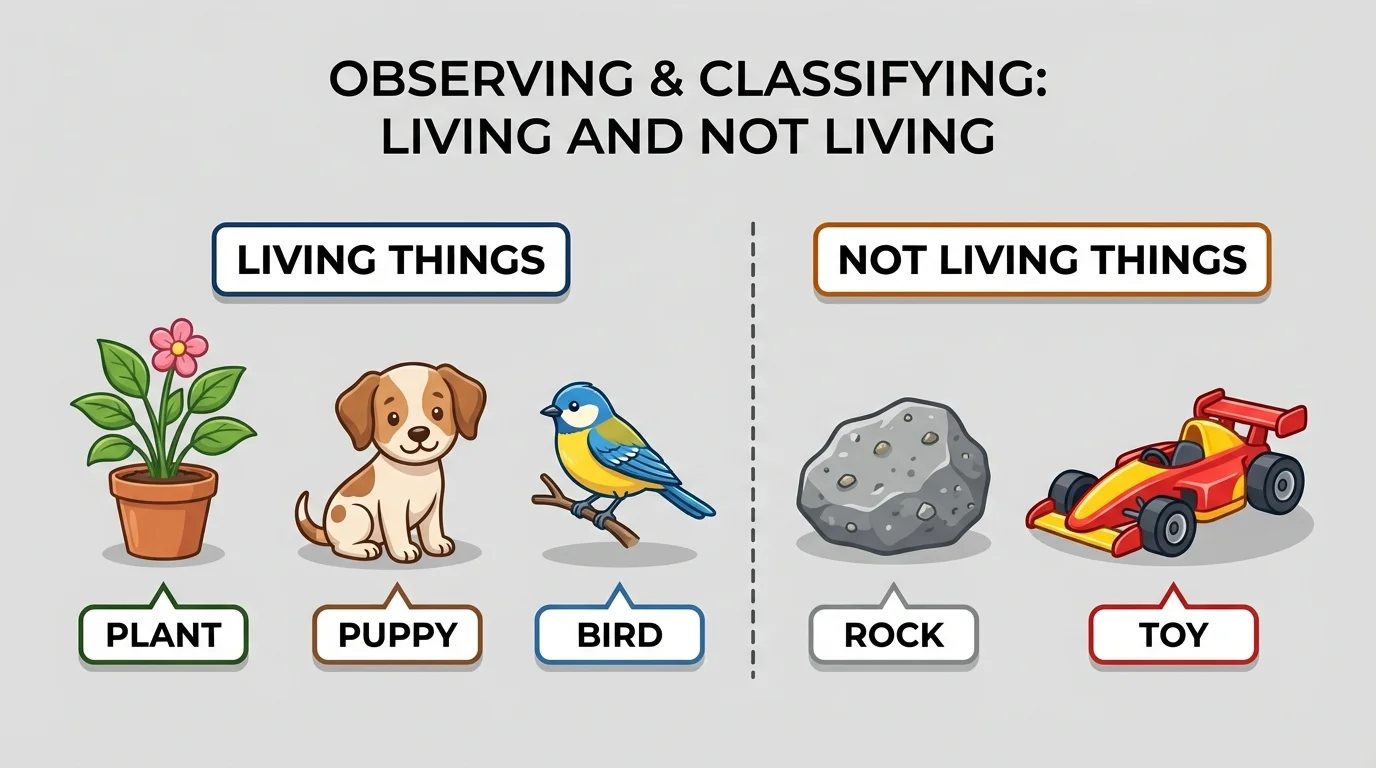
Sometimes a living thing does not move from place to place. A plant stays rooted in the soil, but it is still alive because it grows and needs water and light. This helps us remember that movement is only one clue. Growth and needs are important clues too.
Observation means looking carefully to notice something. Investigation means trying to find out more by watching, comparing, or testing in a simple way.
When we learn about living things, we start with questions. Good science often begins with wondering.
A question helps us find out something new. We can ask, "Does this plant need water?" "What do birds eat?" "Where do ants go?" "Which leaf is bigger?" These are simple questions because we can try to answer them by looking carefully.
Questions about living things should be easy to notice or test. For example, we can watch whether a plant looks droopy before it is watered and more upright after it is watered. We can see whether birds come to a feeder in the morning or later in the day. We can notice whether worms appear on the ground after rain.
Many young children already use science thinking every day when they ask why a ladybug has spots or why grass grows after rain. Wondering is an important part of science.
Some questions have answers we can see right away. Some answers take time. A seed does not become a sprout in one moment. We may need to watch for several days.
An observation uses our senses in safe ways. [Figure 2] shows a plant changing over time. We use our eyes to notice color, size, shape, and movement. We may use our ears to hear birds chirp. We may gently touch a leaf to feel if it is smooth or bumpy when an adult says it is safe.
Careful looking is important. If we look too fast, we may miss something. A caterpillar may move slowly. A flower bud may open little by little. A snail may leave a shiny trail.
Living things can change over time. A plant may have one leaf on one day and more leaves later. A pet may grow bigger. A puddle may bring birds to drink. Watching on different days helps us learn more.
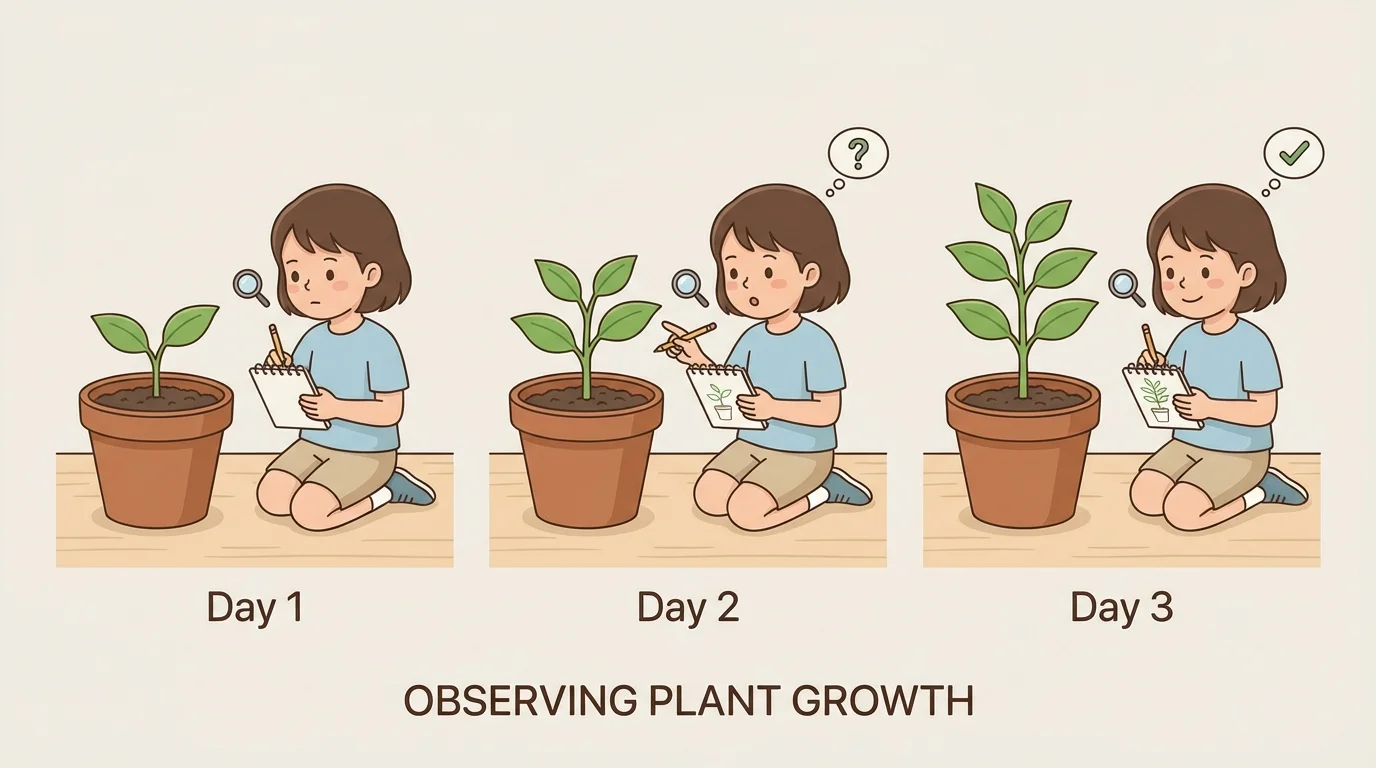
Observations can be spoken out loud. A child might say, "The leaf is green." "The worm is long." "The bird has wings." These simple observations are the start of science learning.
Looking for patterns helps us understand living things. If we see the same kind of change again and again, such as plants leaning toward light or birds visiting a feeder each morning, we begin to notice a pattern. Patterns help us answer questions.
We must be gentle and safe when we observe living things. We do not pull petals off flowers, squeeze bugs, or scare animals. Scientists care for living things while they learn.
A simple investigation is a small way to answer a question. We might watch two plants, with one in sunlight and one in shade, and notice which one grows better after a few days. We might watch what birds do near a tree. We might look at the ground after rain to see if more worms appear.
In a simple investigation, we try to focus on one idea. If we want to know whether a plant needs water, we watch what happens when a dry plant gets water. If we want to know where ants walk, we follow the line with our eyes and notice where it goes.
Example: Watching a classroom plant
Step 1: Ask a question.
"What happens when our plant gets water?"
Step 2: Observe.
Look at the leaves before watering and later after watering.
Step 3: Tell what you notice.
You may notice that the plant looks more upright and the leaves look less droopy.
This simple investigation helps answer a real question about a living thing.
Sometimes our first answer is not quite right, and that is okay. We can look again. Science is about noticing carefully and learning more each time.
[Figure 3] shows some of the basic needs of a plant. All living things need certain things to stay alive and grow. Animals need water, air, food, and space. Plants need water, air, light, and room to grow. Many plants also need soil for support and nutrients.
A dog needs food and water every day. A fish needs clean water and food. A tree needs sunlight and water. If a plant is kept where there is no light, it may not grow well. If an animal has no water, it cannot stay healthy.
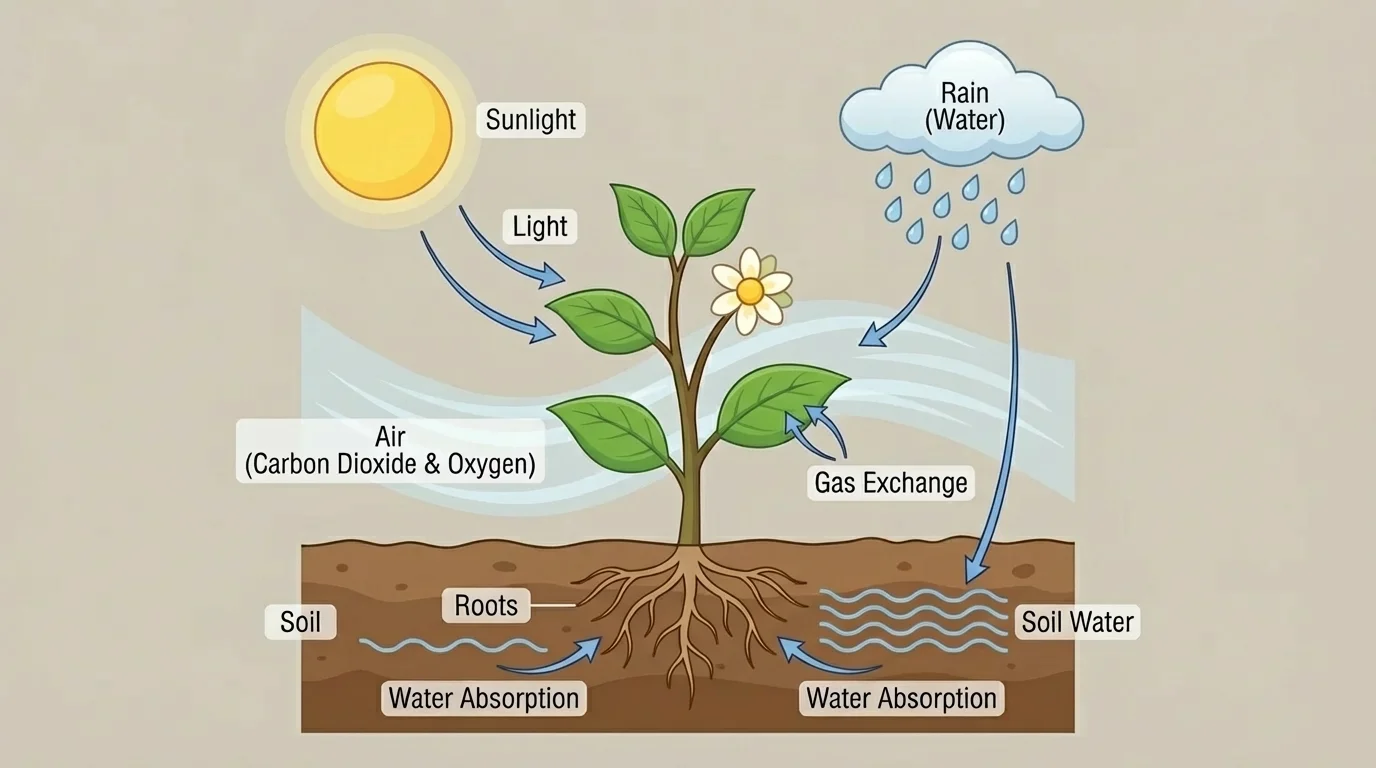
We can often see needs by looking at what happens. A thirsty plant may droop. A pet may go to its water bowl often. Birds search for seeds or insects because they need food. These observations help answer our questions.
When we care for gardens, pets, or classroom plants, we use science in real life. We give living things what they need. The information in [Figure 3] is useful in homes, parks, farms, and school gardens.
Living things are not all the same, but they all need some kind of food or energy, water, and a safe place to live.
People also have needs. Children need water, healthy food, air, and shelter. This helps us understand that humans are living things too.
Plants and animals are both living things, but they may look very different. Animals have different body parts that help them live in different places, as [Figure 4] shows with a bird and a fish. A bird has wings and legs. A fish has fins and a tail. A rabbit has long ears. A duck has a beak and webbed feet.
Plants also have parts we can see. Many plants have roots, stems, leaves, flowers, and seeds. Roots help hold a plant in the ground. Leaves help a plant take in light. Flowers can make seeds. These parts help the plant live and grow.
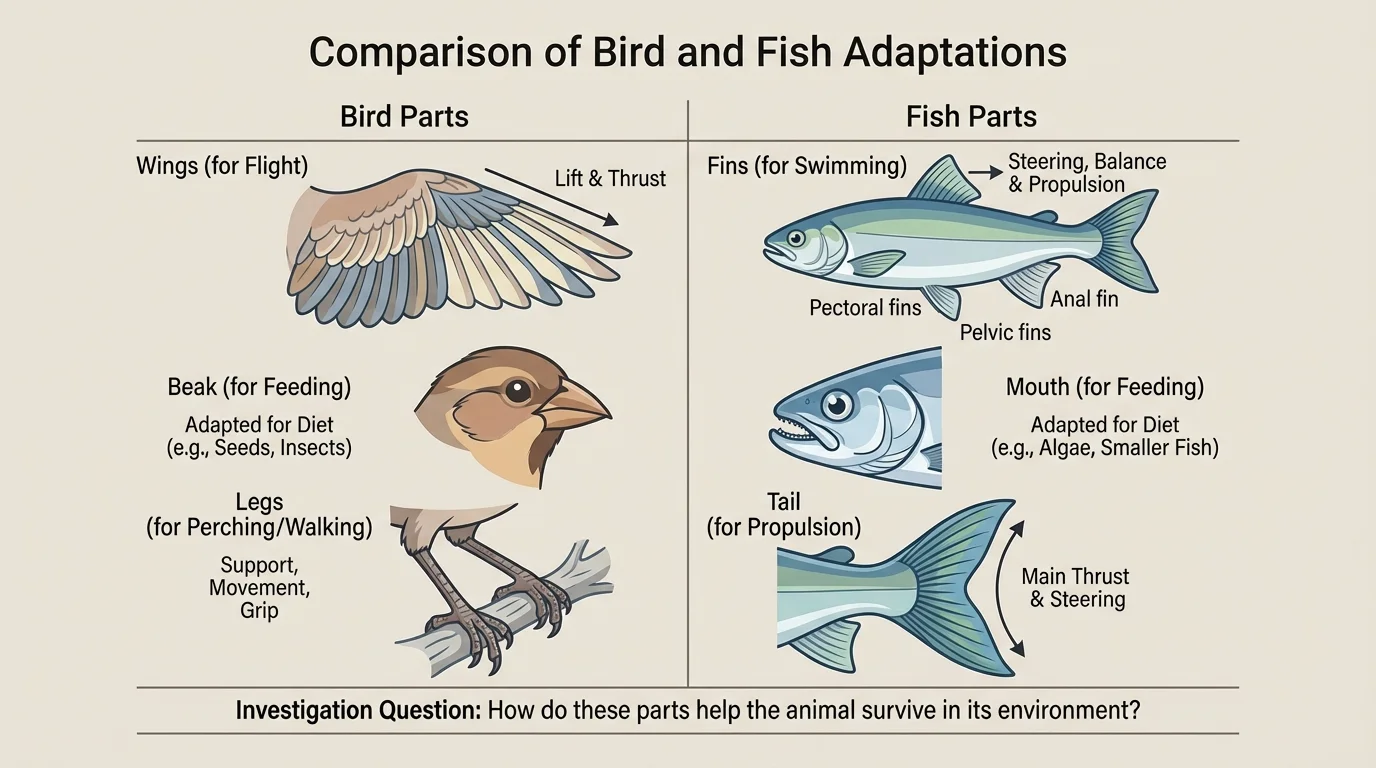
When we compare living things, we can ask, "How are they the same?" and "How are they different?" A bird and a fish are both animals, but one flies and one swims. A tree and a flower are both plants, but they may be very different in size and shape.
Body parts help living things do jobs. Wings help some animals fly. Fins help some animals swim. Roots help plants stay in place. Looking at visible parts helps us understand how living things live. We can return to [Figure 4] to see how different parts match different ways of living.
| Living thing | What we can observe | What it may need |
|---|---|---|
| Plant | Leaves, stem, roots, growth | Water, light, air, space |
| Bird | Wings, feathers, beak, movement | Food, water, air, shelter |
| Fish | Fins, tail, swimming | Water, food, air, safe habitat |
Table 1. Examples of living things, what we can observe about them, and some basic needs.
Simple observations and investigations help us care for living things better. Gardeners watch plants to see when they need water. Families observe pets to see when they are hungry or tired. Park workers notice what animals need in their habitats.
Science is not only in books. It happens when we notice a sprout in the soil, hear birds in the morning, or watch a snail after rain. Asking questions and looking carefully helps us learn about the world around us.
Every time we ask a simple question about a living thing and then observe, compare, or watch for change, we are doing science. This is how we begin to understand life.
