A tiny flower in the yard, a bird in a nest, and a child at breakfast may look very different, but they share something amazing: they all need some of the same things to stay alive. Living things grow, change, and depend on the world around them.
[Figure 1] shows the common needs of many familiar living things. A living thing is something that grows and needs resources such as air and water to stay alive. A dog is a living thing. A tree is a living thing. A fish is a living thing. A rock is not living because it does not grow or need these things in the same way.
People, pets, birds, bugs, and plants all need things from their environment. Some needs come from biotic parts of the world, which means living things, such as food from plants or animals. Some needs come from abiotic parts of the world, which means nonliving things, such as air, water, and sunlight.
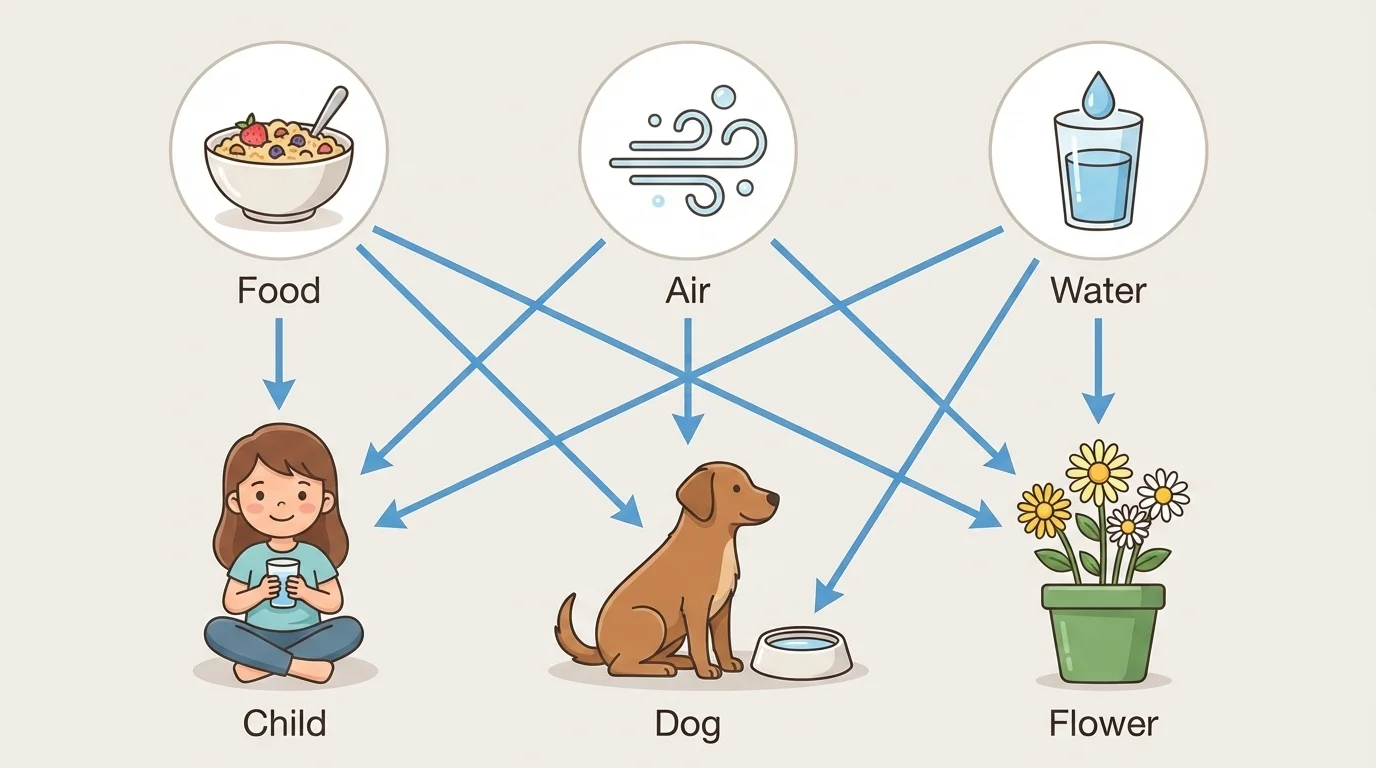
Living thing means something that is alive, grows, and needs resources to stay alive.
Biotic means the living parts of an environment.
Abiotic means the nonliving parts of an environment.
When we look closely, we see that living things may not all eat the same food or live in the same place, but they still need resources to live and grow. A cat drinks water from a bowl. A tree takes in water through its roots. A bird breathes air. A plant also uses air.
[Figure 2] shows that animals eat food, but plants do something special. Energy helps living things move, grow, and stay alive. Animals get food by eating plants or other animals. A rabbit eats grass or carrots. A child may eat fruit, bread, or rice. A dog may eat commercial dog food.
Plants need food too, but they do not chew like animals. Plants make their own food using sunlight, air, and water. Their roots take in water from the soil, and their leaves use air and sunlight. That is why a plant kept in a dark place or without water may droop and stop growing.
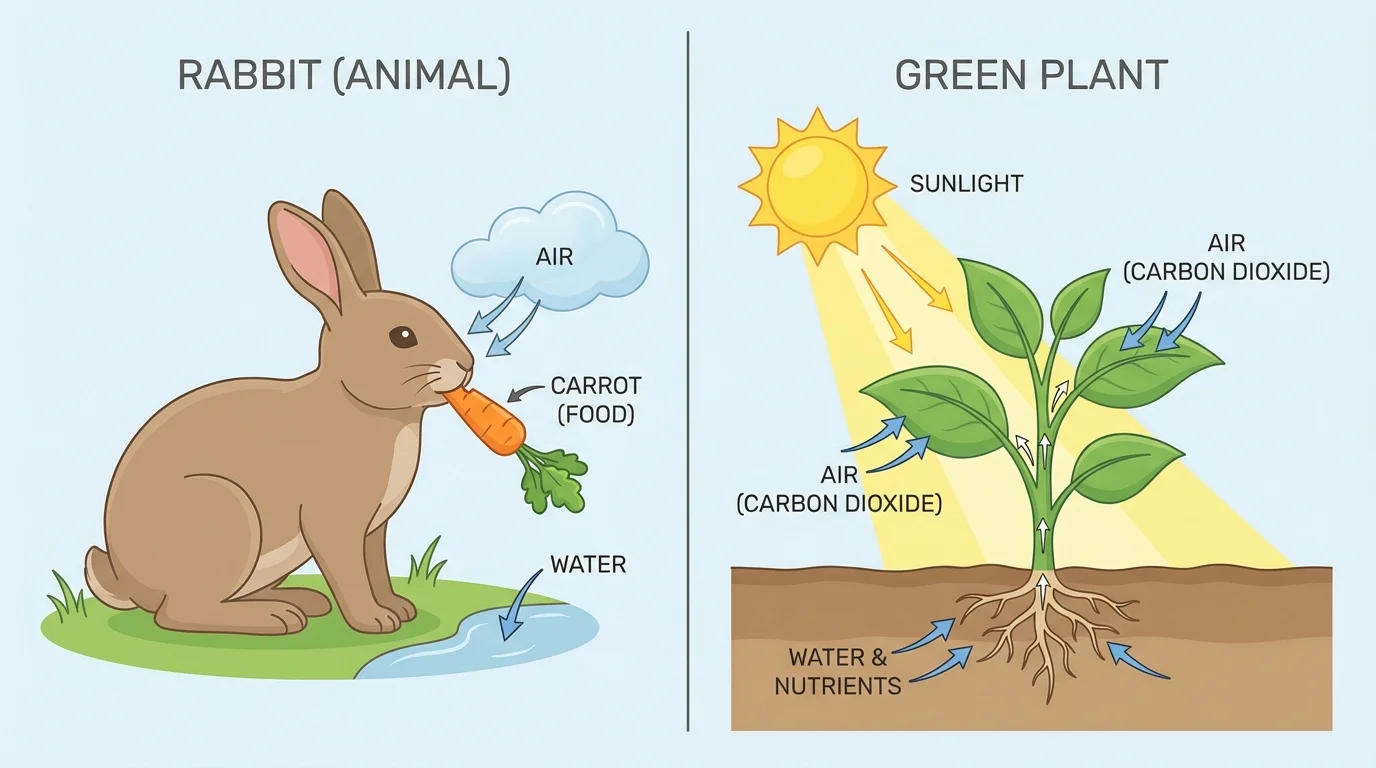
Plants and animals get food in different ways
Animals must eat food from outside their bodies. Plants make food inside their leaves using what they get from the environment. Even though they get food differently, both plants and animals need food to grow in healthy ways.
Food helps living things do many important jobs. A baby needs food to grow bigger. A puppy needs food to run and play. A bean plant needs food it makes for itself so it can grow taller and make more leaves. When a living thing does not get enough food, it may become weak.
Air is all around us, even though we cannot usually see it. People and animals breathe air in and out. Fish also need air, but they get what they need from water. Plants use air too. This means air is a common need for many kinds of living things.
You can watch a pet dog breathing after a run, or you can gently place a hand on your chest and feel yourself breathing. That shows that air matters every day. Plants do not have noses, but they still use air through tiny openings in their leaves.
Some seeds can wait a long time before growing, but when they get water, air, and the right warmth, they can begin to sprout.
Without air, living things cannot live well. That is one reason clean air matters for people, animals, and plants. Trees and other plants are important in many places because they are part of healthy environments.
Water is another basic need. People drink water. Cats and dogs drink water. Plants absorb water through their roots. Water helps living things stay healthy and helps them grow.
You may have seen a dry plant with limp leaves. After it gets water, it may look stronger again. A thirsty pet goes to its bowl. Birds visit puddles or birdbaths. Water is used by living things in many places: homes, ponds, gardens, farms, and forests.
Real-world example: caring for a classroom plant
Step 1: Put the plant where it can get light and air.
Step 2: Give it water when the soil feels dry.
Step 3: Watch for growth, such as new leaves or a taller stem.
The plant stays healthier when its needs are met.
Water does not only help plants. It helps animals and people too. A hamster needs a water bottle. A cow needs water on a farm. A child needs water during play. Different living things may need different amounts of water, but water is still a shared need.
[Figure 3] shows that living things change step by step in ways we can often predict. Living things do not stay the same size forever. They grow in patterns. A seed becomes a sprout, then a bigger plant, and later a flower or fruit. A baby bird becomes a young bird and then an adult bird.
These patterns help us understand what living things need at different times. A baby needs milk or other nourishment and lots of care. A young plant needs water and light to keep growing. If needs are not met, growth may slow down or stop.
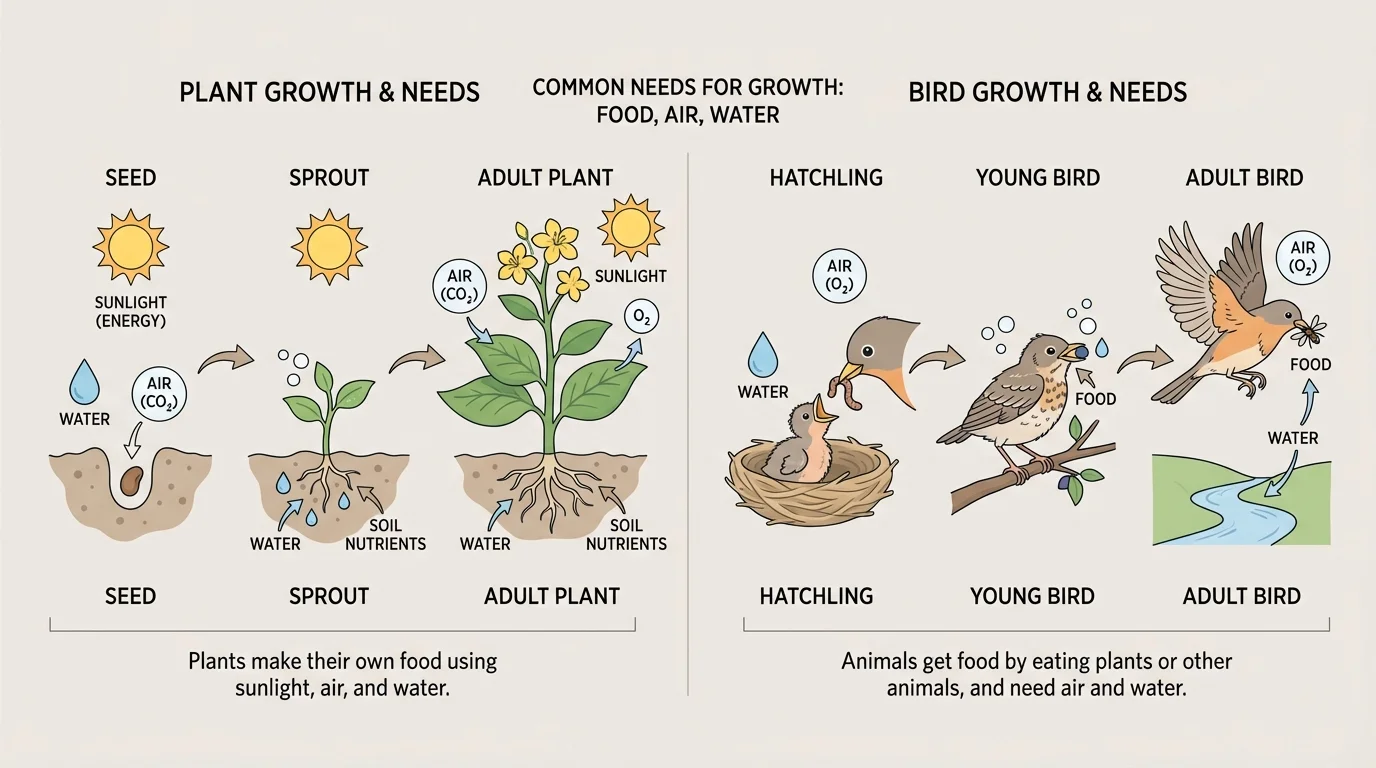
Even though a kitten and a sunflower are very different, both start small and grow bigger over time. We can often guess what comes next because living things usually develop in expected ways. As we saw earlier in [Figure 2], getting food is part of that growth. As shown in [Figure 1], the same basic needs are shared by many kinds of living things.
People use this knowledge every day. Families feed pets and give them water. Gardeners water plants and place them where they can get light and air. Farmers care for animals and crops. Doctors, veterinarians, and plant growers all know that living things need the right conditions to stay healthy.
When we understand common needs, we become better helpers. We can notice when a plant is dry, when a pet needs water, or when a bird needs a safe place with food nearby. Knowing what living things need helps us care for the natural world around us.
