A tiny seed can become a tall flower, and a small baby can grow into an adult. That is amazing, but it is not random. Living things grow and change in patterns. When we look closely, we can notice what living things need, how they change, and what may happen next.
Living things are things that are alive. People, dogs, birds, fish, trees, and flowers are living things. Rocks, toys, and chairs are not alive. Living things grow, need things from their surroundings, and make more living things.
We can learn about living things by watching them carefully. When we observe, we use our eyes and other senses to notice what is happening. We may see a kitten get bigger, a leaf grow from a bud, or a caterpillar change into something new.
Observation means looking carefully to notice details.
Pattern means something that happens again and again in a way we can notice.
Life cycle means the way a living thing grows and changes from the beginning of its life.
Because patterns repeat, they help us make good guesses. If we see a seed sprout and then grow leaves, we can expect more growth if the plant gets what it needs.
All living things have needs. A need is something a living thing must have to live and grow. As [Figure 1] shows, plants and animals do not need exactly the same things, but they all need important help from their environment.
Animals need water, air, food, and a place to live. A puppy drinks water, breathes air, eats food, and rests in a safe home. People need these things too.
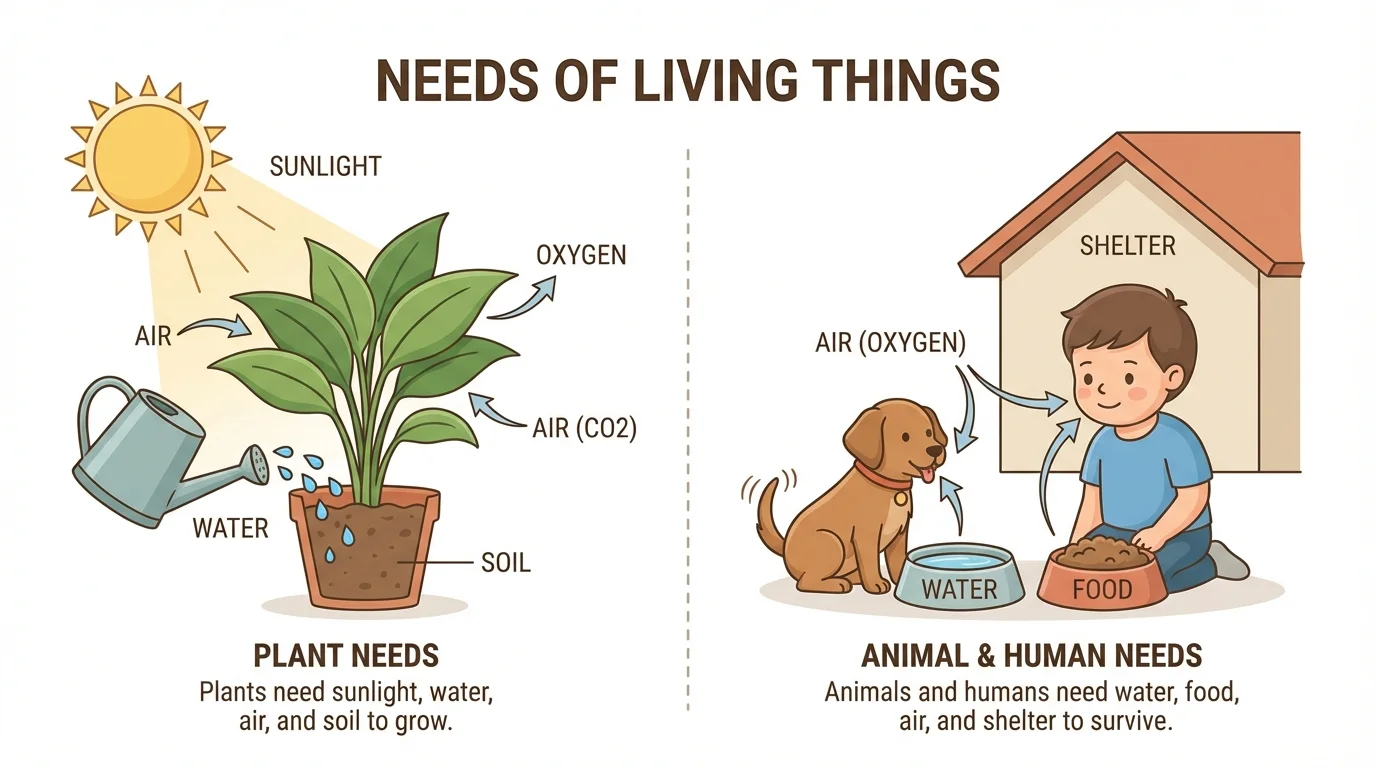
Plants also need water and air. They need light from the sun and space to grow. Many plants grow in soil, which helps hold them in place and gives them what they need. A flower without water may droop. A plant kept away from light may not grow well.
Some parts of the environment are living, such as animals and plants. Some parts are not living, such as sunlight, water, air, rocks, and soil. Living things depend on both living and nonliving parts around them.
Some seeds can wait a long time before they start growing. When they finally get water, air, and the right warmth, they can begin their life cycle.
When we explain why a plant grows well in one place, we can say it has the things it needs. When we explain why another plant does not grow, we can infer that something important may be missing, such as water or light.
[Figure 2] Living things do not stay the same size or look the same forever. They grow and change in predictable ways. The human growth pattern begins with a baby. The baby becomes a child, and later an adult.
A kitten grows into a cat. A chick grows into a chicken. A small tree becomes a bigger tree. These changes happen over time. We can often tell which living thing is younger and which is older by looking at size, shape, or what it can do.
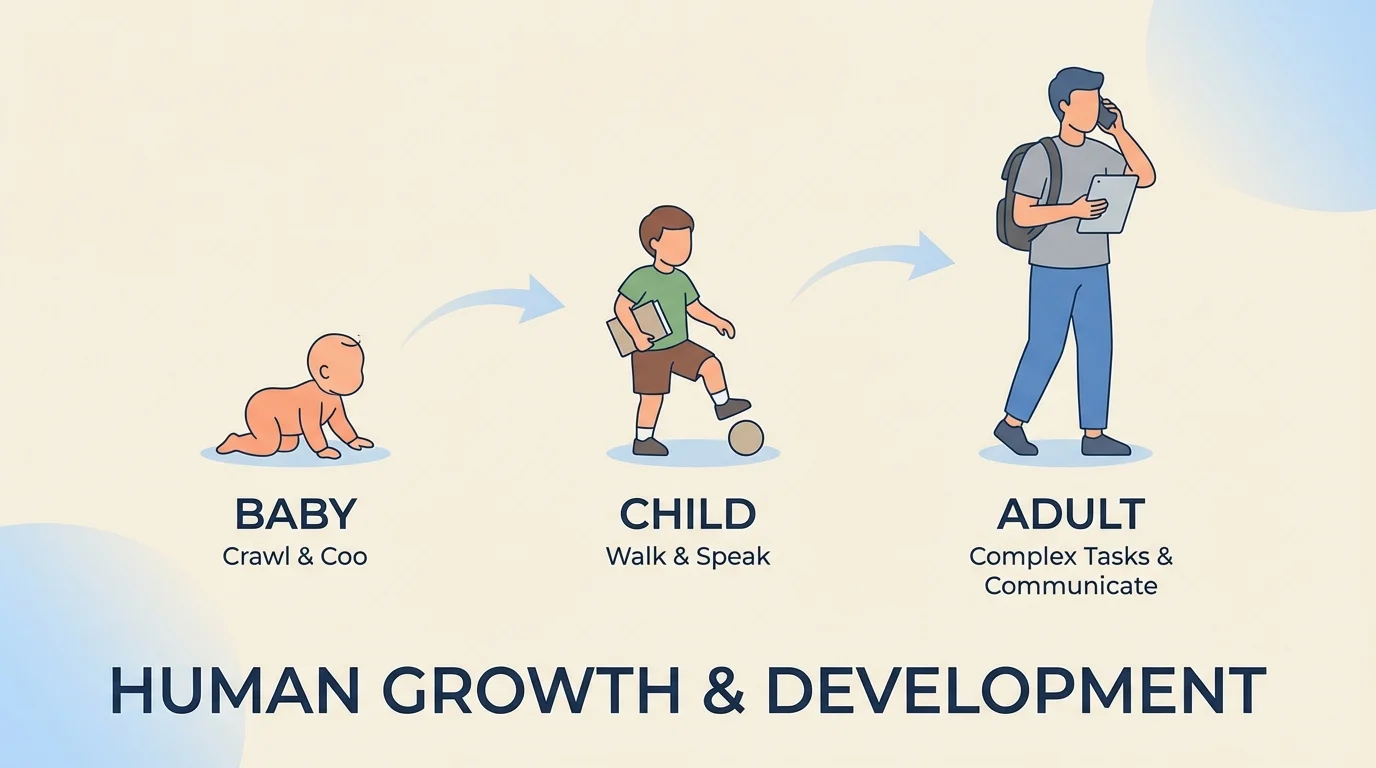
Not all living things grow in the same way, but many follow a clear order. First there is a beginning stage, then younger stages, then adult stages. This order is a pattern we can observe again and again.
Predicting from patterns means using what we already see to tell what is likely to happen next. If a small plant has a sprout and then two leaves, we can predict it may grow more leaves. If an egg hatches into a chick, we can predict the chick will get bigger over time.
We can also explain changes by using observations. If a child sees that a puppy is bigger after many weeks, the child can explain that the puppy has been growing. If we see roots, stems, and leaves on a plant, we can infer that the seed has already started its life cycle.
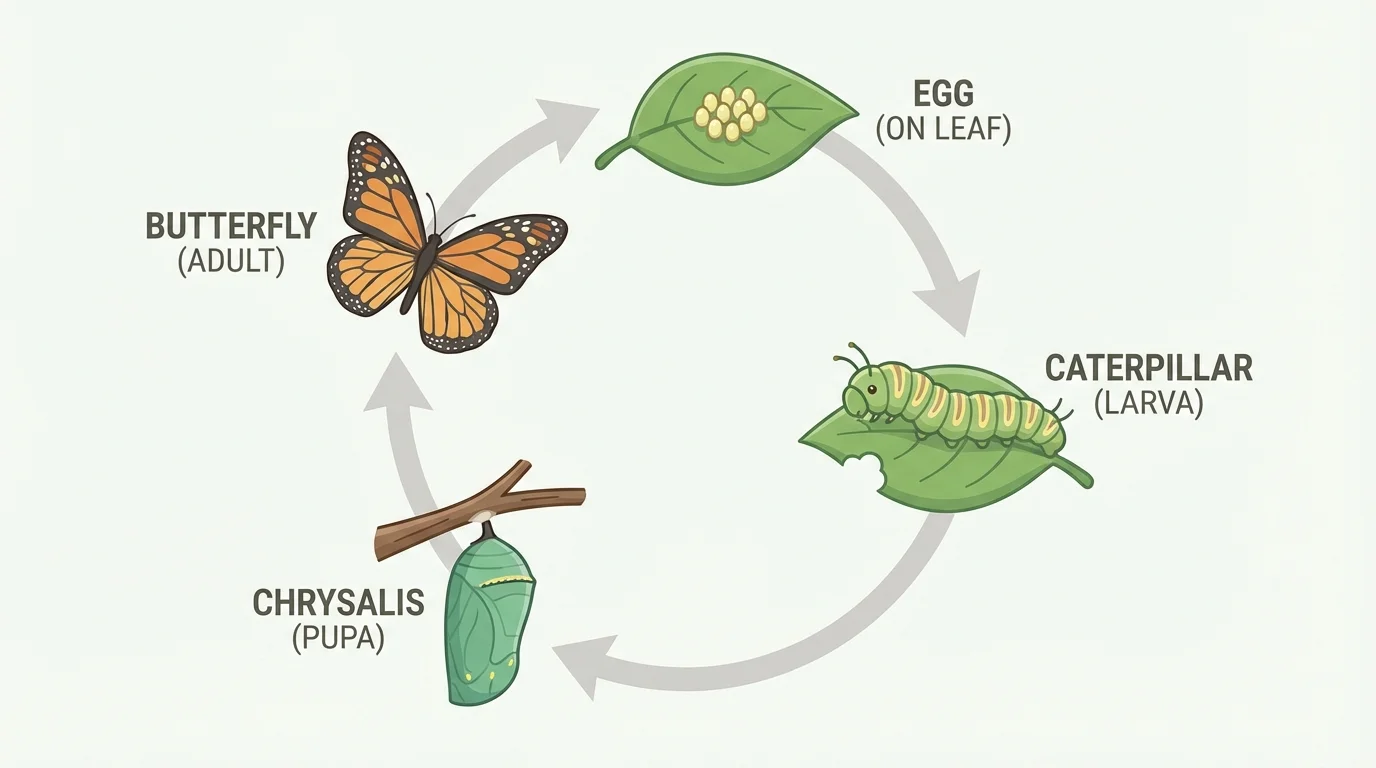
Many living things go through a life cycle. A life cycle has stages. The stages happen in an order. [Figure 3] The butterfly life cycle is a good example of a clear pattern.
A butterfly begins as an egg. The egg hatches into a caterpillar. The caterpillar eats and grows. Then it changes into a chrysalis. After that, an adult butterfly comes out. If we see a caterpillar, we can predict that it will not stay a caterpillar forever.
A frog also changes through stages. A frog begins life as an egg in water. The egg hatches into a tadpole. Tadpoles grow legs and change into frogs. From observation, we can infer that a tadpole with tiny legs is farther along in its life cycle than a tadpole with no legs.
A chicken begins inside an egg. The egg hatches into a chick. The chick grows into an adult chicken. The order stays the same: egg, chick, chicken.
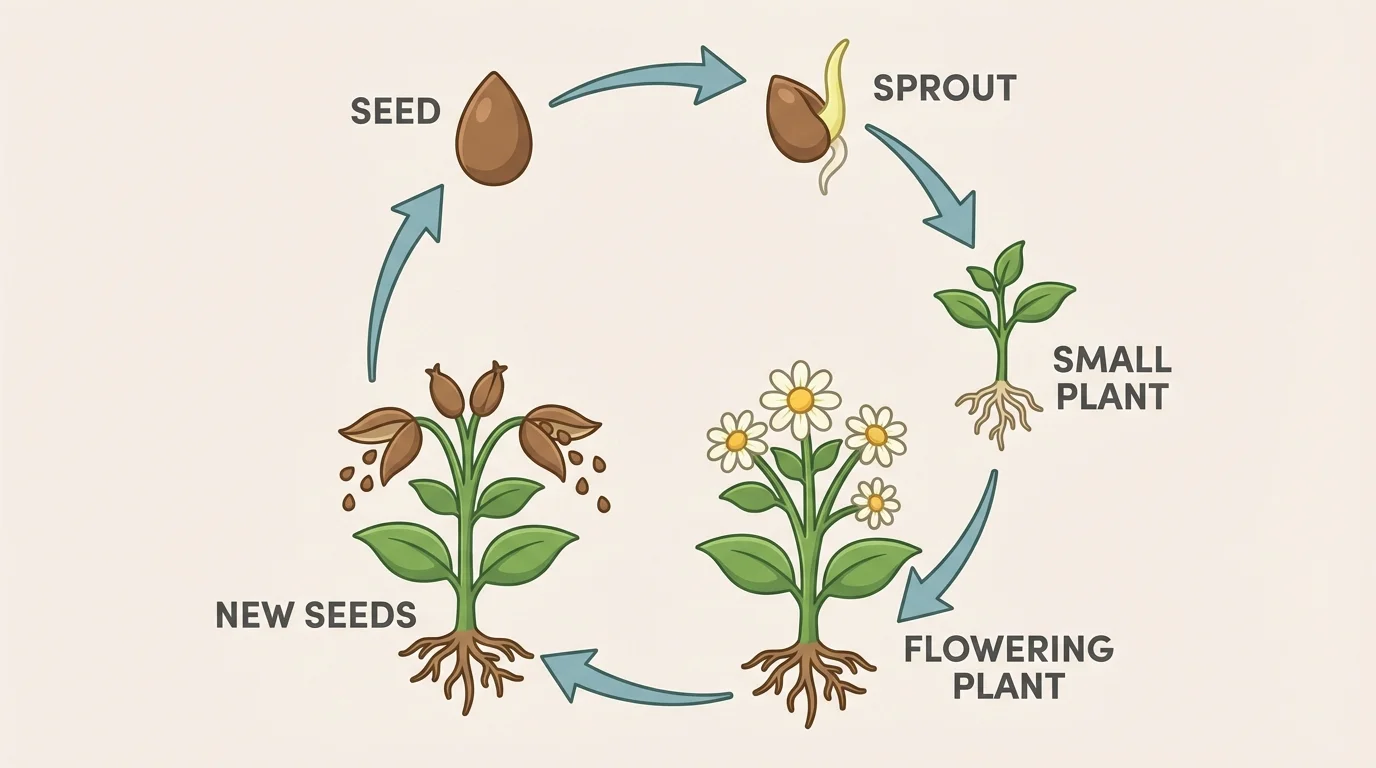
[Figure 4] Plants have life cycles too. A plant starts as a seed. With water, air, light, and space, it can sprout and grow. The plant may make flowers and then seeds. This is a repeating pattern.
When we observe a sprout with tiny leaves, we know it is younger than a tall flowering plant. That helps us put stages in order and explain what may happen next.
Patterns help us sort what we see. We can look for changes in size, shape, color, or body parts. A small bird with fluffy feathers may be younger than a full-grown bird. A tree with blossoms may be at a different stage than a tree with fruit.
Using observations, we can predict, explain, and infer. To predict is to tell what may happen next. To explain is to tell why something is happening. To infer is to use clues from what we see to understand something more.
Example: Watching a bean plant
Step 1: Observe the plant.
A child sees a seed in soil, then later sees a tiny sprout.
Step 2: Look for a pattern.
Seeds often sprout before they grow bigger stems and leaves.
Step 3: Predict and explain.
The child predicts the sprout will grow more leaves. The child explains that the plant is alive and has begun to grow because it has what it needs.
We use the same thinking when we look back at [Figure 3]. A caterpillar stage tells us the butterfly is still growing and changing. It is not the final stage yet.
Living things are connected to the world around them. Birds may use trees for shelter. Bees visit flowers. Fish live in water. Sunlight warms the ground and helps plants grow. These connections help living things survive.
When the environment changes, living things may be affected. If there is little water, a plant may not grow well. If an animal cannot find enough food, it may become weak. Looking again at [Figure 1], we can explain that needs must be met for healthy growth and life cycles.
Scientists and gardeners use observations like these in real life. A gardener checks if a plant has enough light and water. A veterinarian watches young animals grow. People who care for parks notice animal babies, nests, flowers, and seeds to understand what stage of life living things are in.
Young learners already know that babies, pets, and plants can grow. Science helps us describe that growth more carefully by looking for repeated patterns and using evidence from what we observe.
When we pay attention to patterns, living things make more sense. We can tell what they need, how they are changing, and what stage of life they may be in. Observation helps us become careful thinkers about the living world.
