A tiny seed can become a tall flower, and a small caterpillar can become a butterfly. Living things do not stay the same. They grow, change, and follow patterns we can watch. When we look closely again and again, we begin to see nature's story unfolding right in front of us.
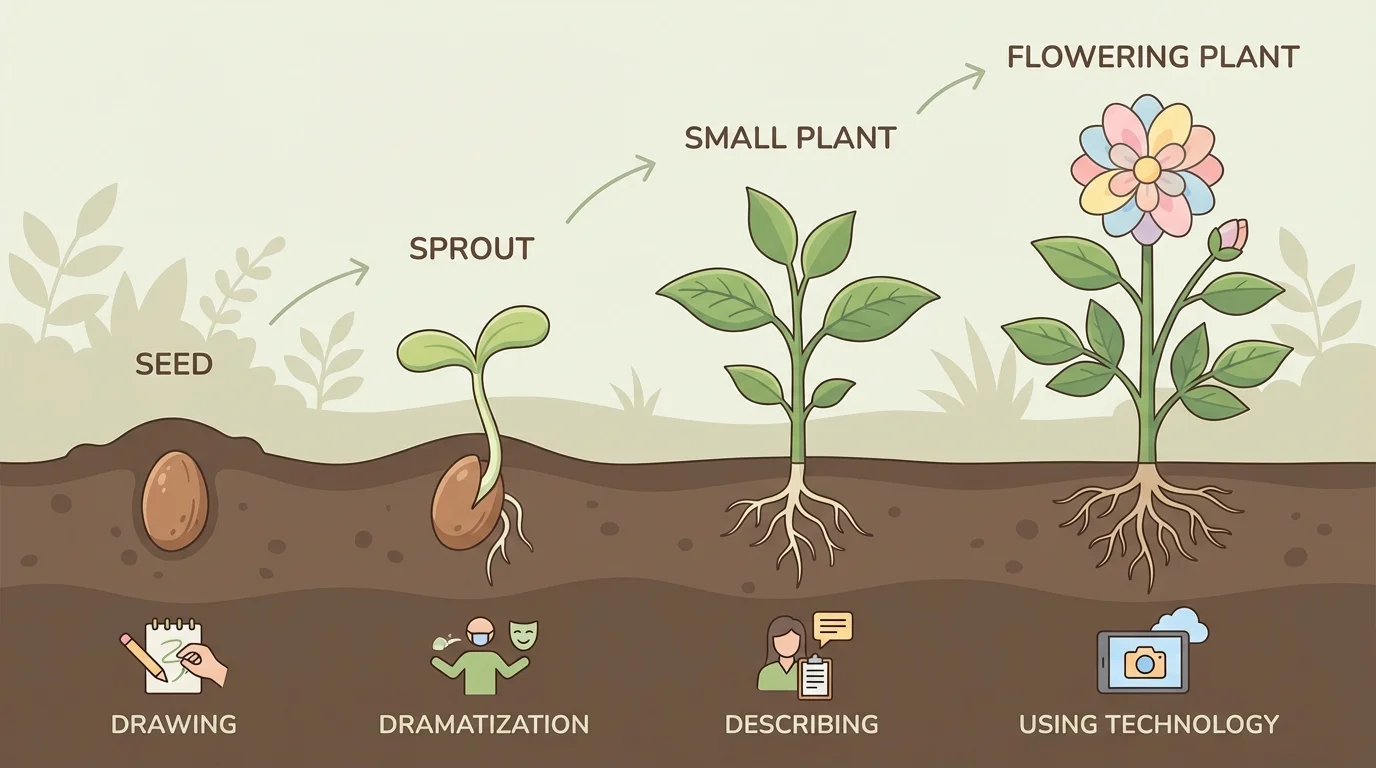
A living thing is something that grows, needs food or water, and is alive. People, plants, and animals are living things. As they grow, they change in ways that often happen in an order. A seed grows roots first, then a sprout, then leaves, as shown in [Figure 1]. A baby animal becomes bigger. A young child becomes taller.
These changes are called patterns. A pattern means things happen in a way we can notice again and again. Not every flower looks the same, but many flowers begin as seeds. Not every puppy grows at the same speed, but puppies grow into dogs.
Observe means to look carefully and notice details. Document means to save what we notice so we can remember it and compare it later.
When scientists study life, they watch for change over time. Young children can do this too. Looking today and then looking again tomorrow helps us notice what is different. A leaf may be bigger. A stem may stand taller. A pet may learn a new movement.
[Figure 2] We can use our eyes to look at color, shape, and size. We can notice if something is longer, shorter, bigger, or smaller. We can also listen. A chick may peep. A frog may croak. We can watch how a living thing moves, rests, or eats.
Change over time means something is different after days, weeks, or months. A plant may start with no flower and later have a bright blossom. A child may start by crawling and later walk and run. Looking one time is helpful, but looking many times helps us understand more.
Predictable growth means many living things change in an order that makes sense. First there is a beginning stage, then a growing stage, and then a more mature stage. We may not know the exact day a change will happen, but we often know the general order.
Careful observation helps us compare. We can say, "The sprout was short before, and now it is taller," or "The caterpillar had one body shape before, and now it is different." Words like before, after, now, and later help describe time.
There are many good ways to save our observations. We can make a drawing of a plant or animal. We can use simple words to describe what we see, such as "green leaf," "tiny root," or "soft fur." We can use our bodies in dramatization by acting like a seed curling up and then stretching into a tall plant. We can also use technology, such as a camera or tablet, to take pictures over time.
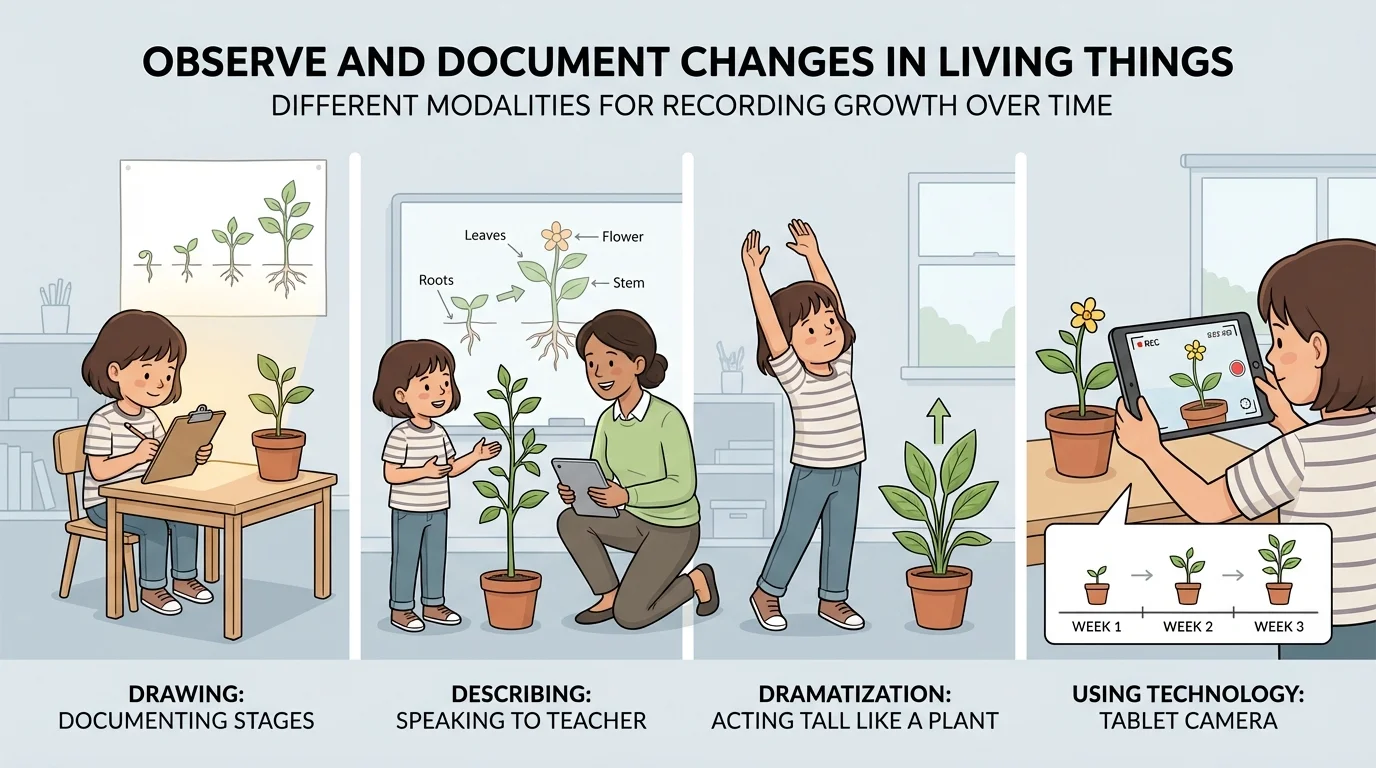
Written words can tell color, texture, or movement. Acting can help us remember the order of changes. Photos and videos can help us compare what a living thing looked like before and after.
Real-world example: watching a bean plant grow
Step 1: On the first day, a child looks at the seed and notices it is small, hard, and dry.
Step 2: A few days later, the child sees a little root and draws it.
Step 3: Later, the child describes the new green sprout with words.
Step 4: The child acts tall like the growing plant and takes a photo to save the change.
By using more than one way to document, the child understands the plant's growth more clearly.
This is useful in real life because gardeners, families, and scientists all watch living things carefully. A gardener checks whether a plant is healthy. A family notices how a baby grows. A scientist records changes to learn more about living systems.
[Figure 3] will later show one clear example of animal change over time. Plants are easy to observe because many changes happen step by step. The seed opens. Roots grow down. A sprout grows up. Leaves appear. Later, some plants make flowers or fruit. The order in [Figure 1] helps us see that plant growth is not random.
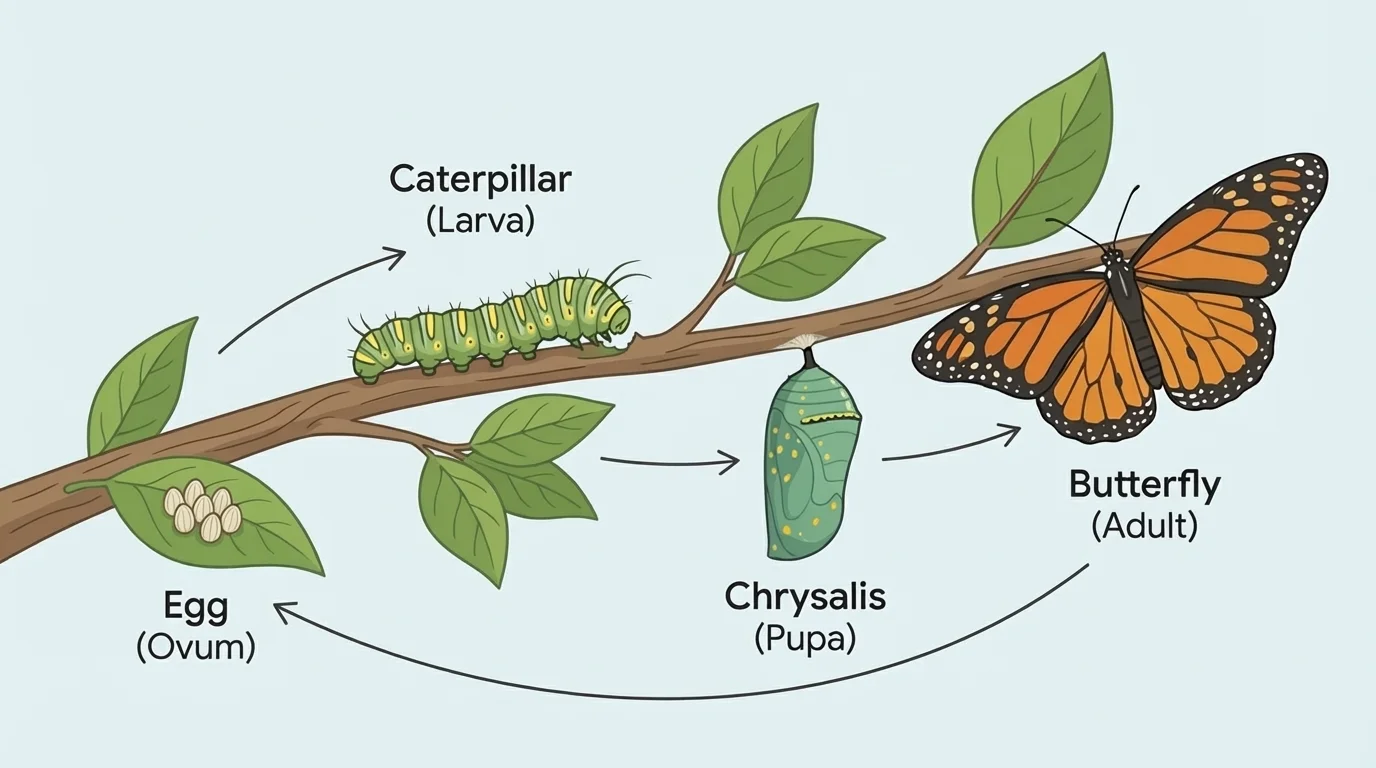
Some animals change a little as they grow, and some change a lot. A butterfly begins in one form and later has wings. First there is an egg. Then comes a caterpillar. Next is a chrysalis. Last comes the butterfly. This sequence is a life cycle.
People also change over time. Babies can become toddlers, then children. Hair can grow longer. Height can increase. Skills can change too. A child may first sit, then stand, then walk, then run. These are changes in living things that we can observe and document.
Some changes in living things happen slowly, like a tree getting taller over many years. Other changes can be easier to notice in just a few days, like seeds sprouting after water and sunlight.
Animals and plants need things from their environment to grow. Water, air, sunlight, food, and space all matter. When we observe a plant that is droopy and then stands up after water, we learn that living things interact with what is around them.
Documenting helps us remember details we might forget. A picture from last week can be compared with a picture from today. A drawing made earlier can show that a stem was once shorter. Words can remind us that a caterpillar moved differently before it became a butterfly, connecting back to [Figure 3].
When we document carefully, we are doing real science. We are noticing, comparing, and communicating. We begin to understand that living things develop in ways we can study. This helps us care for plants, pets, and people because we can notice healthy growth and also notice when something seems different.
Observing over time teaches patience. A living thing may not change much in one moment, but over many moments the change becomes clear. That is why looking closely, then documenting in different ways, is such a powerful way to learn about life.
