A tiny seed can become a tall plant. A baby animal can become an adult animal. That is amazing because living things do not stay the same. They grow and they change.
A plant is alive. An animal is alive. Living things need things from the world around them. They get what they need from the environment, such as water, air, sunlight, food, and space. As time passes, living things get bigger and change in ways we can notice.
Some changes are easy to see. A plant may grow more leaves. A puppy may grow taller. A baby bird may get feathers. These changes happen over time, not all at once.
Grow means to get bigger. Change means to become different. Living things grow and change as part of life.
Rocks and toys can change too, but they are not living. A toy may break or get dirty, but it does not grow by itself. A plant or animal grows because it is alive.
[Figure 1] shows how a seed can begin very small and then, in the right place, start to grow. Plants change in steps. First there is a seed. Next a small root and a tiny sprout begin to grow. Later the plant gets stems, leaves, and sometimes flowers.
Plants need water, air, sunlight, and space to grow well. Their roots take in water from the soil. Their leaves help them use sunlight. When a plant gets what it needs, it can grow bigger and stronger.
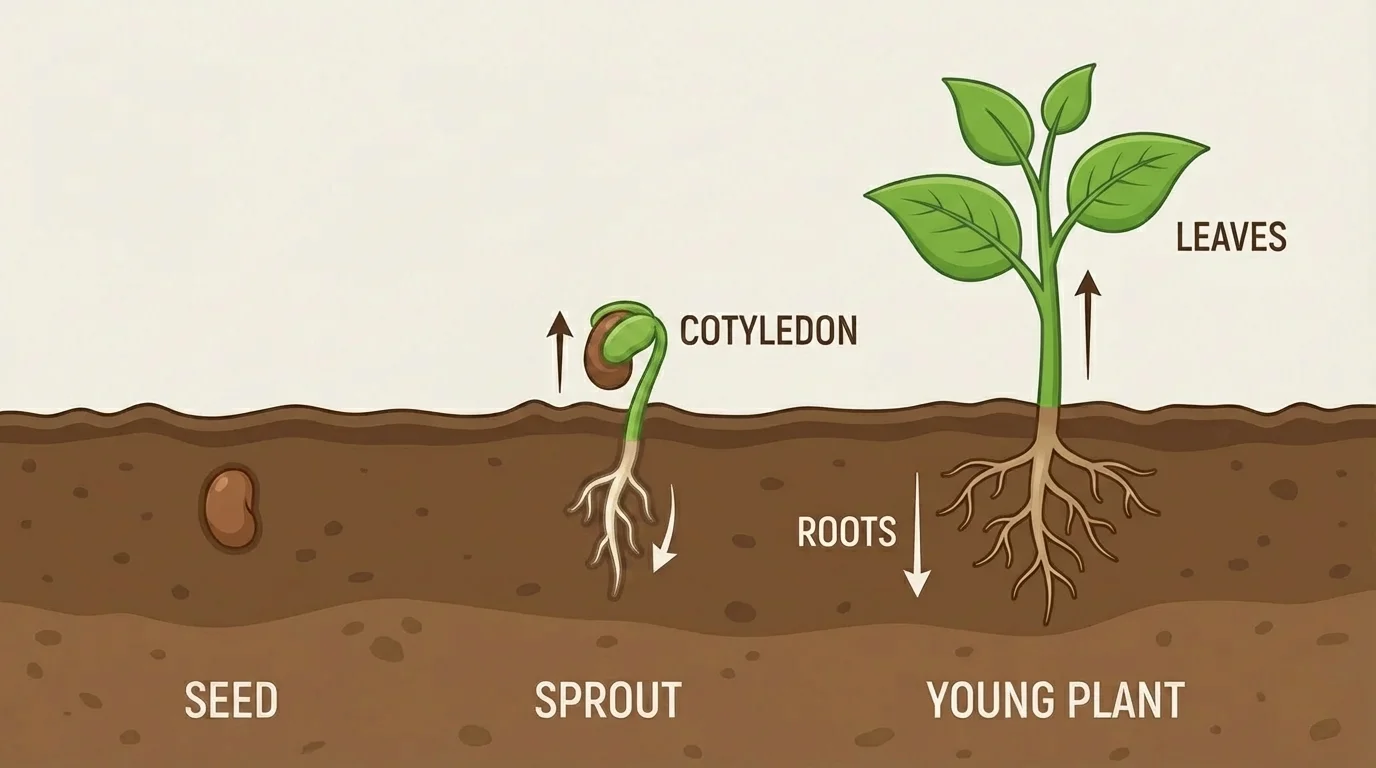
Some plants also make fruit. Inside the fruit there may be more seeds. This means new plants can begin again. A bean seed can grow into a bean plant. An apple seed can grow into an apple tree.
Later, when we think about the order of life stages, this sequence helps us remember that a plant does not start as a full-grown plant. It begins small and develops step by step.
Some seeds are so tiny they can rest on your fingertip, but they can still grow into much larger plants.
Not all plants look the same as they grow. Some become flowers, some become bushes, and some become trees. Even though they look different, they all grow and change.
Animals also change as they grow. A baby animal starts young. Over time it becomes larger and more like an adult. A kitten becomes a cat. A calf becomes a cow.
[Figure 2] shows that sometimes a baby animal looks a lot like the adult, only smaller. A puppy looks like a dog. A lamb looks like a sheep. Sometimes the young animal looks more different at first. A chick is fluffy and small, but an adult chicken is much bigger and has fully grown feathers.
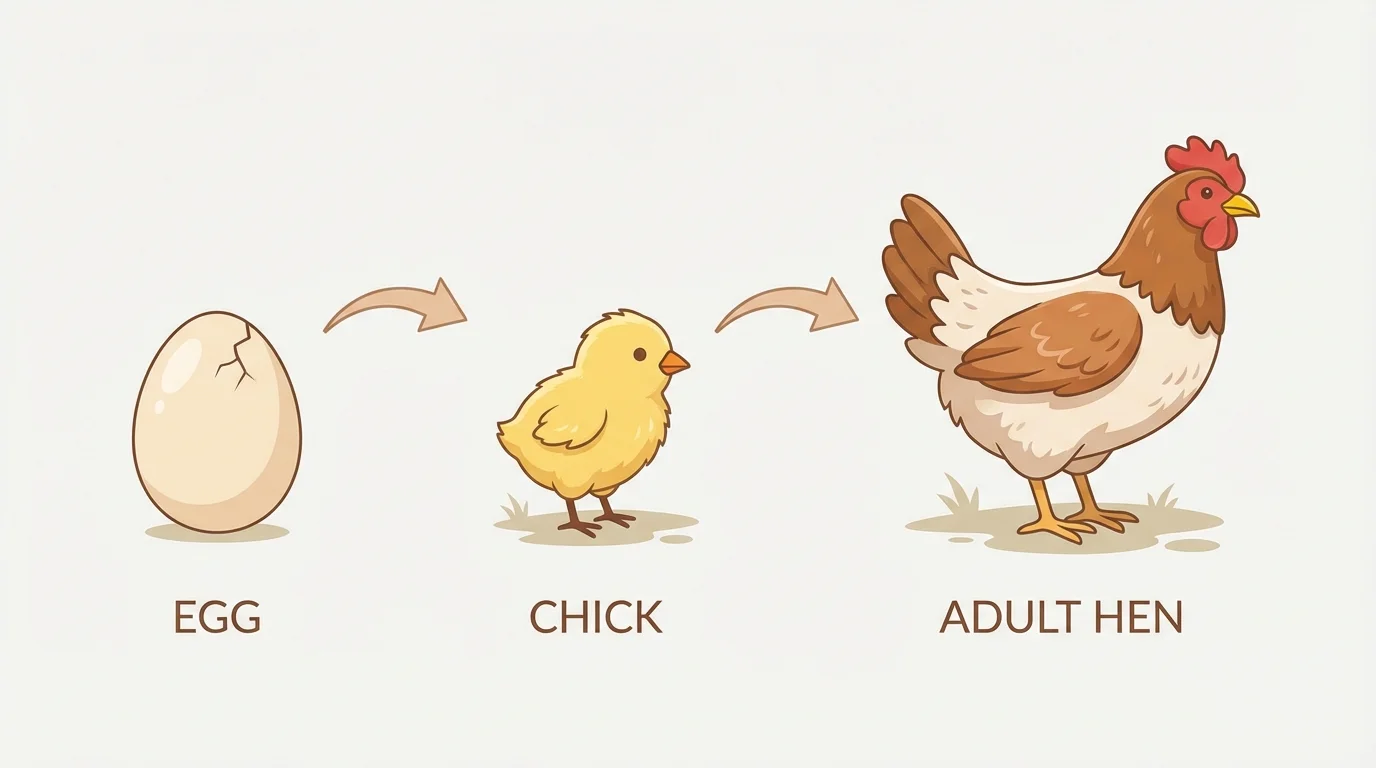
Animals need food, water, air, and a safe place to live. Many young animals also need care from a parent. A baby bird may need food brought to the nest. A baby deer may stay close to its mother.
Growing is a pattern for living things. Babies do not stay babies forever. They move through stages of life in a usual order: young first, then older and bigger later.
When we watch pets, birds, or animals at a farm, we can notice these changes. As [Figure 2] reminds us, growth means more than getting bigger. Body parts, colors, and coverings such as feathers or fur can change too.
Living things depend on both living and nonliving parts of nature. Plants may grow near other plants and animals. Animals may eat plants or other animals. Nonliving things are important too, like water, air, soil, sunlight, and shelter.
A plant without water may wilt. An animal without food will not grow well. Sunlight helps many plants make the food they need. Soil can hold a plant steady and give roots a place to grow.
| Living thing | What it needs | How it helps |
|---|---|---|
| Plant | Water | Helps it stay alive and grow |
| Plant | Sunlight | Helps leaves make food |
| Animal | Food | Gives energy to grow |
| Animal | Shelter | Keeps it safe |
Table 1. Examples of things plants and animals need to live and grow.
When living things get what they need, they can follow their usual pattern of growth. When they do not get what they need, growing can be harder.
[Figure 3] shows that living things develop in life cycles. That means their changes happen in an order. A butterfly changes in a clear pattern. It starts as an egg, becomes a caterpillar, then a chrysalis, and then an adult butterfly.
A plant also has a pattern. Seed first, then sprout, then bigger plant. An animal has a pattern too. Baby first, then young animal, then adult. The exact look may be different for each living thing, but the idea is the same: living things grow and change in expected ways.
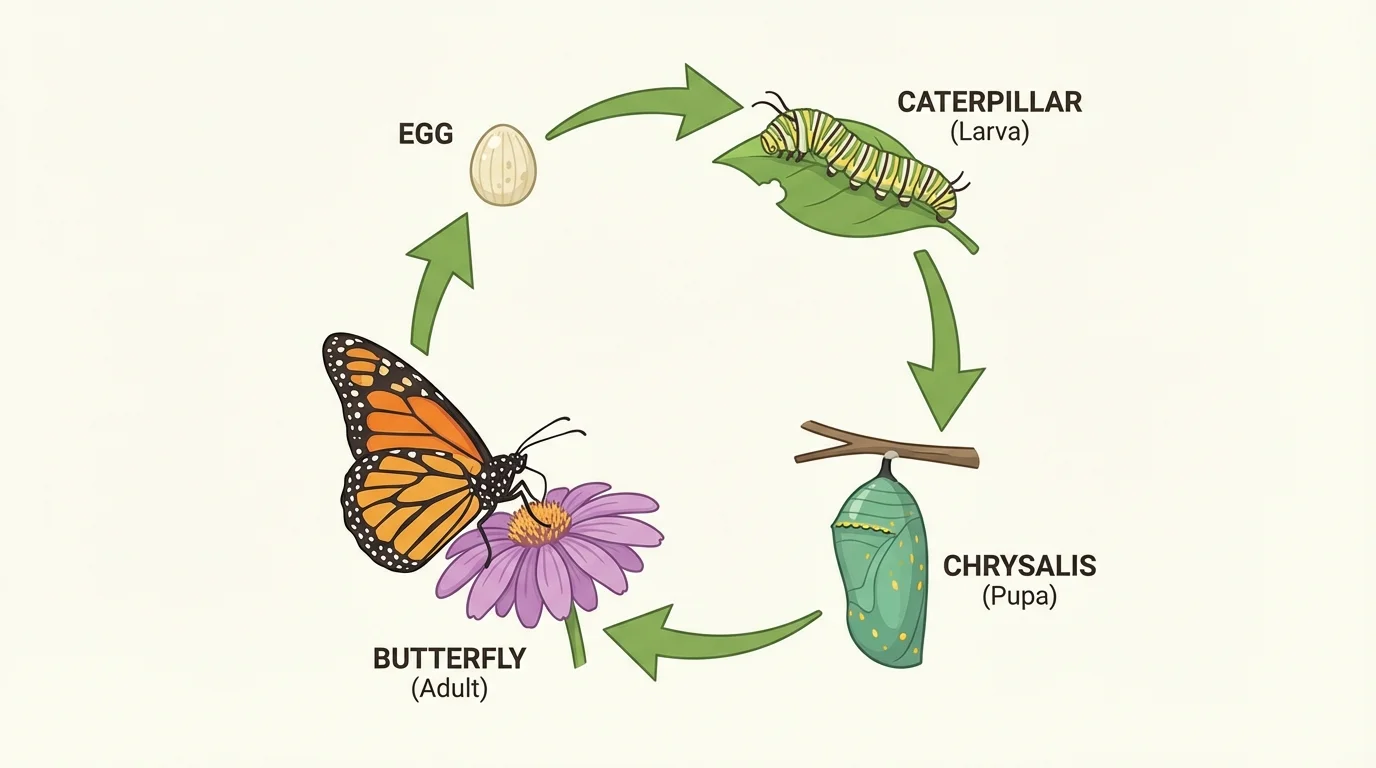
This is why people who care for gardens, farms, or pets watch for each stage. They know what usually comes next. They can give water, food, or care at the right time.
Real-world example: watching a garden grow
Step 1: A person plants a seed in soil.
Step 2: The seed gets water and sunlight.
Step 3: A sprout comes up from the soil.
Step 4: The plant grows leaves, gets bigger, and may later make flowers or fruit.
This is a real example of a living thing growing and changing in a pattern.
We can compare that pattern to the butterfly in [Figure 3]. The stages are different, but both living things change step by step.
We can notice growth at home, in parks, in gardens, and at farms. A tree may have small buds and later full leaves. A pet fish may become longer. A baby duck may become an adult duck.
Watching carefully helps us learn about nature. We can ask simple science questions: What changed? What stayed the same? What did the plant or animal need to grow?
Living things are alive. They need basic things from their surroundings to live. Growing and changing are signs that something is living.
When we understand that plants and animals grow and change, we understand an important idea about life. Living things begin small or young, and over time they develop in ways we can observe.
