Have you ever looked at a puddle, a leaf, or a little rock and wondered, "What is that?" Scientists begin by asking questions. When we inquire about the world, we look closely, touch safely, listen, and talk about what we notice. The natural and physical environment is all around us every day.
The environment is the world around us. It has many parts, as [Figure 1] shows: land, water, air, plants, animals, rocks, and sunlight. Some parts are alive, and some parts are not alive, but all of them are part of the same place.
We can notice the ground under our feet, the sky above us, the warm sun, and water in a cup, sink, puddle, or pond. We can ask simple questions like: What is wet? What is dry? What is hard? What is soft? What is moving? What is still?
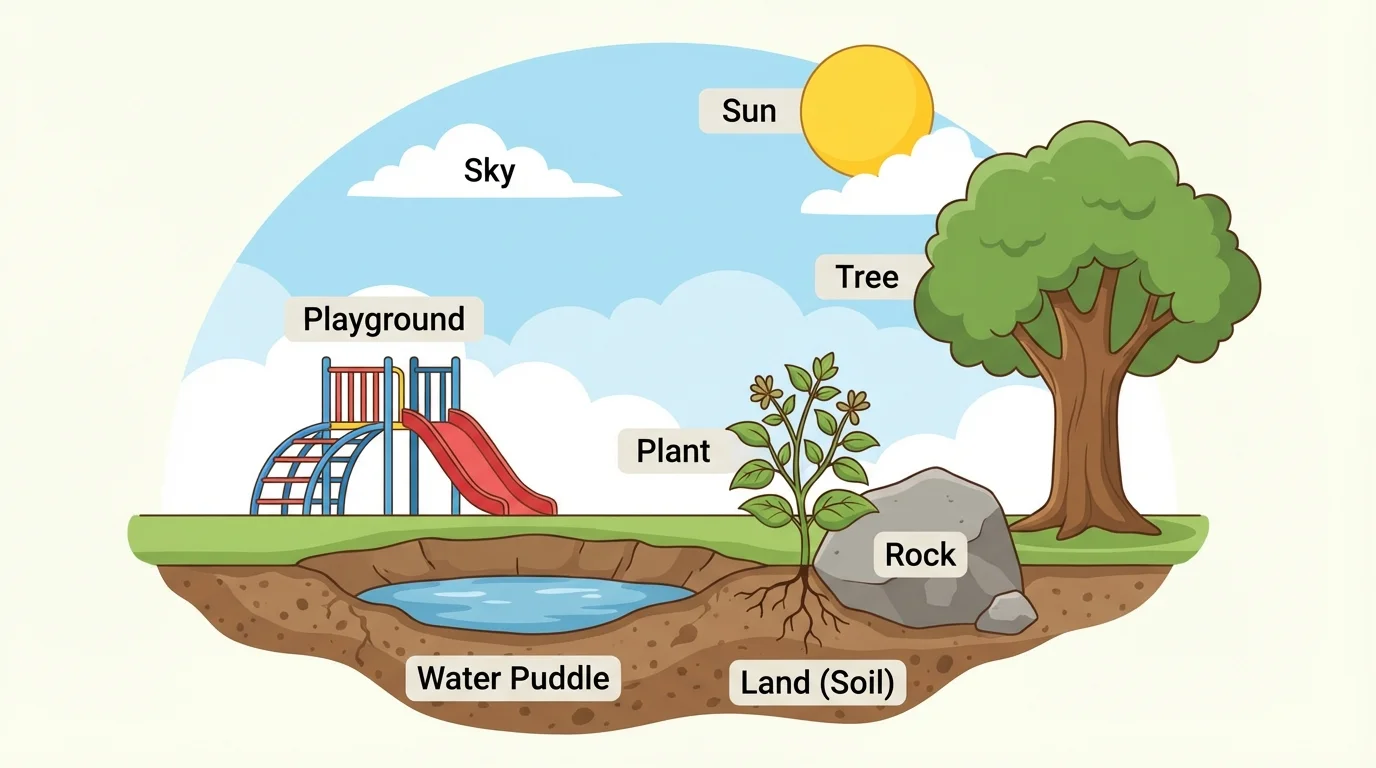
Natural things are parts of the world that come from nature, like rocks, water, soil, plants, and animals. Physical environment means the nonliving parts around us, such as air, water, land, and sunlight.
When children look carefully, they begin to see patterns. Grass grows in soil. Ducks swim in water. Rocks feel hard. Air cannot be seen easily, but it can move leaves and cool our skin. These observations help us learn how the world works.
A living thing grows and needs food, water, and air. People, dogs, birds, trees, and flowers are living things. A rock does not grow the way a plant grows. A puddle does not eat or breathe. Rocks and puddles are nonliving things.
Both living and nonliving things are important. A plant needs sunlight, water, and soil. A bird may build a nest in a tree. A child drinks water. Living things depend on parts of the nonliving world to survive.
Living things need places and materials
Plants and animals live in environments that give them what they need. A flower needs soil and water. A fish needs water. A person needs air, water, food, and shelter. This means living things and Earth materials are connected.
We can sort what we see. A leaf came from a living plant. Soil helps plants grow. Water can move, splash, freeze, or soak into the ground. Looking, sorting, and comparing are ways scientists inquire.
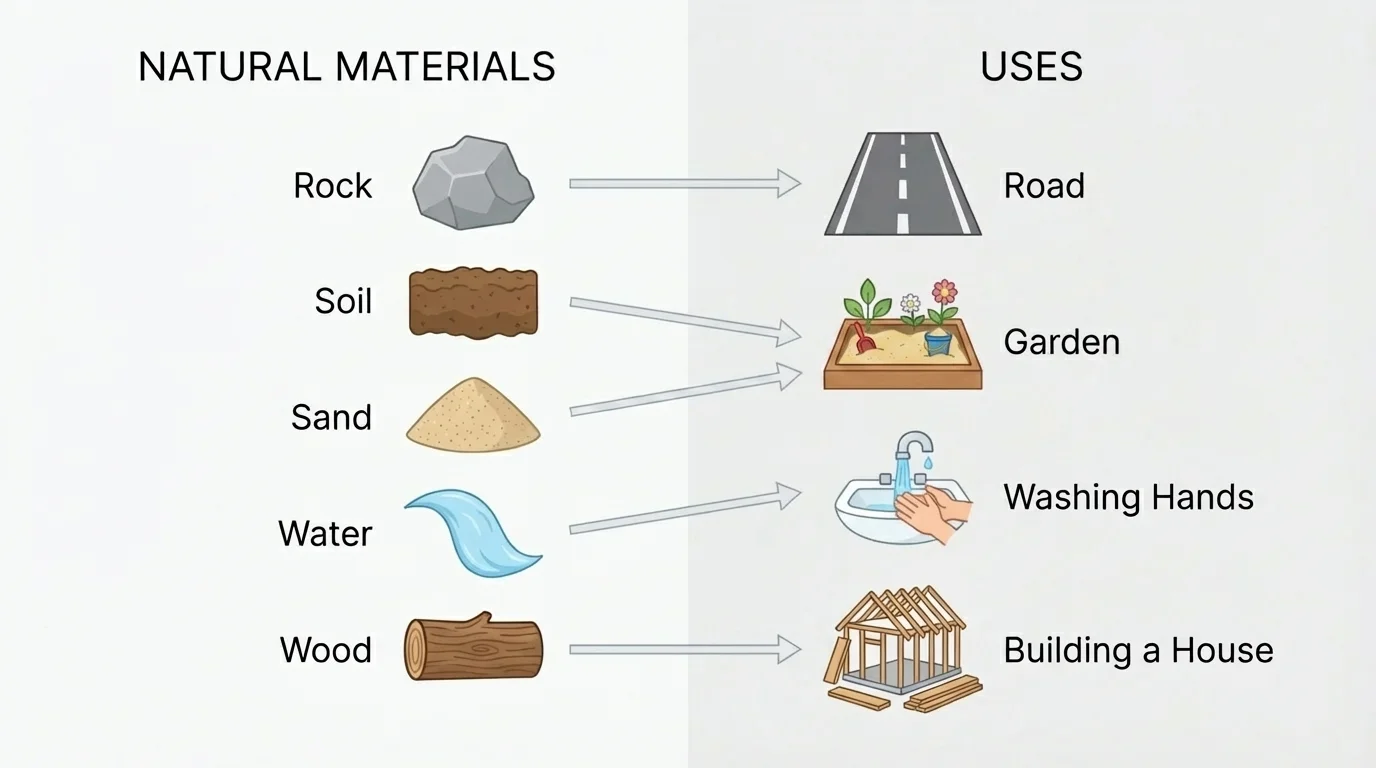
Earth materials are materials that come from Earth, such as rocks, soil, sand, and water. People use these every day, as [Figure 2] illustrates. Soil helps gardens grow. Sand can be used in building. Rocks can help make roads and walls. Water is used for drinking, washing, and growing food.
Wood also comes from trees that grow in soil and need water and sunlight. People use wood to make paper, furniture, and houses. We should use materials carefully because they are important.
Some rocks are smooth because water moves them and rubs them against other rocks. That is why rocks near rivers or beaches can feel rounder and softer on the outside.
When we build, plant, or clean, we are using Earth materials. A garden uses soil and water. A sandbox has sand. A stone path uses rocks. These are real-world examples of how natural materials help people live and work.
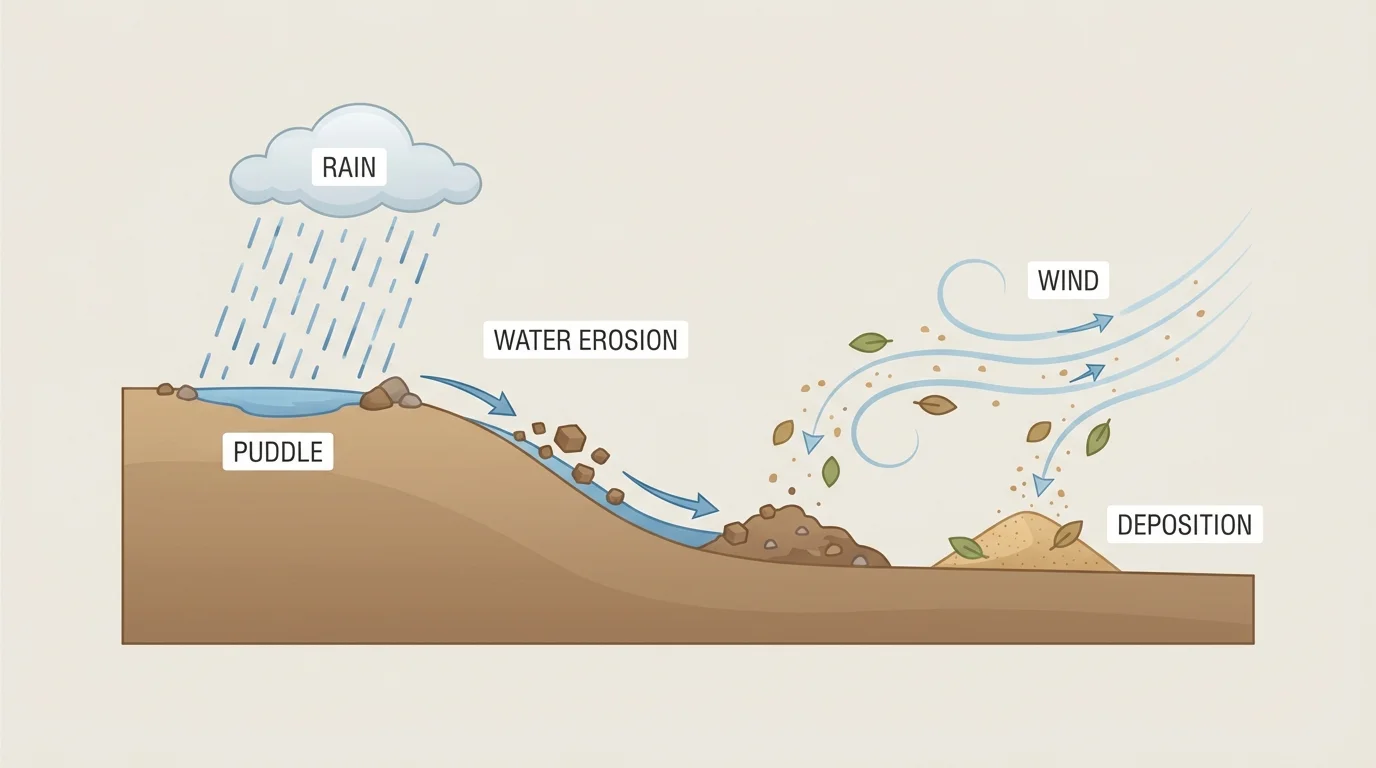
The surface of Earth is the top part of the ground we can see. It does not always stay the same. Water and wind can change it, as [Figure 3] shows. Rain can make puddles. Running water can move tiny bits of soil. Wind can blow leaves and sand from one spot to another.
After a rainy day, the ground may look different. Soil may wash into a small pile. A puddle may be big in the morning and smaller later. On a windy day, dry leaves may move across the ground. These are changes we can observe.
Real-world example: A playground after rain
Step 1: It rains on the dirt and grass.
Step 2: Water flows to a low place and makes a puddle.
Step 3: Some soil moves with the water.
Step 4: Later, the puddle dries and the ground looks different.
This is a simple way Earth's surface can change over time.
People can change the surface too. Digging, planting, building roads, and making gardens all change the ground. Sometimes these changes help us, but we should think about keeping soil, water, and living things safe. The scene in [Figure 3] reminds us that nature can move materials even without people.
We can help care for the environment by putting trash in bins, saving water, and being gentle with plants and animals. Clean water, clean air, and healthy soil help living things stay safe.
If a place has litter, it can hurt animals and make the area dirty. If we waste water, there may be less clean water to use. Caring actions matter. When we take care of the world around us, we take care of ourselves too.
You already know many ways to observe: look, listen, touch safely, and talk about what you notice. These simple science habits help you ask questions about rocks, water, plants, weather, and the ground.
When you inquire about the natural world, you become a careful observer. You learn that living things need nonliving things, Earth materials have many uses, and water and wind can change places over time. The outdoor view in [Figure 1] and the materials in [Figure 2] connect these ideas: everything in an environment works together.
