Have you ever picked up a rock, touched soft soil, or watched sand slip through your fingers? The ground is full of materials to explore. When children ask questions and look carefully, they are doing science. A simple investigation helps us learn about Earth materials such as rocks, sand, soil, and water.
A investigation is a careful way to find out something. We ask a question, we look closely, and we think about what we see. An investigation can be very simple for young children. A question might be, Which feels rougher: sand or a rock? Another question might be, What happens when water touches soil?
Scientists do not only work in big laboratories. People investigate in gardens, on playgrounds, at beaches, and in backyards. When we notice what Earth materials are like, we begin to understand how the ground around us works.
Earth materials are natural things from Earth, such as rock, sand, soil, and water. Observation means noticing something by using our senses, like seeing and touching. Conclusion means telling what we learned after we observed.
Before starting, we stay safe. We look with our eyes, touch gently when an adult says it is okay, and keep materials away from our mouths. Safe science helps us learn well.
A hypothesis is a simple guess we make before we test. It is not a wild guess. It is an educated guess. As [Figure 1] shows, scientists often begin with a question, make a guess, check what happens, and then tell what they learned. A child might say, I think sand will feel softer than a rock. Another child might say, I think soil will hold more water than sand.
A hypothesis can begin with words like I think... or I predict... For very young learners, this is enough. The important idea is that we say what we think will happen before we look closely.
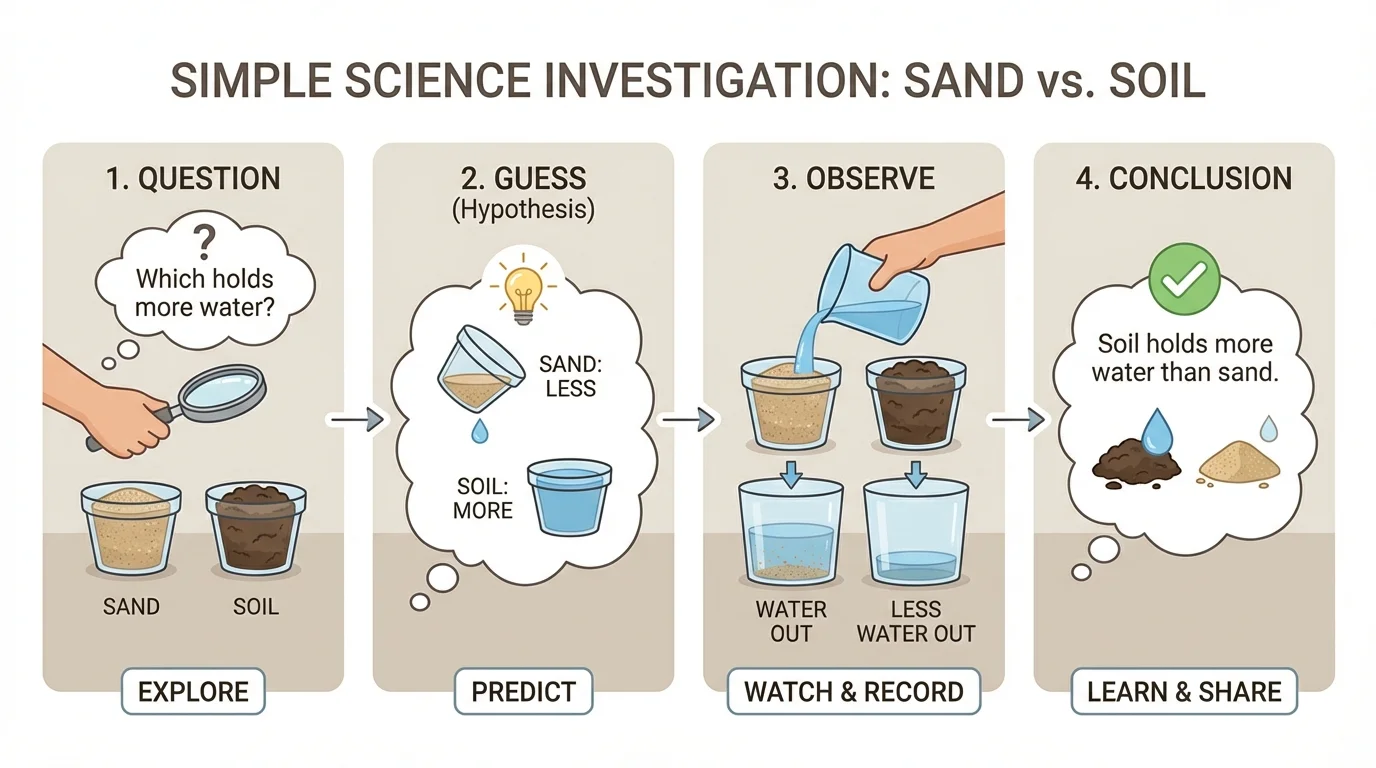
Sometimes the hypothesis matches the result, and sometimes it does not. Both are okay. Science is about learning from what we observe, not about being right every time.
To gather observations, we use our senses in safe ways. As [Figure 2] illustrates, we can look at rock, sand, and soil to notice color, size, and shape. We may also touch gently to notice whether something feels rough, smooth, dry, or damp.
Observations can be words. A rock may look gray. Sand may feel grainy. Soil may look dark and crumbly. Water may make one material sticky and another material loose. These details help us understand what each Earth material is like.
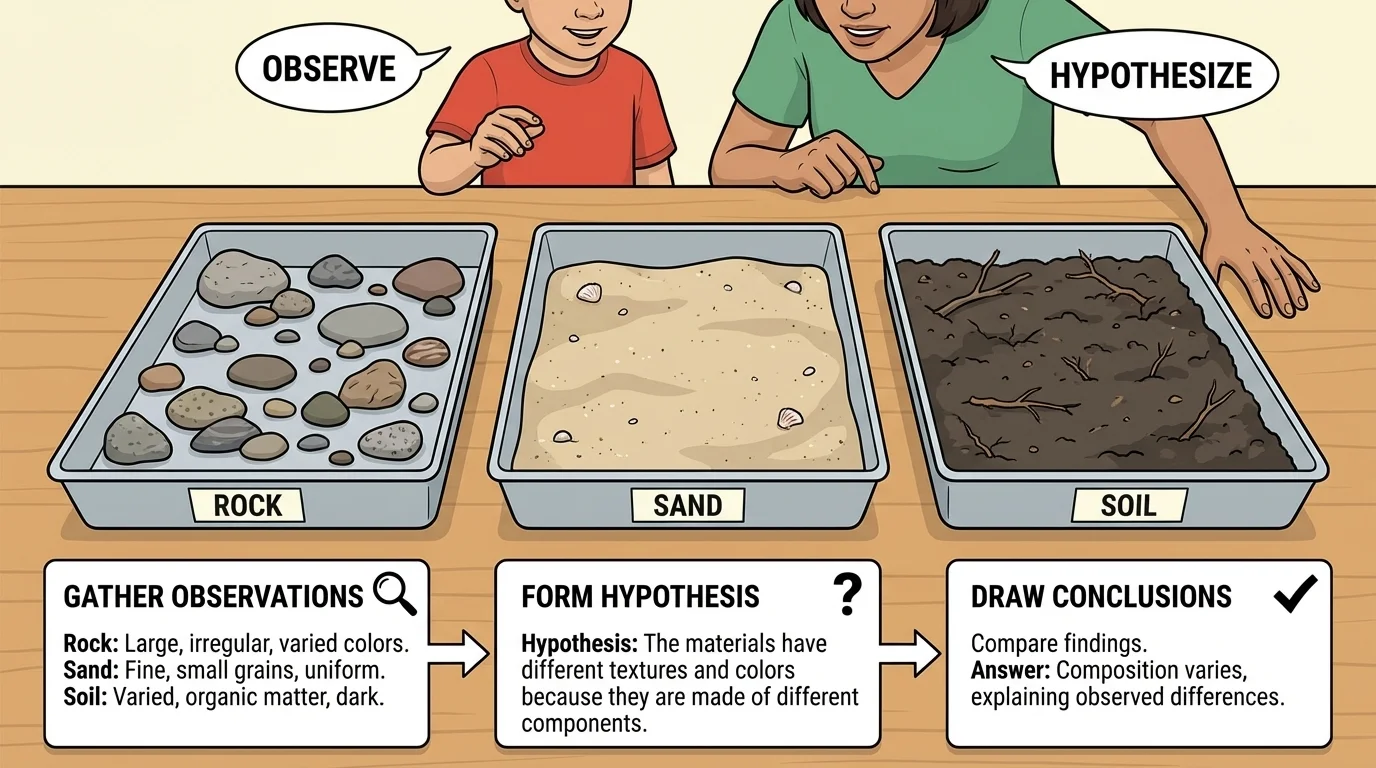
We can also compare what we observe. One rock may be harder than a clump of soil. Sand may fall apart more easily than wet soil. Later, when we talk about results, these observations help us explain what happened.
Soil is more than dirt. It can contain tiny pieces of rock, air, water, and parts of old plants and animals, which helps plants grow.
People use observations every day. Gardeners notice whether soil is dry or wet. Builders notice whether the ground is rocky or sandy. These observations help people make good choices about how to use Earth materials.
After we observe, we make a conclusion. A conclusion tells what we learned from the investigation. If we touched sand and rock, we might conclude that sand feels loose and grainy while the rock feels hard and solid.
A conclusion should match the observations. If the soil stayed wet longer than the sand, we can say the soil held more water in our test. We do not have to use big words. Clear words are best.
From guessing to knowing
Science begins with wondering, but it becomes stronger when we check what really happens. A hypothesis is what we think. Observations are what we notice. A conclusion is what we learn from those observations.
Later, when we think again about [Figure 1], we can see the full path of an investigation: question, guess, observation, and conclusion. This pattern helps children make sense of many science experiences.
Earth materials are all around us. Rocks can be used for building. Sand is used in play areas and also helps make glass. Soil helps plants grow food and flowers. Water moves through soil and across the land.
These materials are important because people use them every day. Farmers care about soil. Construction workers care about rock and sand. Families use water for drinking, washing, and growing plants. Learning about Earth materials helps us understand how people and the land are connected.
| Earth material | What it may feel or look like | How people use it |
|---|---|---|
| Rock | Hard, solid, rough or smooth | Building, walls, roads |
| Sand | Grainy, loose, often dry | Play areas, building materials |
| Soil | Crumbly, dark, can be wet | Growing plants and food |
| Water | Wet, flows, clear or cloudy | Drinking, washing, helping plants grow |
Table 1. Common Earth materials, some observable properties, and ways people use them.
When children investigate these materials, they are learning both science ideas and real ways Earth materials matter in life.
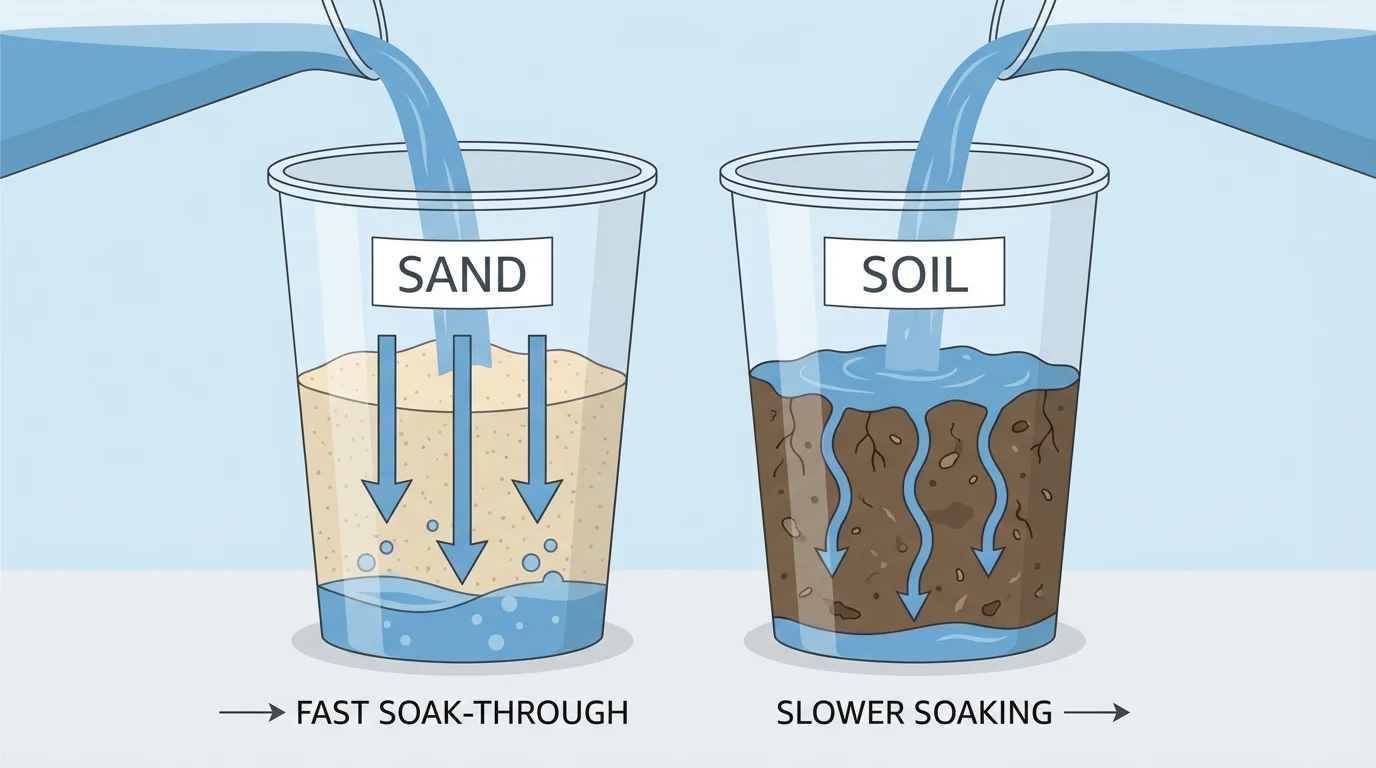
Suppose we want to find out what happens when water is poured on sand and soil. In this example, [Figure 3] shows two cups with different Earth materials so we can compare them. We start with one question: Will water stay longer in soil or in sand?
Now we make a hypothesis. A child might say, I think soil will hold more water than sand. Then we gather observations by watching carefully. We may notice that water moves through sand quickly, while soil may stay wet and clump together.
Example investigation: Sand and soil with water
Step 1: Ask a question.
Which material holds water longer: sand or soil?
Step 2: Make a hypothesis.
I think soil will hold more water.
Step 3: Gather observations.
Look at the sand and soil after water is added. Notice which one looks wetter and which one lets water move through faster.
Step 4: Draw a conclusion.
If the soil stays wet longer, the conclusion is that the soil held more water in this test.
This is a simple investigation, but it teaches an important science habit. We do not only say what we think. We check. That is how scientists learn about Earth.
When we return to [Figure 3], we can use the picture to talk about why the two materials behave differently. Sand is made of loose grains, while soil can contain smaller pieces and bits of organic matter that help it hold water.
Simple investigations help children become careful thinkers. They learn to ask questions, notice details, and explain what happened. These are important skills in science and in daily life.
Investigations about Earth materials also help us care for our surroundings. If we know soil helps plants grow, we may take care of gardens. If we know water moves differently through sand and soil, we begin to understand puddles, mud, and why some places dry faster than others.
Good science learning often starts with simple words: What do I notice? and What happened? Those two questions help turn play and curiosity into real investigation.
Even very young children can participate in science. They can make a hypothesis, gather observations, and draw conclusions. By exploring rocks, sand, soil, and water, they learn how to make sense of the Earth beneath their feet.
