Have you ever looked outside in the morning and then looked again at night? The sky does not stay the same. Sometimes we see bright sunshine. Later we may see the moon. Sometimes the day is dry, and another day is wet and rainy. Nature is full of changes, and we can learn by looking carefully.
The sun is a familiar part of the sky. It helps make the day bright and warm. The [Figure 1] shows that the sky changes over time from day to night. In the daytime, we often see the sun. At night, we may see the moon and sometimes stars.
The sun and moon do not usually appear in the same way all day long. Morning, afternoon, evening, and night can look different. These are changes we can notice again and again. When we wake up, the sky may be bright. When it is time to sleep, the sky may be dark.
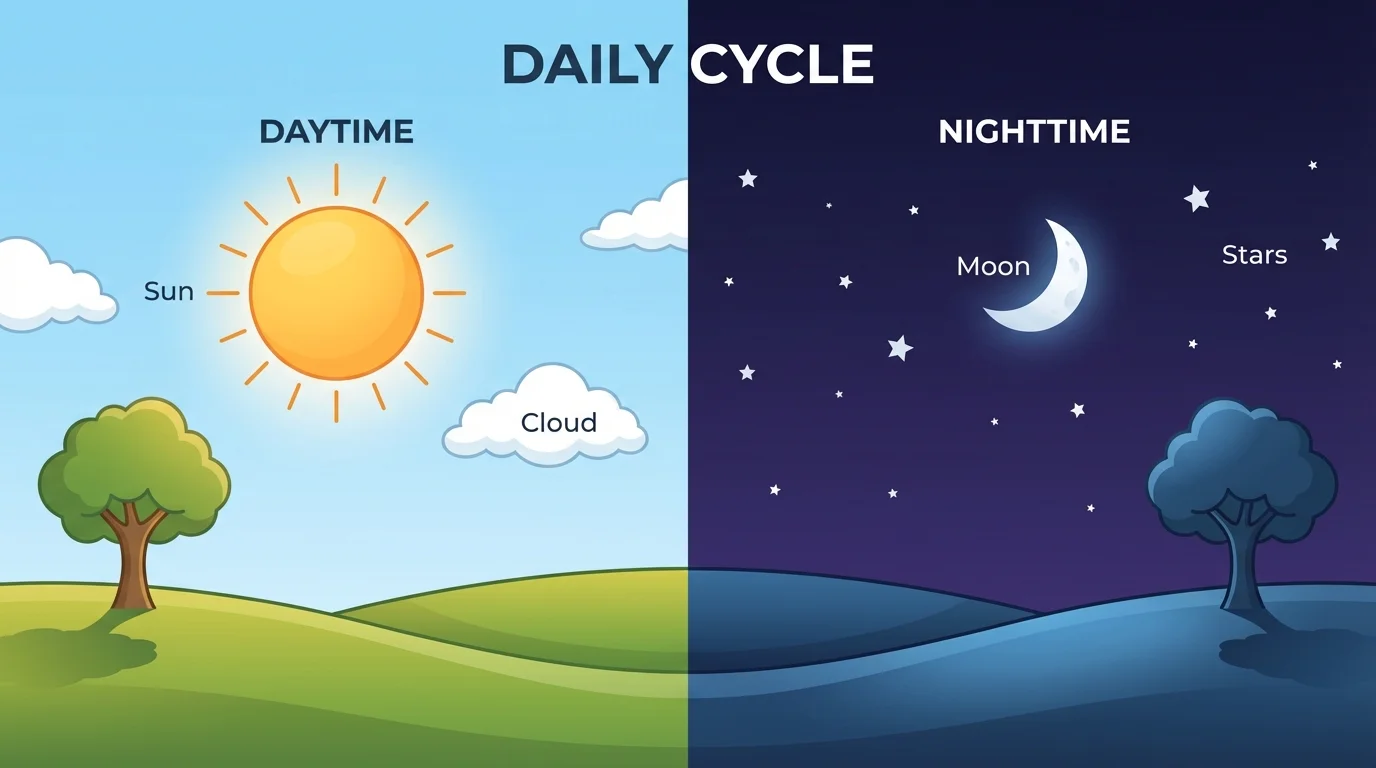
These changes help us know what part of the day it is. A bright sky can mean playtime outside. A dark sky can mean bedtime is near. Looking at the sky helps us learn about time passing.
Day is the time when the sky is usually bright because the sun is up.
Night is the time when the sky is dark and we may see the moon and stars.
Weather is what the air and sky are like outside, such as sunny, rainy, cloudy, or windy.
Sometimes the moon looks different too. On one night it may look big and bright. On another night it may look smaller. Young children do not need to memorize moon shapes yet, but they can begin to notice that the moon can look different over time.
Another part of nature we can notice is weather. Weather can be sunny, cloudy, rainy, or windy, as [Figure 2] illustrates with common outdoor scenes. It can feel warm on one day and cool on another day. The sky does not look the same every day.
Rain makes puddles. Wind can move leaves and make flags flap. Clouds can cover the sun. Sunshine can make bright shadows on the ground. These are all changes in the natural world.
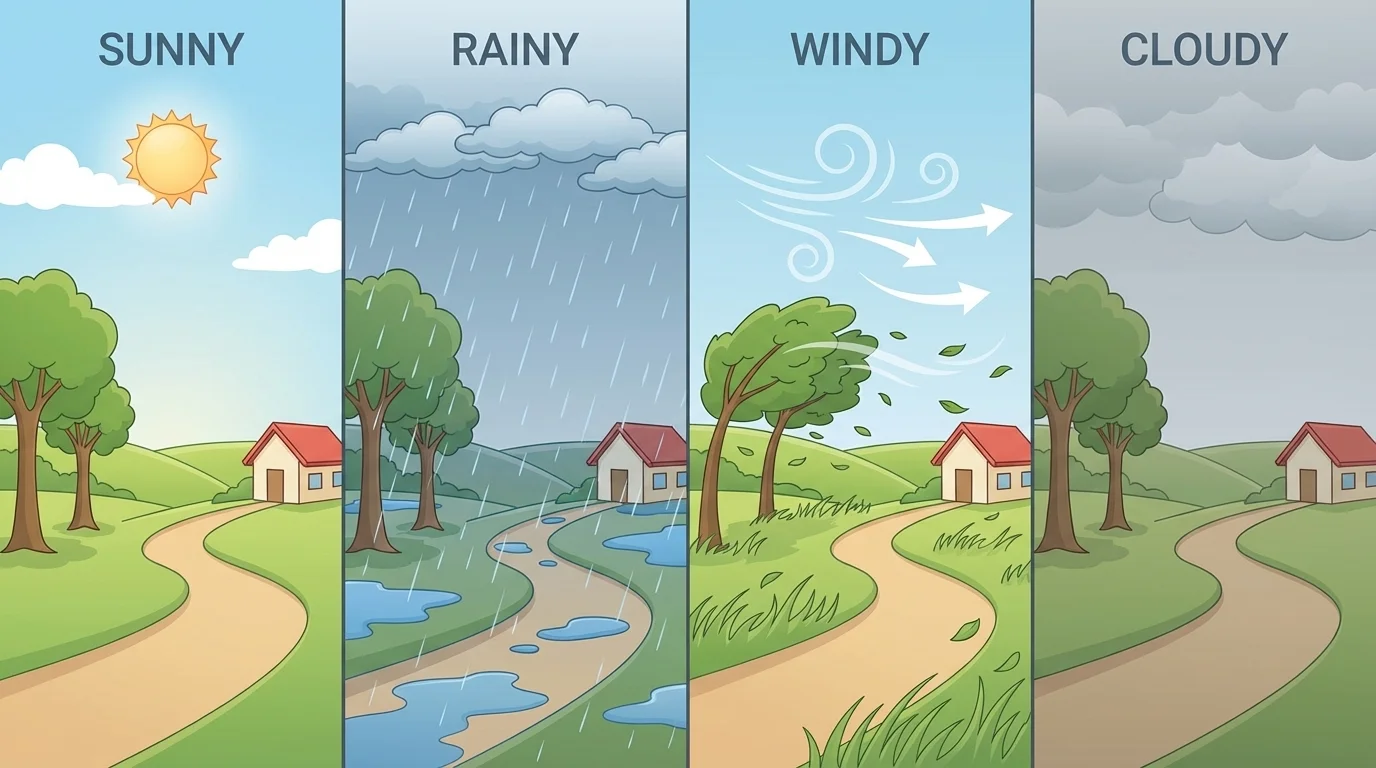
We learn about weather by looking, listening, and feeling carefully. We might hear rain on a window. We might feel wind on our face. We might see dark clouds before rain comes. This careful noticing is part of how we observe in science: we use our senses to learn.
Weather changes from day to day
Some changes happen quickly. A sunny morning can become a rainy afternoon. A calm day can become windy. Children begin to understand science when they see that the same place outside can look different at different times.
Weather changes matter in real life. We wear boots in rain, a coat when it is cold, and a hat on a sunny day. Grown-ups may bring an umbrella if clouds are dark. Farmers, gardeners, and construction workers also watch the weather because it helps them decide what to do outside.
Some changes happen in a short time, and some happen over many days and months. A season is a time of year with weather patterns we notice again and again. The same tree can look different over time, as [Figure 3] shows. It may have many green leaves in warmer times and fewer leaves in cooler times.
Children may notice that some days feel hot and some feel chilly. They may see flowers growing, leaves falling, or snow in some places. These changes do not happen all at once. They happen slowly over time.
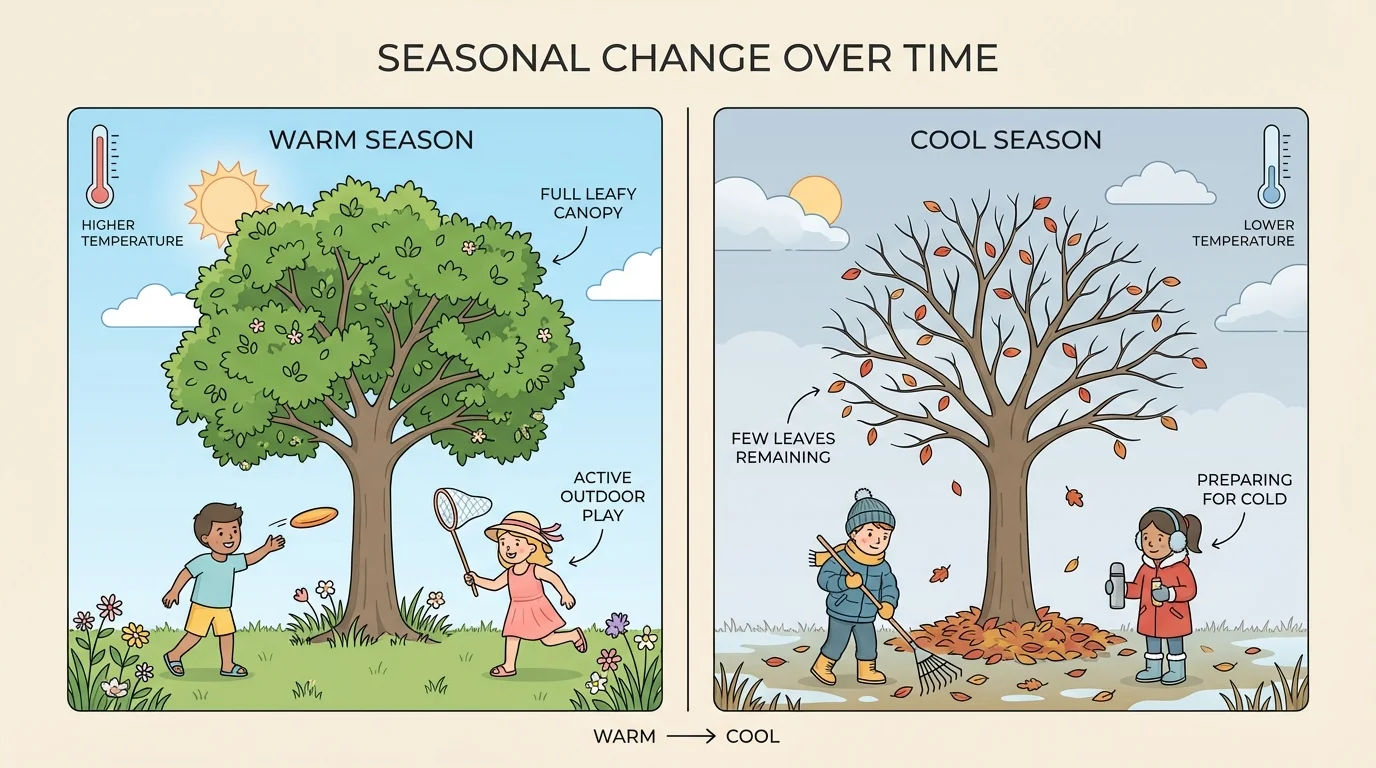
Longer changes help us understand that nature has patterns. A pattern is something that happens again and again in a way we can notice. Day changes to night. Rainy days and sunny days come and go. Warm times and cool times return during the year.
Some animals change what they do when weather changes. Birds may look for shelter in rain, and squirrels may gather food when seasons begin to change.
These patterns help people plan. Families choose different clothes for warm and cool weather. People decide when to plant gardens. Children learn that the world outside is active and always changing.
Scientists begin by noticing. Young children can be scientists too. They can look outside and say, "I see clouds," "The sun is bright," or "The wind is moving the tree." These simple words describe what is happening in nature.
When we talk about changes, we can compare what we see now with what we saw before. Yesterday the ground was dry. Today it is wet. In the morning the sky was dark. Later it became bright. As we saw earlier in [Figure 1], the sky changes from day to night, and that change is one of the easiest natural patterns to notice.
We can also connect weather to actions. If it is raining, we may stay dry under a roof or use an umbrella. If it is sunny, we may look for shade. If it is windy, we may watch leaves blow across the ground. These are real-world ways people respond to natural changes.
Real-world example: Getting ready for the day
Step 1: Look outside and observe.
A child sees dark clouds and small drops of rain.
Step 2: Name the change.
The weather is rainy instead of sunny.
Step 3: Respond to nature.
The child wears boots and takes a raincoat.
This shows how observing the natural world helps us make everyday choices.
Later, when the child sees leaves moving fast and hears air blowing, the weather may be windy, just like the scenes in [Figure 2]. When the child notices a tree looking different after many weeks, that longer change connects to the seasonal pattern shown in [Figure 3].
The natural world is not far away. It is outside the window, above the playground, and all around us. The sun helps light the day. The moon appears in the night sky. Rain fills puddles. Wind moves branches. Clouds can hide the sun. All of these are familiar parts of Earth and sky.
When children notice these things, they are building science understanding. They learn that nature is real, observable, and changing. They also learn that some changes are fast, like a windy afternoon, and some are slow, like a tree changing through a season.
By watching the sky and weather often, children begin to expect patterns and recognize change. This is an important foundation in Earth and space science: the world around us can be seen, described, and understood.
