Have you ever looked outside in the morning and then looked again when it is dark? The world can seem very different. The sky changes, the light changes, and living things can change too. Day and night make a repeating pattern, as [Figure 1] shows, and we can watch that pattern to learn about plants and animals.
Scientists learn by looking carefully. When we watch the same place over several days and nights, we can notice what stays the same and what changes. This helps us see patterns in nature.
Pattern means something happens again and again in a way we can notice. Day comes, then night comes, then day comes again. This repeating change is one of the first patterns students can observe in the natural world.
During the day, the Sun gives us light. At night, the sky is darker and we may see the Moon and stars. Because light changes, many living things change what they do.
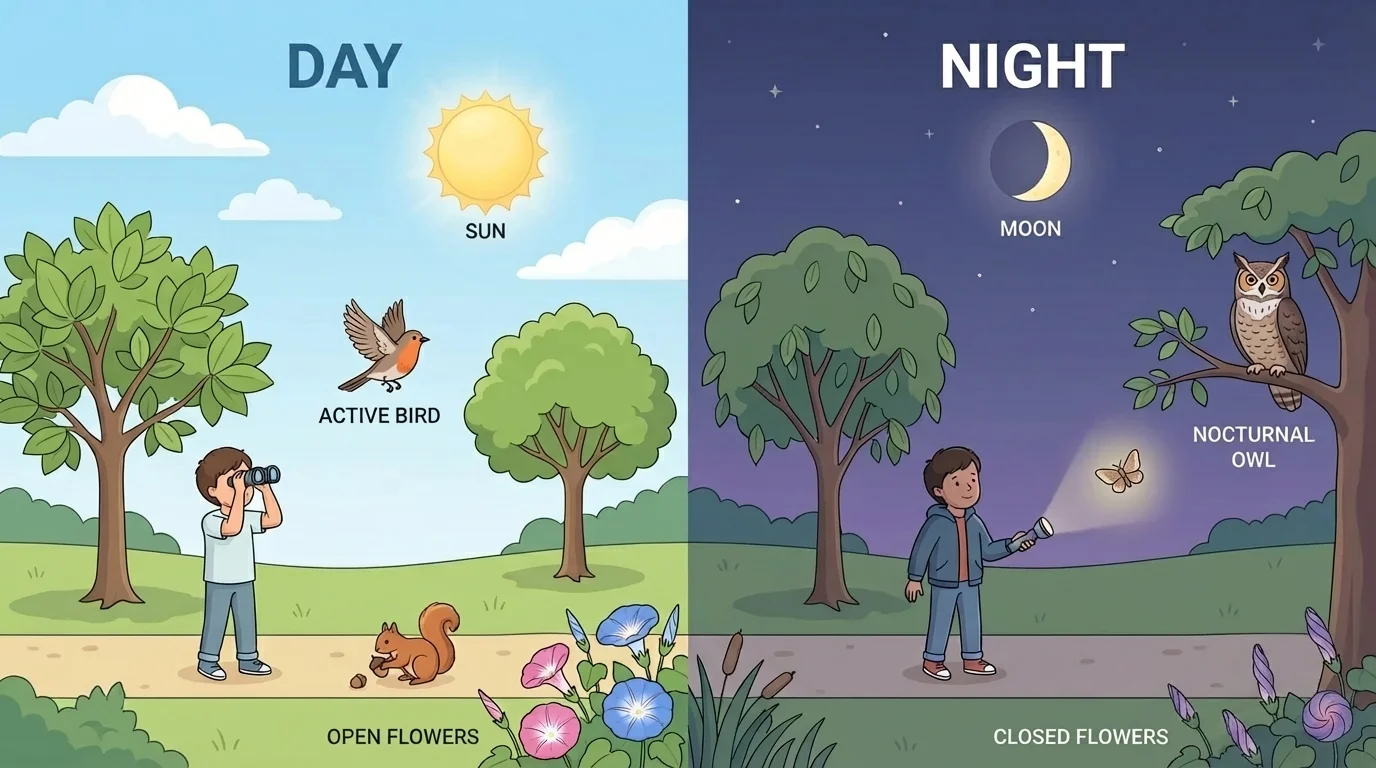
Day is the time when it is light outside. Night is the time when it is dark outside. Observe means to look carefully and notice what is happening.
When we observe, we do not just look once. We look again later. Then we can say, "I saw birds in the morning," or "I saw an owl when it was dark." That is how we describe what we notice.
A careful observer can look at appearance and activity. Appearance means how something looks. Activity means what something is doing. A flower may look open in the daytime and closed at night. A cat may sleep in one part of the day and move around more at another time.
We can use our eyes and ears to notice changes. We may see bright petals, closed petals, flying insects, sleeping birds, or hear quiet sounds at night and more chirping during the day. These observations help us describe nature in simple, true ways.
Some flowers open when the Sun is out and close when it gets dark. This means a plant can look different in the same place, just at different times.
As we continue watching over many days, we become better at telling what usually happens in the day and what usually happens at night.
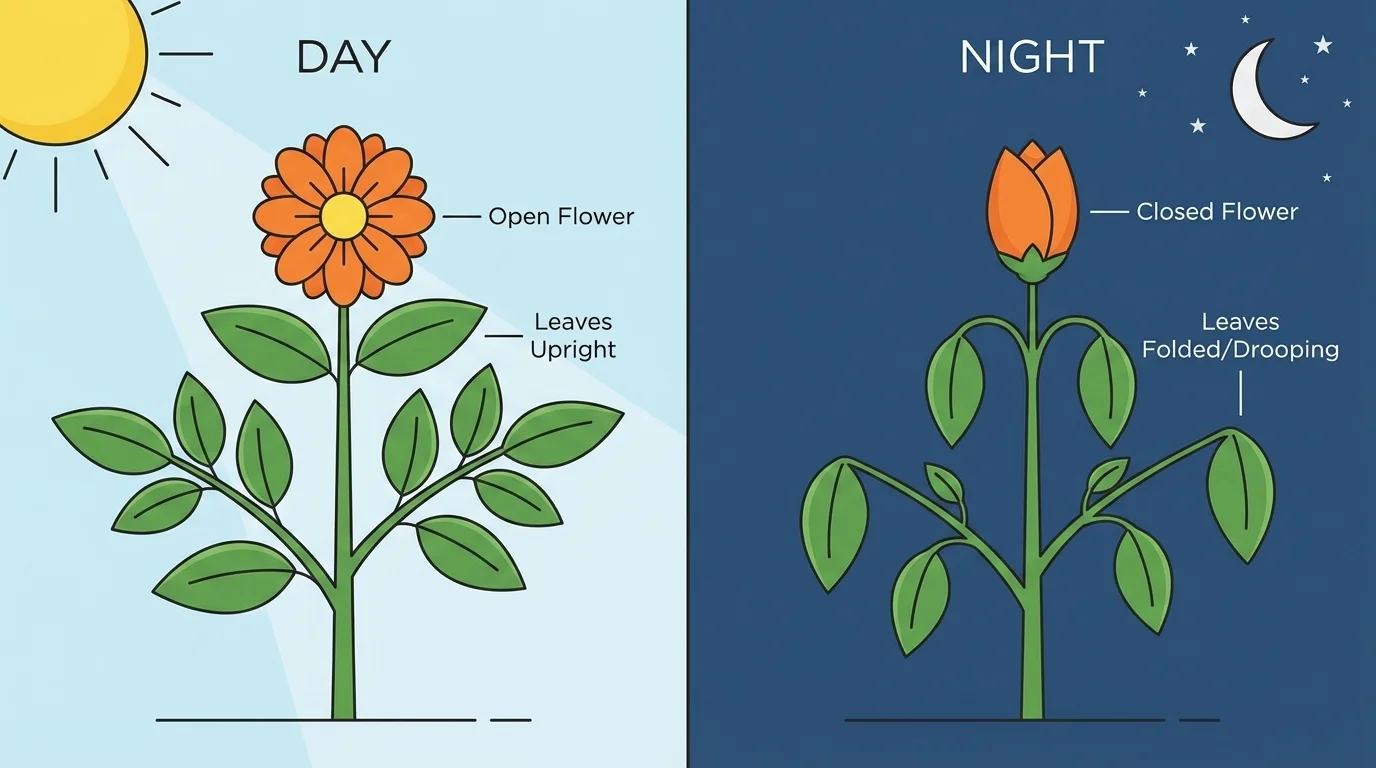
[Figure 2] Plants do not walk from place to place, but they still change over time. Some plants can look different in daylight and darkness. A flower may open wide in the day and close at night. Some leaves may lift, droop, or fold.
These changes are part of a pattern. If we look at the same plant in the morning, afternoon, and nighttime for several days, we may notice the same changes happening again. That tells us the plant is responding to the daily cycle of light and dark.
How plant patterns help us learn
When a plant opens, closes, or changes the position of its leaves at certain times, it gives us clues about the environment around it. Light and darkness can affect how a plant looks. By observing the same plant again and again, we can tell whether the change is a one-time event or a repeating pattern.
Not every plant changes in the same way. Some plants show big changes that are easy to see. Other plants look almost the same all day and all night. That is why observation is important: we learn by looking closely at real living things.
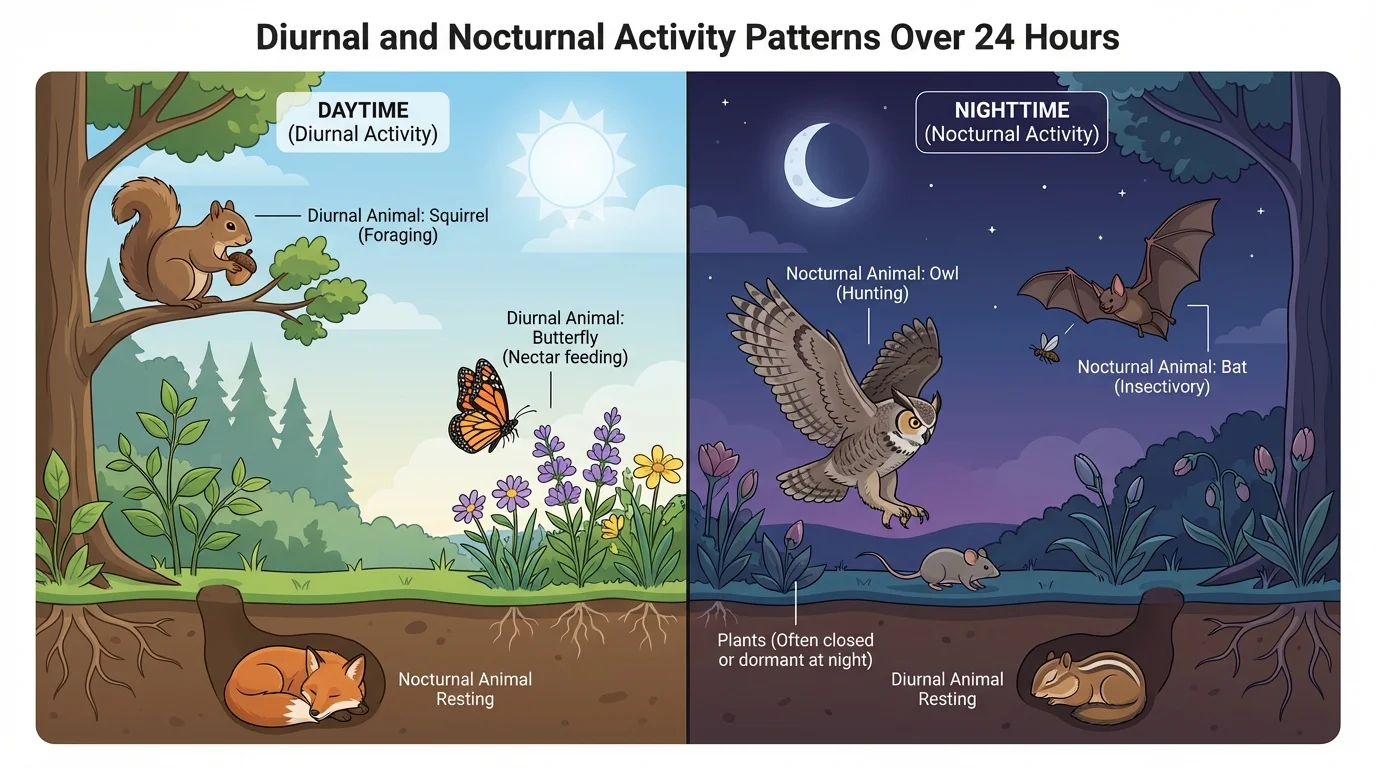
[Figure 3] Animals also follow day and night patterns. Some animals are more active in the daytime, and others are more active at night. A squirrel may run and climb during the day. An owl may hunt when it is dark.
We can often see butterflies, bees, and many birds during the day. They move, fly, eat, and explore when there is light. At night, some of these animals become quiet or rest.
Other animals come out when it is darker and cooler. Bats may fly at night. Owls may look for food at night. Crickets may make sounds after the Sun goes down. These are examples of nighttime activity.
Real-world example: watching one backyard over time
The same outdoor place can look busy at different times for different living things.
Step 1: In the morning, a child sees a bird singing in a tree and a flower open.
Step 2: At night, the child sees the flower closed and hears crickets.
Step 3: After several days, the child notices this happens again and again.
This is a pattern of different plant appearances and animal activities during day and night.
We do not have to see every animal ourselves to know a pattern exists. We can notice sounds, tracks, nests, or changes in what is happening around us. Later in our observations, [Figure 3] still helps us compare animals that are active at different times.
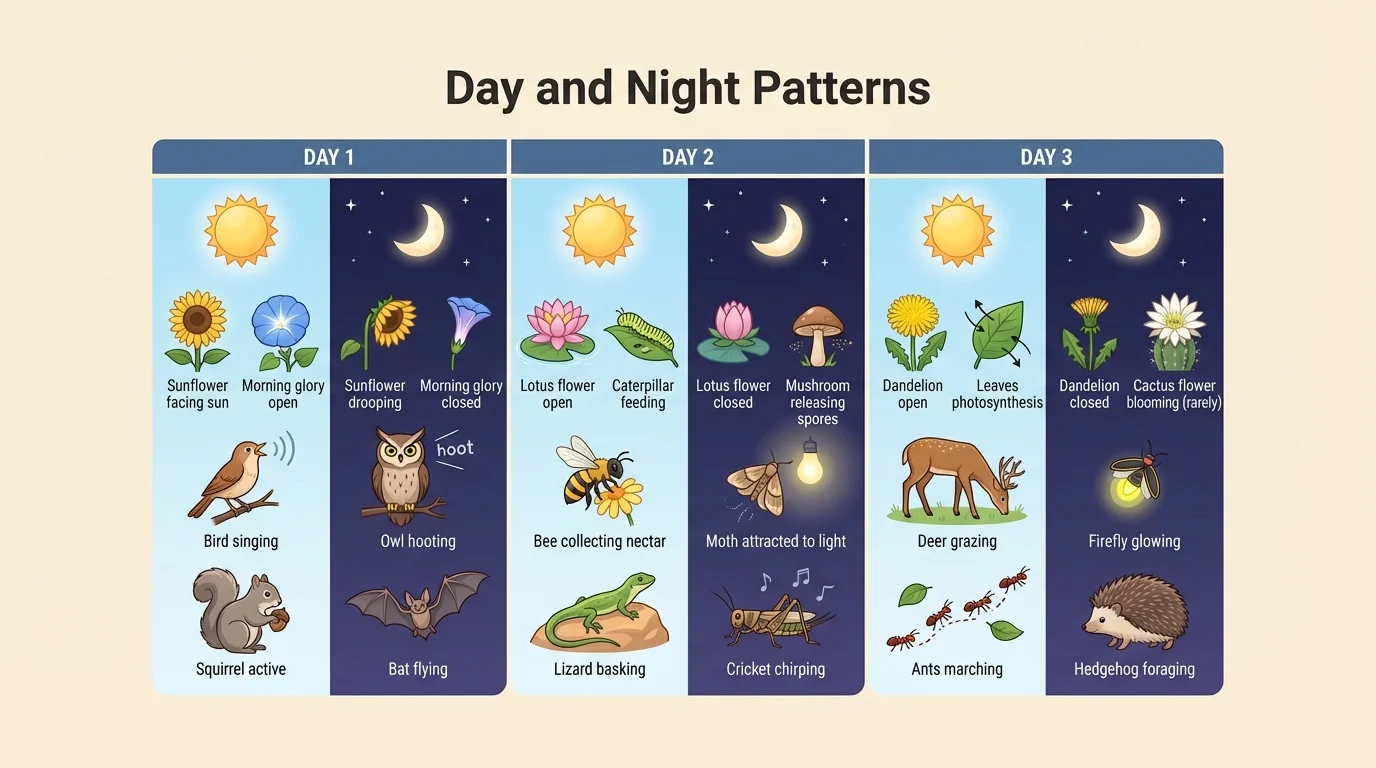
[Figure 4] One day of looking is helpful, but many days of looking are even better. A simple observation record over several days helps us remember what we saw and when we saw it. Then we can describe a pattern more clearly.
If a flower is open in the daytime on day 1, day 2, and day 3, that is a strong clue. If an owl appears only after dark on several nights, that is also a strong clue. Repeating observations help us know that the change is not just by chance.
| Time | What we might notice |
|---|---|
| Day | Bright sky, birds flying, bees buzzing, flowers open |
| Night | Darker sky, crickets sounding, owls awake, some flowers closed |
Table 1. Examples of common observations during daytime and nighttime.
Sometimes the pattern changes a little because of rain, clouds, heat, or cold. A rainy day may make some animals quieter. But even when small things change, the big pattern of day and night still repeats.
The Sun helps make daytime bright, and nighttime is darker. Living things respond to these changes in light.
When we compare many days, we learn that nature has regular rhythms. Plants and animals do not all behave the same way, but many of them follow patterns linked to light and darkness.
People use these observations in everyday life. Gardeners learn when flowers open and close. Farmers notice when animals are active. Families learn the best times to look for birds, butterflies, frogs, or owls.
Caring for living things is easier when we understand their patterns. If we know a plant opens in the daytime, we can check on it then. If we know certain animals are active at night, we understand why we may not see them in bright daylight. The same idea from [Figure 2] helps us remember that living things can look or act different at different times of the day.
Observing day and night patterns helps us become careful scientists. We watch, compare, and describe what we notice. Over time, we learn that the natural world is full of repeating changes.
