Have you ever heard totally different stories about the same thing, like one friend saying “Real friends answer your texts right away” and another saying “Real friends understand if you’re busy”? When it comes to family and peer relationships, the information you believe can change how you act, how you treat others, and how safe you feel. That is why learning to find valid (true and accurate) and reliable (trustworthy and consistent) resources is a powerful skill for your health and happiness.
Every day, you get messages about relationships—through friends, family, social media, TV shows, music, and even memes. These messages can shape what you think is “normal” or “okay.”
For example:
These two messages disagree. If you believe the first one, you might think it’s fine for someone to control your phone. If you believe the second, you might notice that as a red flag and protect your privacy.
Information about relationships affects:
Because of this, you need to be able to tell which resources give you good guidance—and which ones you should question or ignore.
To judge whether a resource is good, you first need a clear picture of what a healthy relationship is. Then you can see if the advice matches.
Healthy family and peer relationships usually include these qualities:
Unhealthy relationships may have:
When you look at any resource about family or friends, ask yourself: Does this advice match the qualities of a healthy relationship? If it tells you that control, fear, or disrespect are signs of “love” or “loyalty,” that resource is not healthy or valid.
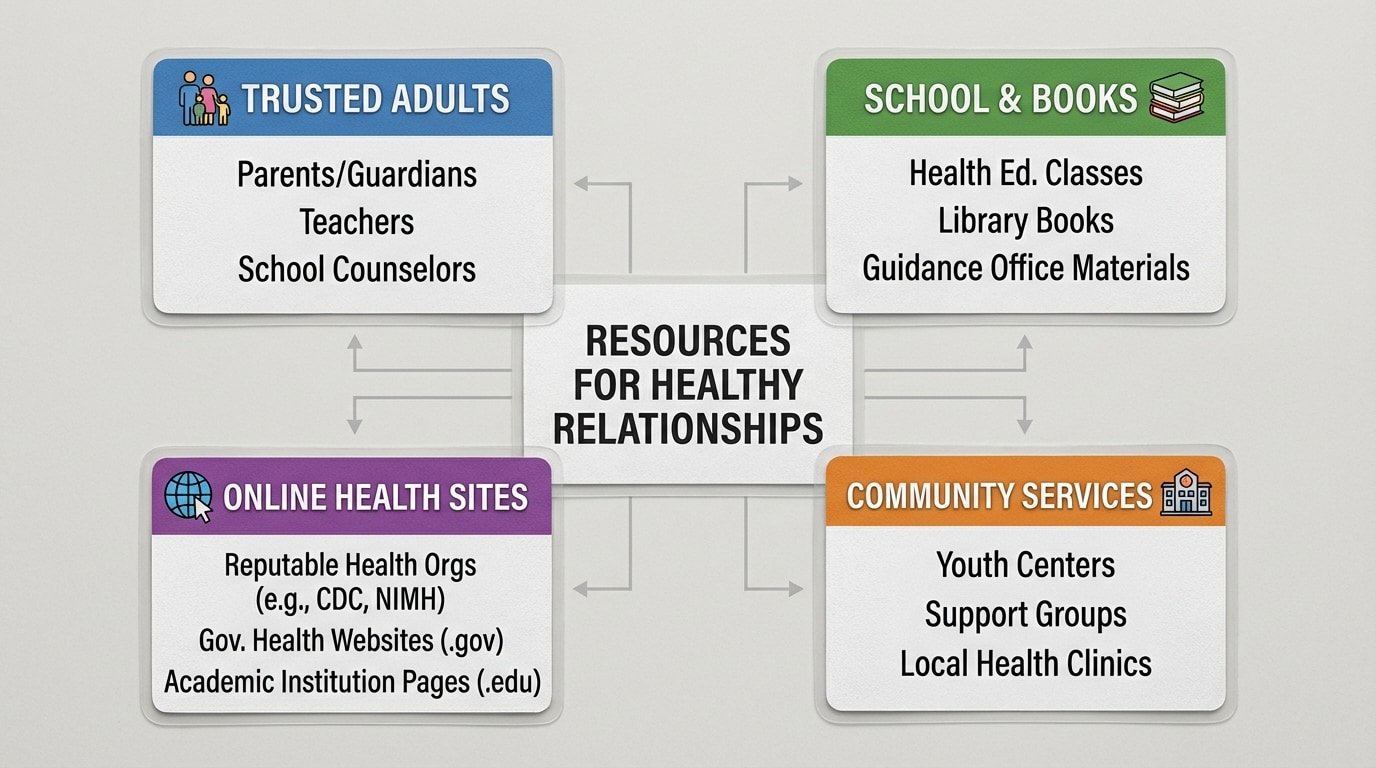
You have access to many different kinds of resources that talk about relationships. Some are usually more trustworthy than others. As shown in [Figure 1], you can think of them in a few big groups.
1. Trusted adults
Trusted adults are important because they know you, can ask questions back to you, and can explain things in detail. If you feel unsure about a relationship, a trusted adult is often the first and best resource.
2. School materials
These materials are usually checked by teachers, schools, or experts before being given to you. That makes them more likely to be valid and reliable.
3. Online health and relationship websites
These sites often end in certain types of web addresses, like .org, .edu, or .gov. They usually explain who created the information and when it was last updated.
4. Hotlines and text lines
These services can help you if you do not feel ready to tell someone you know personally, or if you need help right away.
5. Youth programs and health services
All of these resources can support your physical and personal wellness by giving you tools to handle stress, make safe choices, and build positive relationships.
Not every resource gives correct information. Some share opinions instead of facts, and some spread myths that can be hurtful. The questions in [Figure 2] can help you test whether a resource is valid.
1. Who created this?
Look for the author or organization name. Valid sources about health and relationships are usually created by:
A random person online with no training is less likely to be a valid source for serious relationship advice.
2. Why did they create it?
Ask: Is the goal to help and inform, or just to get clicks, likes, or money?
3. Is there evidence?
Good resources often:
For example, a health site might say, “Experts agree that a healthy friendship includes respect and listening,” and then describe how counselors and psychologists have studied friendships.
4. Is it up to date?
Healthy relationship qualities like respect and safety do not change, but laws, hotlines, or programs can. Check for:
5. Do other trusted sources agree?
If one resource gives advice that sounds extreme or strange, compare it with another trusted source.
When a resource passes these checks, you can feel more confident that the information is true and useful for your decisions.
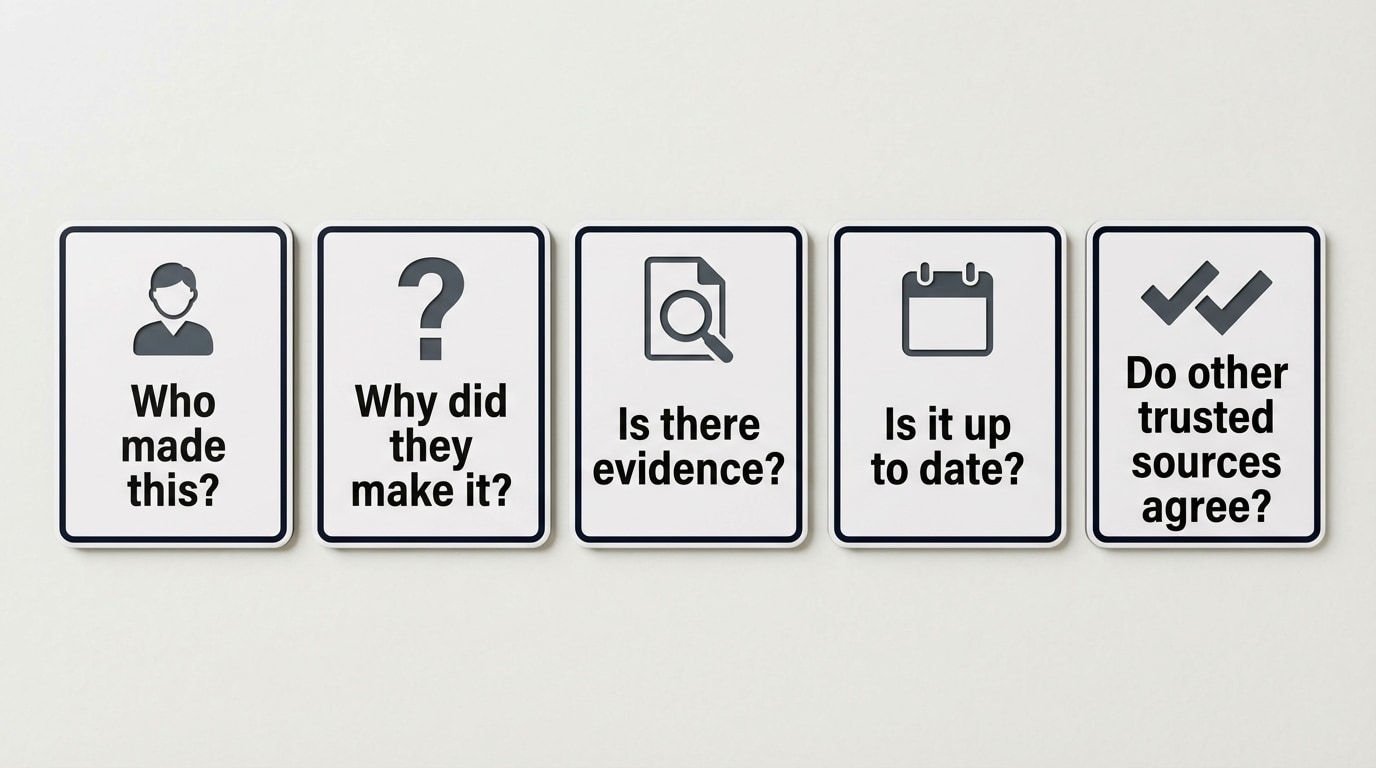
A resource can be correct once by accident. Reliable resources are correct and careful again and again. You can think of reliability as, “Can I keep trusting this source over time?” The questions in [Figure 2] also help with reliability, especially when you use them more than once.
1. Does it stay consistent?
If a resource gives very different advice each time you look at it, without explaining why, it may not be reliable. For example:
Both are extreme and opposite. Reliable resources avoid extreme “always” and “never” statements. They usually suggest balanced ideas like, “It is okay to forgive, but you should also protect your safety and boundaries.”
2. Does it correct mistakes?
Reliable sources fix errors when they find them. Websites might update articles or add notes when new information appears. If a source never admits mistakes, even when others show it is wrong, that is not very reliable.
3. Does it show bias?
Everyone has opinions, but reliable resources try to be fair. Watch out for sources that:
Balanced resources might say, “Some families struggle to communicate. Here are ways kids and parents can listen better to each other.” That shows more fairness.
4. How do you feel after using it?
Reliable resources may share hard truths, but they usually leave you feeling more informed and capable, not hopeless or terrified.
Online information can be helpful, but it is also full of opinions, jokes that pretend to be facts, and harmful messages. When the topic is your safety, your body, or your relationships, you need extra care.
1. Influencers and creators
Some influencers share personal stories about friendships or dating. These stories can be interesting, but they are not always correct for everyone.
2. Group chats and DMs
Friends in chats might share screenshots, rumors, or advice. They care about you, but they may not know the full story or have the right information.
3. Online quizzes and polls
Quizzes like “Are You a Good Friend?” or “Is Your Crush Into You?” can be fun, but they are usually made for entertainment, not for health education.
4. Ads and sponsored posts
Some posts look like regular advice but are actually ads.
When in doubt online, use your checklist from [Figure 2] and then double-check your information with a trusted adult or a high-quality health site.
By grade 6, you may hear classmates talking about crushes, dating, or “going out,” even if you are not interested yet. You might see relationship drama in shows, games, or online videos. Some of this information is confusing, and some is unsafe or disrespectful.
Here is how to use valid and reliable resources for sensitive topics:
1. Questions about crushes or early dating
You might wonder things like:
A valid and reliable resource (like a school counselor, nurse, or health site for kids) will usually say that everyone develops feelings at different times and that there is no rush. It will not pressure you to start dating or make fun of you if you are not interested.
2. Questions about pressure and consent (in age-appropriate ways)
You might see or hear about situations where someone feels forced or pressured, such as:
Valid resources will explain that everyone has the right to say “no” to physical contact or sharing private things, and that adults should help keep you safe. They will encourage you to talk to a trusted adult if you feel uncomfortable or unsafe.
Unreliable or unhealthy resources might say things like:
Those messages do not respect your boundaries or safety and are not healthy.
3. Privacy and safety
With sensitive topics, you also need to think about your own privacy as you look for information.
You do not have to judge resources alone. You can build a “team” of people and tools that help you make good choices about your relationships and health.
1. List your trusted adults
Think of at least three adults you can talk to if you have questions about family, friends, or your body.
2. Know a few trusted websites or hotlines
You do not need a long list—just a few good ones that your school or health provider recommends. Keep them written down in a safe place or bookmarked on a device (with your adult’s permission).
3. Practice asking for help
It can feel awkward to start the conversation, but trusted adults want to help. You can say things like:
Over time, you will get better at noticing which resources help you feel respected, informed, and safe—and which ones you should question or avoid.
You are surrounded by messages about family and peer relationships. The information you choose to believe affects your physical safety, your emotions, and your decisions, so it is important to find resources that are both valid (true and accurate) and reliable (trustworthy and consistent).
Healthy relationships are built on respect, kind communication, boundaries, support, fairness, and safety. Good resources about relationships will match these qualities and will never claim that control, fear, or disrespect are signs of love.
You can use many types of resources: trusted adults, school materials, health websites, hotlines, and community programs, as shown in [Figure 1]. To test if any resource is valid and reliable, use the checklist in [Figure 2]: find out who created it, why they made it, whether there is evidence, if it is up to date, and whether other trusted sources agree. Be especially careful with social media, group chats, influencers, and online quizzes, because they often share opinions or entertainment instead of health information.
When topics feel sensitive—like crushes, dating, pressure, or boundaries—choose resources that protect your safety and privacy, respect your right to say “no,” and encourage you to talk with caring adults. Build your own team of trusted people and tools so that, whenever you face confusing situations with family or friends, you have strong, healthy information to guide your choices.
