Analyze how positive health behaviors can benefit people throughout their lifespan.
How Positive Health Behaviors Help You All Through Life 🌱
What if a few simple daily choices could help you do better in school now, run faster in sports, feel happier, and even help you stay strong and independent when you are a grandparent someday? That is exactly what positive health behaviors can do. They are like tiny investments you make in your body and mind every single day, and the “interest” they earn keeps growing throughout your whole life. 💡
What Are Positive Health Behaviors?
Positive health behaviors are actions you choose that help your body and mind stay healthy, safe, and strong. They are the opposite of habits that hurt your health.
Examples of positive health behaviors:
Eating a variety of healthy foods most of the time
Being physically active every day
Getting enough sleep at night
Practicing good hygiene, like washing your hands and brushing your teeth
Wearing seat belts and helmets for safety
Managing stress in healthy ways and asking for help when you need it
Avoiding tobacco, alcohol, and other drugs
Negative or harmful health behaviors include things like smoking, eating lots of sugary snacks all the time, not sleeping enough, never moving your body, or taking dangerous risks for fun. These choices can lead to disease, injuries, and problems that make life harder.
When we talk about “throughout the lifespan,” we mean all the stages of life: childhood, teen years, adulthood, and older age. The choices you make in each stage affect what happens later. Today’s habits can make future you healthier—or make things more difficult.
Healthy Eating: Fuel for Every Stage of Life 🍎
Your body is always working, even when you are asleep. It needs energy and building materials from food to grow, repair, and stay active. Choosing healthy foods most of the time is a powerful positive health behavior.
Scientists and health experts recommend that most meals include:
Fruits and vegetables for vitamins, minerals, and fiber
Whole grains like brown rice, oats, or whole-wheat bread for long-lasting energy
Protein foods like beans, eggs, fish, nuts, or lean meats to build and repair muscles
Healthy fats from foods like avocados, nuts, and olive oil to support your brain and cells
Water instead of sugary drinks to stay hydrated
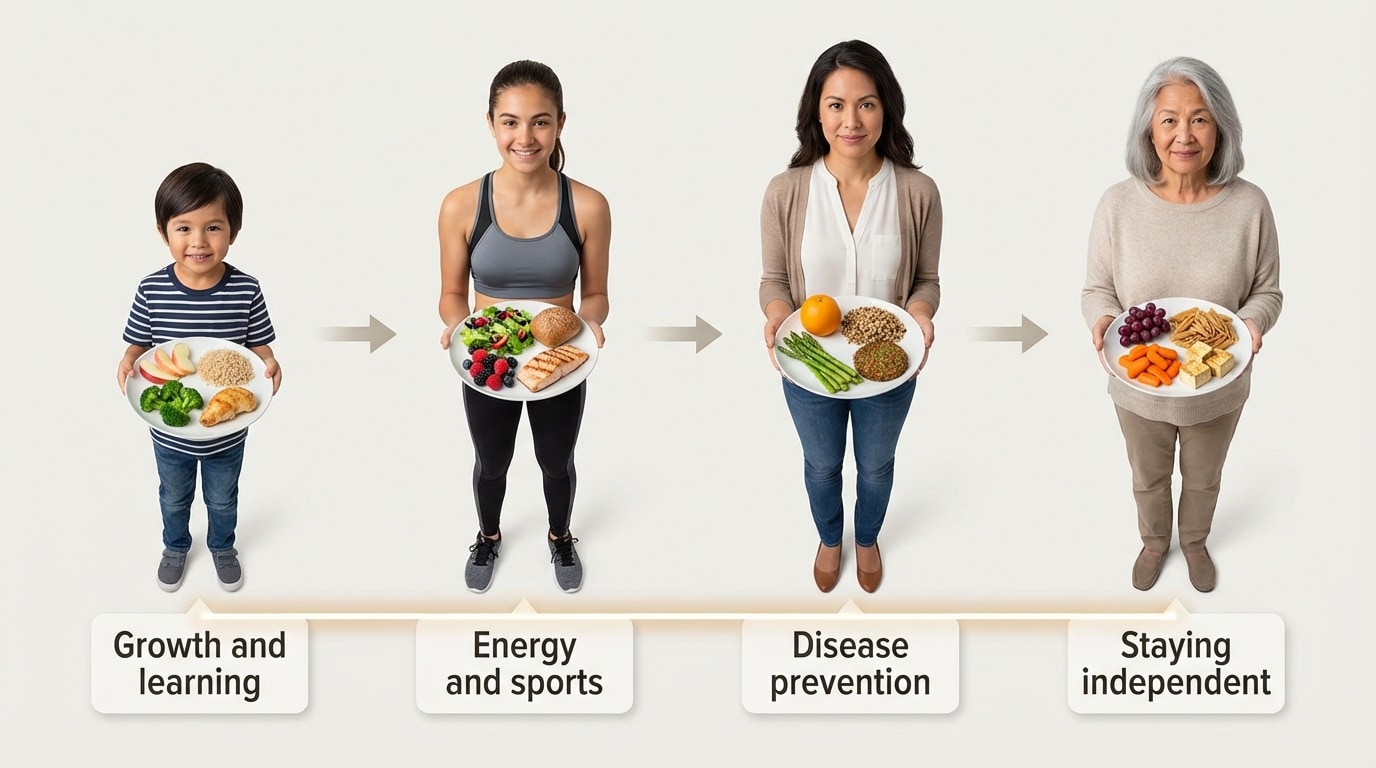
Healthy eating helps you in different ways as you move through life. As shown in [Figure 1], each stage has special needs, but good food is always important.
In childhood (your current stage):
Healthy foods provide energy for running, playing, and sports.
Nutrients like calcium and vitamin D help build strong bones and teeth.
Balanced meals keep your blood sugar more steady, so it is easier to pay attention in class and stay in a good mood.
In the teen years:
Your body grows quickly, and hormones are changing. You need enough protein, iron, and calories to support this growth.
Healthy eating can help prevent serious skin problems and support a healthier weight.
Teens who eat well often have more energy for school, friends, and activities.
In adulthood:
Good nutrition helps prevent diseases like heart disease and type 2 diabetes.
Eating too many foods high in added sugar, salt, and unhealthy fats over many years can damage blood vessels and the heart.
Healthy eating helps adults manage stress, work, family, and responsibilities with more energy.
In older age:
Healthy eating helps older adults keep muscles and strength so they can stay active and independent.
Enough calcium and vitamin D can lower the risk of broken bones.
A balanced diet supports brain health, which may help memory as people age.
So when you choose carrot sticks sometimes instead of chips, or water instead of a sugary soda, you are not only helping yourself today—you are protecting your future health as well. 🎯
Figure 1: Timeline from child to teen to adult to older adult, each figure holding a balanced plate with fruits, vegetables, grains, and protein. Under each stage, short labels such as “growth and learning,” “energy and sports,” “disease prevention,” and “staying independent.”
Physical Activity and Strong Bodies 💪
Physical activity includes any movement that makes your body work harder than when you are resting. This can be sports, dancing, walking the dog, biking, climbing on playgrounds, or even active games with friends. You do not have to be on a sports team to be active.
Health experts suggest that kids and teens aim for at least about 1 hour of moderate to vigorous physical activity most days of the week. You can think of this as enough activity to make your heart beat faster and your breathing a little heavier, while still being able to talk.
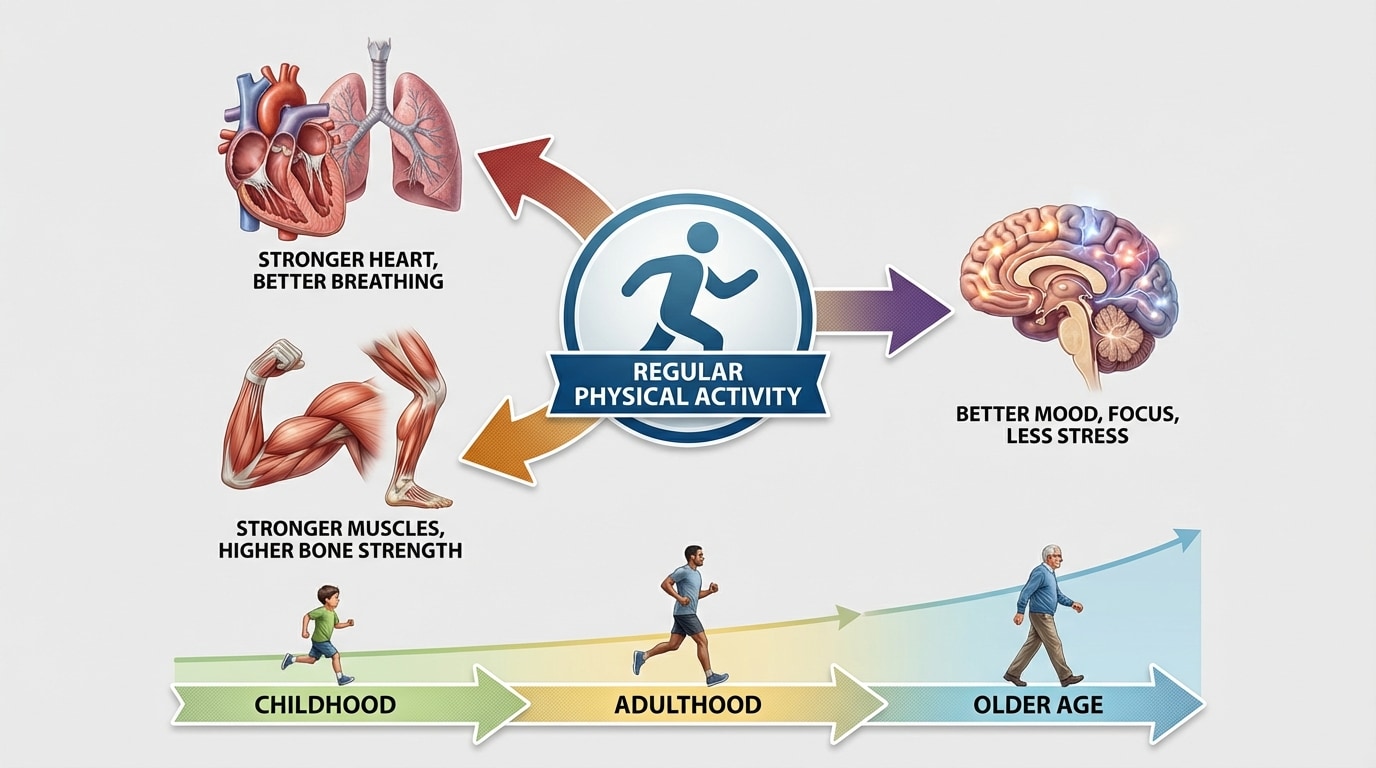
Regular physical activity affects many parts of your body at every stage of life, as you can see in [Figure 2].
Benefits for your heart and lungs:
Your heart is a muscle. When you exercise, it grows stronger and can pump blood more easily.
Stronger lungs help you get more oxygen to your body, so you get less out of breath during activities.
Over a lifetime, this can lower the risk of heart disease and high blood pressure.
Benefits for your muscles and bones:
Activities like jumping, running, and lifting help build stronger muscles and bones while you are young.
Bone strength built in childhood and the teen years can help prevent weak bones (osteoporosis) in older age.
Strong muscles and bones make everyday tasks easier when you are an adult, like lifting groceries or playing with your own kids.
Benefits for your brain and mood:
Exercise releases chemicals in your brain that can help you feel happier and more relaxed.
Physical activity can improve focus and memory, which helps with schoolwork.
Throughout life, being active can lower the chances of depression and anxiety.
Long-term protection:
Regular activity helps manage body weight in a healthy way.
It lowers the risk of diseases such as type 2 diabetes, certain cancers, and heart disease as people grow older.
Active older adults can move more easily, stay independent longer, and enjoy a better quality of life.
Playing tag today or choosing to walk or bike instead of always riding in a car is not just fun—it is building the foundation for a healthier adult and older adult you.
Figure 2: Central icon labeled “Regular Physical Activity” with arrows pointing to three areas: 1) Heart and lungs with benefits like “stronger heart, better breathing,” 2) Muscles and bones with “stronger muscles, higher bone strength,” 3) Brain with “better mood, focus, less stress,” with a timeline arrow suggesting benefits over childhood, adulthood, and older age.
Sleep and Daily Routines 😴
Sleep might seem like “doing nothing,” but your brain and body are actually very busy while you are asleep. Kids your age usually need around 9–12 hours of sleep each night to stay healthy.
Positive sleep behaviors include:
Going to bed and waking up at about the same time each day
Keeping screens (phones, tablets, TVs) out of bed and turning them off at least a little while before sleep
Having a calming bedtime routine, like reading or listening to quiet music
Keeping your bedroom as dark, quiet, and comfortable as possible
How sleep helps at different life stages:
For children and teens: Sleep helps with growth, learning, memory, and mood. Well-rested students usually pay attention better, remember more, and get along more easily with others.
For adults: Enough sleep lowers the risk of accidents at work or while driving. It helps with problem-solving and good decision making.
For older adults: Good sleep supports brain health and can help keep the immune system strong, which is important because older bodies may get sick more easily.
Negative sleep behaviors, such as staying up very late, drinking a lot of sugary or caffeinated drinks, or always sleeping with a screen on, can make it harder to fall asleep and stay asleep. Over many years, poor sleep can raise the risk of heart problems, weight gain, and mental health issues.
When you choose a healthy bedtime routine instead of another hour of scrolling or gaming, you are protecting your brain and body for today and for the future. ⭐
Protecting Yourself: Hygiene, Safety, and Checkups
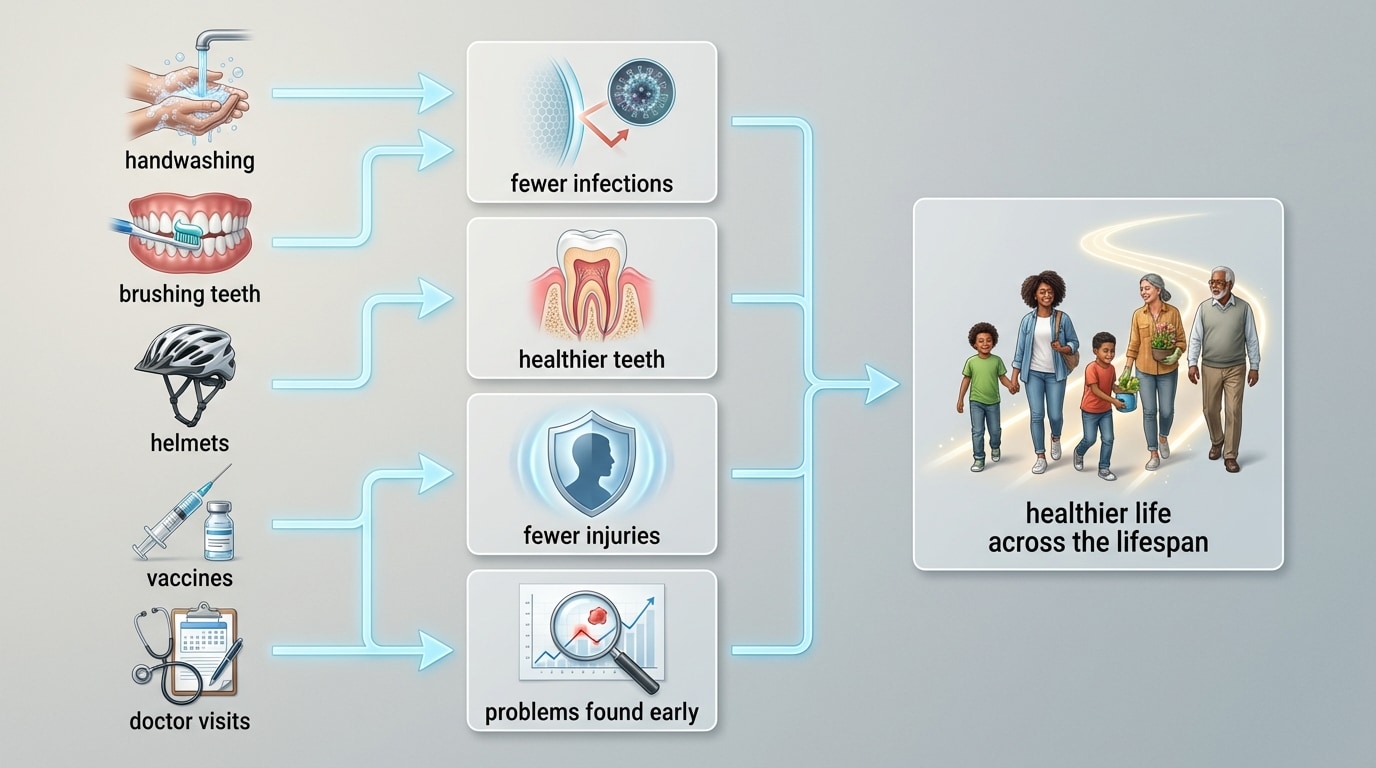
Positive health behaviors are not just about what you eat or how you move. They also include how you protect your body from germs, injuries, and hidden health problems. As [Figure 3] shows, small protective habits add up to big long-term benefits.
Hygiene behaviors:
Handwashing with soap and water, especially after using the bathroom, playing outside, or before eating, removes germs that cause illnesses like colds, flu, or stomach bugs.
Brushing and flossing your teeth every day helps prevent cavities and gum disease.
Bathing and changing clothes regularly keeps your skin healthier and prevents infections.
These habits can mean fewer missed school days now, and fewer serious infections and dental problems later in life. For example, caring for your teeth now can help you keep your own teeth much longer as an older adult.
Safety behaviors:
Wearing a seat belt in a car and sitting in the correct seat helps protect you in a crash.
Wearing a helmet when biking, skating, or skateboarding protects your brain during falls.
Using safety gear in sports, like mouthguards or pads, lowers the chance of injuries.
These actions protect you right away by reducing injuries. Over a lifetime, fewer serious injuries can mean less pain, fewer hospital visits, and a better quality of life.
Checkups and vaccines:
Regular checkups with doctors, dentists, and eye doctors help catch problems early, when they are easier to treat.
Vaccines help your body build protection against dangerous diseases before you are exposed to them.
These health maintenance behaviors protect your future. For example, a vaccine you get as a child might protect you from a serious disease for many years or even a lifetime.
Figure 3: Flow-style chart starting with icons for handwashing, brushing teeth, helmets, vaccines, and doctor visits feeding into boxes labeled “fewer infections,” “healthier teeth,” “fewer injuries,” “problems found early,” which then lead to a final box labeled “healthier life across the lifespan.”
Mental and Emotional Wellness 💛
Health is not only about your body. Your thoughts, feelings, and relationships are also part of your wellness. Positive health behaviors include how you care for your mental and emotional health.
What supports mental and emotional wellness?
Talking to trusted adults or friends when you feel worried, sad, or angry
Using healthy coping skills, like drawing, journaling, listening to music, exercising, or deep breathing when you feel stressed
Spending time with people who treat you with kindness and respect
Limiting time with people or online spaces that make you feel bad about yourself
Asking for help from counselors or doctors when feelings are too big to handle alone
Why does this matter across the lifespan?
In childhood and teen years: Learning healthy ways to handle emotions can prevent problems like constant fighting, trouble with school, or risky behaviors.
In adulthood: Good coping skills help people manage jobs, families, and money stress without turning to harmful behaviors like substance use.
In older age: Strong social connections and healthy thinking patterns can lower the chances of loneliness and some types of depression.
If you practice talking about your feelings and asking for help now, it becomes easier to keep doing it as you grow up. That can protect your mental health for decades.
Avoiding Harmful Behaviors
Sometimes the healthiest choice is not something you do, but something you avoid. Staying away from harmful behaviors is a powerful way to protect your health for a lifetime.
Examples of harmful behaviors:
Using tobacco products, like cigarettes or vapes
Using alcohol or other drugs to try to feel better or to fit in
Taking medicine that is not prescribed for you or not using medicine the way a doctor says
Taking dangerous risks, like not wearing a seat belt or helmet because it “looks cool”
Spending almost all your free time on screens and never moving your body
How avoiding these helps you throughout life:
Avoiding tobacco protects your lungs and heart. Smoking can cause lung disease and many types of cancer, often after many years of use.
Not using alcohol or other drugs protects your brain, which is still growing in childhood and the teen years. It also lowers your risk of addiction as an adult.
Making safe choices in cars, on bikes, and online reduces the chance of serious injuries or other long-term problems.
Limiting screen time and being active can help prevent weight gain, sleep problems, and mood issues.
You might feel pressure sometimes to try these harmful things, especially in the teen years. But remembering how they can damage your future health can help you say “no” and choose what is truly best for you.
Building Lifelong Healthy Habits
Positive health behaviors work best when they become habits—things you do almost automatically, without having to think hard every time. Habits are powerful because they add up, day after day, year after year.
How habits affect your lifespan:
Brushing your teeth twice every day for many years can mean fewer cavities, less pain, and keeping more of your teeth as you age.
Choosing to be active most days can keep your heart and muscles strong into adulthood and older age.
Eating mostly healthy foods and only sometimes having sugary treats can protect you from diseases like diabetes and heart disease later on.
Going to regular checkups can catch problems early, so they can be treated before they become serious.
Starting small now:
Pick one or two positive health behaviors you want to focus on, like “drink water with meals” or “play outside for at least 20 minutes after school.”
Connect new habits to something you already do. For example, after brushing your teeth at night, you might take a few minutes to stretch or take deep breaths to get ready for sleep.
Ask family or friends to support you, like going on walks together or helping you choose healthy snacks.
Even at 11 years old, you have real power over your health. Every time you choose to move your body, eat something nutritious, get enough sleep, protect yourself, or care for your feelings, you are not just helping yourself today. You are building a healthier, stronger, and more confident you for every future stage of your life. 🌟
Across your lifespan, positive health behaviors help you:
Promote health by giving your body and mind what they need to work their best.
Prevent disease by lowering your chances of getting sick or injured.
Maintain health by catching problems early and keeping your body and mind strong for as long as possible.
Your choices matter. The future you is counting on the choices you make today.