What your friends choose to do about sex can affect their health, their emotions, their goals, and even their safety. At the same time, what you say and do as a friend can strongly influence their decisions—for better or for worse. Many teens say they care more about what their friends think than about what adults say. That means you have real power to help others make choices that are safe, respectful, and aligned with their own values.
This lesson focuses on how to use that power responsibly: how to support friends in making positive and healthful choices about sexual behavior without judging, pressuring, or controlling them.
Sexual health is more than just avoiding pregnancy or sexually transmitted infections (STIs). It includes physical, emotional, mental, and social well-being related to sexuality. Positive and healthful sexual choices are decisions about sexual behavior that are:
As a peer, you are not your friends’ parent or doctor, but you can:
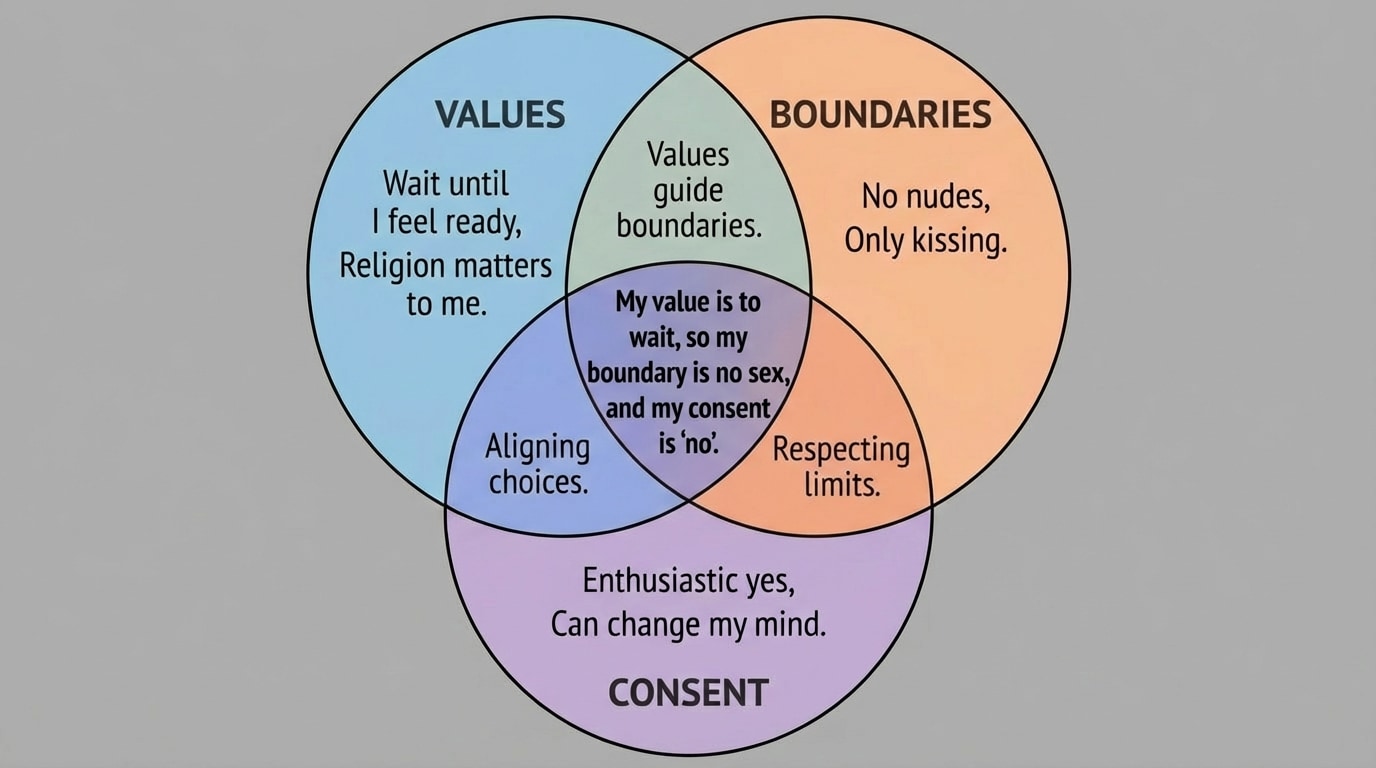
Supporting positive choices begins with understanding three key ideas: personal values, boundaries, and consent. These concepts overlap but are not the same, and each one matters when you support your friends.
Personal values are the beliefs and priorities that guide someone’s choices. Examples:
As a friend, you can respect these values, even if they differ from your own. That may mean backing them up if others make fun of their choices or question them.
Boundaries are limits a person sets about what they are and are not comfortable with. Boundaries can be:
Examples of boundaries:
Consent is an enthusiastic, ongoing, and clearly communicated agreement to participate in a specific activity. Consent must be:
Consent is not valid if someone is very drunk or high, asleep, unconscious, or too young or scared to say no. As a friend, you can reinforce that no one ever owes sex to anyone, no matter what they wore, where they went, or what they did in the past.
Ways to support friends around values, boundaries, and consent:
Talking about sexual behavior can feel awkward or intense. How you communicate can make the difference between your friend feeling supported or judged.
Use active listening:
Avoid judgmental comments:
Ask before giving advice:
Respect their privacy:
Respectful communication builds trust, so your friends are more likely to talk with you before making big decisions, instead of after something has gone wrong.
Abstinence means choosing not to have some or all kinds of sexual activity. Many teens choose to delay sex for reasons like health, personal comfort, religion, or wanting to focus on school and activities.
You can support these choices by:
Example: Your friend says their partner keeps asking to have sex, but your friend does not feel ready. Instead of saying, “Just do it, it’s not that big a deal,” a supportive response is, “Your feelings matter. You’re allowed to say no, and a respectful partner will listen.”
Some people choose to be sexually active. Supporting positive and healthful choices then includes encouraging safer sex practices, without shaming or acting like sex is required. Safer sex aims to reduce risks of STIs and unintended pregnancy.
Key safer sex practices include:
As a friend, you are not responsible for managing someone else’s sex life, but you can:
A nonjudgmental way to bring up protection could be: “If you’re thinking about having sex, have you thought about how you’ll protect yourself and your partner? I care about your health.”
Sometimes, people are pushed or pressured into sexual behavior they do not want. Pressure can be direct (“If you loved me, you’d do it”) or indirect (teasing, gossip, rumors, or threats to break up or spread secrets).
Coercion is when someone uses pressure, manipulation, or threats to get another person to do sexual things. This is not consent.
Ways to support friends against pressure and coercion:
Calling out harmful comments in friend groups also matters. If someone brags about pressuring another person, a supportive response can be, “Pressuring someone into sex isn’t something to brag about. Consent is important.” Even a simple statement like that can shift group norms.
People’s experiences and decisions about sex are shaped by many factors: gender identity, sexual orientation, culture, religion, disability, and more. Supporting others means respecting these differences.
For LGBTQ+ friends or those questioning their identity:
For friends with strong cultural or religious expectations about sex:
Everyone deserves sexual health information and support, no matter who they are. Treating all peers with dignity helps create a safer environment for everyone.
Sometimes a friend’s situation goes beyond what you can safely handle alone. Knowing red flags can help you recognize when to encourage them to seek help from a trusted adult or professional.
Red flags in relationships include:
If you notice these signs:
Remember: You are not responsible for “fixing” everything. Your role is to support, listen, and help them reach people who can provide professional help.
Today, a lot of sexual pressure happens online: through texts, DMs, or social media. Sexting (sending sexual messages or images) can create serious risks, including loss of privacy, bullying, blackmail, or legal trouble, especially if anyone in the image is under 18.
The decision path in [Figure 2] outlines practical steps a person can take if they are pressured to send sexual images, and shows how a supportive friend can help them choose safer options.
If a friend is being pressured to send sexual images, you can support them by:
Remember that sharing someone else’s sexual image without permission is a serious violation of privacy and trust, and in many places, it is illegal—especially when minors are involved. You can support respectful online behavior by refusing to share or comment on leaked images, and by saying openly, “Sharing that is not okay. That’s someone’s privacy.”
When you think back to the overlapping circles of values, boundaries, and consent in [Figure 1], the same ideas apply online: your friends’ values may include privacy and respect, their boundaries may include never sending sexual images, and their consent is required before anything related to their body is recorded, stored, or shared.
Supporting friends’ sexual health does not always look dramatic. Most of the time, it happens in everyday moments and small comments that either increase pressure or increase safety.
Consider these brief scenarios and how a supportive friend might respond:
Scenario 1: Party pressure
A friend says, “If I get drunk enough at the party, maybe I’ll finally hook up with them.” A supportive response might be: “I care about you. Being really drunk makes it harder to give or get real consent and can put you at risk. If you want, we can plan to stay together and leave if anything feels off.”
Scenario 2: Gossip about someone’s sex life
People in your group are judging a classmate’s sexual choices (“They’ve been with so many people!”). A supportive response could be: “We don’t know their situation, and shaming people about sex isn’t cool. Everyone deserves respect.” That helps create a culture where your friends are less afraid of being judged if they have questions or concerns.
Scenario 3: Friend unsure whether to have sex
Your friend says, “My partner really wants to have sex, but I don’t know if I’m ready.” Options for support include:
Scenario 4: Friend in an unhealthy relationship
Your friend says, “They said they’ll break up with me if I don’t send them nudes.” Supportive actions might include:
In all of these situations, your goal is not to control your friend’s choices but to help them:
Positive and healthful choices about sexual behavior are voluntary, informed, respectful, protective, and aligned with each person’s values. As a peer, you have real influence on whether your friends feel pressured or supported. You can strengthen their ability to make healthy decisions by listening carefully, respecting their values and boundaries, and reinforcing that consent must be clear, enthusiastic, and ongoing.
Supporting others includes backing up friends who choose abstinence or delayed sexual activity, encouraging safer sex practices without shaming anyone, and challenging pressure, coercion, and harmful stereotypes in your friend group. It also involves being inclusive and respectful of different identities, orientations, cultures, and religions, and recognizing when a situation is unsafe or abusive so you can help friends connect with trusted adults and services.
Online spaces are part of sexual decision-making, too. You can help friends resist pressure to send sexual images, refuse to share private content, and take steps like blocking or reporting when needed. Above all, being a supportive friend means promoting respect, safety, and consent—in conversations, relationships, and digital interactions—so that everyone has a better chance to make choices that protect both their present well-being and their future goals.
