Have you ever seen a team that was smaller or slower still win a game? That happens because of one powerful thing: strategy. Players who think carefully about where to move, when to pass, and how to work together can often beat players who are only relying on speed or strength. This lesson explores beginning strategies you can use in many different activities, games, and sports so you can play smarter, not just harder.
Strategy is a plan for how you will play the game to reach a goal, like scoring more points or stopping the other team from scoring. A tactic is a smaller action that helps your strategy, like setting a screen in basketball or passing back to a teammate in soccer so you can switch the play.
In physical activities, strategy includes things like:
Using strategies connects directly to movement concepts such as space, time, force, and relationships:
When you understand these ideas, you can create simple but powerful beginning strategies for almost any game.
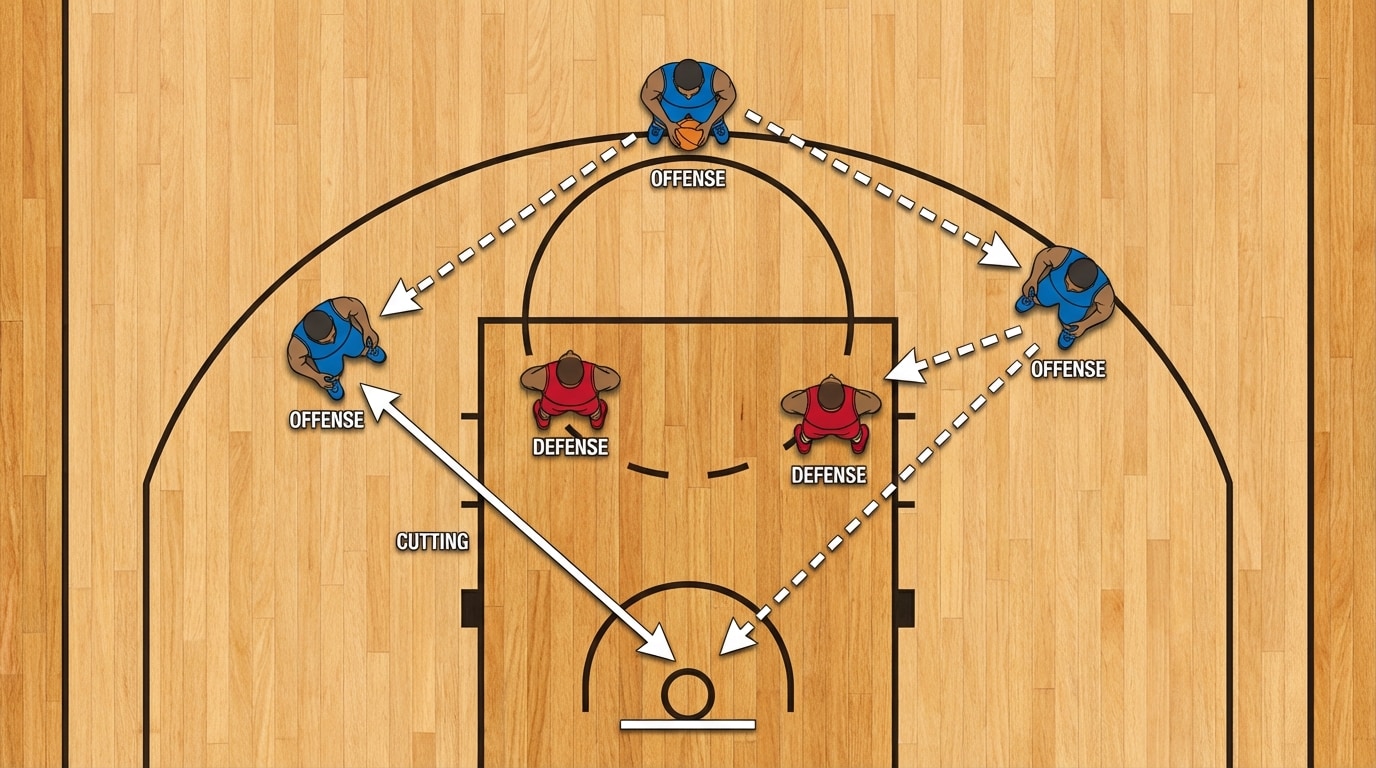
In many activities, the most important players are not the ones holding the ball, disc, or shuttle. They are the ones who are moving into good positions to help the play. Learning to “read the space,” as shown in [Figure 1], is one of the most useful skills you can build at your age.
1. Spacing on offense
In invasion games (like soccer, basketball, handball, or flag football), a beginning strategy is to spread out on offense instead of clumping around the ball.
Good spacing creates more pathways to pass or move the ball. It also makes defenders run farther and get tired faster.
2. Moving into open space
Do not just stand and wait for the ball. Instead, move into open space where there are fewer defenders. A beginning strategy is to use cuts:
When you cut into open space at the right time, it gives the player with the ball a simple pass and a better chance for your team to keep possession.
3. Supporting the player with the ball
A helpful beginning strategy is: “Make a triangle.” Imagine you and two teammates form a triangle, with the ball at one point. This shape:
If your team loses the ball, your job changes from support to pressure or recovery. Move quickly to slow down the opponent with the ball or run back between them and your goal.
4. Positioning on defense
On defense, a simple starting strategy is to stay between your opponent and the goal or target. For example:
Always keep your head turning so you can see both the ball and your assigned player. This is called awareness, and it is the base of most good defensive strategies.
Now that you understand spacing and movement, you can start using simple offensive strategies that work in many sports.
1. Quick passing instead of holding the ball too long
Beginners often hold the ball too long and then lose it. A better strategy is to:
In soccer or basketball, for example, one or two quick passes can create an open shot or drive to the basket. The ball travels faster than any player can run, so passing helps your team control the game’s speed.
2. The give-and-go
The give-and-go is a classic beginner-friendly tactic:
This works in soccer, basketball, handball, and ultimate frisbee because defenders often relax for a moment after a pass. The give-and-go uses that short time to create a scoring chance.
3. Using fakes
A fake is when you pretend to go one way or do one action, then quickly do another. Simple fakes include:
Fakes do not need to be fancy; they just need to be believable and fast. They help you create just enough space for a pass, dribble, or shot.
4. Choosing when to shoot
A beginning strategy for shooting is “good shot, better shot” thinking:
If you have a good shot but see a teammate with a better shot, passing to them is often the smarter choice. Over time, this team-first thinking leads to more points and better chances to win.
Defense is not just about stealing the ball; it is about making everything harder for the other team.
1. Staying goal-side and ball-side
A simple defensive rule in invasion games is:
This positioning makes it tougher for your opponent to get a clear pass or shot. If the ball moves, you adjust your position quickly to stay between them and the goal.
2. Pressure, cover, and balance
Teams defend as a group using three basic roles:
Even as a beginner, you can start to think: “Am I the pressure, the cover, or the balance right now?” and move your body to match that role.
3. Basic man-to-man and zone ideas
Two major types of team defense are:
In early grades, man-to-man is more common because it is easier to understand: stay with your person, move your feet, and keep your hands active. Begin by always knowing exactly who you are guarding.
4. Communication on defense
Talking on defense is a powerful beginner strategy:
Clear communication helps your team move together, like one big shape, instead of five or more separate people.
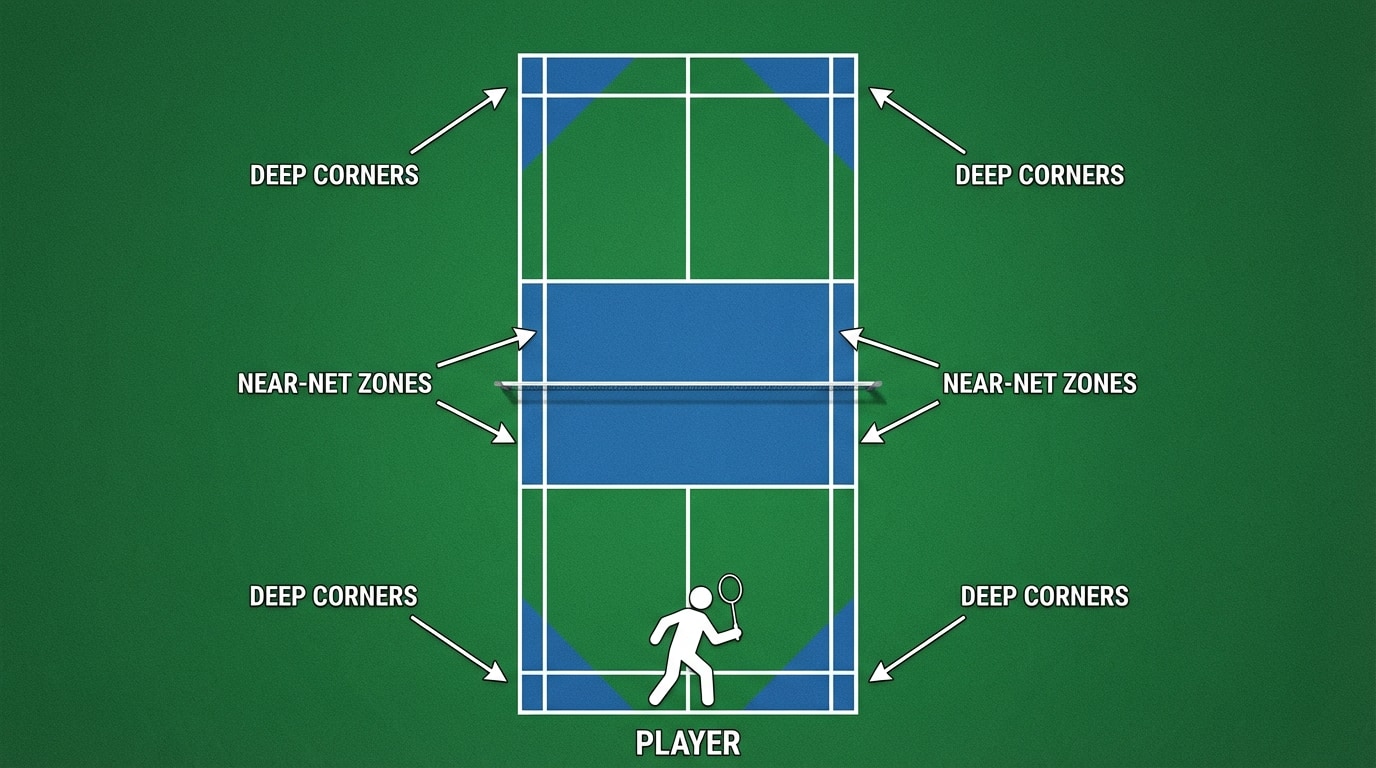
Net/wall games include activities like volleyball, badminton, tennis, and pickleball. In these games, you are trying to make the object (ball or shuttle) land in the other side’s court, using the net or wall to your advantage. Using the space on the court wisely, as shown in [Figure 2], is one of the most important starting strategies.
1. Aiming for open space
Instead of just hitting straight to where your opponent is standing, a simple strategy is to aim where they are not:
Even if your shots are not super powerful, good placement can still win points.
2. Playing high vs. playing low
You can also plan when to hit high or low:
A simple beginner plan: when you are off-balance or out of position, hit higher and deeper to give yourself time. When you are in a strong position and see an opening, hit lower and faster.
3. Recovering to a ready position
After every hit, do not stand and watch the shot. Instead, move back toward the middle of your side of the court, bend your knees, and get your racket or hands ready. This is your ready position.
This starting strategy means you are prepared to move in any direction for the next shot.
4. Serving with a plan
Even beginners can think strategically about serving:
A reliable serve that starts the point is a better beginner strategy than a risky serve that often goes out.
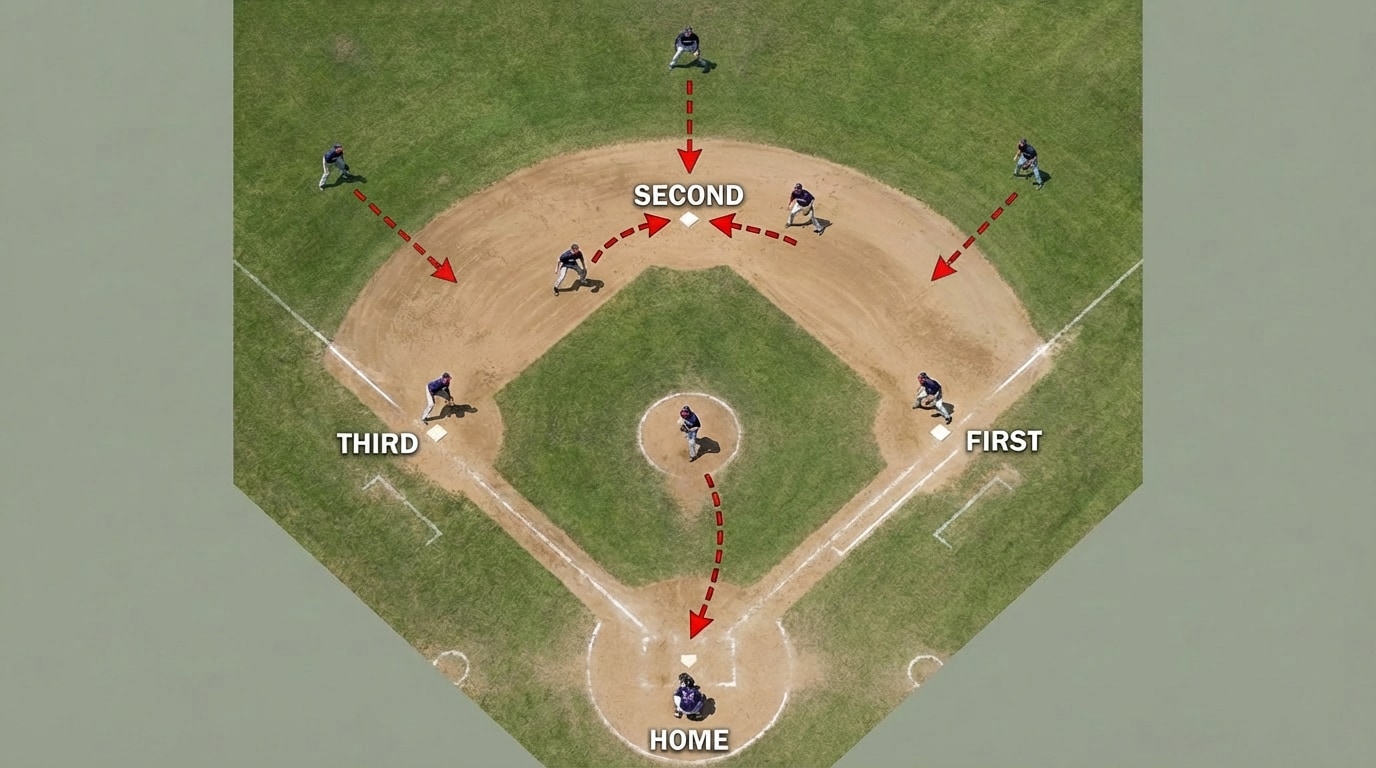
Striking/fielding games include kickball, softball, baseball, and similar activities. One team strikes (kicks or hits) and runs bases to score, while the other team fields the ball and tries to get outs. How players spread out on the field, as shown in [Figure 3], has a big effect on success.
1. Batting or kicking strategies
As a hitter or kicker, a beginner can already use smart strategies:
You can also think about the count in sports like baseball or softball (how many strikes or balls). With many strikes, protect the plate. With fewer strikes, wait for a better pitch you can handle.
2. Base-running decisions
Good base-runners use simple strategies:
Over time, you will start to “feel” when it is safe to take an extra base and when to stay.
3. Defensive positioning
On defense, players should not all stand in straight lines. Instead, beginners can use these key ideas:
Everyone should know their primary job (like covering a certain base) when the ball is hit.
4. Backing up plays
A hugely important beginner strategy is backing up. This means:
Backing up keeps small mistakes from turning into big ones, like a missed catch becoming an inside-the-park home run.
Races include activities like track events, swimming, and even relay games in PE. Strategy in races is mostly about pacing, positioning, and energy instead of passes or shots.
1. Pacing yourself
If you sprint full speed at the very start of a longer race, you will probably tire out before the end. A smart beginner strategy is to:
This helps you spread your energy more evenly instead of using it all at once.
2. Knowing the distance
Your strategy should change with the length of the race:
Even in PE games like relay tag or obstacle courses, thinking about distance helps you decide how fast to start.
3. Positioning in the lane or pack
In some races, you stay in a lane; in others, you may be in a group or “pack.” Beginners can:
In relays, another strategy is smooth hand-offs. Focus on strong, safe exchanges of the baton or object so your team does not lose time with drops.
Even at your age, you can start to “think like a coach” on the field or court. Here is a simple decision-making pattern:
By repeating these steps, your strategies will keep improving. You will start noticing patterns: a teammate who is always open in a certain spot, or an opponent who struggles to move to their left, for example.
Remember that strategies are not only for “serious” sports. You can use them in tag games, relay games, dance formations, cooperative challenges, and more. Anywhere bodies are moving in space and time, a smart plan can help.
To become a smarter, more strategic player in any physical activity, focus on building these habits:
Beginning strategies are not about memorizing a huge playbook. They are about using simple, smart ideas—like spacing, timing, and communication—to make every activity, game, or sport more successful and more fun.
