What do hiking into your 70s, playing pickup basketball with friends, and joining a community dance class all have in common? They all depend on the movement skills you are building right now in high school. Your future quality of life is being shaped in your muscles, joints, and nervous system today.
This lesson explores what it means to engage in many kinds of physical activities at a competent level, not just for a season or a school team, but across your whole life. You will see how motor skills, movement patterns, strategy, and smart safety habits all connect to help you move well, enjoy activity, and stay active long-term.
Lifelong physical activity is not just about "being on a team" or "working out." It means regularly doing physical activities—formal or informal—that you can continue through different stages of life. Examples include brisk walking, cycling, swimming, yoga, strength training, tennis, basketball, dance, martial arts, and hiking.
Key reasons lifelong activity matters:
To keep doing these things over decades, you need more than just "trying hard." You need movement competence: the ability to perform motor skills and movement patterns efficiently, safely, and consistently.
Movement competence is your ability to use your body effectively in different situations. It includes:
Think of competence as a continuum:
| Level | Description | Example in a New Activity |
|---|---|---|
| Beginner | Understands basic instructions but movement is inconsistent, inefficient, or poorly timed. | A beginner in tennis often hits the ball off the frame of the racket and struggles with timing. |
| Competent | Executes key skills reliably with reasonable technique, control, and awareness. | A competent player serves and rallies with control, even if not at high speed or power. |
| Proficient/Advanced | Highly efficient, powerful, and adaptable; shows creativity and high tactical awareness. | An advanced player varies spin, placement, and strategy intentionally. |
Movement competence is transferable. If you develop strong fundamental skills, you can more easily pick up new activities. When you learn to jump and land safely in volleyball, it also supports basketball, parkour, and even stepping off a curb without hurting your knees, as suggested earlier in [Figure 1].
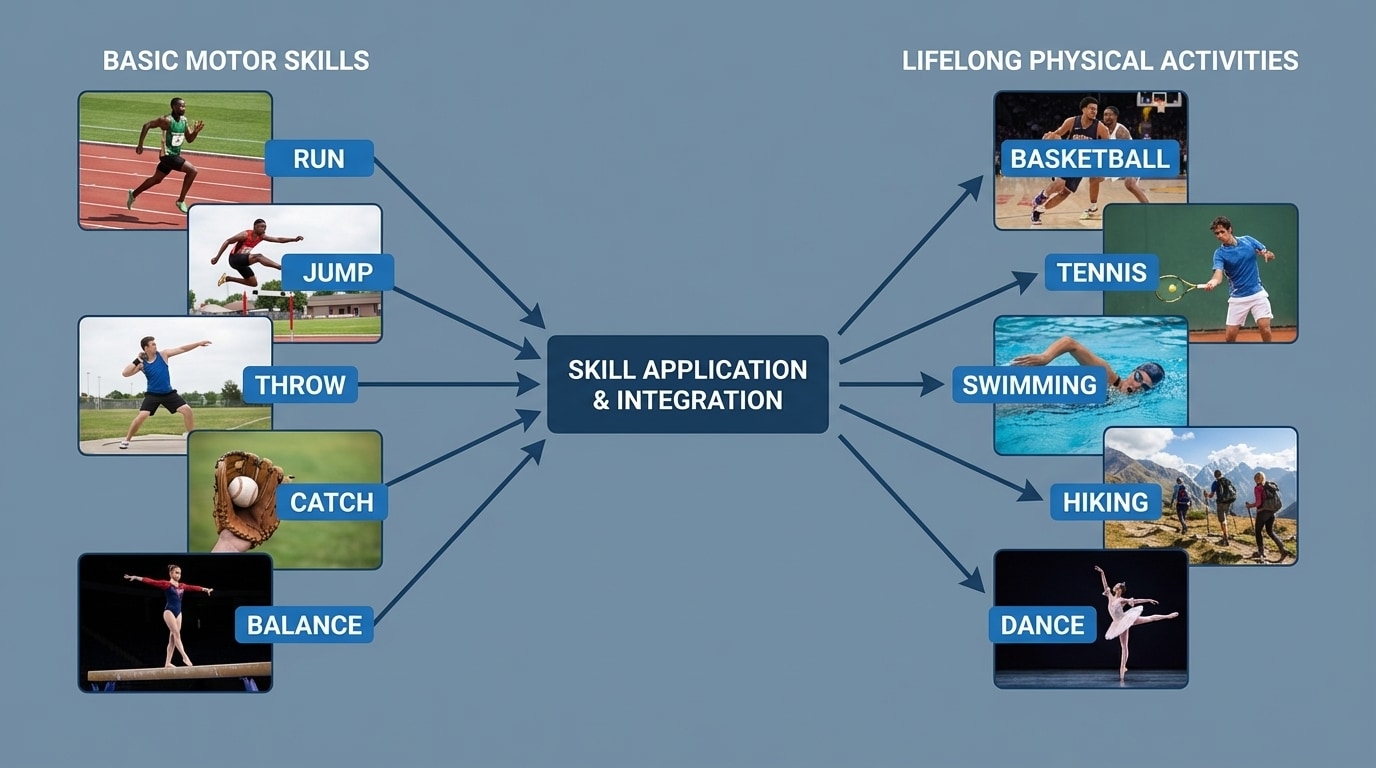
Fundamental motor skills are the "alphabet" of movement. They can be grouped into three main categories:
Locomotor skills involve moving your body from one place to another. Examples include:
These are critical for many lifelong activities. For example, efficient walking and running patterns support hiking, jogging clubs, soccer, and basketball.
These skills involve control of the body without moving your base of support very far. Examples:
Non-locomotor skills are vital for yoga, strength training, martial arts, and simply maintaining good posture in daily life.
Manipulative skills involve controlling objects using your hands, feet, or other body parts. Examples:
These create the foundation for many sports: basketball, soccer, tennis, pickleball, baseball/softball, hockey, and more.
Most real activities combine multiple skill types. For example:
If you consistently refine your fundamental skills, your ability to learn and enjoy new activities later in life increases dramatically.
Being "competent" means you use key technique cues to move efficiently and safely. Here are some examples across activities you can practice throughout your life.
Key technique cues:
Competent walking and jogging reduce joint stress and make longer distances more comfortable.
Key technique cues:
Competent cycling helps you ride longer with less fatigue and lowers risk of knee or back pain.
Key technique cues for freestyle:
Swimming is a high-value lifelong activity because it is low-impact and trains the whole body.
Core skill cues:
Competent racket skills provide access to many social, intergenerational activities—people of different ages can play together.
Key technique cues:
These skills support bone density, muscle strength, and joint health, which are critical as you age.
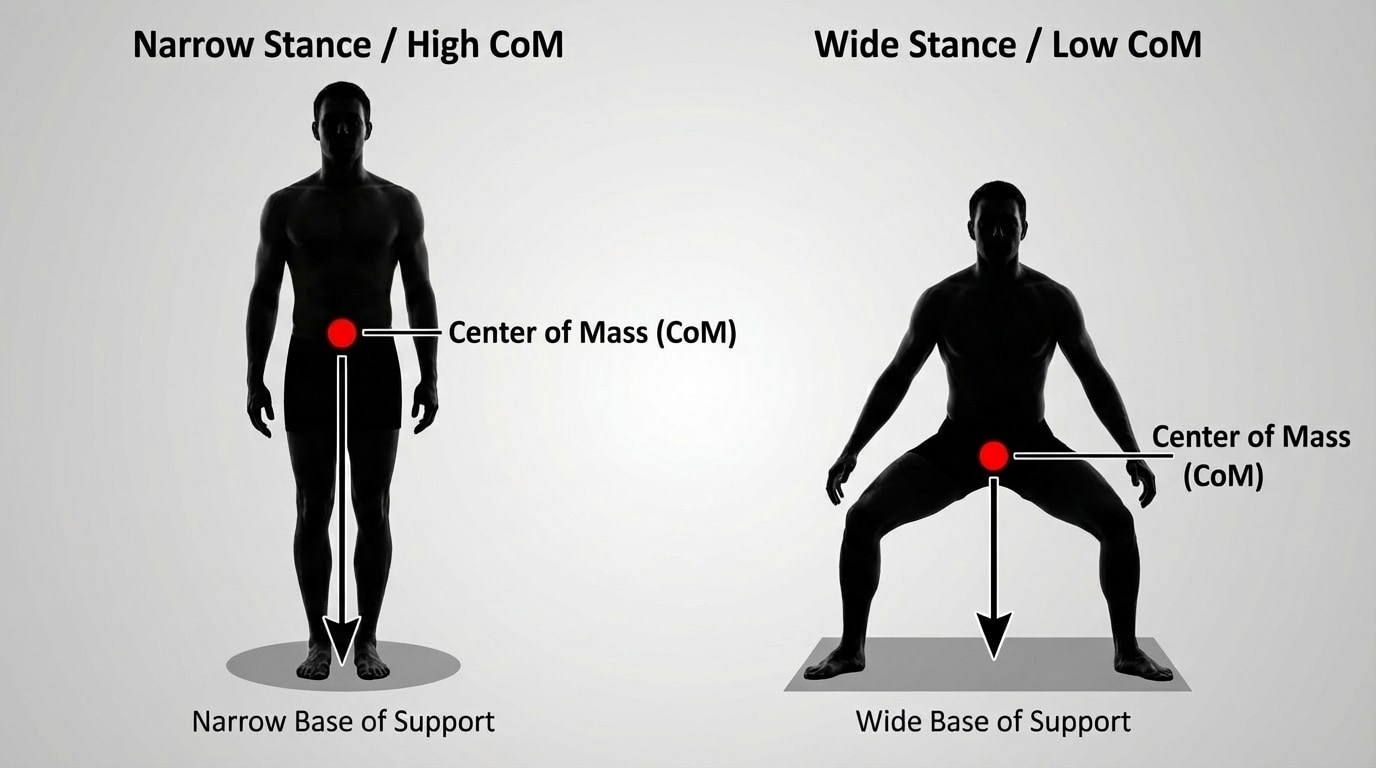
Beyond technique cues, movement concepts help you understand why certain patterns are more effective and safer. Concepts like balance, force, and leverage apply across many activities, as shown in [Figure 2].
Your center of mass is the point where your body's mass is evenly distributed. Your base of support is the area under and between your points of contact with the ground (for example, between your feet).
To increase stability:
This matters in activities like defensive stance in basketball, wrestling, skiing, or even standing on a moving bus. When you understand these principles, you can quickly adopt more stable positions, like widening your stance when lifting something heavy.
Force is a push or pull, and your body uses levers (bones as levers, joints as fulcrums, muscles as force producers) to create movement.
Understanding this helps you adjust movements: you might shorten the lever (bend your arms more) when learning a new strike in martial arts to maintain control and safety, then lengthen as you improve.
Your body moves in three main planes:
Lifelong competence means including all three planes in your activities. For example, a weekly mix that includes walking (sagittal), lateral band walks (frontal), and rotational core exercises (transverse) supports balanced strength and reduces injury risk.
Competence is not only about technique; it also includes tactical awareness and decision-making.
Key tactical skills:
These skills allow you to contribute to a game even if you are not the fastest or most skilled shooter. They are also transferable to other areas of life: reading situations, anticipating, and making quick decisions.
Decision-making matters here as well:
Competent participants know how their body feels at different intensities and can adjust on the fly to stay safe and effective.
Staying active for life requires avoiding the kinds of injuries or burnout that cause people to quit.
Key principles:
These routines prepare your muscles, joints, and nervous system and can reduce injury risk.
To improve, your body needs a challenge—but not too much at once.
Safe progression examples:
Competent movers also think about context:
To stay active over decades, it helps to know what types of activities fit you best—your activity profile. This is where you connect self-knowledge with movement competence, as visualized in [Figure 3].
Important questions include:
Your answers help you choose from categories like:
Engaging in a variety of activities uses different movement patterns, reduces overuse injuries, and can be more enjoyable. At the same time, some consistency helps you build real competence in specific activities.
One way to visualize this is with a weekly activity calendar that includes different types of movement.
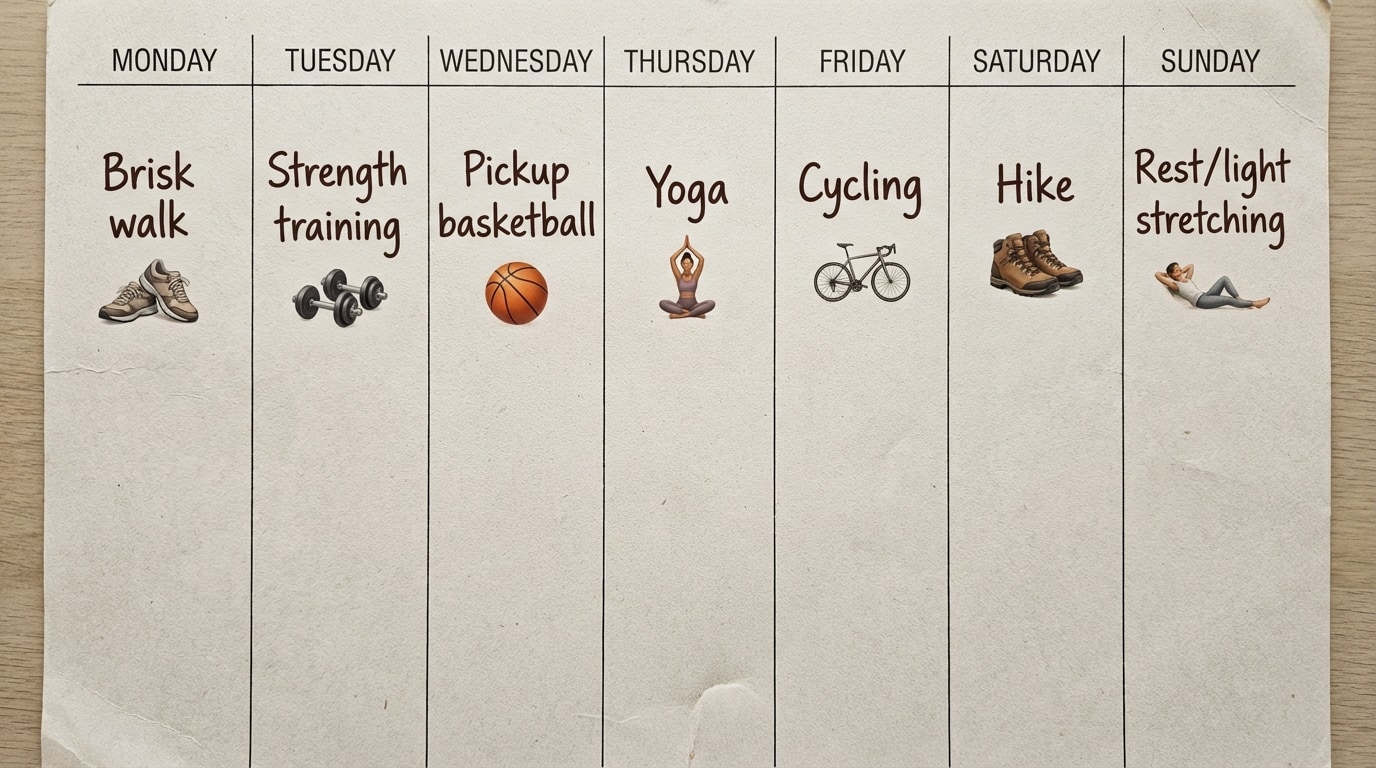
Across a lifetime, your mix may change: a high-intensity sport in your 20s might give way to more low-impact options like swimming and hiking in later decades, while strength and mobility stay in your routine throughout.
Even with good skills, many people struggle to stay active. Common barriers include time, motivation, confidence, and access.
Strategies:
If you feel self-conscious or "not athletic," remember:
Motivation can be:
For lifelong engagement, intrinsic motivation is especially powerful. Notice which activities you finish thinking, "That felt good," and lean into those. 🎯
Lifelong physical activity is about sustaining movement habits that support your physical, mental, and social health across many decades. Movement competence—the ability to perform motor skills and movement patterns effectively, safely, and consistently—is central to this goal.
Competence grows from strong fundamental motor skills (locomotor, non-locomotor, and manipulative), which combine into complex sport and activity patterns. Technique cues for walking, jogging, cycling, swimming, racket sports, and strength training help make movement efficient and safe.
Understanding broader movement concepts such as balance, center of mass, base of support, force, leverage, and planes of motion allows you to apply skills across many activities. Tactical awareness and decision-making—like pacing in individual sports or spatial awareness in team games—are part of being competent, not just physical execution.
Safety and injury prevention rely on warm-ups, cool-downs, progressive overload, and attention to environment and equipment. Developing a personal activity profile that fits your preferences, resources, and physical needs, while balancing variety and consistency, supports long-term engagement.
Finally, recognizing and addressing barriers—time, confidence, motivation, and access—and cultivating intrinsic motivation help you maintain regular activity. Building competence now expands your options, so you can continue to move, play, and participate in a wide range of physical activities throughout your life.
