What if the way you move during a game, a dance, or even walking to school is actually reshaping your brain in real time? 🧠 Every cut, jump, and balance adjustment is not just "exercise" – it is also a powerful brain-training session that changes how you think, focus, and learn.
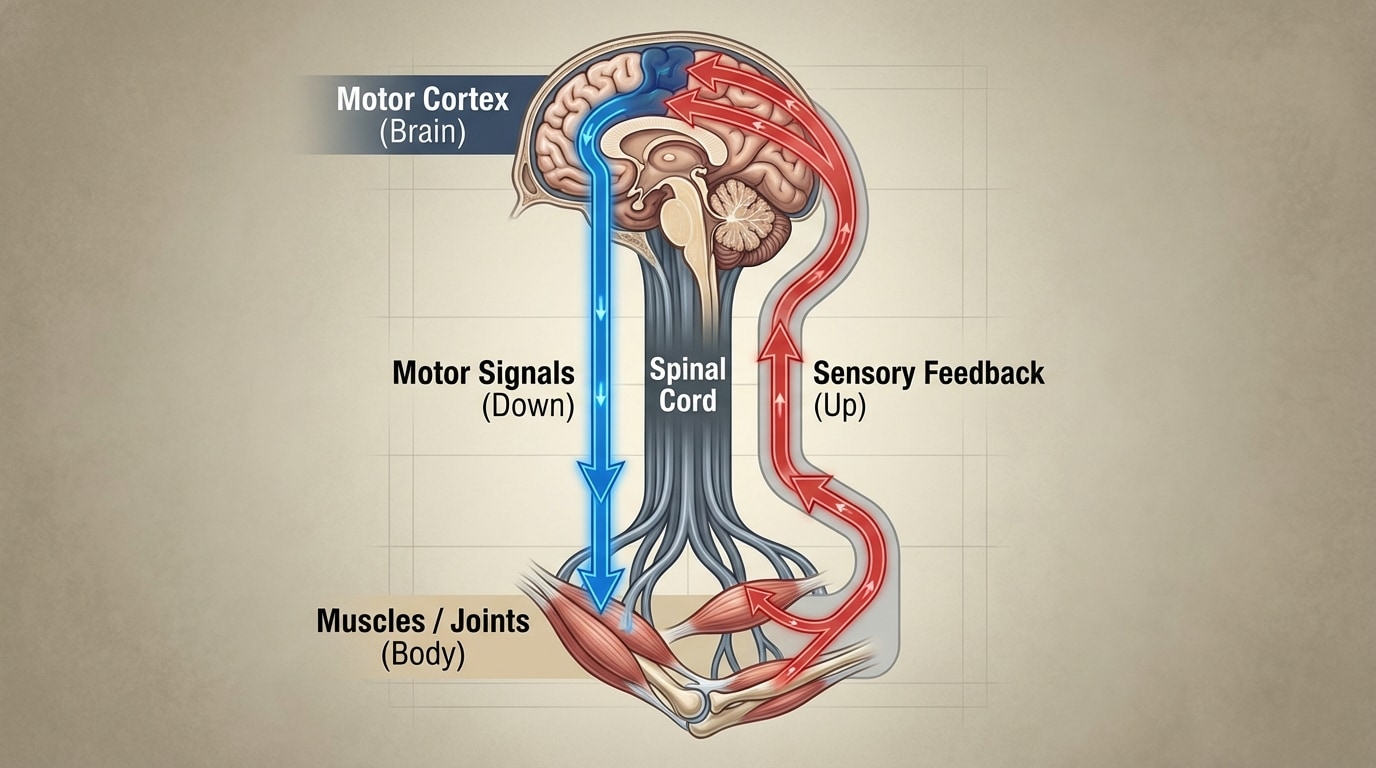
Your brain and body are in constant conversation. When you move, your brain sends electrical signals through nerves to your muscles, and your muscles send a stream of information back. This continuous loop, described in [Figure 1], is the foundation for how movement concepts influence brain development.
Several key brain areas are especially important for movement:
When you practice a physical skill, such as shooting a free throw or learning a gymnastics routine, these regions do not work alone. They connect with areas responsible for vision, hearing, decision-making, and emotion. Over time, connections between these regions become stronger and more efficient. This process is called neuroplasticity – the brain's ability to change its structure and function based on experience.
At the cellular level, repeated movements can cause neurons (brain cells) to make more connections called synapses. Practice can also increase myelination, the insulation around nerve fibers that allows signals to travel faster. The more efficiently signals move along these pathways, the smoother and more automatic your movements feel.
Because movement requires constant adjustments, your brain is always predicting and updating. When you misjudge a step on the stairs, your brain rapidly corrects your balance. These small "errors" are not failures; they are opportunities for the brain to refine its internal model of your body and the environment.
Physical education and sport often talk about movement concepts: ideas like space, effort, relationships, timing, and tactics. These are not just coaching buzzwords. Each one challenges your brain in a specific way and shapes how it develops.
1. Space: Where the body moves
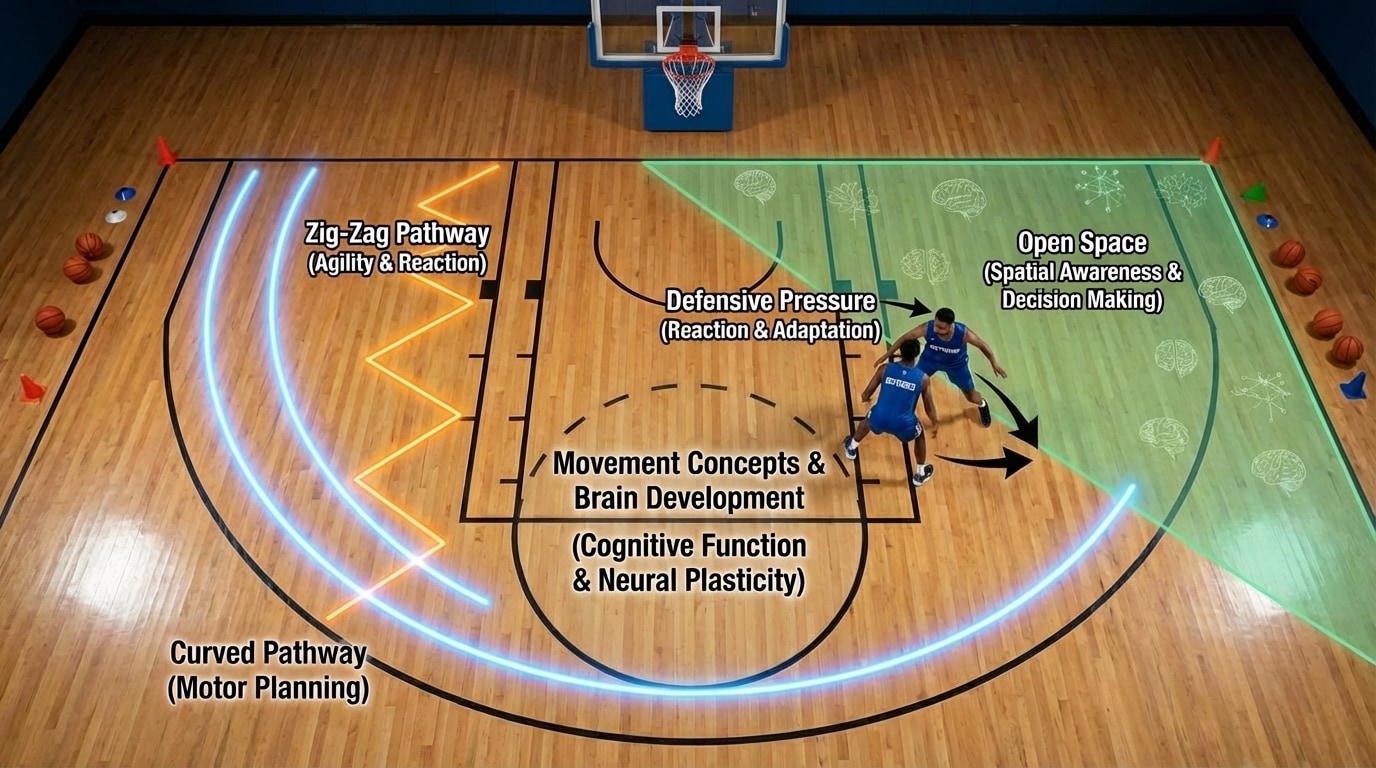
Space refers to the area around you and the pathways your body or equipment takes through that area. In game situations, using space effectively is both a physical and a cognitive challenge.
Every time you adjust your path, your brain updates its internal map of the environment and your location in it. This relies heavily on visual processing and the parietal lobes, which help with spatial awareness.
2. Effort: How the body moves
Effort relates to the quality of movement – speed, force, flow, and rhythm.
Changing effort qualities challenges the brain's ability to scale movements up or down. It refines control over motor units in the muscles and strengthens connections between motor and sensory areas.
3. Relationships: With people, objects, and the environment
Relationship concepts focus on how you move with or around others and objects:
These relationships require your brain to integrate multiple information sources at once – visual cues, body position, and predictions about others' actions. This improves social cognition and decision-making networks.
4. Timing, Coordination, and Tactics
Timing is about when you move; coordination is about how smoothly different parts of your body work together; tactics involve strategic choices. For example, timing a volleyball spike, coordinating arms and legs in swimming, or choosing when to press in soccer all demand rapid information processing.
Your prefrontal cortex, which handles planning and strategy, works closely with motor regions to execute these tactical decisions under pressure.
Not all movements challenge the brain in the same way. Different types of movement concepts lead to different patterns of brain development.
1. Gross vs Fine Motor Skills
Practicing gross motor skills strengthens large-scale networks connecting motor cortex, cerebellum, and spinal cord. Fine motor skills demand extremely precise timing and control, refining small clusters of neurons and their synapses.
2. Simple vs Complex Skills
Complex skills activate more of the brain at once, engaging memory, attention, and planning. Repeated practice of complex skills can increase connectivity between frontal regions (planning) and motor areas, improving overall cognitive flexibility.
3. Open vs Closed Skills
Closed skills allow the brain to automate movements. This can lead to highly efficient neural pathways where less conscious effort is required. Open skills force the brain to constantly update predictions and make fast choices. This type of practice is especially powerful for developing decision-making and attentional control.
4. Bilateral and Cross-Lateral Movements
Bilateral movements use both sides of the body at once (jumping jacks), while cross-lateral movements cross the midline of the body (right hand to left knee). These movements encourage communication between the left and right hemispheres of the brain through the corpus callosum, the large bundle of nerve fibers connecting them.
Regular practice of complex bilateral and cross-lateral movements can strengthen these connections, improving coordination and, in some cases, supporting skills like reading and writing that also depend on efficient left–right communication.
Movement concepts do not just build athletic skill; they also influence how well you think and learn in other areas of life, including academics. 💡
1. Attention and Focus
Physical activity increases blood flow and oxygen delivery to the brain. It also triggers the release of neurotransmitters like dopamine and norepinephrine, which support attention and motivation. Activities that apply movement concepts – such as drills requiring quick changes of direction and strategy – train your brain to shift attention rapidly and stay engaged under pressure.
For example, a fast-paced small-sided soccer game requires you to constantly track the ball, teammates, and opponents, anticipate plays, and adjust tactics. This is similar to rapidly switching attention between questions on a test.
2. Memory and Learning
Exercise and movement can increase levels of brain-derived neurotrophic factor (BDNF), a protein that supports the growth and survival of neurons and the formation of new synapses. This is closely linked to memory formation, especially in the hippocampus, a brain area critical for learning new information.
Movements with clear patterns and sequences – like choreography, martial arts kata, or complex playbooks – require you to encode, store, and retrieve ordered information. Practicing these sequences strengthens the same types of memory processes used for remembering formulas, vocabulary, or historical timelines.
3. Executive Functions
Executive functions include skills like planning, inhibiting impulsive responses, switching tasks, and holding information in working memory. Applying movement concepts in games and sports directly challenges these functions:
Over time, these challenges can strengthen the prefrontal cortex – the "control center" for executive function – and its connections with other brain regions.
4. Emotional Regulation and Stress
Physical activity helps regulate stress hormones like cortisol and supports the release of endorphins, which can improve mood. Learning to stay calm while applying movement concepts under pressure – for example, staying poised during a penalty kick – builds emotional resilience.
When you repeatedly face and manage physical challenges, your brain learns that stress can be handled, which can carry over into academic tests, social situations, and everyday pressures.
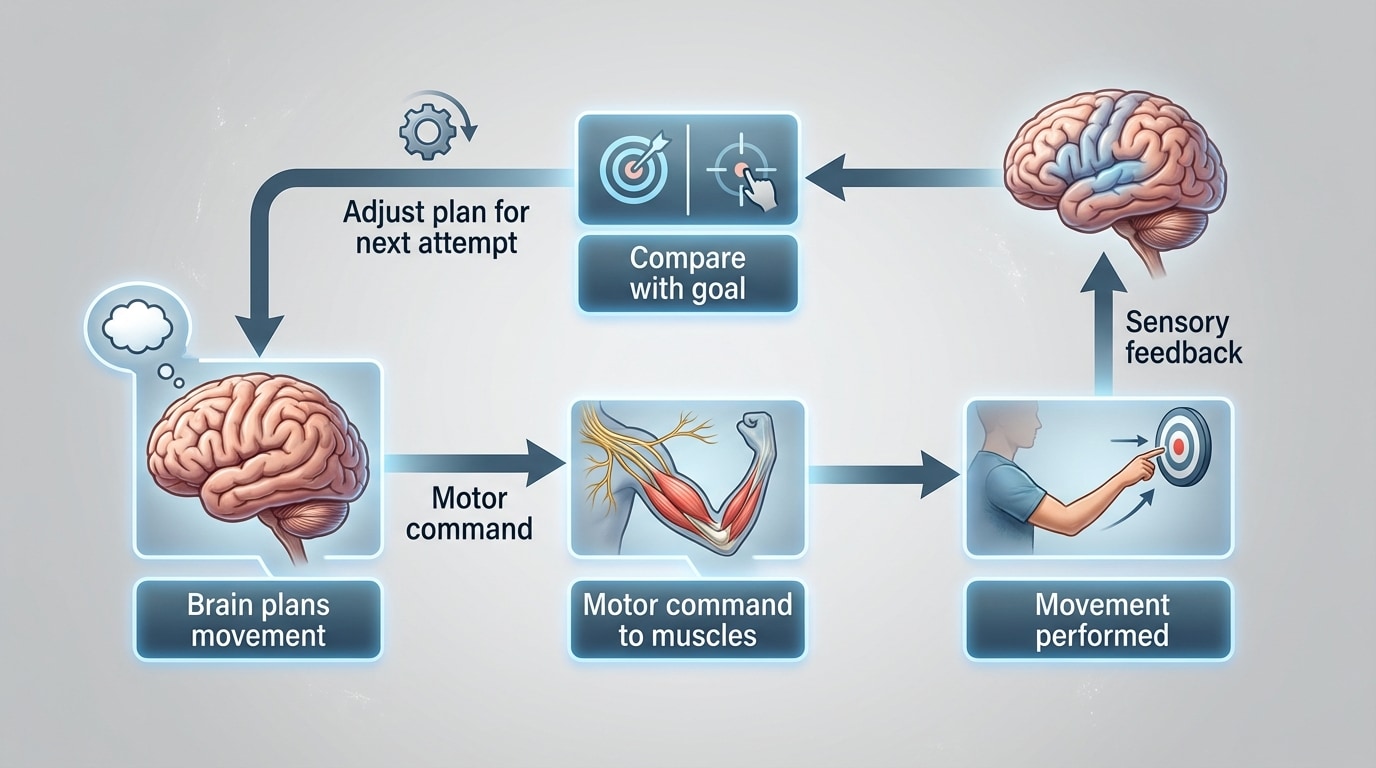
Movement concepts only shape brain development if you engage with them through practice and feedback. This process forms a continuous learning loop between your brain and body, summarized in [Figure 3].
1. Planning the Movement
Your brain begins with a motor plan: what you intend to do. For example, "perform a layup from the right side using correct footwork." The premotor cortex and prefrontal cortex are heavily involved in this planning stage, using past experiences and movement concepts (like space and timing) to design an action.
2. Sending Commands and Performing
Next, the motor cortex sends signals through the spinal cord to the muscles involved. As you move, your brain also sends a prediction of what it expects to happen – how your limbs will feel, what you will see, and what outcome you will get.
3. Sensory Feedback
While you move, sensory receptors in your muscles, joints, skin, eyes, and inner ear send information back to your brain. This includes:
4. Error Detection and Adjustment
Your cerebellum and other areas compare the feedback to the original motor plan. If there is a difference – maybe you jumped too far or released the ball too late – your brain detects an error signal. On the next attempt, it adjusts timing, force, or direction. Over many repetitions, the error becomes smaller, and the movement feels more automatic.
Coaches and teachers enhance this loop by providing external feedback (knowledge of results and performance). For example, "Your elbow was too wide" or "You released too early." Your brain combines this external information with internal sensory feedback to refine the motor plan.
5. Applying Strategies and Tactics
As movements become more automatic, your brain can focus more on higher-level strategies and tactics. In a game, this might mean tracking multiple players, anticipating a teammate's run, and choosing the best pass – all while executing accurate technical skills that your brain has automated through neuroplastic changes.
Movement concepts influence brain development throughout life, not just in childhood.
1. Adolescence and Young Adulthood
During your teen years, the brain is especially plastic. Regions involved in decision-making, risk assessment, and planning are still maturing. Complex physical activities that integrate space, timing, coordination, and tactics provide ideal training for these systems.
Sports, dance, martial arts, and outdoor adventure activities can strengthen neural circuits for focus, self-control, and collaboration. This can support both mental health and life skills such as leadership and problem-solving.
2. Adulthood and Skill Specialization
Adults can still reshape their brains through movement. Learning a new sport, dance style, or skill (like climbing or paddleboarding) forces the brain to build new maps of the body and environment. Athletes and performers who practice at high levels often show structural brain differences in areas related to their specific skills.
3. Aging and Brain Health
For older adults, maintaining regular physical activity and learning new movement patterns can help slow cognitive decline. Activities that involve balance, coordination, and strategic thinking – such as tai chi, pickleball, or dancing – may support brain regions vulnerable to aging.
4. Injury Prevention and Rehabilitation
Understanding movement concepts can also protect the brain. Good technique, body awareness, and tactical choices can reduce the risk of concussions and other injuries. In rehabilitation settings, carefully designed movements help the brain re-learn skills after injury by forming alternative pathways.
5. Everyday Life and Other Domains
The brain skills built through movement transfer to other areas:
• Movement and brain development are tightly linked. Every movement you make is part of a brain–body loop that can strengthen neural pathways through neuroplasticity and myelination.
• Movement concepts give structure to how you move. Space, effort, relationships, timing, coordination, and tactics each challenge different brain systems, from spatial awareness and motor control to decision-making and social cognition.
• Different types of movement shape the brain in different ways. Gross vs fine motor skills, simple vs complex skills, and open vs closed skills all place distinct demands on your nervous system, promoting a wide range of cognitive and motor abilities.
• Movement supports attention, memory, and executive function. Applying movement concepts in games and activities trains focus, working memory, planning, and impulse control, and can improve academic performance and emotional regulation.
• Practice and feedback drive brain change. Repetition with variation, combined with rich feedback, engages powerful learning loops between motor planning, sensory feedback, and error correction, leading to more efficient and automatic skills.
• Movement concepts matter across the lifespan. From adolescence through older adulthood, engaging in varied, challenging physical activities helps build and maintain a healthy, adaptable brain that supports performance in sports, the arts, school, work, and everyday life. 🧠
