What if you could be 80 or 90 years old and still hike, travel, or play with your grandkids without getting exhausted? That kind of future does not happen by accident. It comes from choices you make now in your teen years, and from learning how to use the right health and wellness resources throughout your life.
Lifelong health is about more than just “not being sick.” It is the long-term state of your body working well: strong heart and lungs, good immune system, healthy muscles and bones, and low risk of serious disease. Wellness goes even further. It includes how you feel mentally and emotionally, the quality of your relationships, and how you live in your environment.
Your current goals—getting into college, performing well in sports or arts, working a job, or just having energy to hang out with friends—are all affected by your health. So are your future goals, like career plans, financial stability, and family life. Regular physical activity is one of the most powerful tools you have to protect your long-term health and wellness, but you do not have to do it alone. There are many resources—people, places, technologies, and organizations—that can help you make smarter decisions and build healthy habits that last for decades.
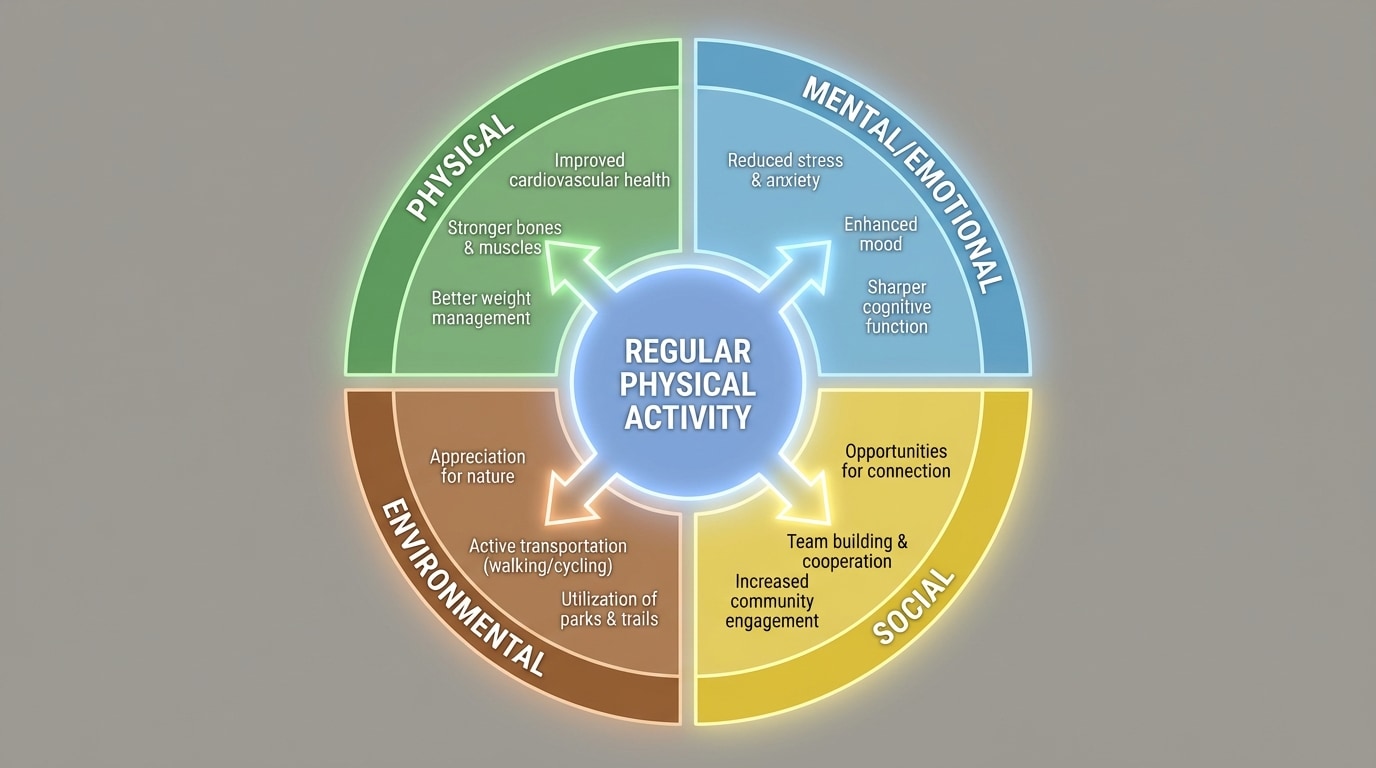
Wellness has several dimensions that are all connected. As shown in [Figure 1], regular physical activity sits at the center and influences each dimension in different ways.
1. Physical wellness
Physical wellness is about how well your body functions. It includes your strength, endurance, flexibility, body composition, sleep quality, and resistance to illness. Regular physical activity can help you:
For example, when you participate in at least \(60\textrm{ minutes}\) of moderate to vigorous physical activity on most days, you lower your risk of diseases like type 2 diabetes and heart disease later in life.
2. Mental and emotional wellness
Mental and emotional wellness involves how you think, feel, and cope with stress. Physical activity has powerful effects here too. During exercise, your body releases chemicals like endorphins and serotonin that can boost mood and reduce anxiety. Students who are regularly active often report:
3. Social wellness
Social wellness is about your relationships and sense of connection. Team sports, group fitness classes, dance groups, and walking or running clubs give you chances to meet people and build friendships. Being part of a physical activity community can provide support, motivation, and a sense of belonging.
4. Environmental wellness
Environmental wellness relates to how your surroundings support or harm your health. Safe sidewalks, bike lanes, parks, and recreation centers make it easier to stay active. When more people use these spaces, communities often push for better lighting, cleaner parks, and safer streets, which benefits everyone.
All of these dimensions interact. For example, going for a run at a local park improves your physical wellness, reduces stress, and might lead to positive social interactions if you run with a friend or group, as the connections in [Figure 1] highlight.
Even the most motivated person needs expert help sometimes. Professional resources are people with training and credentials who can guide you safely.
1. Primary care providers (doctors, nurse practitioners, physician assistants)
These professionals can:
Signs they are trustworthy include having a recognized license, working in an established clinic or health system, and being willing to explain your options clearly.
2. School nurses and athletic trainers
School nurses can help with everyday health questions, medications, and injuries that happen at school. Certified athletic trainers specialize in sports injuries, prevention, and safe return-to-play plans. If you sprain an ankle at practice, an athletic trainer can evaluate the injury, teach you exercises, and coordinate with your doctor and coach.
3. Physical therapists
Physical therapists help people recover from injuries, surgeries, or chronic pain. They design exercise programs to rebuild strength, flexibility, and balance. For example, after an ACL injury, a physical therapist may guide you through a months-long plan to regain knee stability before you return to high-intensity sports.
4. Registered dietitians and nutrition professionals
Nutrition fuels physical performance and long-term health. Registered dietitians can:
They can also help you spot unsafe diets or supplements that promise “quick fixes” but may harm your health.
5. Mental health professionals and school counselors
Psychologists, licensed counselors, and school counselors are crucial for emotional and social wellness. They can support you with stress, family issues, anxiety, depression, or performance pressure in sports and school. Learning healthy coping skills can prevent burnout and help you keep physical activity enjoyable rather than stressful.
6. How to evaluate professional resources
When choosing professionals, consider:
If something feels wrong—like pressure to buy expensive products or ignore your concerns—ask for a second opinion.
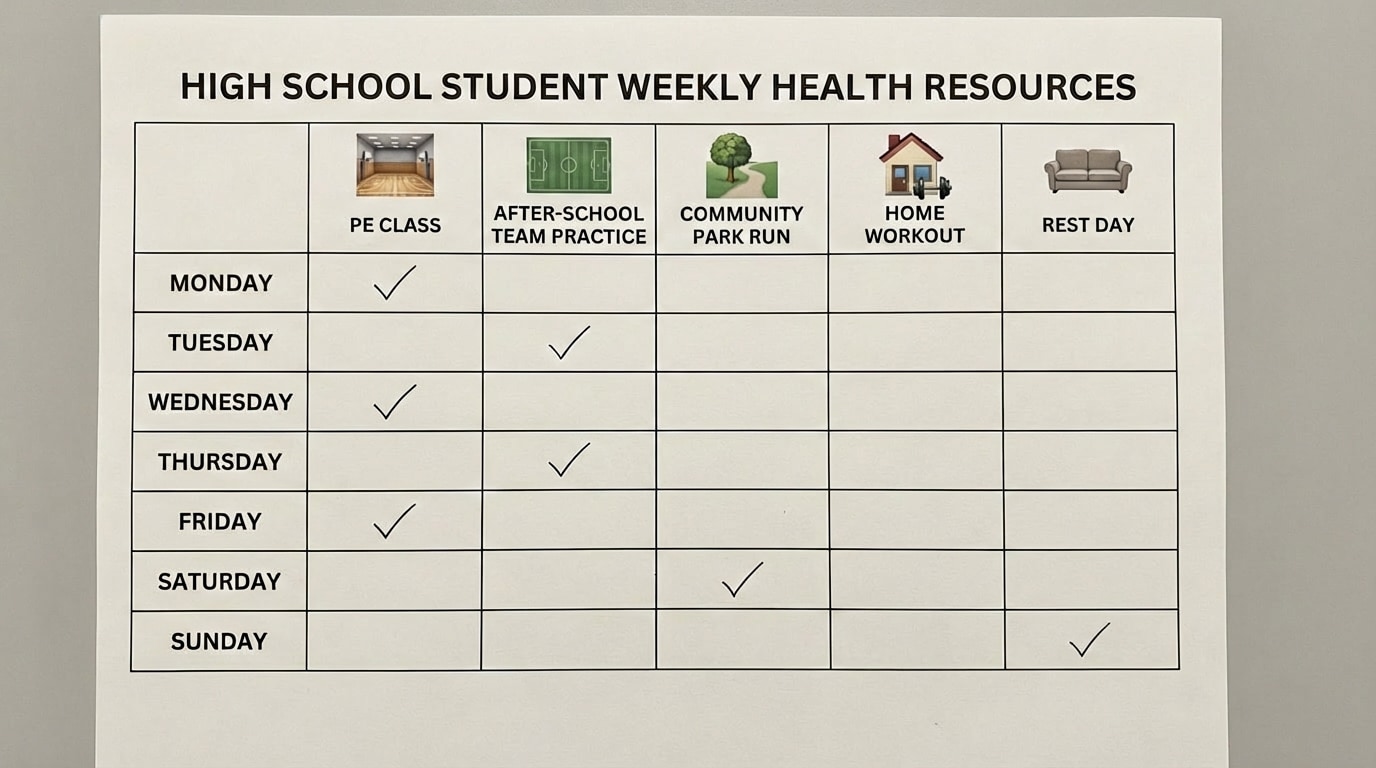
Your environment can either make it easy or very difficult to stay active. Many schools and communities offer resources that support movement, often at low or no cost. A weekly routine that mixes school programs, community spaces, and home activities, like the schedule in [Figure 2], can make regular activity much more realistic.
1. School-based resources
2. Community resources
3. Building a realistic weekly activity plan
You do not have to exercise intensely every day. A balanced week might include:
If formal programs are not available, simple routines like home body-weight workouts, stair climbing, or neighborhood walks still count and can be combined with school and community resources as shown later in [Figure 2].
Phones, watches, and computers can support your health—or distract you from it. Used carefully, digital tools can keep you motivated and informed.
1. Fitness apps and wearables
Common features include:
These tools help you see patterns, like realizing you feel better on days when you reach \(8{,}000\textrm{–}10{,}000\textrm{ steps}\) or sleep at least \(8\textrm{ hours}\).
2. Online workout videos and virtual classes
Streaming platforms and apps offer free and paid workouts: yoga, strength training, HIIT, dance, and more. They can be especially useful if you do not have easy access to a gym. However, it is important to:
3. Reliable health information websites
For research about exercise, nutrition, or mental health, stick to sources that are science-based and not trying to sell you products. Good examples include:
Be cautious if a website or influencer makes extreme promises like “Build 20 pounds of muscle in 2 weeks” or “This single food will melt fat.” Those are red flags.
4. Privacy and social media concerns
Some fitness and health apps collect location or health data. Check privacy settings and share only what you are comfortable with. On social media, be critical of “fitspiration” posts that focus only on appearance. Healthy bodies come in many shapes and sizes. Follow accounts that emphasize strength, mental health, and realistic habits instead of perfection.
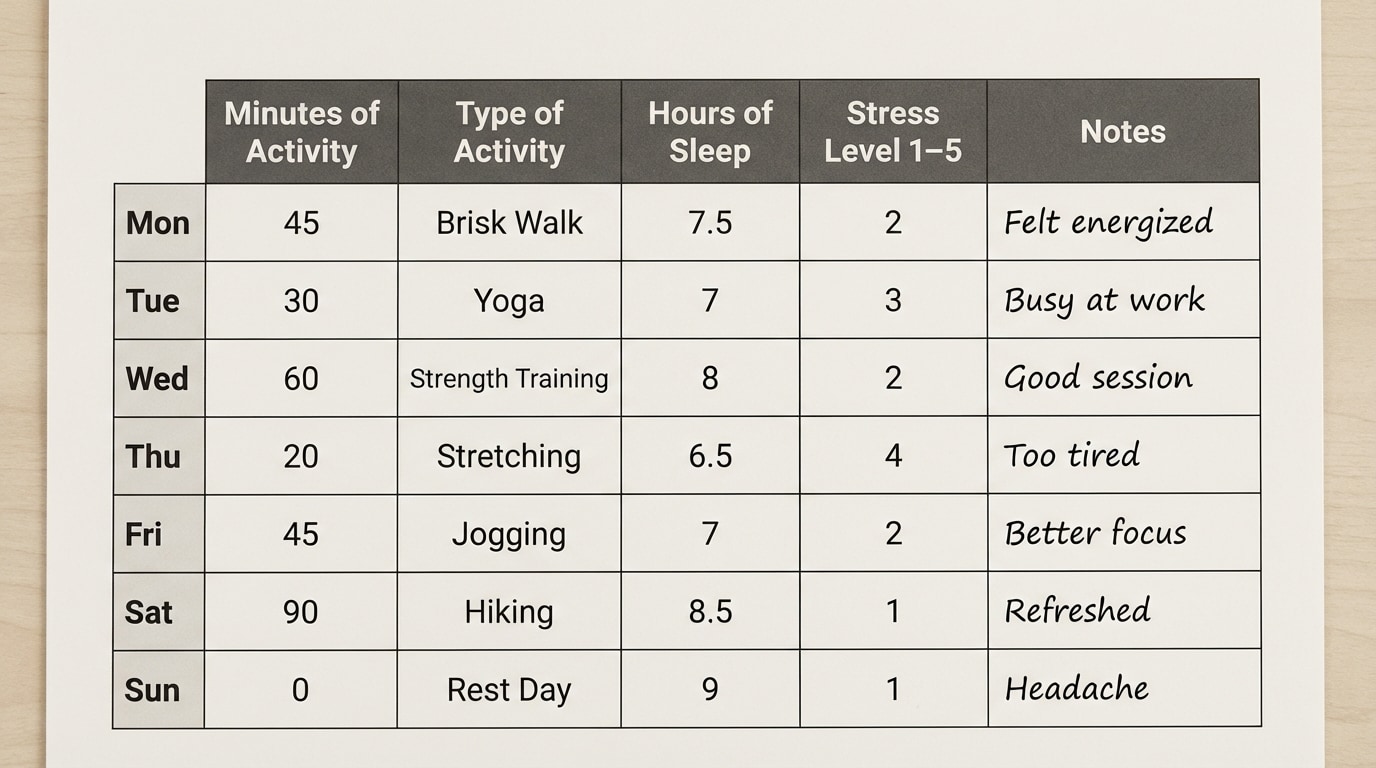
Even with many outside resources, your daily choices matter the most. Simple self-monitoring tools, like the tracker in [Figure 3], can turn vague goals into clear actions and help you stay honest with yourself.
1. Habit tracking and journaling
Tracking your activities can show what is really happening in your life versus what you think is happening. You can record:
Looking back over a week, you might notice patterns like, “On days I sleep at least \(8\textrm{ hours}\), my soccer practice feels easier,” reinforcing the importance of both sleep and exercise.
2. SMART goals for physical activity
Effective goals are SMART: Specific, Measurable, Achievable, Relevant, and Time-bound. For example, instead of “I will get in shape,” a SMART goal would be, “I will briskly walk for at least \(30\textrm{ minutes}\) after school on Mondays, Wednesdays, and Fridays for the next \(4\textrm{ weeks}\).”
3. Building a personal support network
Your support network might include:
A workout buddy can make it easier to show up, even on days you feel tired or stressed.
4. Balancing activity with rest and recovery
Lifelong wellness is not about pushing hard every day. Your body needs rest. Aim for consistent sleep (often around \(8\textrm{–}10\textrm{ hours per night for many teens}\)), and pay attention to signs of overtraining, such as constant fatigue, frequent injuries, or irritability. Rest days and lighter movement days protect your long-term health and keep activity enjoyable, as shown by balanced plans like the one you might record in [Figure 3].
Not everyone has the same access to safe spaces, equipment, or professional help. Recognizing these barriers is the first step to working around them and pushing for fairer conditions.
1. Common barriers
2. Low-cost and creative alternatives
Even with limited resources, many forms of activity are free or cheap:
3. Advocating for better resources
Students can be powerful voices for change. You can work with student councils, community groups, or local leaders to:
Equity in health means that everyone has a fair chance to be healthy, regardless of their neighborhood, family income, or background.
Lifelong wellness requires the ability to sort reliable information from hype. With so many fitness trends, diets, and supplements advertised to teens, critical thinking is a major health skill.
1. Questions to ask about any health claim
2. Red flags in wellness marketing
3. Making decisions that fit you
A fitness plan or diet that works for one person may not be safe or effective for another. Consider:
When in doubt, combine information from trustworthy websites with advice from professionals like doctors, school nurses, or certified trainers.
Lifelong health and wellness come from many small, consistent choices over time, supported by strong resources. Here are the central ideas to remember as you plan your own healthy future:
By understanding and using these resources—people, places, technologies, and strategies—you can build a personalized support system that helps you stay active, strong, and well at every stage of life.
