Have you ever bitten into an orange and thought, "Wow, that is juicy," or tasted salsa and said, "That is spicy"? Those words may be small, but they do important work. They help us describe the world around us. Good readers and writers do more than memorize words. They connect words to real things they can taste, touch, hear, smell, see, and feel.
Words can help us make pictures in our minds. An adjective tells more about a noun, such as a food, animal, place, or thing. When someone says "a crunchy apple," you can almost hear the bite. When someone says "a soft blanket," you can almost feel it.
Many words connect to our senses. If a word matches something from real life, it is easier to understand and remember. For example, if you have tasted lemonade, you know what sour means. If you have heard thunder, you know what loud means. If you have touched sandpaper, you know what rough means.
Real-life connection means linking a word to something you know from everyday life. Adjectives tell more about people, places, things, or ideas. They help make meaning clear.
When readers connect words to life, they understand stories and information better. If a book says a puppy had floppy ears and a silky coat, you can build a clearer picture because you may have seen or touched something floppy or silky before.
Some of the easiest real-life word connections come from food. Food words are strong examples because we can taste, smell, and feel them. Words like spicy, juicy, crunchy, and smooth connect to things students know from meals and snacks.
Spicy describes food that has a hot, strong flavor in your mouth. Salsa, some chips, and certain noodles can be spicy. Juicy describes food that has a lot of juice inside, like watermelon, oranges, and peaches. Crunchy means something makes a crisp sound when you bite it, like carrots or crackers. Smooth can describe pudding or yogurt because it feels even and creamy, not bumpy.
Words also describe things beyond food. A flashlight can be bright. A hallway can be quiet. A fire truck siren can be noisy. A kitten's fur can be soft. Rain boots can be muddy. A backpack can be heavy. These words make talking and writing more exact.
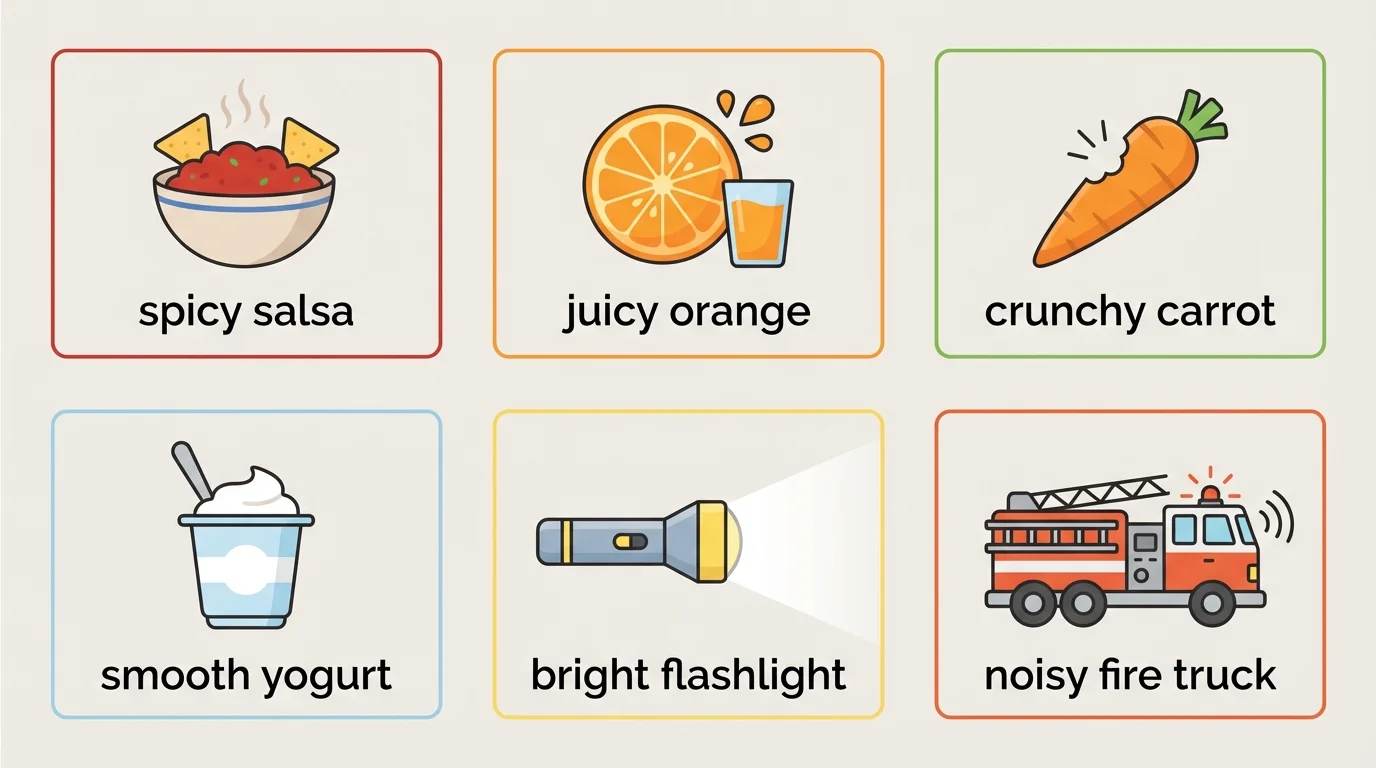
Notice that one word may fit some things but not others. You can say "juicy peach," but "juicy rock" does not make sense. You can say "bright sun," but "bright banana" usually does not fit unless you mean a strong yellow color. Good readers think, "Does this word match real life?"
Sometimes a word can fit more than one sense. A lemon may be yellow when you see it, sour when you taste it, and bumpy when you touch it. This is one reason rich vocabulary matters. More words help us describe more parts of the same thing.
Your brain remembers words better when you connect them to something you have really seen, tasted, heard, or felt. That is why sensory words are so powerful in reading and writing.
Writers often choose sensory words on purpose. Instead of saying "I ate fruit," a writer might say, "I bit into a juicy pear." Instead of saying "The chips were good," a writer might say, "The crunchy chips made a loud snap." Those details help the reader feel closer to the scene.
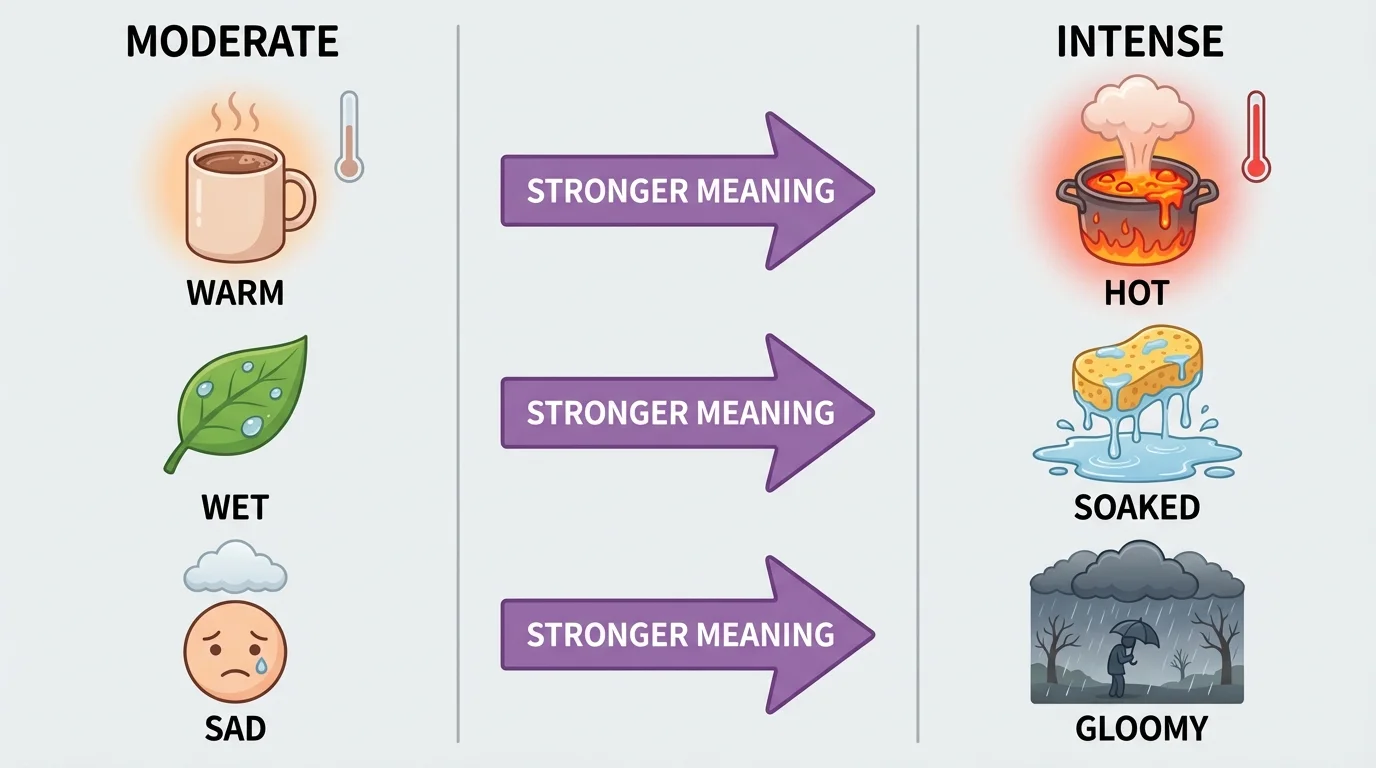
[Figure 2] Some words are close in meaning, but they are not exactly the same. This is called nuance, or a small difference in meaning. Words can be close in meaning while still giving different pictures.
Think about synonyms and words with close meanings. Words like warm and hot are related, but hot is stronger than warm. Wet and soaked are related, but soaked means very, very wet. Sad and gloomy are related, but gloomy can feel darker and heavier.
This matters because the best word gives the clearest meaning. If your socks got a little water on them, wet makes sense. If you stepped in a deep puddle, soaked may be the better word. If soup is warm, it may be ready to eat. If soup is hot, you may need to blow on it first.
Readers pay attention to these small differences. If a story says the dog trotted, that is different from saying the dog raced. Trotted sounds steady and not too fast. Raced sounds much faster. Both involve movement, but the exact word changes the picture in your mind.
Writers do this all the time. They choose from groups of related words: tiny, small, little; angry, mad, furious; chilly, cold, freezing. Each word carries its own shade of meaning. As we saw in [Figure 2], these shades help us move from a simple idea to a more exact one.
| Word | Close Word | How They Differ |
|---|---|---|
| warm | hot | Hot is stronger than warm. |
| wet | soaked | Soaked means much wetter. |
| small | tiny | Tiny means very small. |
| cold | freezing | Freezing means extremely cold. |
Table 1. Examples of related words with small differences in meaning.
Sometimes words are used in an exact, direct way. This is called literal meaning. If you say, "The ice is cold," you mean real cold ice. But sometimes words are used in a more colorful way. This is called figurative language. One word can be used both literally and figuratively.
For example, if someone says, "That test was a breeze," the test was not really moving wind. The speaker means the test was easy. If someone says, "I am freezing during this speech," the person may not mean ice is forming. The person may mean they feel very nervous or very cold, depending on the situation.
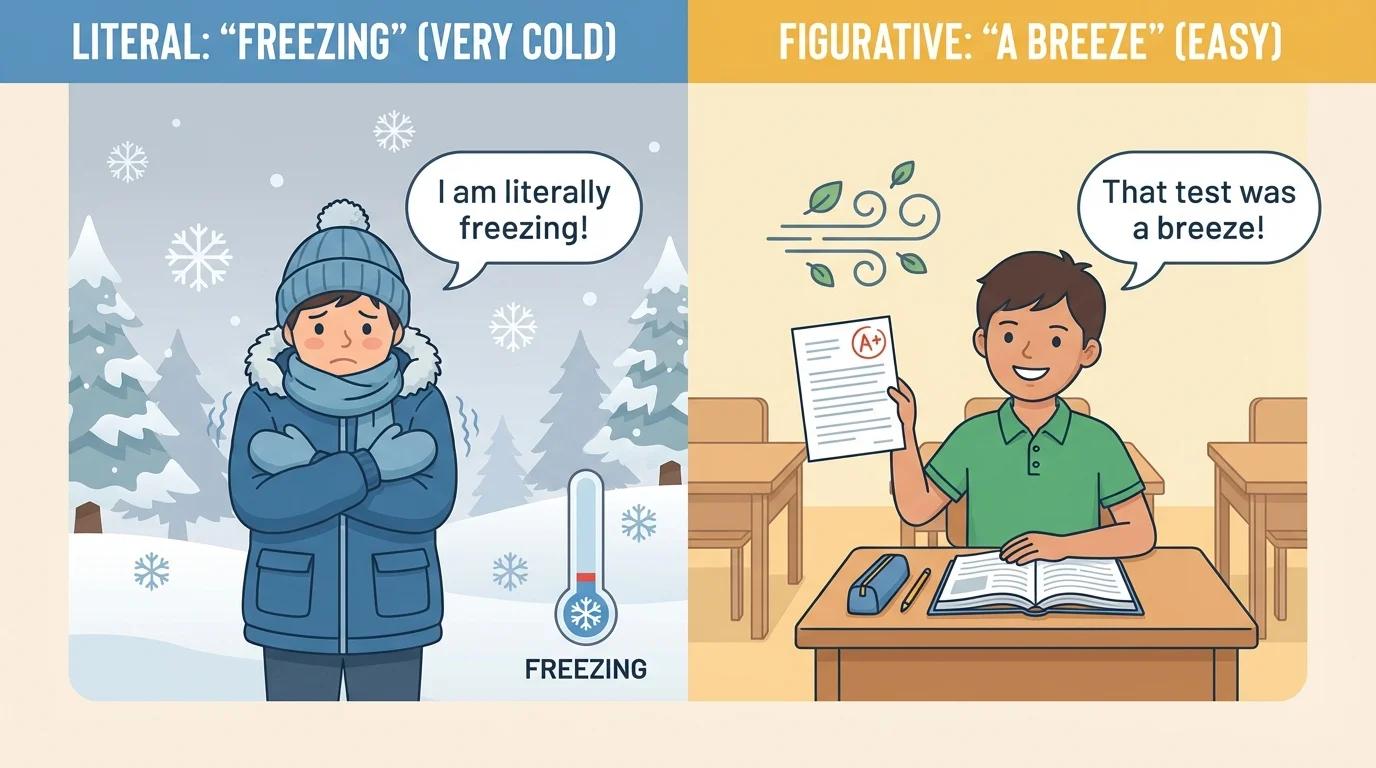
Literal meaning tells exactly what is happening. Figurative language paints a stronger picture or shares a feeling in a special way. Both are important. You use context, or the words around it, to decide which meaning fits.
How context helps
Context means the other words, pictures, and ideas around a word. If you read, "Mia drank cold water after gym," cold means the temperature. If you read, "Kai gave me a cold look," cold describes behavior, not temperature. The surrounding words help you choose the right meaning.
A word can travel into many situations. Bright can mean full of light, like a bright lamp. It can also describe someone who learns quickly, like a bright student. Sharp can mean a pointy pencil, but it can also describe a strong sound or a clever mind. Words are flexible, and that makes language powerful.
Later, when you meet a word in a new sentence, think about what is happening. Just as the two uses in [Figure 3] are different, the same word may change a little depending on where and how it is used.
Good readers and writers do not just grab any word. They choose the word that fits best. If a drink has ice and lots of fruit flavor, juicy may fit better than sweet. If popcorn makes a crisp sound, crunchy fits better than soft. If the room hurts your ears, loud fits better than quiet.
It also helps to match words to the kind of thing you are describing. People can be cheerful, sleepy, or brave. Weather can be stormy, windy, or calm. Food can be spicy, sour, creamy, or fresh. Music can be loud, soft, or cheerful. Choosing a fitting word makes communication stronger.
Real-life word choices
Here are three situations where the best adjective depends on real-life meaning.
Step 1: Think about pizza with peppers.
If the peppers make your mouth feel hot, spicy is a strong match.
Step 2: Think about biting into an orange slice.
If juice runs out, juicy is a strong match.
Step 3: Think about walking on dry leaves.
If they crackle under your feet, crunchy or crisp may fit, depending on the exact sound and feel.
The best word depends on what really happens in the situation.
Writers often revise, or improve, their word choices. They may first write "The snack was good," then change it to "The snack was crunchy and salty." The second sentence gives a clearer picture. Real-life connections help writers make those better choices.
You build vocabulary every time you read, listen, talk, and notice the world around you. When you hear a new word, connect it to something you know. If someone says a blanket is fuzzy, think of a soft stuffed animal. If a story says the sky was gloomy, think of dark clouds before rain.
Sometimes parts of words give clues too. The ending -y often turns a word into a describing word, such as juicy, messy, foggy, or sandy. That pattern can help you understand new words. If a beach towel is sandy, it has sand on it. If the day is foggy, it has fog.
You already know that words carry meaning. Now you are adding something important: some words are close in meaning, some change meaning by context, and the best word often connects to a real experience.
Talking about everyday life is great practice for understanding words. Think about breakfast, recess, pets, weather, playground sounds, and favorite places. Language grows when you connect words to life.
When you read stories and information books, pay close attention to adjectives and other descriptive words. Ask yourself: What does this word remind me of? Have I seen, heard, tasted, touched, or felt something like this before? Those questions help meaning stick in your mind.
