A single sentence in a nonfiction text can hide a whole chain of connections. A scientist makes an observation, which leads to an experiment, which changes an idea. A ruler raises taxes, which causes protests, which leads to a major event in history. A machine part moves, which makes another part turn. Strong readers notice these links. They do not just collect facts. They understand how the facts fit together.
When you read informational text, you are often reading to learn how something works, why something happened, or what effect one thing had on another. This means you need to look for a relationship, or connection, between details in the text.
If a text says that a long drought dried out crops and caused food shortages, the important idea is not just "there was a drought" and "there were shortages." The important idea is that the drought caused the shortages. If a text says a student follows steps to build a bridge model, the important idea is not just the list of materials. It is how each step connects to the next one in the process.
Informational text is writing that teaches readers about real people, real events, real ideas, or real procedures. It includes history articles, science books, directions, manuals, and reports.
Text evidence is the exact information from a text that supports an answer or explanation.
Good readers ask questions like these while reading: What changed? What caused that change? What happened first? How are these ideas alike or different? How does one person influence another person? How does one step affect the result?
A relationship can exist between individuals, events, ideas, or concepts. In informational texts, these often appear in a few common patterns.
One pattern is cause and effect. One thing happens, and it makes another thing happen. Another pattern is sequence, where actions or events happen in order. A third pattern is compare and contrast, which shows how things are alike and different. Another common pattern is problem and solution, where a text explains an issue and how it is fixed or improved.
Sometimes a relationship is about influence. For example, in a history text, one leader's speech may inspire a group of people. In a science text, one animal population may affect another. In a technical text, pressing one button may start a chain of actions inside a device.
Relationships are more than facts
To explain a relationship, you must do more than repeat two details from the text. You must show the connection between them. For example, "The storm arrived. The river rose." is a list of facts. "The storm caused heavy rain, and the rain made the river rise." explains the relationship.
That is why words like because, so, therefore, before, after, similarly, and unlike are so useful. They help readers and writers show the type of connection being discussed.
Historical texts often explain how people's choices and important events connect across time, as [Figure 1] illustrates with actions leading to later events. A ruler may pass a law, citizens may react, and those reactions may lead to protests, meetings, or even war. History is full of linked causes, effects, and decisions.
When you read history, pay attention to dates, actions, and responses. Ask: Who did something? Why did they do it? What happened next? How did one event change another event? Historical relationships often connect leaders and citizens, governments and laws, inventors and inventions, or explorers and the lands they reached.
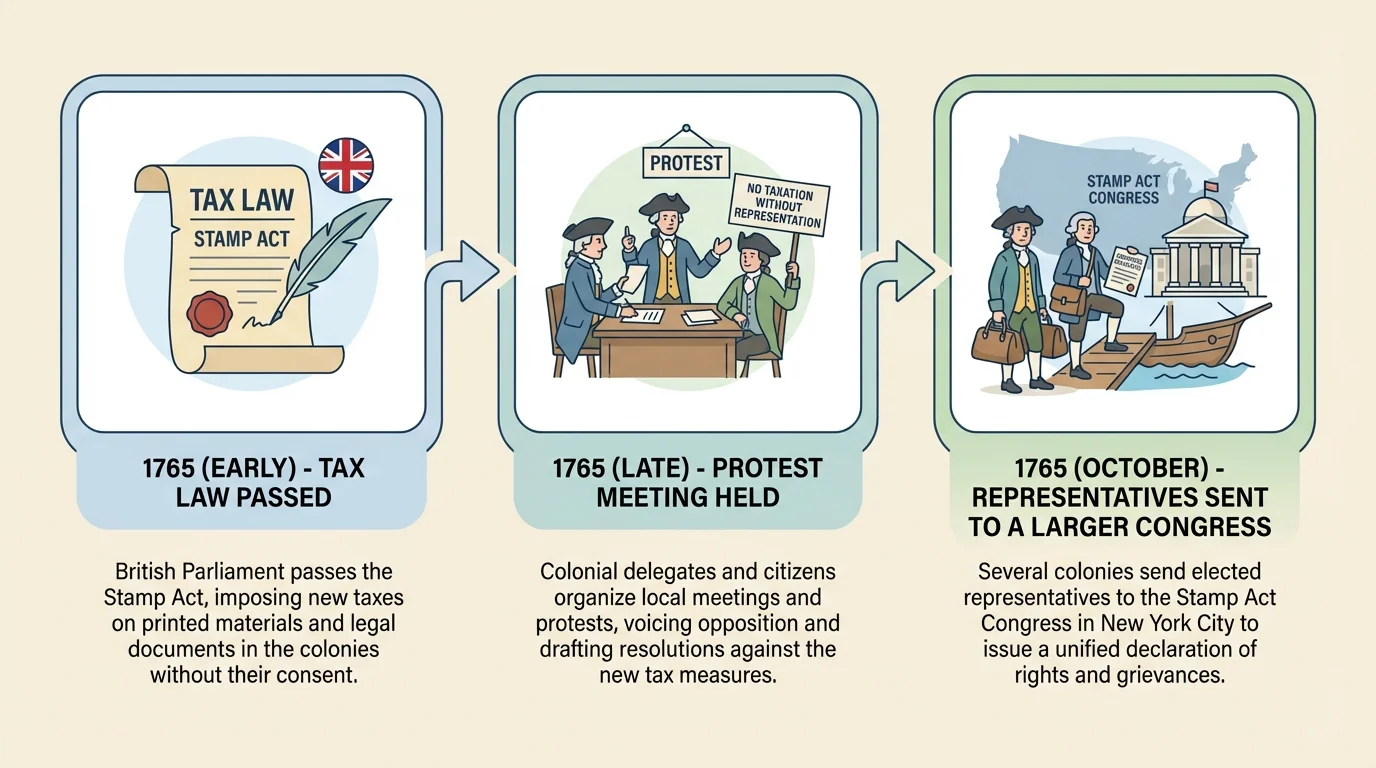
For example, suppose a text explains that colonists were angry about taxes placed on goods they used every day. The text then says that they organized meetings and wrote complaints. Later, representatives from several colonies met to discuss what to do next. The relationship is not just that these events happened. The relationship is that the taxes led to anger and action, and that action led to larger cooperation.
Historical texts also show relationships between individuals. One scientist may build on another scientist's work. One leader may inspire supporters. One explorer's journey may open new trade routes. These are relationships of influence, support, response, and change over time.
Some of the most important historical events began with smaller actions that seemed ordinary at first, such as a meeting, a letter, or a protest. Reading carefully helps you see how those small moments connect to major changes.
Later in a historical reading, [Figure 1] still matters because it reminds you that history often moves like a chain. One event does not stand alone. It often grows out of earlier choices, problems, and reactions.
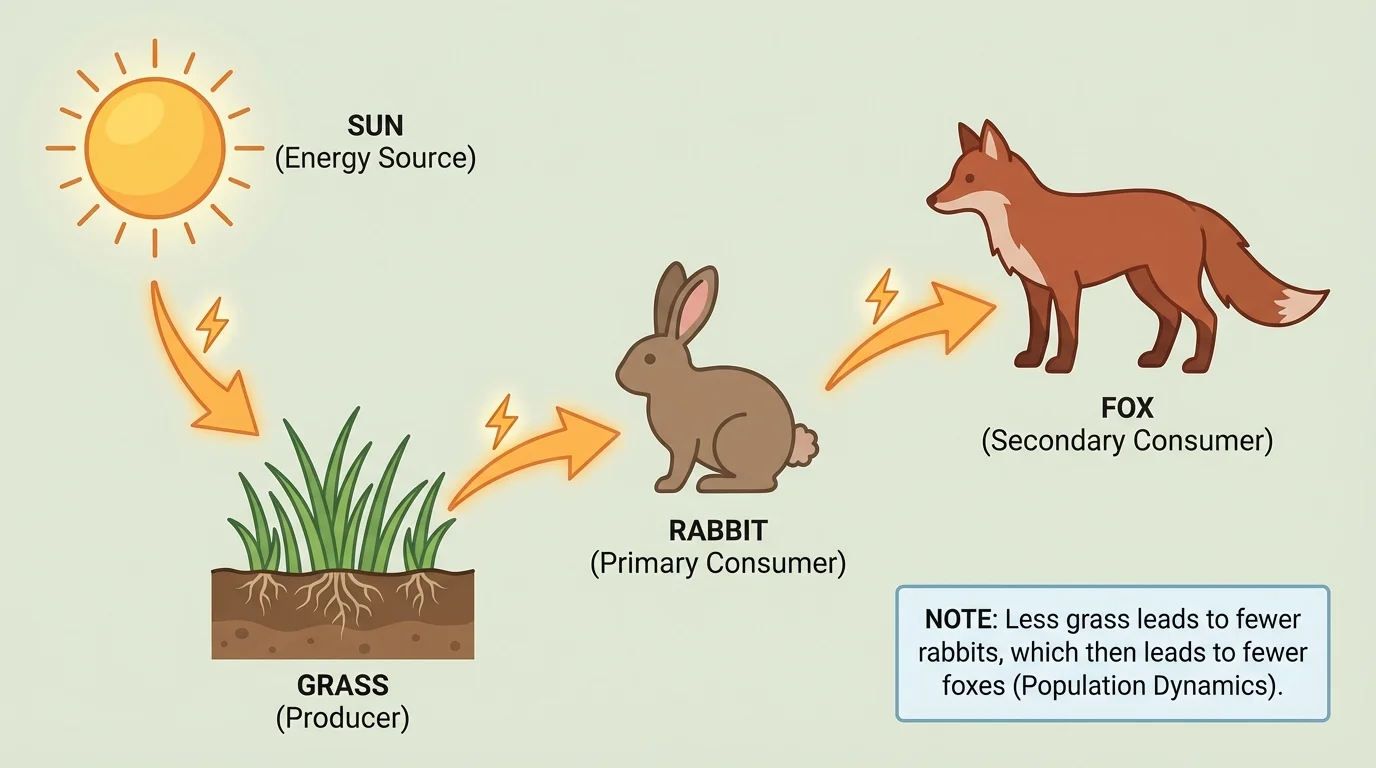
Scientific texts often explain systems in which parts interact with one another, as [Figure 2] shows in a simple food-chain example. In science, a change in one part of a system can affect many other parts. That is why readers need to look for interactions and not just isolated facts.
For example, a science text might describe a habitat with grass, rabbits, and foxes. Rabbits eat grass, and foxes eat rabbits. If a dry season reduces the amount of grass, the rabbit population may shrink because there is less food. Then the fox population may also shrink because there are fewer rabbits to eat. This is a relationship among concepts in an ecosystem: one change affects the whole system.
Scientific relationships can also involve forces, weather, the human body, or materials. If a text says that heating water turns it into vapor, the relationship is between heat and change of state. If a text explains that exercise makes the heart pump faster, the relationship is between activity and body response. If a text says plants use sunlight to make food, the relationship is between energy from the sun and plant growth.
Sometimes a science text compares ideas. For example, it may compare inherited traits and learned behaviors. It may explain that eye color is inherited from parents, but riding a bicycle is learned through practice. Here, the relationship is comparison and contrast. The text helps the reader understand both ideas better by showing how they are different.
Science text example
Text: "Bees visit flowers to collect nectar. As they move from flower to flower, pollen sticks to their bodies and is carried to other flowers. This helps plants reproduce."
Step 1: Identify the two connected ideas.
The two ideas are bees collecting nectar and plants reproducing.
Step 2: Find the interaction.
The bee moves pollen while gathering nectar.
Step 3: Explain the relationship using evidence.
Bees help plants reproduce because pollen sticks to the bees' bodies and is carried to other flowers.
This explanation is stronger than just saying "bees and flowers are connected" because it tells exactly how they are connected.
As you continue reading science, [Figure 2] helps you remember that science often describes webs of connection. One factor can affect another, and the effects can spread through an entire system.
Technical texts explain how to do something or how something works, and they often connect steps and results in a very clear order, as [Figure 3] demonstrates. These texts include directions, manuals, recipes, and explanations of machines or tools.
When reading technical texts, look for step words such as first, next, then, and finally. Also look for words that show purpose, such as in order to or so that. These clues help you understand not only the order of actions but also why each step matters.
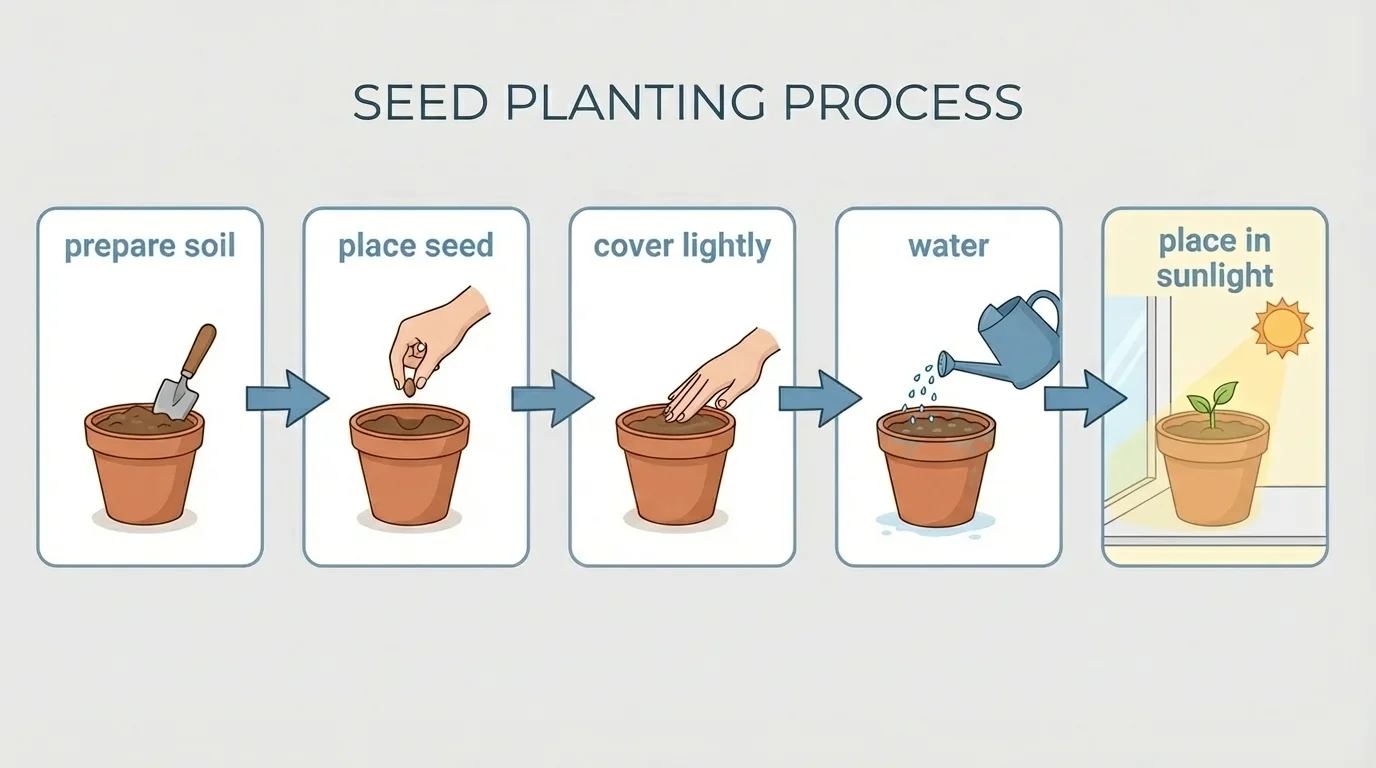
For example, a set of directions for planting a seed may say to loosen the soil, place the seed in the hole, cover it lightly, water it, and place the pot in sunlight. The relationship here is sequence, but it is also cause and effect. If you skip watering, the seed may not sprout well. If you place the pot in darkness, the seedling may not grow properly. Each step affects the outcome.
Technical texts may also explain relationships between parts of a machine. A text about a bicycle may explain that pressing the pedals turns the chain, and the chain turns the back wheel. That is a relationship among parts. The pedals, chain, and wheel work together. If one part fails, the system does not work correctly.
When you read directions, always notice order words and action words. They often tell you which step must happen before another step can work.
Much later in a procedure, [Figure 3] still connects to your reading because it keeps the order of the process clear. In technical reading, understanding the relationship among steps often means understanding the entire text.
The most important part of explaining relationships is using text evidence. Your explanation should come from the text, not from a guess or from your own opinion. You can do this by noticing exact words, repeated ideas, dates, actions, or descriptions.
For example, if a text says, "After the bridge collapsed, engineers tested the materials and discovered a weakness in one support beam," you can explain the relationship like this: The bridge collapse caused engineers to test the materials, and the tests helped them discover the weak beam. This answer uses specific details from the text.
A strong explanation often follows a simple pattern: name the two things being connected, state the kind of relationship, and support it with details. For example: "The relationship between the drought and the food shortage is cause and effect. The text explains that crops dried out because there was little rain, so farmers harvested less food."
Signal words are clues that help readers recognize the kind of relationship a text is showing. They are helpful, but remember that a relationship can still exist even if a signal word is not obvious. Readers should always think about meaning, not just search for one word.
| Relationship pattern | What it shows | Common signal words |
|---|---|---|
| Cause and effect | One thing makes another happen | because, since, so, therefore, as a result |
| Sequence | Things happen in order | first, next, then, after, before, finally |
| Compare and contrast | How things are alike or different | similarly, both, unlike, however, in contrast |
| Problem and solution | An issue and how it is addressed | problem, solution, answer, resolve, fix |
| Interaction | Things affect each other | influences, affects, depends on, responds to |
Table 1. Common relationship patterns in informational texts and signal words that often reveal them.
These patterns appear in all kinds of nonfiction. A biography may show how one person's invention changed transportation. A science article may compare two animal adaptations. A technical manual may explain how one broken part causes a machine to stop working.
Looking at short examples can help you see how to explain relationships clearly.
Historical example
Text: "A city built walls for protection. When new weapons became stronger, the walls no longer worked as well. Leaders then changed the city's defenses."
Step 1: Identify the events or ideas.
The city had walls, weapons became stronger, and leaders changed defenses.
Step 2: Find the connection.
Stronger weapons made the old walls less effective.
Step 3: Explain with evidence.
The relationship is cause and effect. Because weapons became stronger, the city's walls did not protect as well, so leaders changed the defenses.
Notice that the explanation includes both the relationship type and the proof from the text.
Technical example
Text: "To make a paper airplane fly farther, fold the wings evenly and bend the back edges up slightly. These changes help the airplane stay balanced in the air."
Step 1: Identify the steps and result.
The steps are folding the wings evenly and bending the back edges up. The result is a longer flight.
Step 2: Determine the relationship.
The relationship is between the design changes and the airplane's balance.
Step 3: Explain using details.
The paper airplane flies farther because the even folds and bent edges help it stay balanced in the air.
In both examples, the answer is strongest when it explains how one thing affects another.
One common mistake is naming a topic instead of a relationship. If a text is about volcanoes, "volcanoes" is the topic. But if the text explains that pressure builds under the earth and causes an eruption, the relationship is cause and effect between pressure and eruption.
Another mistake is giving too little detail. Saying "the king and the people are related" is too vague. A better explanation is "The king raised taxes, and the people protested because they believed the taxes were unfair." Now the relationship is clear.
A third mistake is using outside knowledge instead of text evidence. Outside knowledge can be helpful, but your answer should be based on what the text actually says. If the text does not mention a detail, do not pretend it does.
"Readers who notice connections understand more than readers who only collect facts."
Another challenge is that some texts contain more than one relationship at the same time. A passage about a scientific discovery might include sequence, because the steps happened in order, and cause and effect, because one discovery led to another. Good readers can tell which relationship the question is asking about.
When you write about relationships in a text, your answer should be clear, complete, and supported. A useful way to organize your thinking is to answer three questions: What two things are connected? What kind of relationship do they have? Which details prove it?
You can use sentence starters like these:
Here is a strong response to a science passage: "The relationship between sunlight and plant growth is cause and effect. The text explains that plants use sunlight to make food, so without enough sunlight they do not grow well." This response names the ideas, explains the connection, and includes evidence.
Here is a strong response to a history passage: "The relationship between the new law and the protests is cause and effect. The law upset the colonists, so they organized meetings and protests." Again, the answer is direct and supported.
As you become a stronger reader, you will start to notice that informational texts are full of connected parts. Historical events build on earlier events. Scientific ideas interact in systems. Technical steps work together to produce results. Seeing those connections helps you understand the text more deeply and explain your thinking more clearly.
