Some stories are short, but they can teach important lessons. A fox may talk, a turtle may win a race, or a clever child may solve a problem. Even when a story is short, it can help us think about kindness, honesty, courage, or patience. When readers recount a story, they tell it again in a clear way. They also think about what the story is really trying to teach.
[Figure 1] Reading stories is a little like following footprints. We notice who is in the story, where the story happens, what happens first, next, and last, and how the problem is solved. Then we ask an important question: What does this story want me to learn?
A recount is a retelling of a story using the most important parts. When you recount, you do not tell every single little detail. You tell the parts that matter most.
A good recount usually includes the characters, the setting, the problem, important events, and the ending. It goes in order so the listener or reader can understand the story clearly.
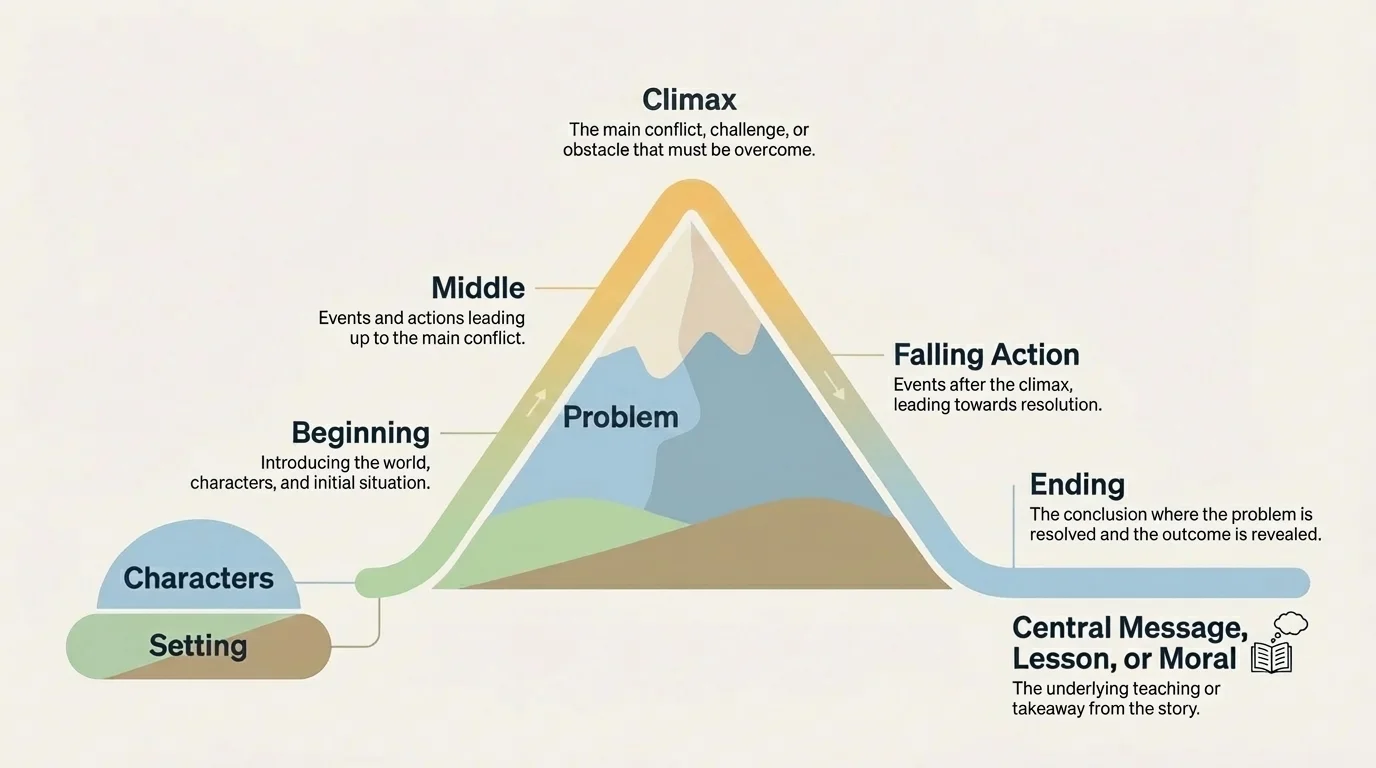
The character is the person or animal in the story. The setting is where and when the story happens. In many stories for young readers, the setting may be a forest, a village, a farm, or long ago in a special place.
Recount means to tell a story again using the important details in the correct order. A central message is the big idea the story teaches. A moral is the lesson about how people or characters should act.
When you recount well, you help yourself understand the story better. Recounting is not just memory work. It helps you notice which events are most important and how those events connect to the story's lesson.
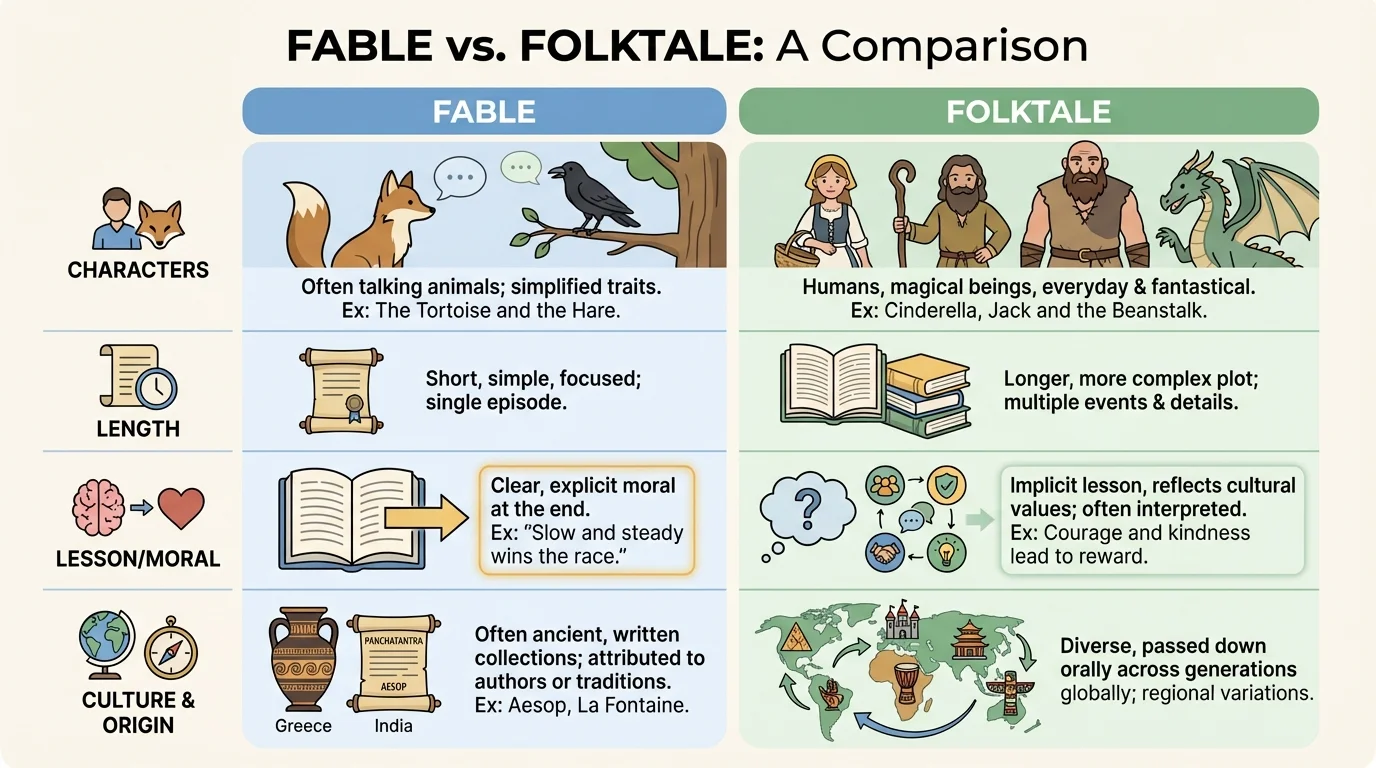
[Figure 2] Two kinds of literary stories you may read are fables and folktales. These story types are alike in some ways and different in other ways. Both can teach lessons. Both can be passed from one person to another for a long time.
A fable is a short story that often has animals that talk and act like people. Fables usually teach a clear moral. One famous example is The Tortoise and the Hare. The animals act in human-like and sometimes surprising ways, but the lesson is serious.
A folktale is a traditional story shared in a group of people or a culture. Folktales may include people, animals, magic, tricksters, or heroes. They can explain ideas, share values, or entertain listeners. Some folktales teach a lesson very clearly. Others teach it more gently through what happens in the story.
Stories come from many places and many people. A folktale from West Africa, a fable from ancient Greece, and a story told by Native American communities may all feel different, but each one can carry wisdom. That is one reason stories matter so much.
Many folktales were first told out loud long before they were written in books. Families and communities remembered them and passed them on from generation to generation.
Because stories travel across time and place, there may be different versions of the same folktale. One version might happen in a snowy place, while another version happens in a hot grassland. The details can change, but the lesson can stay strong.
To recount clearly, start with who and where. Then tell what problem begins the action. After that, tell the most important events in order. Last, explain how the story ends.
Sequence words can help. Words like first, next, then, and finally make the order easy to follow. These words act like stepping-stones across the story.
When recounting, keep the important details and leave out tiny details that do not change the story. For example, if a rabbit wore a blue scarf, that detail may not matter unless the scarf helps solve the problem. The goal is to retell the story so that someone understands the main action.
Example: Recounting The Tortoise and the Hare
Step 1: Name the characters and setting.
The characters are the tortoise and the hare. The story happens during a race.
Step 2: Tell the problem.
The hare thinks he is much faster than the tortoise and is not worried about losing.
Step 3: Tell the important events in order.
First, the race starts. Next, the hare runs far ahead. Then, he stops to rest because he feels too sure of himself. The tortoise keeps going slowly and steadily.
Step 4: Tell the ending.
Finally, the tortoise reaches the finish line first and wins the race.
This recount includes the important parts without telling every tiny detail.
A strong recount is clear and easy to follow. It should help someone who did not read the story understand what happened from start to finish.
[Figure 3] Every story does not say its lesson in exactly the same way. Sometimes the lesson is written right at the end. Sometimes readers must think carefully about the characters' choices and what happens because of those choices.
To find the central message, ask questions such as: What problem did the character face? What choice did the character make? What happened because of that choice? What does the ending teach?
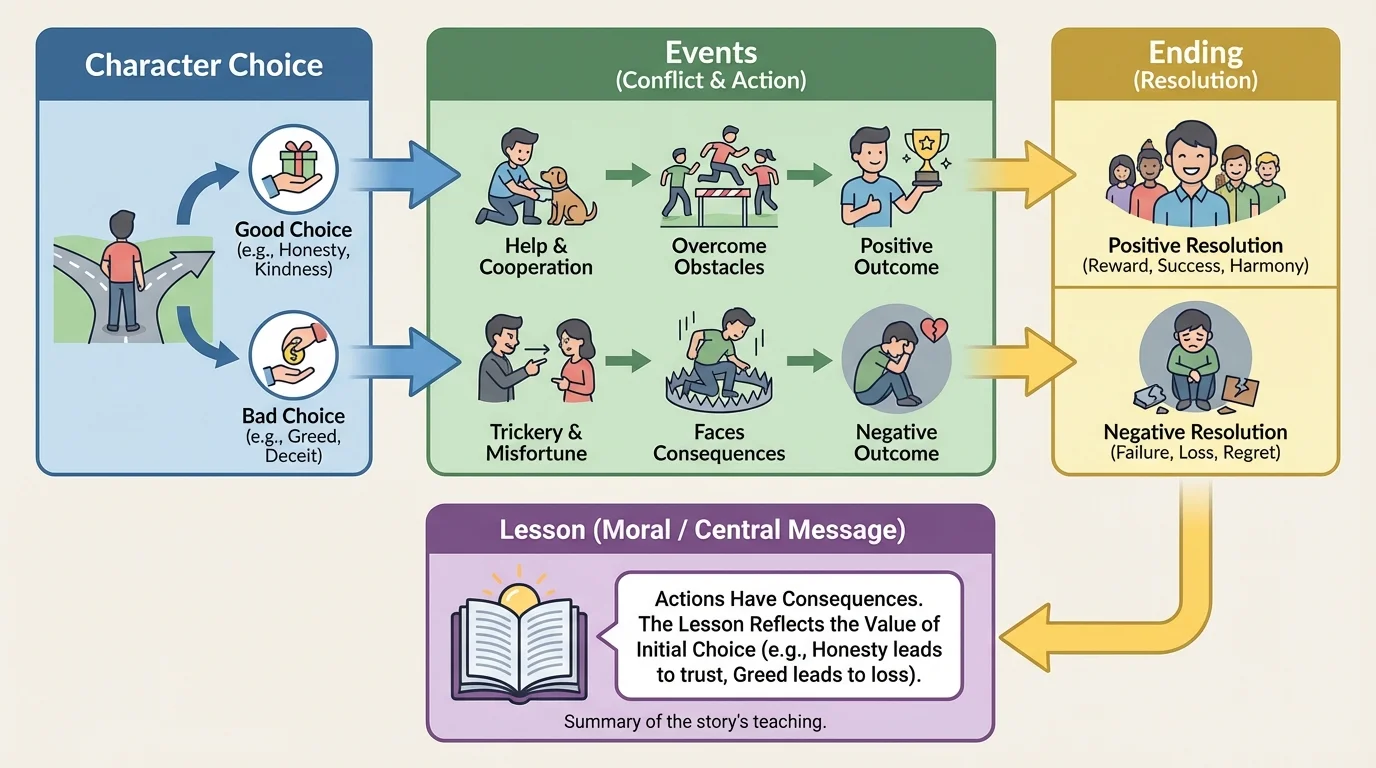
The central message is not just one event from the story. It is the bigger idea. In The Tortoise and the Hare, the big idea is not simply that a tortoise won a race. The lesson is that steady effort can beat bragging and carelessness.
A moral is often a rule or lesson about behavior. A central message can be a little broader. For young readers, these two ideas often work together. Both help us understand what the story teaches.
How to tell the difference between a detail and a lesson
A detail tells what happened in one part of the story. A lesson tells what readers can learn from the whole story. "The fox lost the grapes" is a detail. "People sometimes pretend not to want what they cannot have" is a lesson.
As you saw earlier in [Figure 1], a recount follows the story structure. That structure also helps with finding the moral, because the ending often reveals what the whole story means.
[Figure 4] People all around the world tell stories to teach, entertain, and remember important values. The spread of story traditions across places reminds us that wisdom can come from many cultures.
For example, some West African folktales feature Anansi the spider, who is clever and tricky. Ancient Greek fables, often linked with Aesop, use animals to teach lessons. Chinese folktales may teach respect, wisdom, or careful thinking. Native American stories may explain nature, honor community, or teach responsibility.
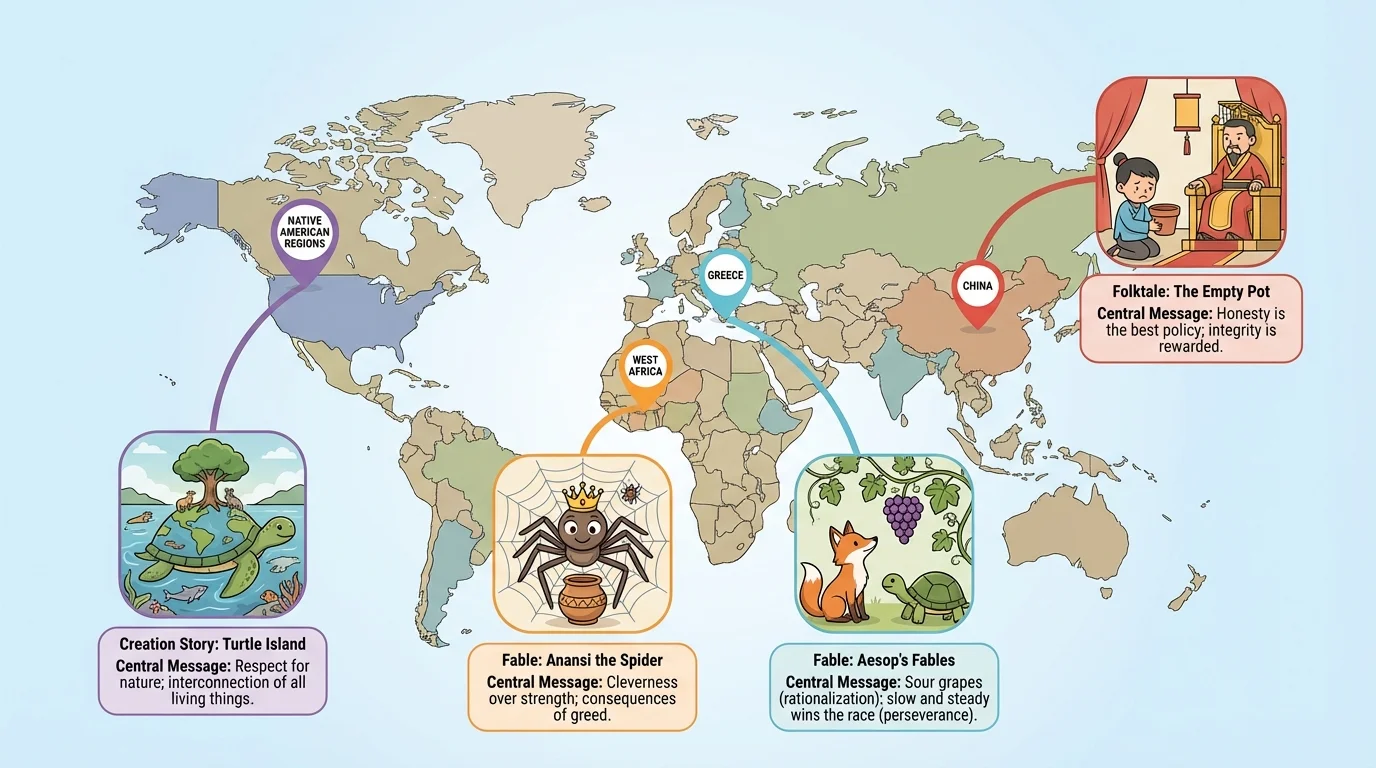
Even when the places and characters differ, stories may share similar lessons. A trickster story from one culture and a fable from another culture may both warn readers not to be greedy. Another pair of stories may teach that kindness matters more than pride.
| Story Tradition | Possible Characters | Common Lessons |
|---|---|---|
| Fables from Greece | Talking animals | Honesty, patience, humility |
| West African folktales | Anansi, animals, families | Cleverness, consequences, fairness |
| Chinese folktales | Children, elders, wise people | Respect, wisdom, hard work |
| Native American stories | Animals, nature figures, people | Responsibility, balance, community |
Table 1. Examples of story traditions from different cultures and the lessons they may teach.
Looking at stories from different cultures helps readers grow. It teaches that people may tell stories in different ways, yet many human hopes and lessons are shared.
Let us look more closely at a few stories and their messages. These examples show that recounting the important events can help us find the lesson.
Example: The Boy Who Cried Wolf
A boy keeps tricking people by shouting that a wolf is coming when there is no wolf. The villagers run to help, but he is only joking. Later, a real wolf comes. This time the villagers do not believe him, and no one comes to help.
The moral is that if you lie, people may not trust you when you tell the truth.
Notice how the lesson comes from the pattern in the story. The boy makes a bad choice again and again. The ending shows the result of that choice. That is the clue readers use to find the moral.
Example: Anansi and a Trick
In one Anansi tale, Anansi tries to trick others to get food or prizes for himself. At first, his plan seems clever. Later, the trick causes trouble, and Anansi loses what he wanted or learns a hard lesson.
The central message may be that tricking others for selfish reasons can lead to problems.
That message is not about one spider only. It is about behavior. It teaches readers to think beyond the plot and notice the bigger idea.
Example: A folktale about kindness
A poor traveler shares food with a stranger. Later, the stranger helps the traveler in return. The recount is simple: the traveler is kind, kindness is remembered, and help returns.
The central message is that kindness can come back to you.
As in [Figure 3], we can trace the path from choice to result. Kind action leads to a helpful ending, so the lesson grows naturally out of the story events.
Recounting and finding the lesson are partners. If you miss an important event, you may miss the message. If you include the key problem, character choices, and ending, the lesson becomes easier to see.
Suppose a story is about a girl who keeps practicing a song even when it is hard. In the end, she performs well. A good recount would include her struggle, her practice, and her success. From those details, readers can tell that the lesson may be about perseverance, or not giving up.
Sometimes two readers may say the lesson in different words, and that is okay if the idea matches the story. One reader might say, "Keep trying." Another might say, "Practice helps you improve." Both fit the events.
When you answer questions about a story, always go back to the text in your mind. Think about who, where, what happened, and why it mattered. Those details help you recount accurately and choose a lesson that fits.
Stories are powerful because they can be fun and meaningful at the same time. A talking crow, a sly spider, or a brave child may seem very different, but each can help readers think about real life. That is why fables and folktales stay important across time.
