Have you ever heard someone tell about a fun day, but they talked so fast that you missed the best part? Speaking is more than just saying words. When you speak, you help other people build a picture in their minds. A strong speaker shares ideas in a way that listeners can understand, remember, and enjoy.
Students use speaking skills every day. You might explain a science topic, tell a story to classmates, or recount something that happened at recess or on a family trip. In each case, your job is to share information in a clear way. Good speakers use the right details, stay organized, and speak at a pace that is easy to follow.
Speaking helps you learn and connect with others. When you answer a question in class, give directions to a partner, or present a topic, your voice carries your ideas. If your ideas are mixed up, too quiet, or too fast, listeners may become confused. If your words are clear and well organized, listeners can focus on what you mean.
Clear speaking also shows respect. It tells your audience, "I want you to understand me." That matters in informal situations, like talking with friends, and in formal situations, like presenting to a class or speaking to a principal.
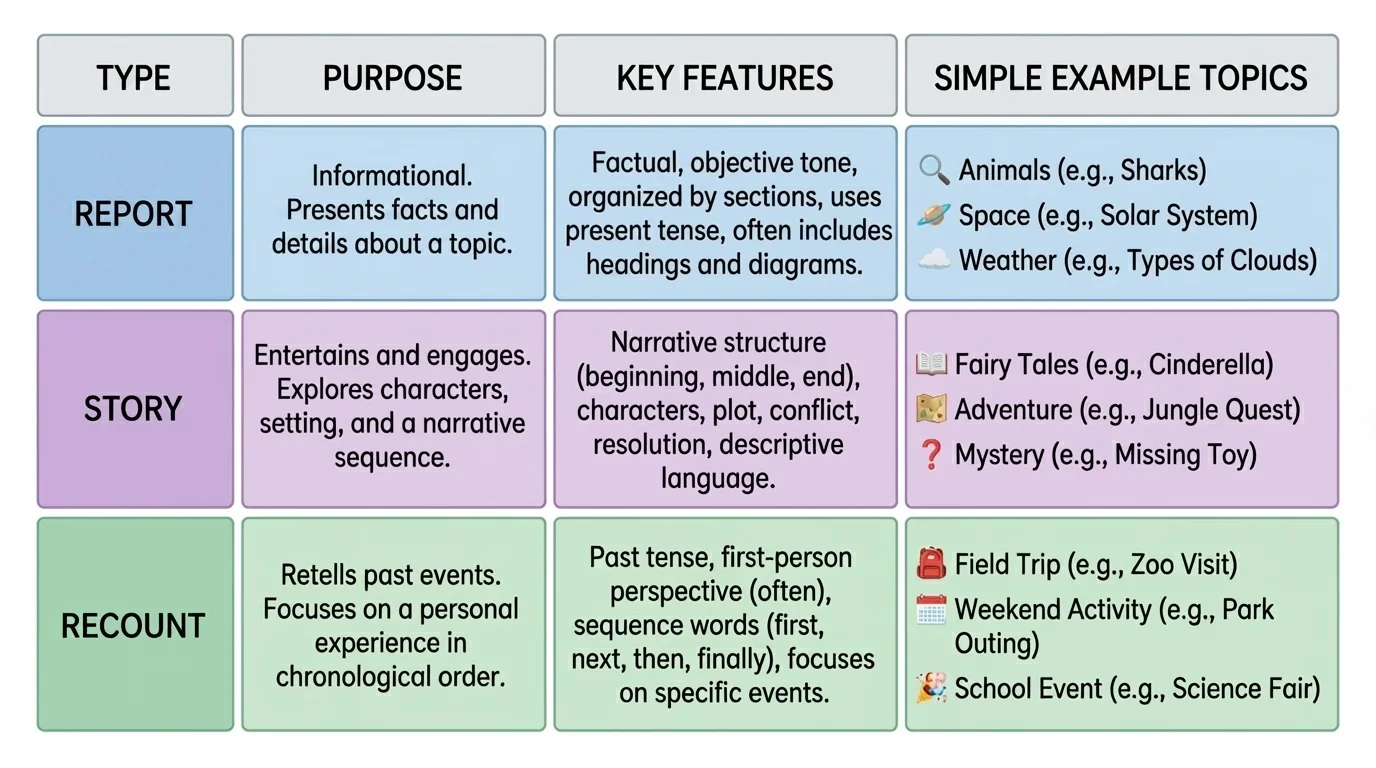
Report means to speak about a topic or a text by sharing important facts and details. Story means to tell about characters and events in a way that entertains or teaches. Recount means to tell about something that really happened, usually in the order it happened.
Each kind of speaking has a different purpose, but all of them need clear words, helpful details, and an order that makes sense.
There are three speaking jobs you will often do in school, and each one has its own purpose. A report teaches listeners about a topic or text. A story takes listeners through made-up or real events in an engaging way. A recount explains something that happened to you or someone else.
[Figure 1] A report might be about dolphins, a book you read, or a famous person. A story might be about a lost puppy, a brave explorer, or a magical tree house. A recount might be about your soccer game, your birthday party, or the time your class planted seeds.
| Kind of speaking | Main purpose | What it includes |
|---|---|---|
| Report | To inform | Facts, examples, important details |
| Story | To entertain or teach | Characters, setting, problem, events, ending |
| Recount | To retell something real | What happened first, next, then, and last |
Table 1. Comparison of three common kinds of speaking.
Even though these types are different, they all work best when the speaker stays focused and uses details that match the purpose.
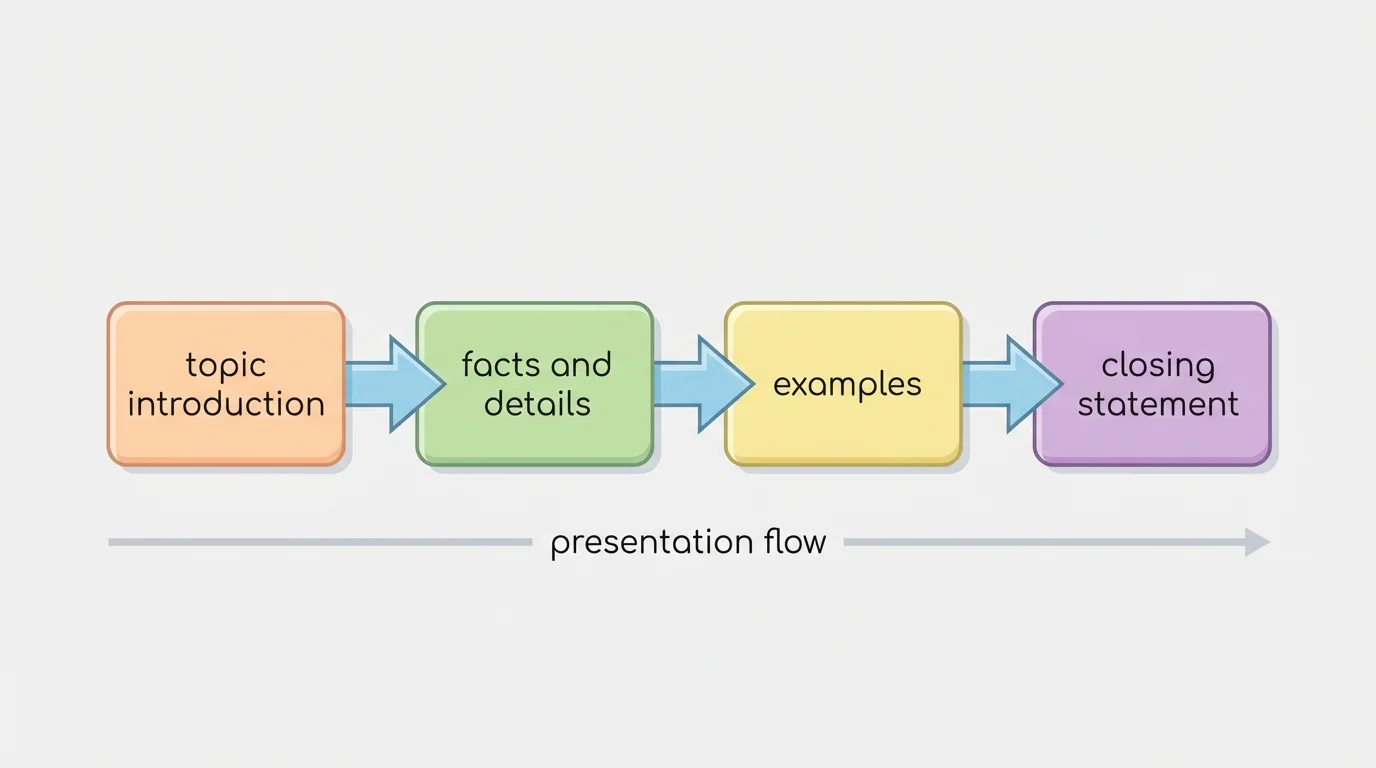
When you give a report, you are helping listeners learn something. A good report is organized. It usually begins by naming the topic. Then it gives facts, examples, and important details. At the end, it reminds listeners of the main idea.
[Figure 2] Suppose your topic is frogs. You might begin by saying, "Today I am going to give a report about frogs." Then you could tell where frogs live, what they eat, and how they grow. You should choose facts that fit the topic instead of adding random information.
Appropriate facts are true pieces of information that belong to the topic. If you are reporting on frogs, saying that frogs can live near ponds is an appropriate fact. Talking about your favorite ice cream flavor is not. Good speakers ask themselves, "Does this detail help my audience understand the topic?"
Relevant, descriptive details make facts stronger. Instead of saying, "Frogs are interesting," you might say, "Some frogs have long back legs that help them leap far and swim quickly." That extra detail helps listeners picture and understand the idea better.
Example of a short report opening
"I want to tell you about dolphins. Dolphins are sea mammals, not fish. They breathe air through a blowhole on top of their heads. They are known for being smart and for living in groups called pods."
This short report starts with the topic and follows with facts that match it.
A report should also have a sensible order. You might group details by category, such as appearance, habitat, and behavior. Or you might go in the order the text explains them. Later, when you check your report, make sure your topic introduction leads into facts and then a closing idea.
A story is different from a report because it pulls listeners into events. Stories may be made up or based on real life, but they still need order and details.
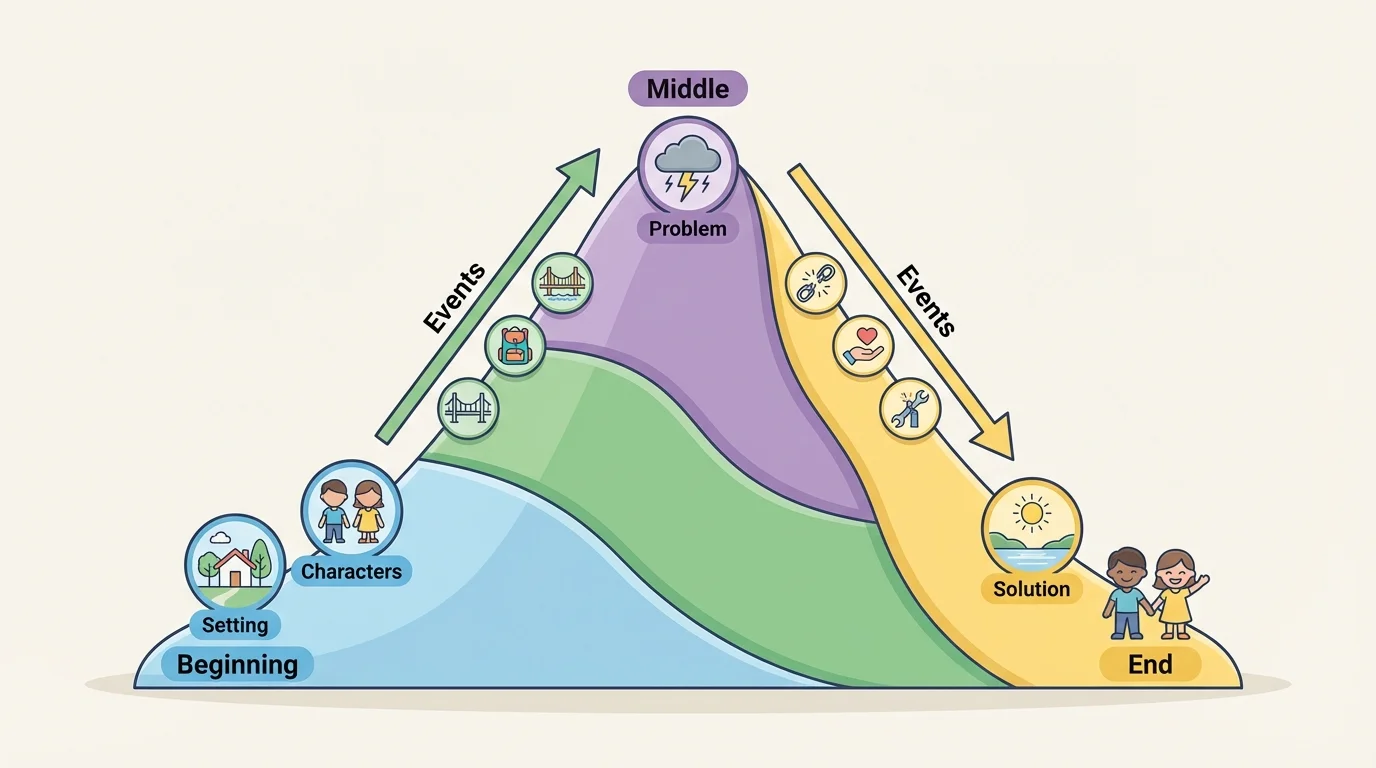
[Figure 3] Most stories have characters, a setting, a problem or challenge, and a solution or ending. The beginning introduces who and where. The middle tells what happens. The end explains how the problem is solved or how the events finish.
Descriptive details are very important in stories. They help listeners imagine the action. Instead of saying, "The dog ran," you could say, "The muddy brown dog dashed across the yard with its floppy ears bouncing." That kind of detail paints a picture.
You do not need to use too many details. If you add every tiny thing, your listeners may lose track of the main action. Choose details that help the audience understand the scene, the feeling, or the important event.
Strong stories balance action and detail. If a story has action but no detail, it feels plain. If it has detail but no action, it feels slow. Good storytellers move the events forward while also helping listeners see, hear, and feel what is happening.
Here is a short example: "On a windy afternoon, Maya spotted her red kite stuck high in an oak tree. She tugged the string, but it would not move. Then her older brother brought a long pole, and together they gently pulled the kite free." The details are not too many, but they make the story vivid. The setting leads to a problem and then to a solution.
To recount an experience means to retell something that really happened. This kind of speaking often uses words like first, next, then, and finally. These words help listeners follow the order of events.
If you are recounting a field trip, you might begin by saying where you went and why. Then you could explain what happened when you arrived, what you saw, what you learned, and what happened at the end. You may also include your thoughts or feelings, such as being excited, surprised, or proud.
A recount should stay truthful. You are not making up new events. You are choosing the most important parts of what happened and sharing them clearly. This helps your audience understand your experience.
For example, "First, our class rode the bus to the farm. Next, we fed the goats and learned how farmers care for animals. Then we picked apples. Finally, we returned to school tired but happy." The order helps listeners follow along easily.
Many strong speakers quietly think through the words first, next, then, and last before they begin. That simple plan helps their speaking sound smooth and organized.
Recounts are common in daily life. You use them when you explain what happened during a game, describe your weekend, or tell how you solved a problem with a friend.
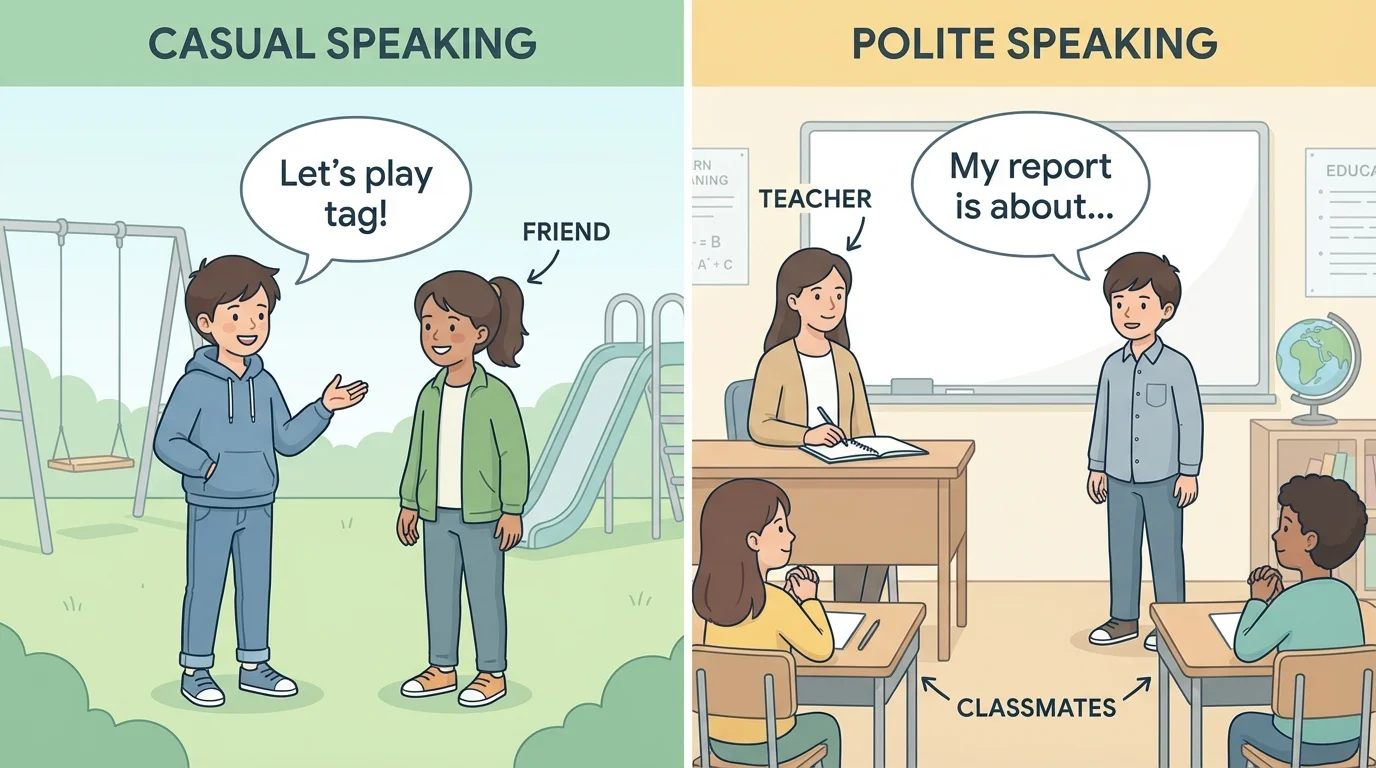
Good speakers choose words to fit the audience and purpose. In an informal situation, such as talking with a friend, your language can be relaxed. In a formal situation, such as reporting to the class, you should sound more careful and complete.
[Figure 4] For example, with a friend you might say, "That book was super cool!" In a class presentation, you might say, "The book was interesting because the main character solved problems in a clever way." Both sentences make sense, but one fits a classroom presentation better.
Formal speaking does not mean using giant words. It means choosing respectful, clear language. You can still sound natural. You simply avoid slang that may confuse listeners, and you speak in complete thoughts.
| Situation | Language style | Example |
|---|---|---|
| Talking to a friend | Informal | "That was awesome!" |
| Sharing in class | More formal | "I enjoyed it because it taught me something new." |
| Speaking to a principal | Formal and respectful | "Thank you for listening to my ideas." |
Table 2. Examples of language choices in different speaking situations.
When you are unsure which language to use, think about who is listening. That question helps you choose words that fit the moment. This contrast becomes easier to notice when you compare informal and formal speaking situations.
Clear speaking depends on both your words and your delivery. Even a well-planned report or story can be hard to understand if it is mumbled, rushed, or too quiet.
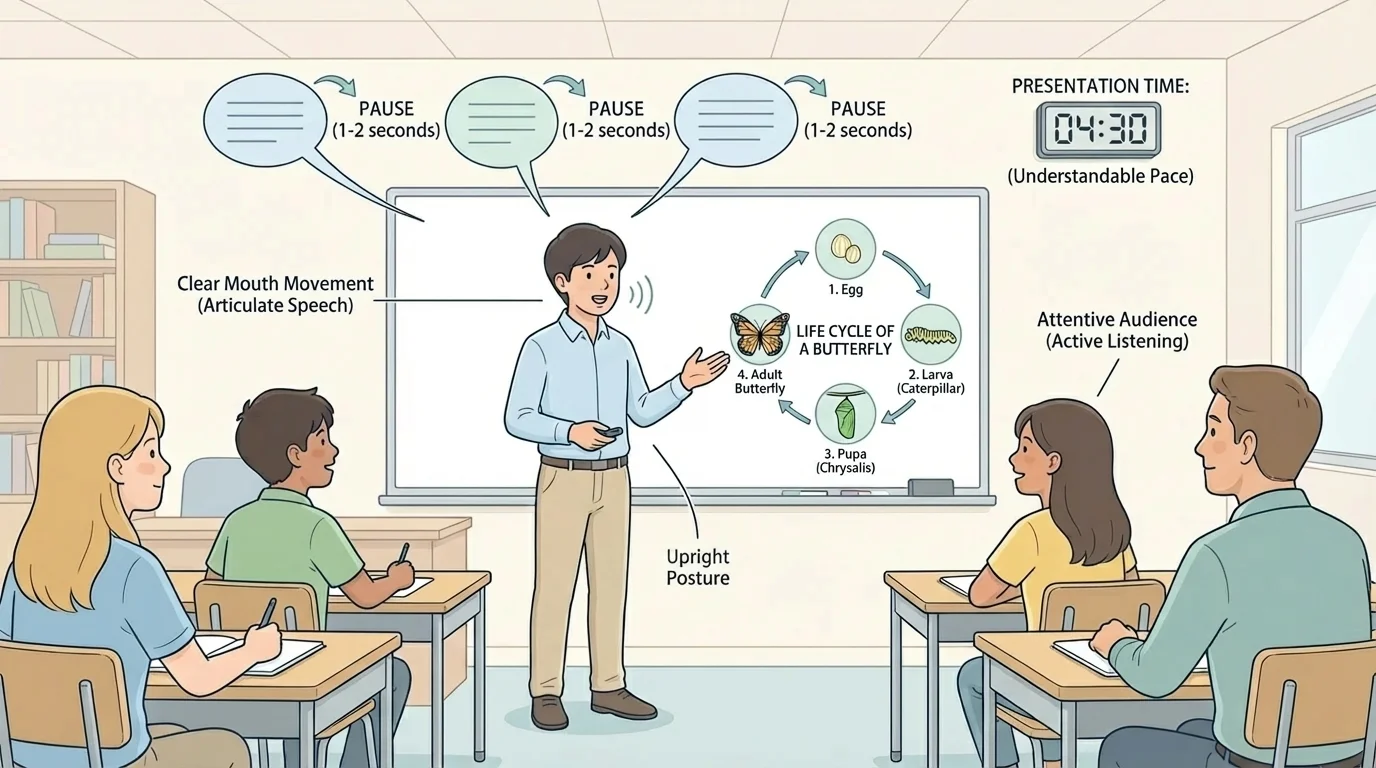
[Figure 5] Speaking clearly means saying words in a way listeners can hear and understand. Open your mouth enough to form the sounds. Face your audience when possible. Use a voice that is strong enough for the room, but do not shout.
An understandable pace means not too fast and not too slow. If you race through your words, important details may get lost. If you speak far too slowly, listeners may have trouble staying focused. Pausing at commas, periods, or between ideas helps your audience keep up.
Expression matters too. Your voice should match the meaning. If you are telling about an exciting surprise, your voice may sound lively. If you are sharing a serious fact, your voice may sound calm and thoughtful. Expression helps listeners understand the feeling behind the words.
Example of pace and clarity
Fast, unclear version: "Yesterdaywewenttothezooandsawapenguinshowanditwasgreat."
Clearer version: "Yesterday, we went to the zoo. We saw a penguin show, and it was great."
The second version gives each idea space, so the audience can understand it.
If you ever feel nervous, take a breath before you begin your next sentence. That one small pause can improve both your pace and your confidence. Later, when you practice, focus on posture, eye contact, and calm pacing working together.
Strong speakers rarely begin with no plan at all. Before speaking, think about your main idea, your audience, and the order of your details. A short plan can help you stay on track.
You do not need to memorize every word. In fact, speaking from a few notes often sounds more natural than trying to remember a long script. You can jot down key words such as topic, fact one, fact two, example, and ending.
For a report, your notes might be "Topic: bees; job in nature; making honey; helping flowers grow." For a story, your notes might be "boy, storm, lost hat, dog finds it." For a recount, your notes might be "first bus ride, then museum, last lunch." These notes guide you without forcing you to sound stiff.
Remember that listeners cannot reread your spoken words the way they can reread a page. That is why speaking needs especially clear order and helpful transitions.
Planning also helps you choose what to leave out. Not every detail belongs in your speaking. Pick the details that matter most to your purpose.
Speaking and listening work together. A strong speaker pays attention to the audience. If listeners look confused, you may need to explain a part again or add a clearer detail. If they seem interested, you can continue with confidence.
Sometimes listeners ask questions after a report or recount. If that happens, listen carefully to the question before answering. You do not have to rush. A thoughtful answer is better than a quick, confusing one.
Good speakers also show respect when others are speaking. Listening carefully to classmates helps you learn from their word choices, their pacing, and their organization.
One common problem is rushing. A speaker gets excited or nervous and talks too fast. The fix is to slow down, breathe, and pause between ideas.
Another problem is mumbling. This happens when words are not pronounced clearly. The fix is to face the audience, speak with enough volume, and say each word carefully.
A third problem is having too few details. If you say, "It was fun," listeners may want to know why. Add a relevant detail such as, "It was fun because we built a tall bridge from blocks, and it stayed standing."
A fourth problem is having too many details. If every tiny moment is included, your main point can disappear. Choose the most important facts or events and leave out the parts that do not help.
Another problem is getting events out of order. Sequence words such as first, next, then, and finally help keep speaking organized.
"Say it clearly, say it in order, and say what matters most."
— Guiding rule for strong speakers
These fixes are simple, but they make a big difference. Small changes in pace, order, and detail can turn a confusing talk into one that is easy to follow.
You use these skills in many places. In class, you might report on an animal, tell a story based on a picture, or recount your weekend. At home, you might explain game rules to a sibling or tell your family about a school event. On a team, you might describe what happened during a game or give ideas for what to do next.
Think about a student explaining how a seed grows. That student needs facts for a report. Think about another student sharing a tale about a dragon protecting a garden. That student needs story details. Think about a child describing a rainy-day walk to the bus stop. That child is recounting an experience. Different purposes, but the same need for clear speaking.
When speakers choose the right details, organize their ideas, and use language that fits the situation, they become easier to understand. Their audience can learn, enjoy, and respond.
