Have you ever followed directions for a game, a recipe, or a science activity and noticed that the order really matters? If someone told you to bake cookies before mixing the dough, it would not make sense. Authors know this too. When they write, they connect sentences and paragraphs in ways that help readers understand their ideas.
When you read informational text, you are not just reading one sentence at a time. You are also noticing how each idea links to the next. One sentence may tell a cause, and the next may tell the effect. One paragraph may describe one animal, and the next may compare it to another animal. Good readers pay attention to these links because they help the whole text make sense.
A logical connection is the clear way one idea relates to another idea. The word logical means it makes sense. In reading, logical connections help us understand why an author put ideas in a certain order or grouped them in a certain way.
Logical connection means the relationship between ideas in a text. It tells how one sentence or paragraph is linked to another, such as by order, comparison, or cause and effect.
Suppose you read these two sentences: "The sun went down. The sky grew dark." These sentences are connected by cause and effect. The setting sun causes the sky to grow dark. Now read these: "First, Maya put on her helmet. Next, she got on her bike." These are connected by sequence, or order.
When readers notice these relationships, they understand the text better. They can explain what happens, why it happens, and how the ideas fit together.
A sentence can connect to the sentence right before it. A paragraph can connect to the paragraph before it too. Sometimes the author adds more information. Sometimes the author gives an example. Sometimes the author changes direction and explains a different side of the topic.
A paragraph is a group of sentences about one main idea. In informational text, one paragraph often introduces an idea, and the next paragraph may explain it more, compare it to something else, or show what happened because of it.
For example, one paragraph might tell how bees collect nectar. The next paragraph might explain how that nectar becomes honey. Those paragraphs are connected because the second one explains what happens next. In another text, one paragraph might describe frogs, and the next might describe toads. Those paragraphs may be connected by comparison.
Readers already know that every sentence gives information. This skill goes one step further: it asks how the information pieces are connected.
Thinking about these links is like looking at the roads on a map. Each road goes somewhere. In a text, each sentence leads to another idea, and each paragraph helps the reader move through the topic.
Authors use several common patterns to connect ideas, as [Figure 1] shows. Learning these patterns helps readers quickly recognize what kind of relationship they are seeing in a text.
Some of the most common connections are sequence, cause and effect, comparison, problem and solution, and main idea with supporting details. Not every text uses all of these, but many informational texts use several of them.
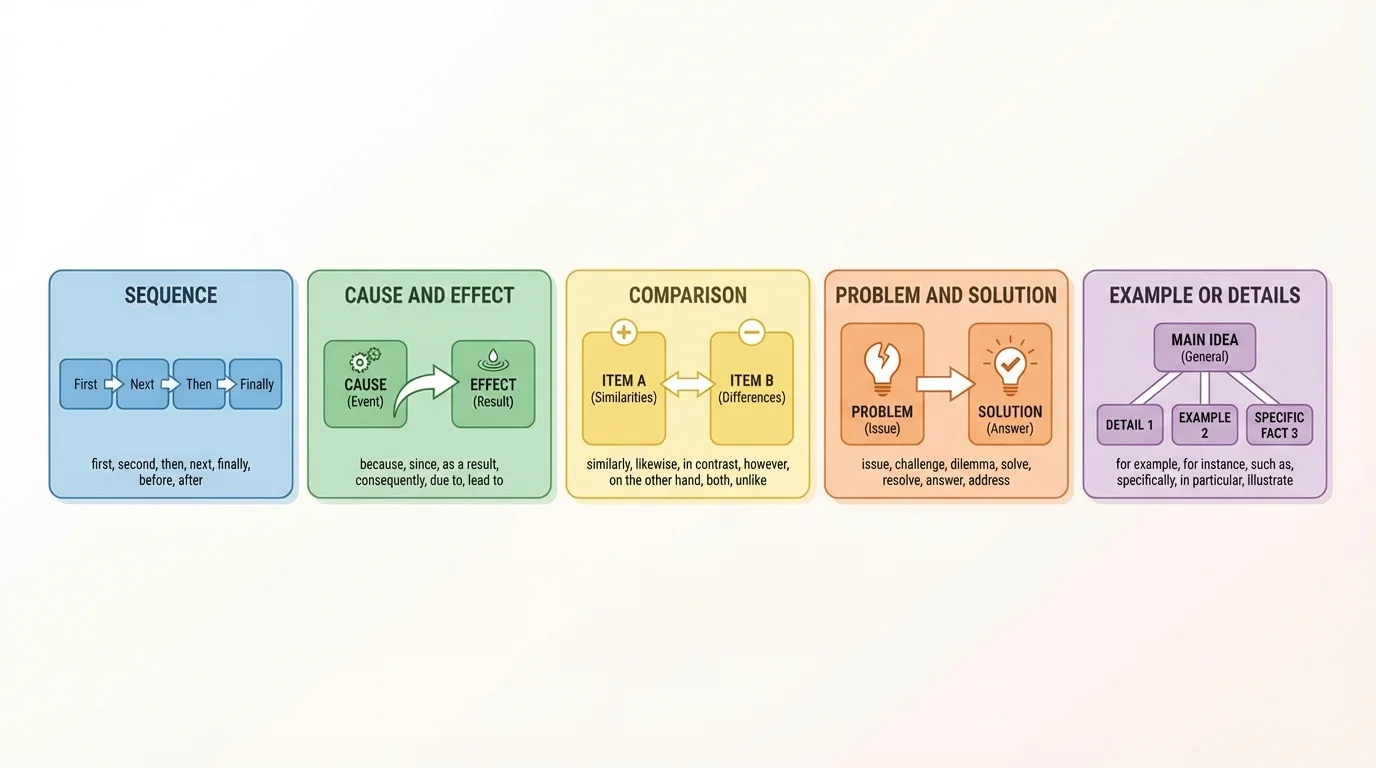
Here is a quick look at these connections:
| Connection Type | What It Shows | Example |
|---|---|---|
| Sequence | Ideas in order | First the egg hatches, then the chick grows. |
| Cause and effect | Why something happens and what happens | It rained, so the ground became wet. |
| Comparison | How things are alike or different | Both lions and tigers are big cats, but they have different body features and fur patterns. |
| Problem and solution | A difficulty and how it is fixed | The plant drooped, so Mia watered it. |
| Main idea and details | A big idea with facts that support it | Penguins are excellent swimmers. Their wings help them move in water. |
Table 1. Common logical connections in informational texts with simple examples.
These patterns do not just help writers. They help readers too. When you know the pattern, you know what kind of information to expect next.
Authors often use clue words, sometimes called signal words, to show relationships. Signal words are not magic, but they are helpful hints.
Using clue words wisely
Signal words can point to a connection, but readers should also think about the meaning of the sentences. For example, the word because often shows cause and effect, while words like first, next, and finally often show sequence.
Here are some common signal words:
| Connection | Signal Words |
|---|---|
| Sequence | first, next, then, later, finally |
| Cause and effect | because, so, since, as a result |
| Comparison | like, unlike, both, similar, different, however |
| Problem and solution | problem, solution, solve, answer |
| Example or detail | for example, for instance, also, such as |
Table 2. Signal words that often help readers identify logical connections.
Sometimes a text has no signal words at all. Even then, readers can figure out the connection by thinking carefully about the ideas. For example, "The ice melted. Water dripped onto the floor." There is no word like because, but the connection is still cause and effect.
Sequence means the order in which things happen. Authors use sequence when they explain steps, retell events, or show stages in a process, as [Figure 2] illustrates.
You often find sequence in texts about life cycles, directions, experiments, and history. A text might say, "First, the caterpillar hatches. Next, it eats leaves. Then it forms a chrysalis. Finally, it becomes a butterfly." Each sentence adds the next step in order.
Here is another example: "First, Elena found a pot. Second, she filled it with soil. Third, she planted the seed. Last, she watered it." The connection between these sentences is not comparison or cause and effect. It is sequence because the ideas are arranged from beginning to end.
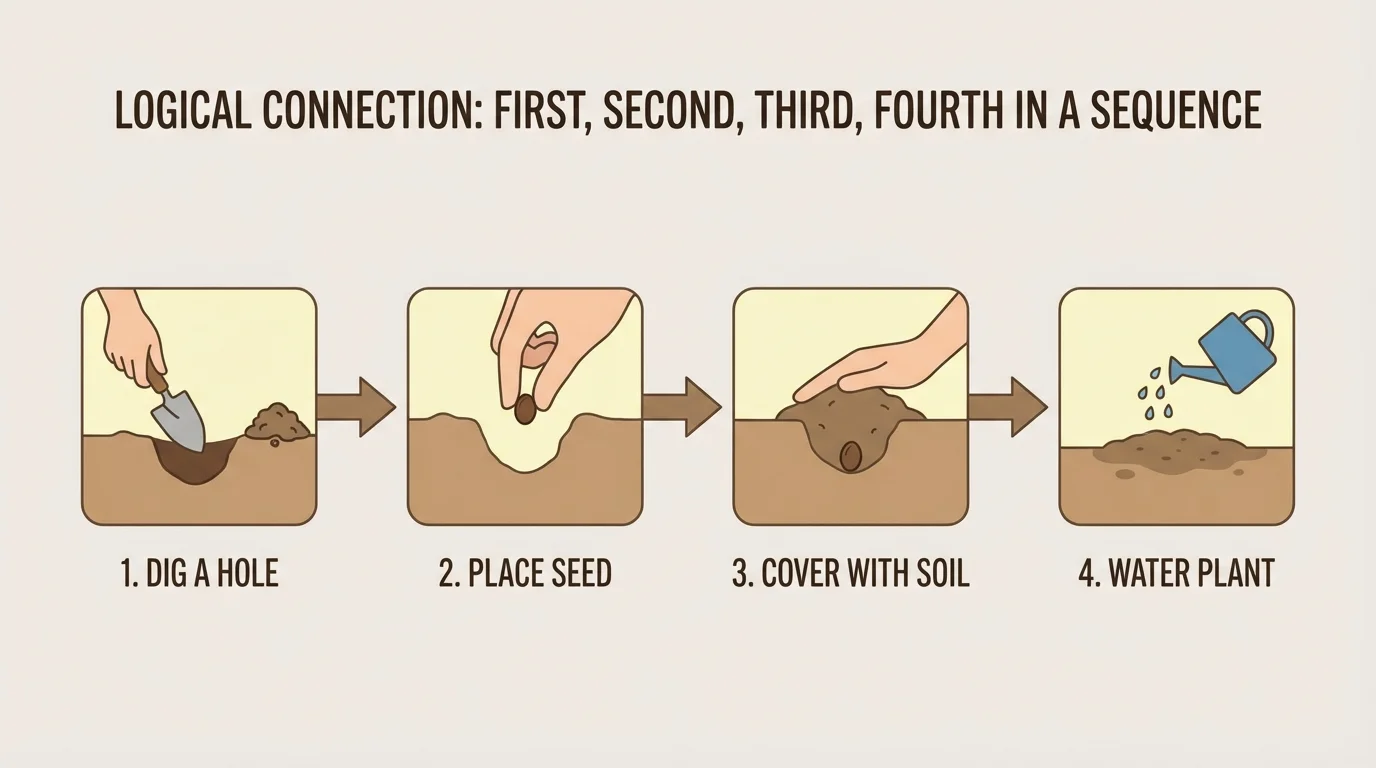
At the paragraph level, sequence works the same way. One paragraph may explain the beginning of an event, and the next paragraph may explain what happened later. In a book about space travel, one paragraph may describe preparing the rocket, while the next paragraph tells about liftoff.
Later in a text, sequence may return again. A biography, for example, may move through a person's life in order from childhood to adulthood, just as the steps in [Figure 2] move from the first action to the last action.
Cause and effect explains why something happens. A cause is the reason something happens. The effect is what happens because of that reason, as [Figure 3] shows.
Read these sentences: "A cold wind blew all night. By morning, the pond had a thin layer of ice." The cold wind is part of the cause, and the ice is the effect. In science and social studies texts, cause and effect is used often because authors want to explain why events happen.
Here is a familiar example: "The team practiced every day. As a result, the players worked together better." Practicing every day is the cause. Working together better is the effect. Sometimes one cause leads to several effects. Sometimes several causes lead to one effect.
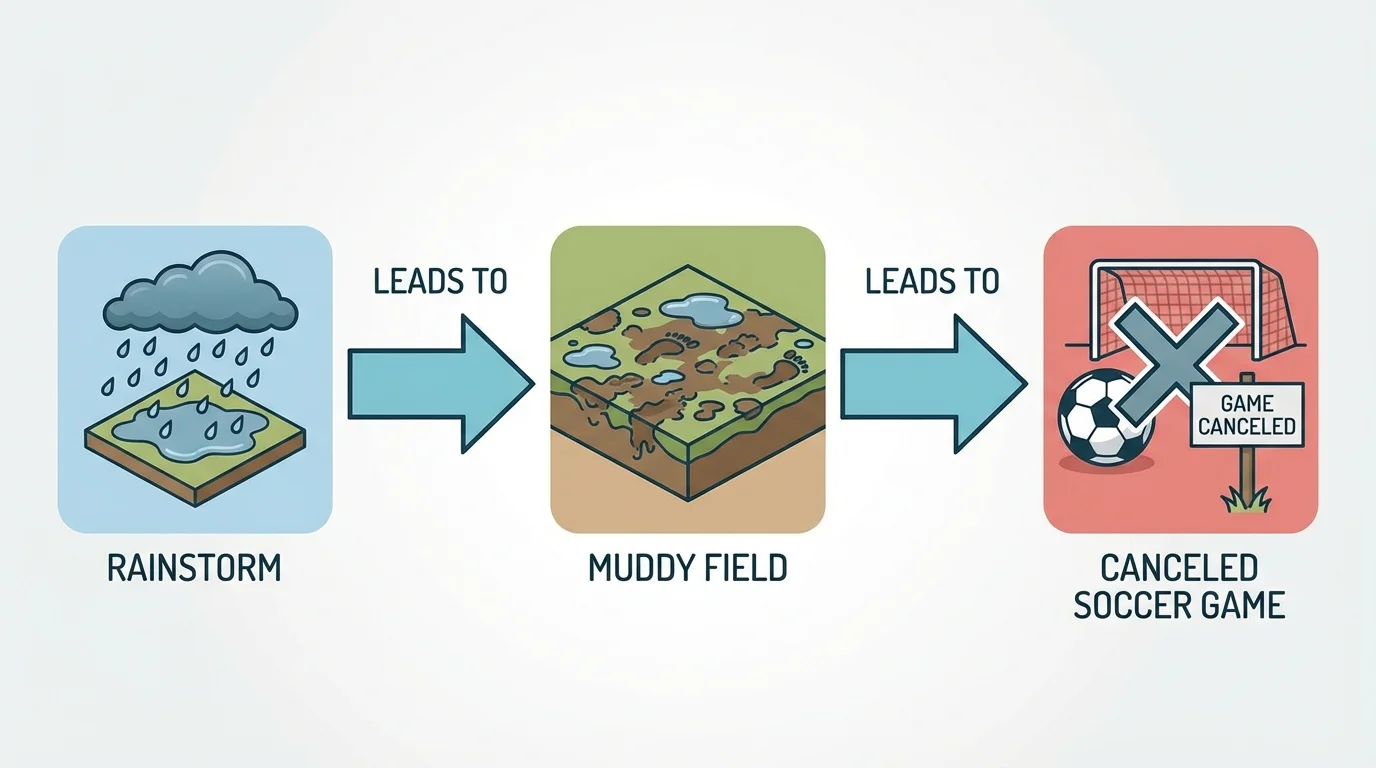
Paragraphs can be connected by cause and effect too. One paragraph might describe a drought, and the next might explain how the dry weather hurt crops. The second paragraph is connected to the first because it shows the result of what happened.
Finding cause and effect in a short passage
Passage: "The classroom plants were left near the window during a heat wave. The soil dried out quickly. Several leaves turned brown."
Step 1: Look for what happened first.
The plants were left near the window during a heat wave.
Step 2: Ask what happened because of that.
The soil dried out quickly.
Step 3: Notice another effect.
Several leaves turned brown.
This passage has a chain of cause and effect. One event leads to another.
Cause and effect is especially important in science. If a text explains that bees help pollinate flowers, and then another paragraph tells how pollination helps fruits grow, the ideas are linked in a cause-and-effect chain, much like the event links shown in [Figure 3].
Comparison shows how two or more things are alike, and sometimes how they are different. Authors compare ideas to help readers see important features, as [Figure 4] makes clear.
Suppose a text says, "Both turtles and tortoises have shells. However, turtles usually spend more time in water, while tortoises mostly live on land." This is a comparison because it tells a similarity and a difference.
Comparison can happen in a single sentence, in several sentences, or across whole paragraphs. One paragraph may describe city life. The next paragraph may describe country life. The connection between the paragraphs is comparison because the author wants readers to think about the two settings side by side.
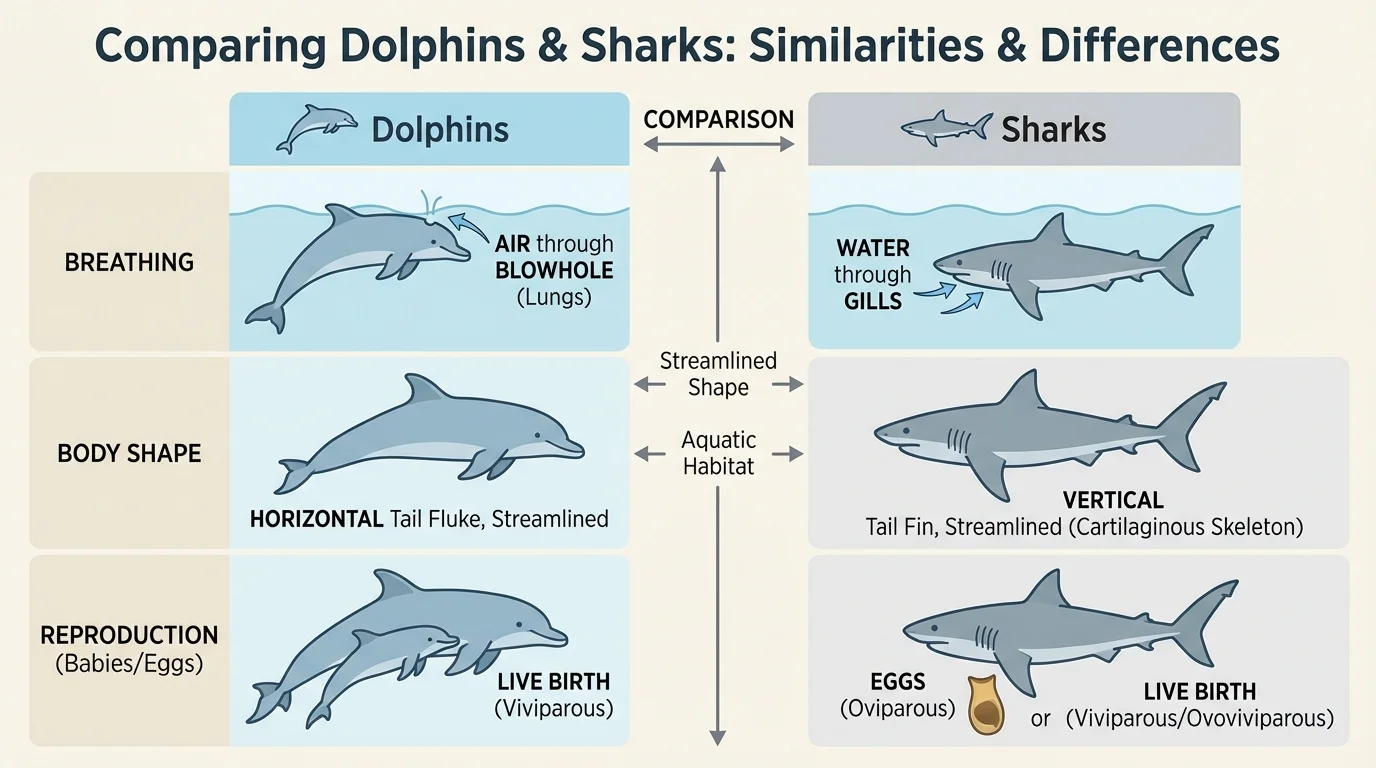
Words such as both, similar, different, unlike, and however often signal comparison. But again, meaning matters most. If the author places two subjects next to each other and tells how they match or differ, that is comparison.
Readers use comparison in many subjects. In science, they may compare reptiles and mammals. In geography, they may compare deserts and rain forests. In history, they may compare the lives of two important leaders. The side-by-side chart in [Figure 4] shows how this structure helps readers sort similarities and differences clearly.
Some texts connect ideas by showing a problem and solution. For example: "The class wanted to keep the bird feeder full, but seed kept spilling. They solved the problem by using a feeder with a tray." The first sentence gives the problem. The second sentence gives the solution.
Other texts connect ideas with main idea and details. A paragraph may begin with a big idea such as "Owls are well suited for hunting at night." The sentences after that may give details about sharp hearing, strong vision, and quiet flight. The details support the main idea.
Informational books about animals, weather, sports, and inventions often use more than one text structure in the same article. A writer might begin with descriptive details, add a comparison, and then explain cause and effect.
Authors also connect ideas by giving examples. A sentence like "Many birds migrate, such as geese and swallows" uses examples to make the idea clearer. Examples are not a separate big structure every time, but they are an important way ideas are linked.
Paragraphs are like building blocks. Each one has a job. To understand a whole article, readers need to know how the blocks fit together.
One paragraph may introduce the topic. The next may add details. Another may compare two ideas. A final paragraph may explain what happened because of the events described earlier. This means paragraph connections can change as the text moves along.
Read this example:
Paragraph 1: "Volcanoes are openings in Earth's surface. They can release lava, ash, and gas."
Paragraph 2: "Some volcanoes erupt often, while others stay quiet for many years."
The second paragraph connects to the first by adding more information about volcanoes. It stays on the same topic but gives a new detail.
Now read another pair:
Paragraph 1: "Bears eat many kinds of food, including berries, fish, and insects."
Paragraph 2: "In contrast, giant pandas eat mainly bamboo."
These paragraphs are connected by comparison because they show how one animal's diet differs from another's.
Sometimes readers can ask a simple question to find the paragraph connection: Does the next paragraph tell what happened next, why it happened, how it is similar or different, or how it is solved? That question often points to the answer.
Strong readers are like detectives. They look for clues, but they also think about meaning.
A simple reading process
First, read the sentences or paragraphs carefully. Next, ask what job the second part is doing. Is it showing order, giving a reason, telling a result, adding an example, or comparing ideas? Then, look for signal words to confirm your thinking.
Here are some helpful questions readers can ask:
If the answer is not clear right away, reread. Sometimes the connection becomes clearer after reading the whole paragraph instead of only one sentence.
Studying a paragraph pair
Paragraph 1: "Sea turtles hatch on beaches. After breaking out of their eggs, the tiny turtles hurry toward the ocean."
Paragraph 2: "Many dangers wait on the sand, including birds and crabs. Because of this, only some hatchlings reach the water safely."
Step 1: Find the topic.
Both paragraphs are about sea turtles hatching and moving toward the ocean.
Step 2: Notice what the second paragraph does.
It explains what happens to the hatchlings and why the trip is dangerous.
Step 3: Name the connection.
The paragraphs are connected by cause and effect because the dangers on the sand affect whether the hatchlings reach the water.
Readers do not need to use complicated words every time. They just need to explain the relationship clearly. Saying "The second paragraph tells the result of what the first paragraph described" is a strong answer.
Informational texts are everywhere: library books, websites, science articles, social studies passages, and even instructions for games or crafts. When you can name the connection between ideas, reading becomes easier and smarter.
You can understand a science text more clearly when you notice that one paragraph explains a weather event and the next shows its effects. You can understand a history text better when you see that the paragraphs move in time order. You can understand an animal article more fully when you notice that the writer is comparing two creatures.
This skill also helps when you talk or write about what you read. Instead of saying, "These paragraphs are both about weather," you can say, "The first paragraph tells what causes thunderstorms, and the second explains the effects of thunderstorms." That answer is more exact and shows deeper understanding.
As you read more nonfiction, keep asking how each sentence and paragraph connects to the next. Authors build meaning one idea at a time, and readers build understanding by noticing those links.
