Have you ever started telling a story and someone stopped you right away to ask, "Wait—who was there?" or "Where did this happen?" That happens when the beginning is missing important information. A good narrative helps readers step into the story from the very first lines. Readers should quickly understand the situation, meet the people in the story, and follow the events in an order that makes sense.
A narrative is a story. It may be real or imagined, but it always needs a clear beginning, middle, and end. Strong narratives do not feel like random events tossed together. Instead, the events connect, build, and move toward an ending that feels complete.
Narrative means a story that tells about events. A strong narrative includes a situation, characters, a sequence of events, details, and closure.
Situation is what is happening at the start of the story, including where and when it happens and what problem, goal, or change begins the action.
Closure is the ending that helps the reader feel the story is finished.
When writers create a narrative, they make many choices. They decide who will tell the story, which characters matter most, what happens first, what happens next, and how the story will end. These choices help the writing feel clear and interesting.
The beginning of a narrative is important because it gives the reader directions. It tells the reader where to stand in the story and what to pay attention to. If the beginning is confusing, the rest of the story may also feel confusing.
A strong opening usually answers some simple questions: Who is involved? Where are they? What is happening? Why does it matter? The reader does not need every detail all at once, but the opening should give enough information to make the story easy to enter.
For example, compare these openings:
Weak opening: Sam ran fast. It was bad.
Stronger opening: Sam raced across the playground when he realized the class hamster cage was sitting open by the slide.
The stronger opening gives the reader a character, a place, and a problem. That is what makes a story begin to come alive.
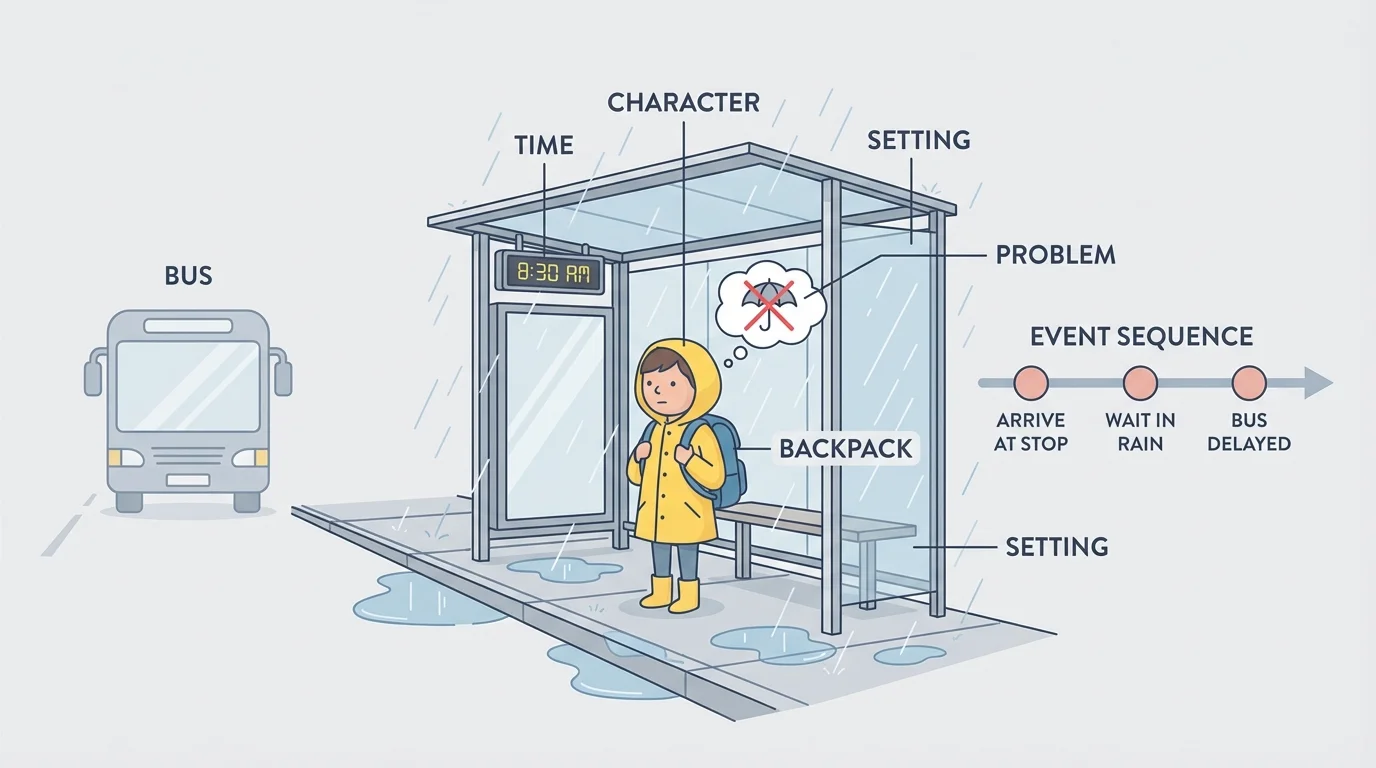
At the start of a story, readers need the main parts of the situation, as [Figure 1] illustrates: a person or people, a setting, and something important that is happening. Without these parts, the story can feel blurry.
The setting is where and when the story happens. It may be a classroom in the morning, a backyard at sunset, or a snowy park after school. The setting helps readers picture the story world. Even a few carefully chosen details can make a strong setting. A writer might describe squeaky sneakers in a gym, wet leaves on a sidewalk, or the smell of soup in a kitchen.
The situation also includes the story's first important moment. This may be a problem, a surprise, a goal, or a change. Perhaps a child loses a library book, hears a strange sound in the attic, or tries to win the school relay race. The beginning does not need a giant disaster. It simply needs something that starts the action.
Writers often reveal the situation through action instead of explaining everything in a list. Instead of writing, "Lena was nervous. It was the first day of school. She had no friends," a writer might show Lena smoothing the wrinkles in her shirt, standing alone by the classroom door, and looking at the noisy groups of children inside. The reader understands the situation through details.
Details should be useful. A good beginning does not pile on many unrelated facts. It chooses details that help the reader understand the scene and prepare for what comes next. When we think back to [Figure 1], each part of the scene supports the main moment instead of distracting from it.
What makes a situation clear? A clear situation gives the reader enough information to follow the story without confusion. It includes the important people, the place, and the first meaningful event. It may also hint at a feeling, such as excitement, worry, or curiosity, so the reader knows the mood of the opening.
Sometimes a writer starts with dialogue, but even then the situation must become clear quickly. If a story opens with "Hurry!" Maya shouted, the reader soon needs to learn who Maya is, where she is, and why she is hurrying.
Every narrative has someone telling the story. This is the narrator. The narrator may be a character in the story, or the narrator may tell about other characters.
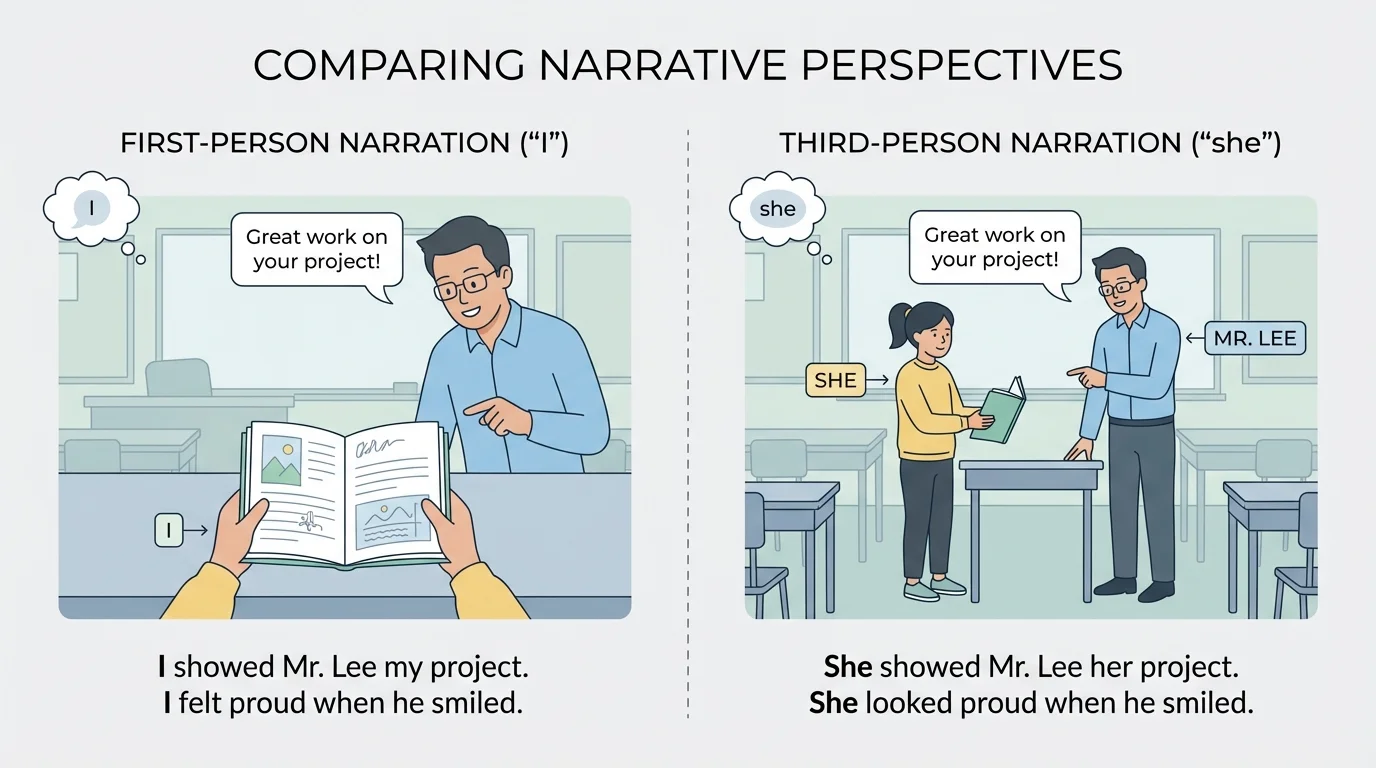
The way the narrator tells the story is called point of view, and [Figure 2] helps show a simple difference between common choices. In first-person narration, the storyteller uses words like I, me, and my. Example: "I gripped the spelling list so tightly that the paper crinkled in my hand." In third-person narration, the storyteller uses names or words like he, she, or they. Example: "Nora gripped the spelling list so tightly that the paper crinkled in her hand."
Both choices can work well. First-person narration can make the story feel close and personal because the narrator tells what I think, feel, and notice. Third-person narration can make it easier to focus on one or more characters from the outside.
The characters are the people or animals in the story. The character the story focuses on most is often called the main character. Other characters may help, challenge, or support the main character.
When introducing characters, writers should give readers what they need to know at the right time. A character introduction may include a name, an action, a feeling, or a trait. For example, "Jada checked the clock for the third time and tapped her pencil on the desk" introduces Jada as a person who may be worried or impatient. The writer does not need to say, "Jada was impatient," because the action already shows it.
Characters feel real when they do, say, think, and feel believable things. A narrative becomes stronger when characters' actions fit the situation. If a child forgets a lunch at home, the story might show embarrassment, problem-solving, or hope that a friend will help. Those reactions make sense.
Later in the story, the narrator continues to guide the reader by choosing what to describe. As seen in [Figure 2], point of view changes how close we feel to a character's thoughts and experiences.
Example: Introducing a narrator and character
First-person opening: I knew something was wrong when our dog Pepper refused to leave the garden gate.
Third-person opening: Eli knew something was wrong when Pepper refused to leave the garden gate.
Both openings introduce a situation and a character. The first makes the narrator part of the story. The second lets the narrator tell about Eli from the outside.
Writers also choose how many characters to introduce at the beginning. For younger writers, it is often best to begin with only the most important character or two. Too many names too quickly can confuse the reader.
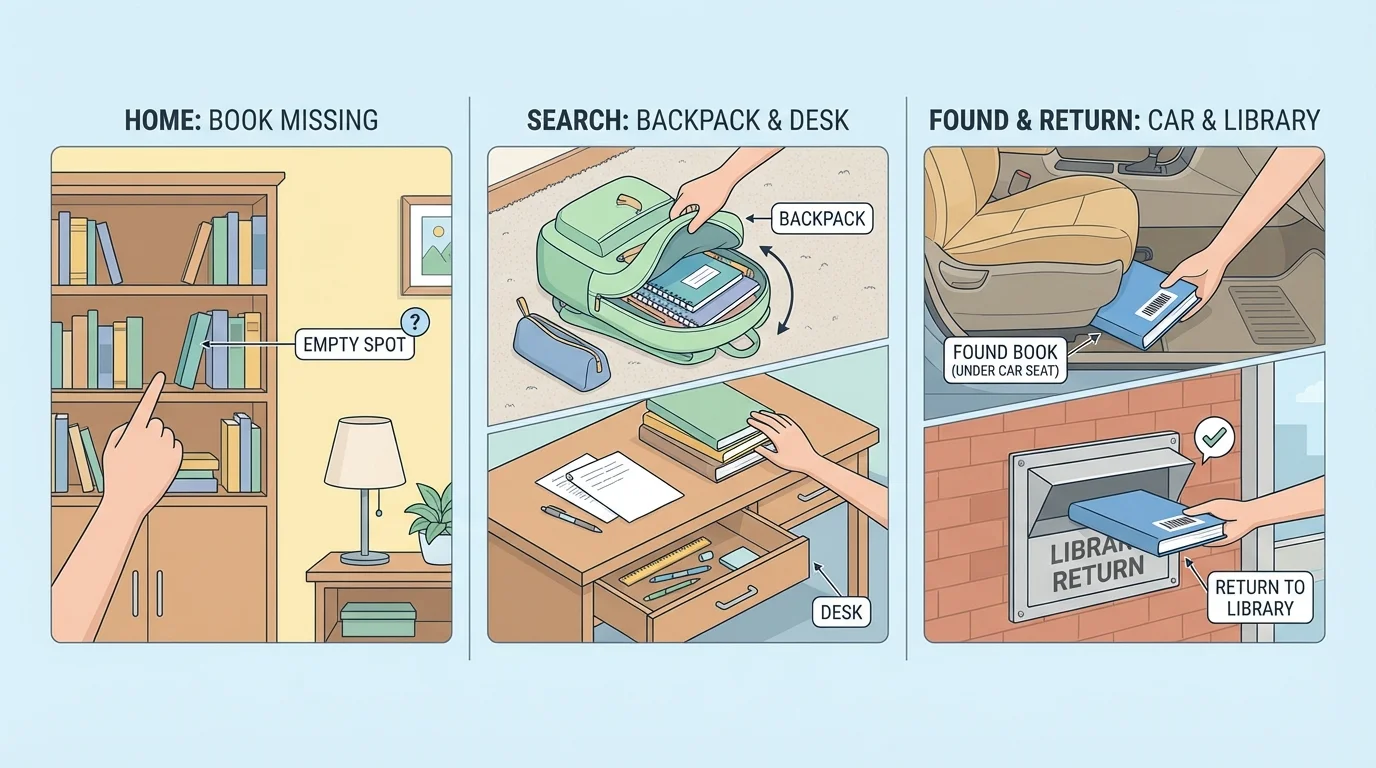
Once the story begins, the events should unfold one step at a time, as [Figure 3] shows in a simple sequence. A reader should be able to follow what happens first, next, later, and finally.
A natural event sequence means the story moves in an order that feels clear and sensible. Many narratives follow time order. One event leads to another because it happens later. If Mia spills paint, then she grabs paper towels, then she notices the painting is ruined, those events make sense in that order.
Events also connect through cause and effect. A cause is why something happens. An effect is what happens because of it. If the wind blows the map away, the characters may get lost. If the class misses the bus, they may have to walk. Stories feel natural when events connect like this.
Transitions help readers move from one event to the next. Useful transitions include first, next, then, after that, later, suddenly, and finally. These words are helpful, but writers should not use them in every sentence. The events themselves should also connect clearly.
Here is a simple event sequence: "Before school, Ava discovered that her science project was missing one wheel. She searched the kitchen table and the hallway shelf. Then she remembered her little brother had played with it the night before. After a quick look under the couch, she found the wheel and hurried out the door." Each event grows from the one before it.
Readers understand stories more easily when writers keep events in a clear order. Think about how you retell your day: you usually tell what happened in the order it happened, not in a mixed-up way.
Sometimes a narrative can mention an earlier event, but the main action should still stay clear. For grade 3 writers, the easiest way to organize a story is usually straight through from beginning to end.
Much later, when a writer wants to revise for smoothness, the structure in [Figure 3] remains useful because it reminds us that every event should connect to the next one, not appear out of nowhere.
A story can be told in the correct order and still feel jumpy. That happens when the reader does not understand how one event connects to the next. To make a narrative flow smoothly, writers include enough details to bridge the action.
Look at this jumpy version: "Carlos heard a crash. He was at the nurse's office. His sister cried." The reader has questions. What crashed? Why is Carlos at the nurse's office? When did his sister cry?
Now look at a smoother version: "Carlos heard a crash from the art room and ran into the hall. When he rounded the corner, he saw his little sister sitting on the floor beside a broken clay pot. She had a red scrape on her knee, so Carlos walked her to the nurse's office while she tried not to cry." This version connects the events.
Writers make events flow by adding actions, thoughts, dialogue, and descriptive details. These do not slow the story down when they are meaningful. Instead, they help the reader stay with the story.
Some of the best story details are very small. A trembling hand, a squeaky door, or a backpack zipper that gets stuck can help a reader feel exactly what a character is experiencing.
It also helps to keep the focus on the main idea of the story. If a narrative is about finding a lost kitten, the events should mostly connect to that search. A long side trip about a sandwich, a soccer game, and a science test may pull the story away from its purpose.
Reading models can help us notice what strong narrative writing does. Here is one example:
"The morning of the talent show, Ruby discovered that one tap shoe was missing. She dumped her dance bag onto the living room rug, but only one shiny black shoe tumbled out. Her stomach tightened. The show started in twenty minutes, and she was the first act."
This opening works because it quickly introduces Ruby, the setting, and the problem. It also gives the reader a reason to care: the talent show is about to start.
Now notice how the events can continue naturally: "Ruby checked under the couch, behind the curtains, and even in the coat closet. Then her little cousin pointed to the dog bed. There, half-hidden under a floppy ear, was the missing shoe. Ruby laughed, grabbed it, and dashed to the car just in time."
The sequence makes sense. Ruby has a problem, searches in several places, gets help, finds the shoe, and solves the problem. The story moves forward without confusion.
Example: From weak sequence to natural sequence
Step 1: Weak version
"Ben was wet. He won the race. He jumped in the pool. Everyone cheered."
Step 2: Ask what should happen first
The cheering should probably happen after the race, and the pool jump should happen after the win.
Step 3: Improved version
"Ben splashed through the final stretch of the swim race and slapped the wall first. As the whistle blew, everyone in the stands cheered. Grinning, Ben climbed out of the lane and cannonballed into the practice pool to celebrate."
The improved version introduces events in an order that makes sense and adds details that connect them.
A natural sequence does not mean every story is slow or predictable. A surprise can still happen. The key is that the surprise must fit the story. If a storm suddenly begins during a soccer game, the reader should feel that it belongs in the situation, not that it came from nowhere.
A satisfying ending connects to what came before and can take different forms of closure. The ending may solve the problem, show what the character learned, or reveal how the character feels at the end.
Closure does not have to mean a huge lesson. It simply means the reader is not left hanging in confusion. If the story begins with a missing lunchbox, the ending should let us know whether it was found, replaced, or turned into a funny misunderstanding.
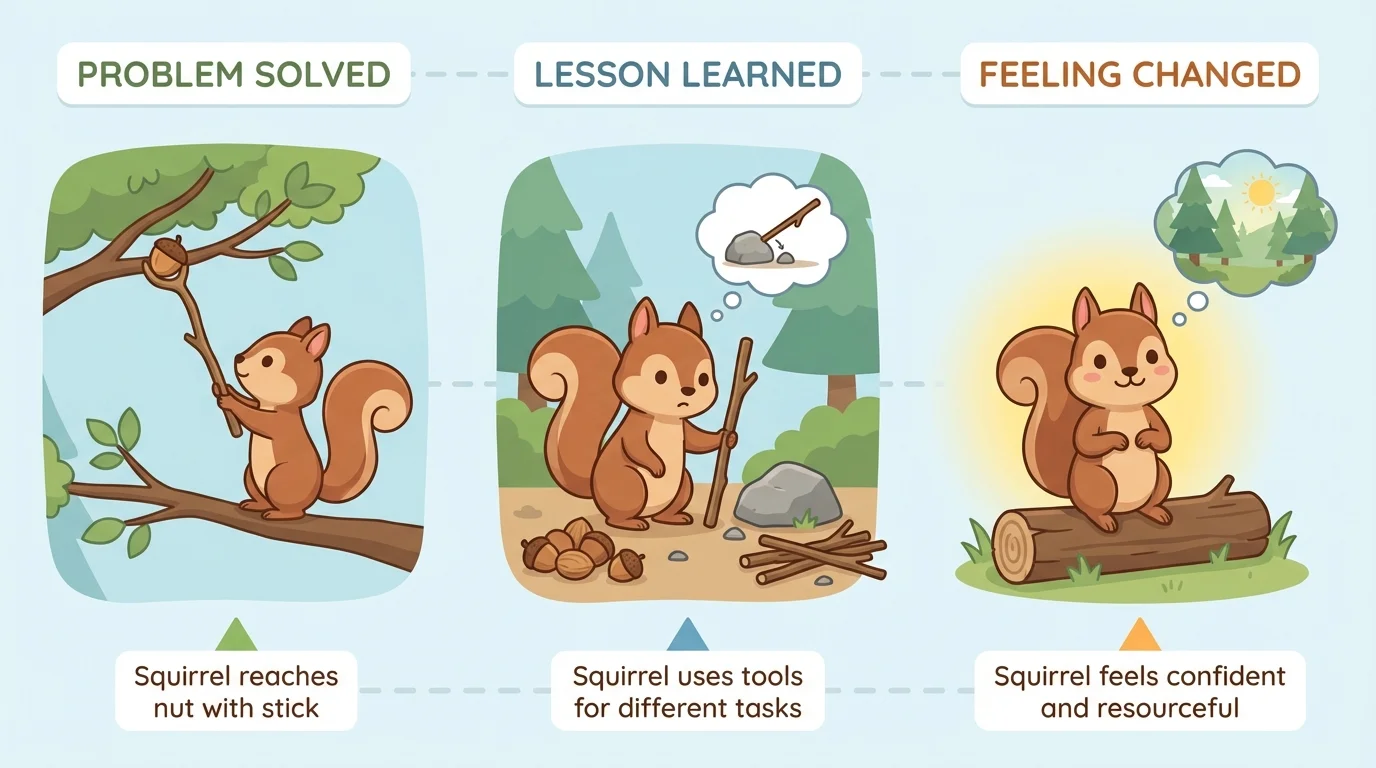
Here are three ways a story can close, as [Figure 4] shows: the problem is solved, the character changes, or the moment settles into a final feeling. For example, after a child overcomes stage fright, the ending might show applause, a proud smile, or relief on the ride home.
An abrupt ending often feels unfinished. "And then I went home" is usually too sudden unless the story has already clearly wrapped up. A stronger ending links back to the main event. In the endings shown by [Figure 4], the final moment answers the question the story raised at the beginning.
What closure does for a reader Closure helps the reader understand that the important events are complete. It answers the story's main question and leaves the reader with a final thought, image, action, or feeling.
Sometimes the very last sentence is simple but powerful: "This time, when Noor stepped onto the stage, her hands stayed still." That ending shows change and gives the story a finished feeling.
One common problem is starting too suddenly without enough information. If the story begins with "It happened again," the reader may feel lost. A writer can fix this by adding details about who is speaking, what is happening, and where the scene takes place.
Another problem is introducing too many characters at once. If six classmates all appear in the first paragraph, the reader may not remember who matters most. A clearer beginning focuses on the most important characters first.
A third problem is an event sequence that feels random. If a story jumps from recess to bedtime to a bike crash without explanation, the reader may struggle to follow it. To fix this, the writer should place events in order and add transitions or connecting details.
A final problem is weak closure. If the story's problem is never answered, the reader may feel unsatisfied. The fix is to return to the main event and show its outcome.
| Problem | What It Looks Like | How to Fix It |
|---|---|---|
| Unclear beginning | The reader does not know who, where, or what | Add the situation clearly |
| Too many characters | Too many names appear at once | Introduce the main character first |
| Jumpy sequence | Events do not connect | Put events in order and explain links |
| Abrupt ending | The story stops without answering the main question | Show the result, feeling, or lesson |
Table 1. Common narrative problems and simple ways to improve them.
When writers revise, they can ask themselves useful questions: Did I make the situation clear? Did I introduce the narrator or characters well? Do my events connect? Does my ending feel finished? These questions help turn a rough draft into a stronger narrative.
"A story works best when each part helps the next part happen."
Good narratives feel natural because the writer guides the reader carefully. The beginning opens the door, the characters give the story life, the events move in a clear order, and the ending brings the reader to a satisfying stop.
