Have you ever heard someone tell a great story and then end with, "So... yeah, that's it"? That can feel disappointing. A story ending matters because it gives the reader a final feeling, thought, or picture. A good ending does not come out of nowhere. It fits the story, like the last puzzle piece clicking into place.
When you write a narrative, you tell about real or imagined events in order. Your story may include characters, dialogue, actions, thoughts, and details. But after all that, your reader still needs a conclusion. The conclusion should show that the experience or event has reached a stopping place. It should feel earned.
A conclusion is the ending part of a story. It helps the reader understand what happened at the end and why it matters. Even in a short narrative, a conclusion can leave the reader feeling happy, thoughtful, excited, relieved, or even surprised.
Without a strong ending, a story can feel unfinished. Readers may wonder, "What happened next?" or "Why did I read all of that?" A conclusion helps answer those questions by tying the story together. It does not have to solve everything in a huge way, but it should give a sense of closure.
Conclusion is the ending of a narrative that follows from the events and gives the reader a clear final feeling, thought, or result.
Closure is the feeling that the story has reached a natural stopping point.
Narrative is a story about real or imagined events told in a sequence.
Think of a story as a path through a park. The beginning starts the walk. The middle includes turns, obstacles, and discoveries. The conclusion is where the path leads. If the path suddenly ended in the middle of a pond, it would not make sense. A story ending should make just as much sense as the path itself.
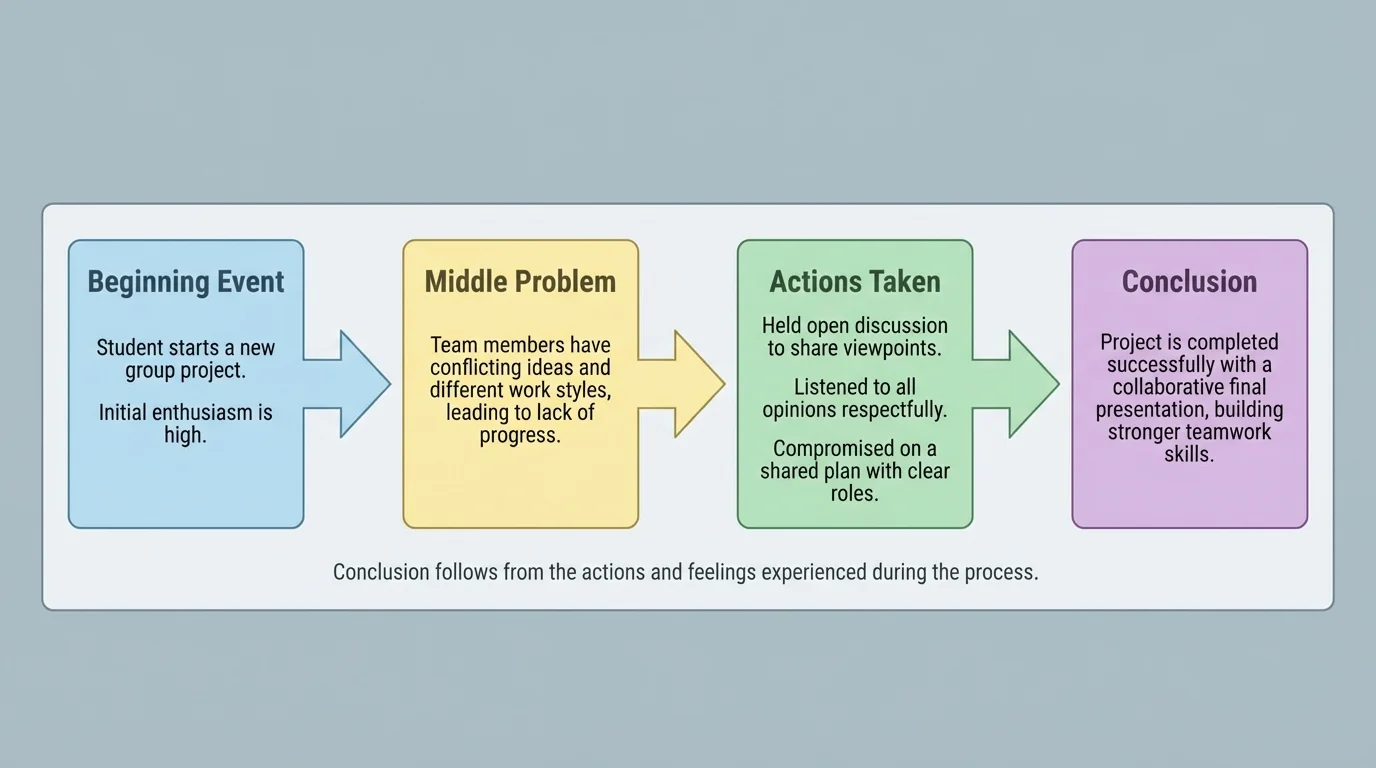
[Figure 1] When a conclusion follows from the events, it grows naturally from what already happened in the story. The ending should connect to the beginning, the problem, and the actions the character took. If a character spends the whole story trying to find a lost dog, the ending should connect to that search, not suddenly switch to winning a spaceship race.
This means the reader can look back and think, "Yes, that ending fits." The character's final action, feeling, or thought should match the experiences in the story. If the story has been funny and light, the ending may be playful. If the story has been tense and challenging, the ending may feel relieved or proud.
A conclusion that follows from the story usually answers one or more of these questions: What changed? How was the problem solved, or partly solved? What did the character learn? How does the character feel now? What final moment shows that the story is complete?
That does not mean every ending must teach a lesson out loud. Some stories end with a quiet action or image. For example, if a child was nervous about performing in a school concert, the ending might show the child smiling after the last note, hearing the applause, and finally taking a deep breath. That ending fits because it comes from the event the story has been building toward.
Writers can end stories in different ways, and [Figure 2] helps compare several strong choices. The best kind of conclusion depends on the story you are telling. What matters most is that the ending matches the events and the character.
One kind of ending is a reflection ending. In this type, the character thinks about what happened. For example: "I had been scared to dive off the high board all summer, but as I climbed out of the pool, I knew I would never look at that board the same way again." This works because the thought connects to the experience.
Another kind is an action ending. The story closes with something the character does. For example: "Mia clipped the leash onto Rusty's collar and laughed as he tugged her toward home." This ending works if the story was about finding the missing dog. The final action shows the problem is solved.
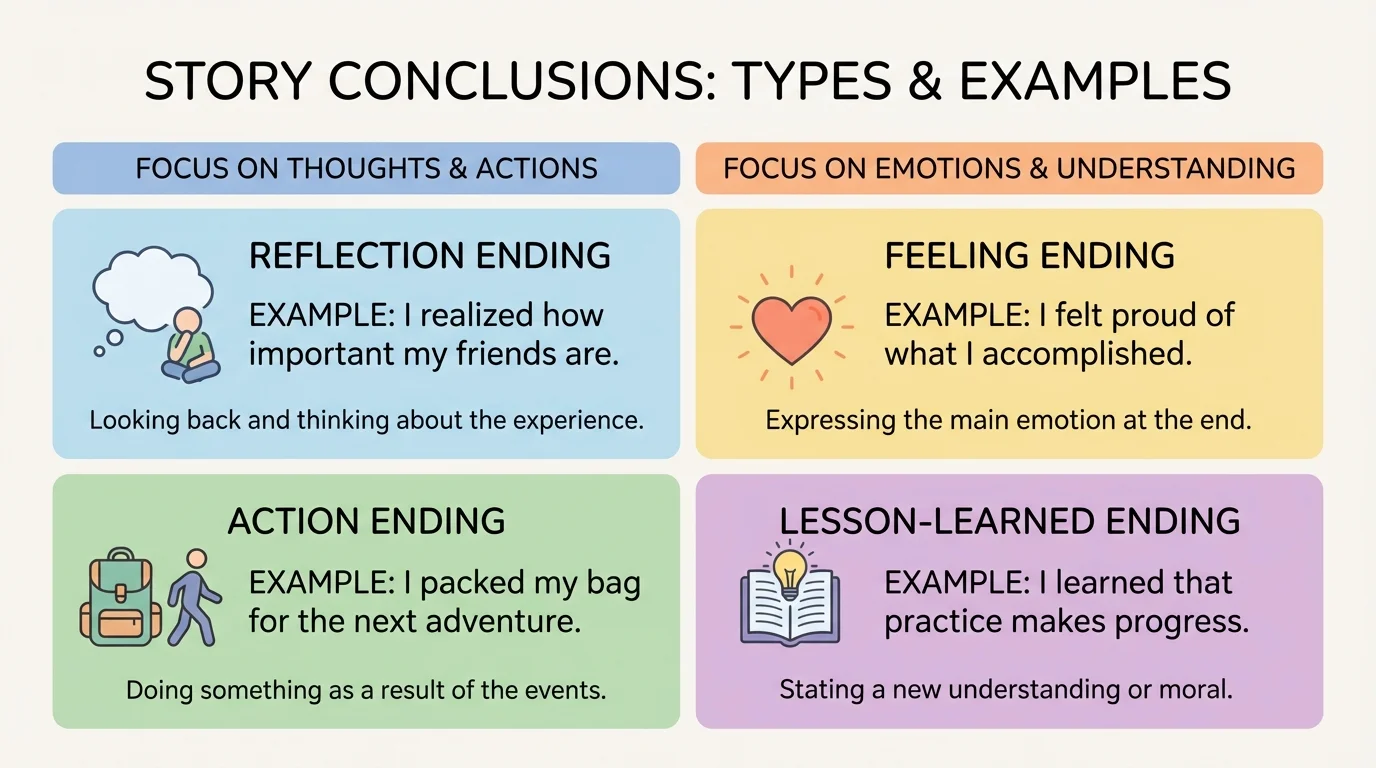
A feeling ending shows the character's emotion at the end. For example: "My knees were still shaking, but this time it wasn't from fear. It was from excitement." A lesson-learned ending tells what the character discovered, but it should still sound natural. For example: "I learned that asking for help is not the same as giving up."
Some stories use a circular ending. That means the ending connects back to the beginning in an interesting way. If a story starts with a character saying, "I am never getting on that bike," it might end with, "I wobbled down the driveway, shouting, 'Look at me now!'" The ending feels satisfying because it returns to the first idea and shows change.
Many favorite books and movies are remembered because of their endings. A strong conclusion can make readers want to talk about the whole story again.
As you choose an ending, ask yourself which type fits your narrative best. Some endings are quiet. Some are exciting. Some are thoughtful. The important thing is that the reader sees how the final moment comes from the events that happened before.
A narrative usually includes a character who wants something, faces a problem, or goes through an experience. The ending should match that person and that situation. If your character is shy, the conclusion should sound like something that character would really think, say, or do. If your character is bold and funny, the ending may sound different.
This is why a character's dialogue matters. The last line a character says should fit the way that character has spoken all along. If a quiet character suddenly gives a giant speech full of fancy words, the ending may feel fake. But a simple line like, "I guess I really did it," can sound true and powerful.
The problem in the story also matters. If the conflict is small, the ending may be small too, and that is fine. A story about forgetting homework might end with the student making a promise to pack the backpack the night before. A story about getting lost on a hiking trail might end with rescue, relief, and a promise to stay closer to the group. Big and small stories both need endings that make sense.
The ending must be earned
An earned ending is one that the story has prepared the reader for. The character's actions, choices, and experiences lead naturally to the final moment. Readers may not guess every detail, but when they reach the end, they should feel that it belongs there.
When readers believe the ending, the whole story becomes stronger. Even a short personal narrative about a rainy field trip can feel meaningful if the ending shows how the character changed, what the group did next, or what memory lasted after the rain stopped.
Sometimes a conclusion is weak because it is too abrupt. For example: "Then I got home. The end." This stops the story, but it does not really conclude it. The reader does not get a final thought, feeling, or clear result.
Another weak ending is one that is unrelated. Imagine a story about practicing for a spelling bee that ends with, "Then my uncle bought a purple boat." Unless the boat was part of the story earlier, that ending does not follow from the events. It feels random.
A third weak ending explains too much. Some writers add a long speech that tells every lesson in a heavy way. For example: "And that is why teamwork is the most important thing in the universe, and everyone should always remember it forever." Most of the time, a simple ending is stronger. Let the story do the work.
There is also the dream ending, where a whole story suddenly turns out not to be real: "Then I woke up." Writers sometimes use this idea, but it can make readers feel tricked if the dream was not important to the story. In most grade 4 narratives, it is better to end with a real result from the events you told.
[Figure 3] If endings feel tricky, a simple process can help. It lays out a useful path: think about what changed, how the event ended, how the character feels now, and what final line or image fits best. This helps writers avoid random or rushed conclusions.
Start by looking back at the middle of your story. What was the main problem, challenge, or experience? Then ask how it ended. After that, think about the character's response. Did the character feel proud, disappointed, surprised, grateful, calmer, or braver?
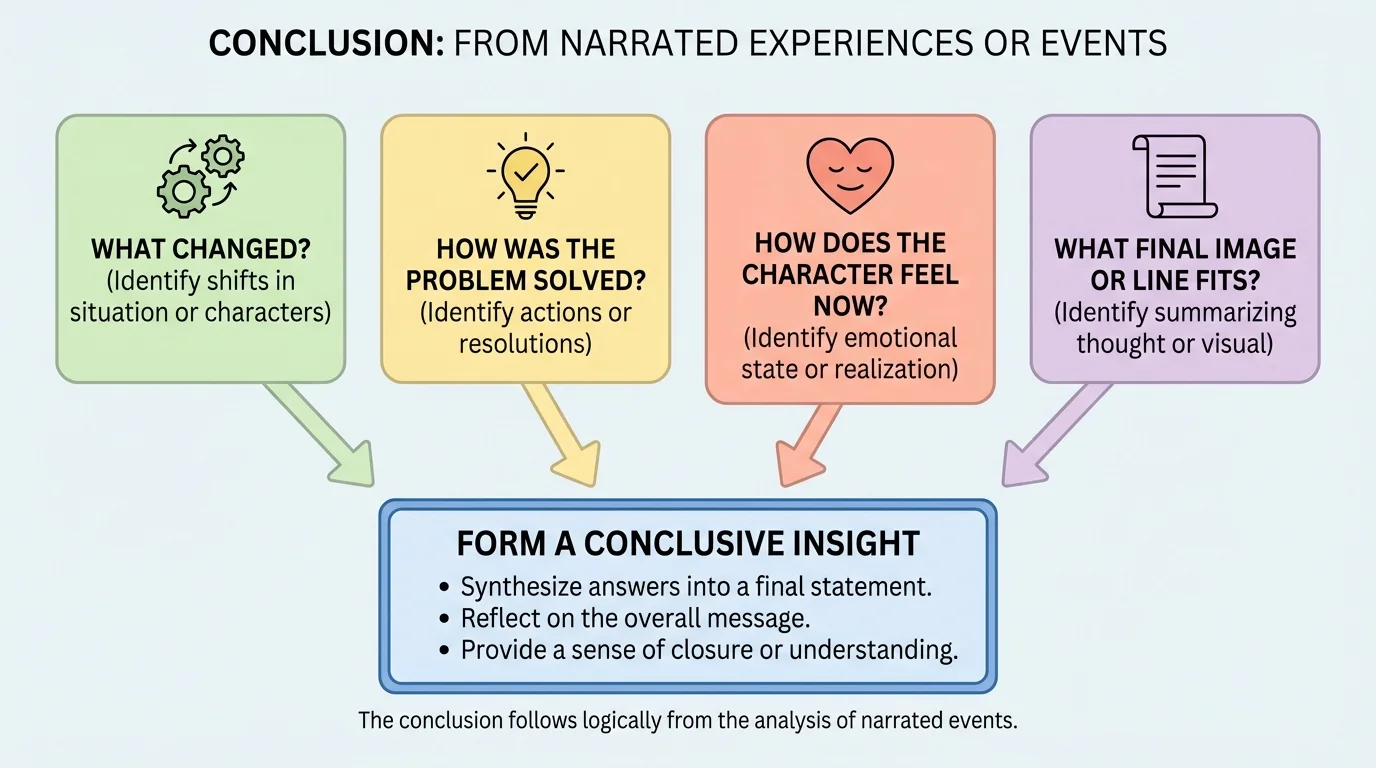
Next, choose the final moment. This could be a line of dialogue, a thought, an action, or an image. A final image is the last picture that forms in the reader's mind. For example, "The blue ribbon fluttered against my shirt as Dad grinned from the bleachers." That gives the reader something clear to see.
Finally, read your ending together with the whole story. Does it sound like the same character? Does it match the mood? Does it connect to the events? If the answer is yes, your conclusion probably follows from the narrative.
Example 1: Weak ending and stronger ending
Story idea: Jordan studies hard for a big science test after failing the last one.
Step 1: Weak ending
"Then the quiz was over. I went home."
Step 2: Why it is weak
This ending stops the story, but it does not show the result or Jordan's feelings.
Step 3: Stronger ending
"When Ms. Chen handed back the tests, I saw the bright red 100 at the top and almost laughed out loud. All those flashcards on my bedroom floor had been worth it."
The stronger ending follows from the events because Jordan studied for the quiz and now sees the result.
Notice that the stronger version does more than tell the reader the story is over. It shows a result and a feeling. That makes the ending satisfying.
Let's look at several short examples. Each one ends in a way that grows from the events before it.
Example 2: Lost wallet narrative
Story idea: Elena loses her wallet at the county fair and spends the afternoon searching for it.
Step 1: Ending that fits
"The volunteer at the information booth held up my blue wallet, and I nearly cried with relief. As Mom squeezed my shoulder, I tucked it deep into my bag and promised myself I would never leave the zipper open again."
Step 2: Why it works
The problem is solved, Elena's emotion is clear, and the final promise connects to what she learned from the experience.
This ending works because it stays with the main event. It does not add a new surprise that pulls the reader away from the fair or the missing wallet.
Example 3: First soccer goal narrative
Story idea: A player who usually sits on the bench gets a chance to play in the final minutes of a game.
Step 1: Ending that fits
"When the ball rolled past the goalie and into the net, I froze for half a second. Then my teammates crashed into me, shouting my name, and for once I did not feel like the kid who always waited on the sideline."
Step 2: Why it works
The conclusion matches the event, shows the character's feelings, and reveals a change in how the character sees himself.
That final thought gives the story meaning. The ending is not only about scoring. It is also about belonging.
The same idea from [Figure 1] still matters here: the ending grows out of the earlier problem and actions. The reader sees a clear path from the struggle to the conclusion.
[Figure 4] A conclusion becomes more vivid when it includes strong words and details. A final line of dialogue or a clear sensory detail can make the ending feel alive. Instead of simply writing, "I was happy," you can show happiness through voice, movement, or description.
For example, after finishing a race, a character might say, "I actually did it!" That one line of dialogue can reveal excitement and surprise. You can also add descriptive details such as pounding feet, cool evening air, or the sound of cheering. These details help the reader step into the final moment.
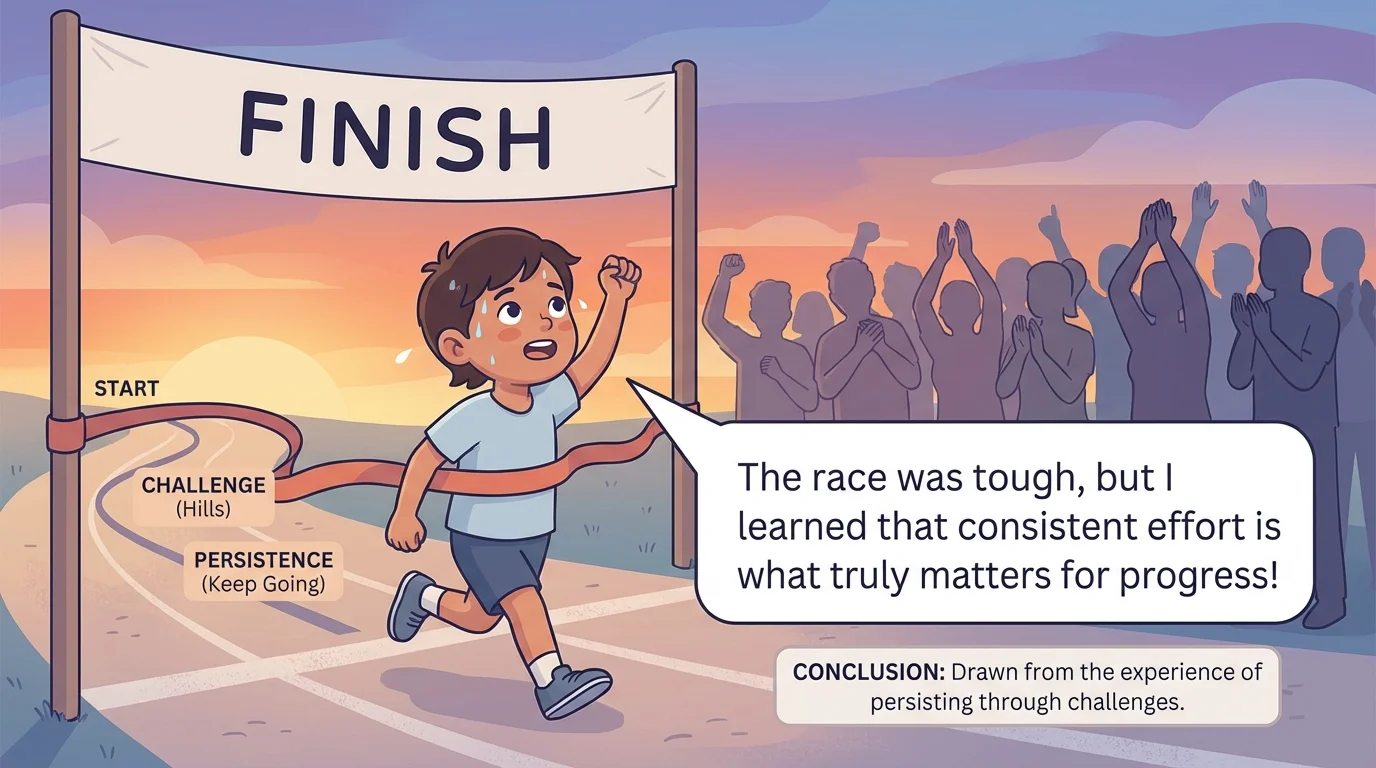
Description should match the mood. If the ending is calm, the details may be gentle: the creak of a porch swing, the smell of soup, the last orange light in the sky. If the ending is exciting, the details may be energetic: clapping hands, bright lights, bouncing voices, and fast breaths.
You do not need many details. Just a few carefully chosen ones can make an ending memorable. The goal is not to pile on extra sentences. The goal is to leave the reader with the right final picture or feeling.
Earlier in narrative writing, you learned that good stories include a beginning, middle, and end. You also learned to use descriptive details and dialogue to show events clearly. A strong conclusion uses those same tools, but now it focuses them on the final moment.
When used well, dialogue and description can do the job of a long explanation. A smile, a whisper, a deep breath, or a small action can tell the reader exactly how the story ends.
Revision is where many good endings become great endings. After writing your first conclusion, read the whole narrative from the beginning. Listen for whether the ending sounds connected or tacked on.
Ask yourself these questions: Does my conclusion match the main event? Does it sound like something this character would think, say, or do? Does it show a result, a feeling, a change, or a final image? Does it feel complete without adding unrelated information?
If your ending feels too short, add one meaningful detail, thought, or line of dialogue. If it feels too long, cut parts that repeat what the reader already knows. If it feels random, go back and connect it more closely to the events in your story.
Writers do not always get the perfect ending on the first try. That is normal. Good writing often means trying different final lines until one feels right. You might write three endings and choose the one that best fits the story.
And remember the comparison in [Figure 2]: there can be more than one strong way to end the same story. What matters is that your conclusion follows from the narrated experiences or events and leaves the reader with a clear sense that the story has reached its natural close.
