A pond can look calm and quiet, but it is really a busy neighborhood full of life. Fish swim below the surface, insects land on the water, frogs hide near the edge, and plants stretch toward the sun. But what happens if the pond starts to dry up, or the weather becomes much hotter? Some living things stay and survive. Some leave. New organisms may arrive. Others may die. Nature is always changing, and living things must respond.
[Figure 1] An ecosystem is a place where living things and nonliving things interact. The living parts include plants, animals, fungi, and tiny organisms that are too small to see easily. The nonliving parts include water, air, sunlight, rocks, and soil. A pond, a forest, a desert, a grassland, and even a school garden can all be ecosystems.
Each organism lives in a habitat, which is the place where it finds what it needs to survive. A frog may live near pond water and reeds. A squirrel may live in trees. A cactus lives where there is very little rain. Habitats are not all the same. They have different temperatures, amounts of water, and kinds of food.
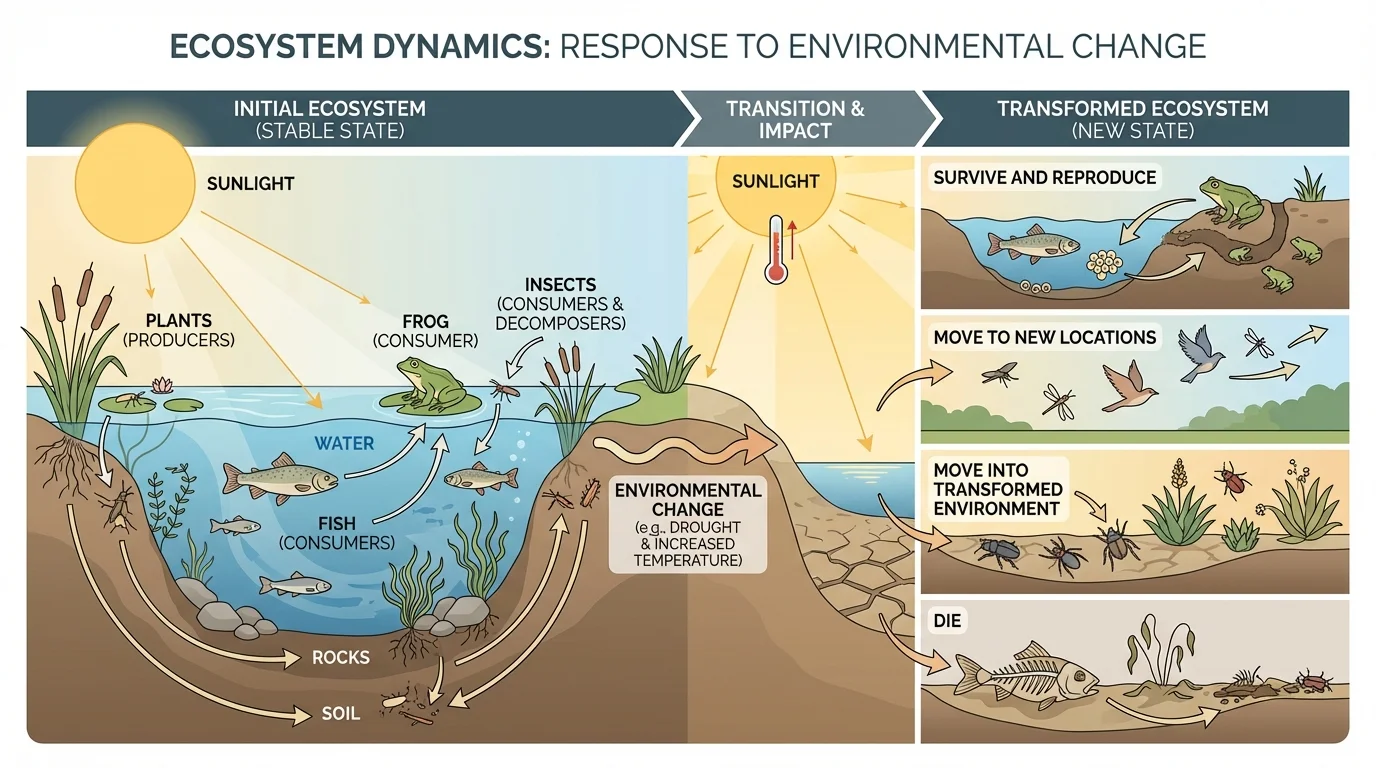
Ecosystems work because all the parts are connected. Plants use sunlight to make food. Plant-eating animals eat the plants. Other animals eat those animals. Decomposers break down dead matter and return nutrients to the soil. If one part changes, many other parts may change too.
Ecosystem means all the living and nonliving things in a place and the way they affect one another.
Habitat is the home or environment where an organism gets food, water, shelter, and space.
Even small ecosystems can be full of change. A puddle after rain may hold tiny living things for a short time. A log on the forest floor may become a habitat for insects and fungi. Size does not matter as much as the relationships between the parts.
All organisms need resources. Resources are things living things need to live and grow. Animals need water, food, oxygen, shelter, and space. Plants need water, air, sunlight, nutrients from soil, and room to grow. When resources are easy to find, more organisms may survive. When resources become scarce, life becomes harder.
Think about birds in winter. If seeds are plentiful, many birds can eat well. If snow covers the ground for a long time, food may be harder to reach. Some birds stay and find other foods. Some move to warmer places. Some may not survive. The amount of available food changes what happens to the population.
Temperature also matters. Some animals are well suited to cold weather because they have thick fur, feathers, or a layer of fat. Some plants can survive frost. Others grow only in warm places. If the temperature changes a lot, organisms that are well matched to the new conditions have a better chance of living and reproducing.
Living things need energy and materials to stay alive. Plants usually make their own food using sunlight, while animals get energy by eating plants or other animals.
Space is another important resource. A tree may provide nesting spots for birds, shade for insects, and climbing space for squirrels. If many organisms need the same space, they may compete. Competition becomes stronger when resources are limited.
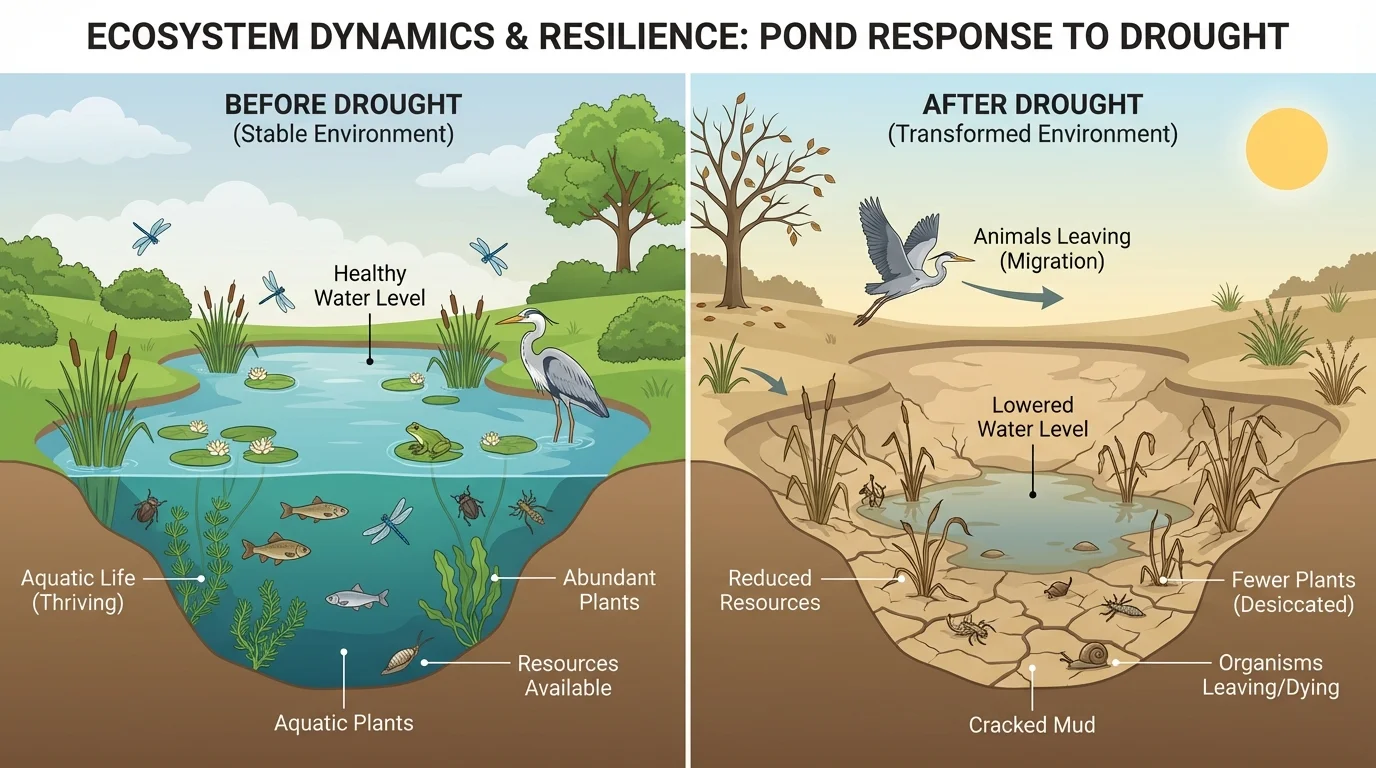
[Figure 2] Environments change all the time. Some changes happen slowly, such as a warmer climate over many years. Other changes happen quickly, such as a flood, wildfire, or storm. A change in rainfall, temperature, sunlight, or available food can make an ecosystem very different.
A drought happens when there is much less rain than usual. In a pond, less rain can lower the water level. Plants along the edges may dry out. Fish may have less oxygen in the water. Frogs may lose places to hide. Birds that visit the pond may find less food. One change can spread through the whole ecosystem.
Wildfire is another example. Fire may destroy grasses, bushes, and trees in one area. Animals that can run or fly may escape. Animals that move slowly may be in danger. After the fire, the land may look empty, but change continues. New plants may begin to grow, and some animals may return.
People can also change environments. Building roads, cutting forests, draining wetlands, or polluting water can alter habitats. Sometimes these changes happen so fast that organisms do not have enough time to adjust. Other times, people can help ecosystems by planting native species, protecting water, or reducing pollution.
Some ponds appear only during rainy parts of the year. Organisms that live there may grow quickly, lay eggs, or leave before the water disappears.
Seasonal change is natural too. In autumn, leaves fall and temperatures drop. In spring, plants grow again and many animals become active. Natural seasonal changes are part of how ecosystems function, but sudden or extreme changes can be much harder for organisms to handle.
[Figure 3] When an environment changes, organisms do not all respond the same way. In a changing habitat, some organisms survive and reproduce, some move to new locations, some move into the changed environment, and some die. These different responses are an important part of ecosystem dynamics.
Some survive and reproduce. If an organism has traits that fit the new conditions, it may stay alive and have offspring. For example, if a dry summer leaves only tough plants growing in a field, insects that can eat those plants may continue to live there.
Some move to new places. Birds may fly to a wetter area if a lake shrinks. Deer may travel farther to find food. Fish may swim to deeper water when shallow water becomes too warm. Moving is possible only if another suitable habitat is nearby.
Some move in. A changed habitat may become better for different organisms. After a storm opens a sunny space in a forest, plants that like lots of light may grow there. Insects that feed on those plants may arrive next. Later, birds may come to eat the insects.
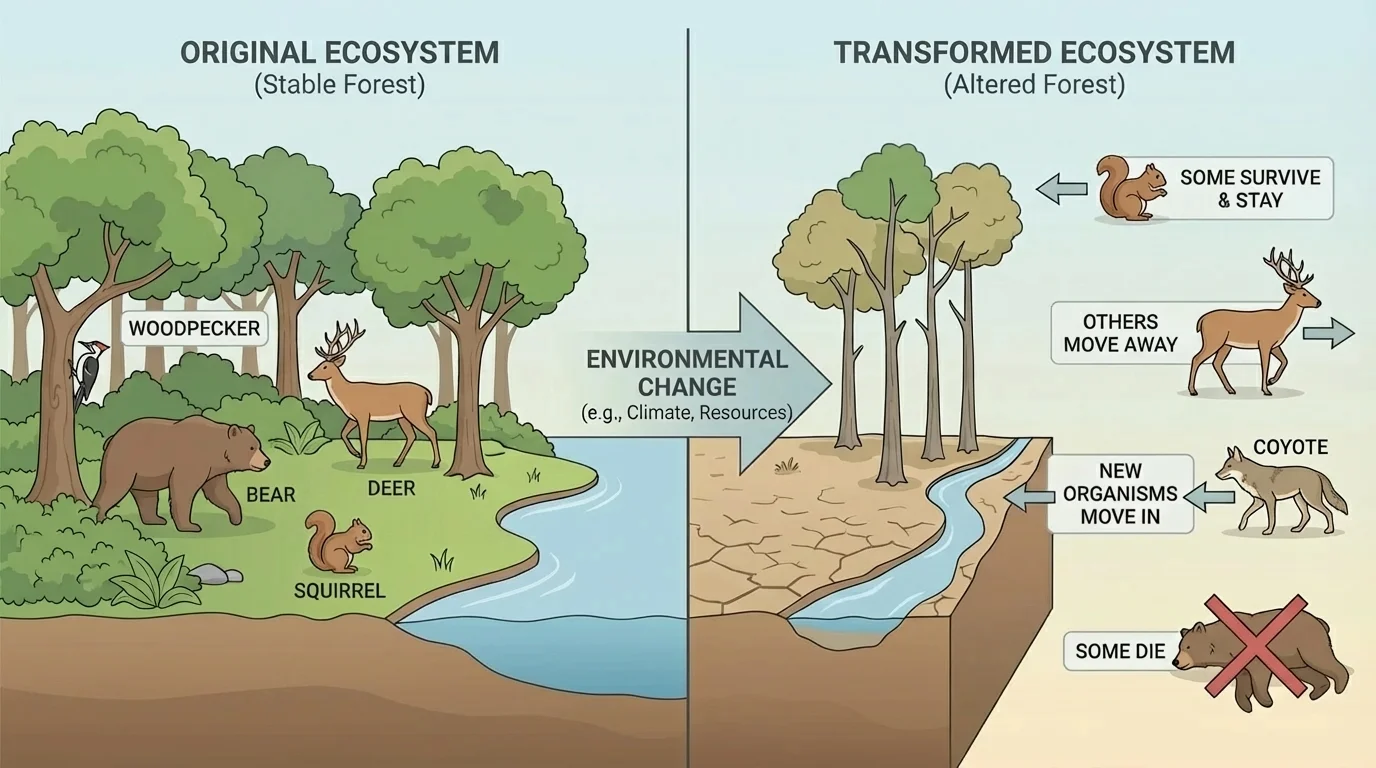
Some die. If the change is too great and the organism cannot move or adapt, it may not survive. A fish species that needs cool water may die if the water becomes too warm and there is not enough oxygen. A plant that needs shade may die if all the trees above it are removed.
Different responses happen at the same time. One environmental change can lead to all four results in the same ecosystem. During a drought, some pond insects survive in the mud, some frogs move away, birds may arrive to feed at the shrinking water edge, and some fish may die if the pond becomes too shallow.
These responses explain why ecosystems do not stay exactly the same. Populations rise and fall. Habitats shift. New living things may appear, and others may disappear from that place.
An organism's traits are features or behaviors that affect how well it survives. Traits can include body parts, color, size, speed, thick fur, deep roots, or the behavior of hiding during the hottest part of the day. A trait that is helpful in one environment may not help in another.
For example, a rabbit with fur that blends into dry grass is harder for predators to see. A plant with long roots can reach water deeper in the soil during dry weather. A turtle that can move to deeper water may survive a hot day better than one that is stuck in a shallow puddle.
Traits do not make an organism perfect. They simply affect its chances. If conditions change, some traits become more useful and others become less useful. That is why changes in the environment can change which organisms are most successful.
Example: Surviving a hot, dry summer
Three kinds of plants grow in the same field: one has shallow roots, one has deep roots, and one grows only in shade.
Step 1: The weather becomes hotter and there is less rain.
The soil near the surface dries first.
Step 2: The plants respond differently.
The deep-rooted plant can still reach water. The shallow-rooted plant struggles. The shade-loving plant may suffer if nearby bushes die and the area becomes sunnier.
Step 3: The population changes.
More deep-rooted plants survive and make seeds, so later there may be more of them in that field.
This kind of pattern happens in many ecosystems. The organisms best suited to the new conditions are more likely to stay and reproduce. The same idea helps explain why some species remain in a place after change while others disappear.
[Figure 4] A food web shows how living things are connected by feeding relationships. The food web shows that when one population changes, other populations may change too. Ecosystems are like a giant set of linked pathways.
Suppose a grassland has less rain. Less rain means less grass grows. If there is less grass, rabbits may have less to eat. If there are fewer rabbits, foxes may have less food. Hawks may also be affected. A change that begins with water can spread to plants, then to plant-eaters, and then to predators.
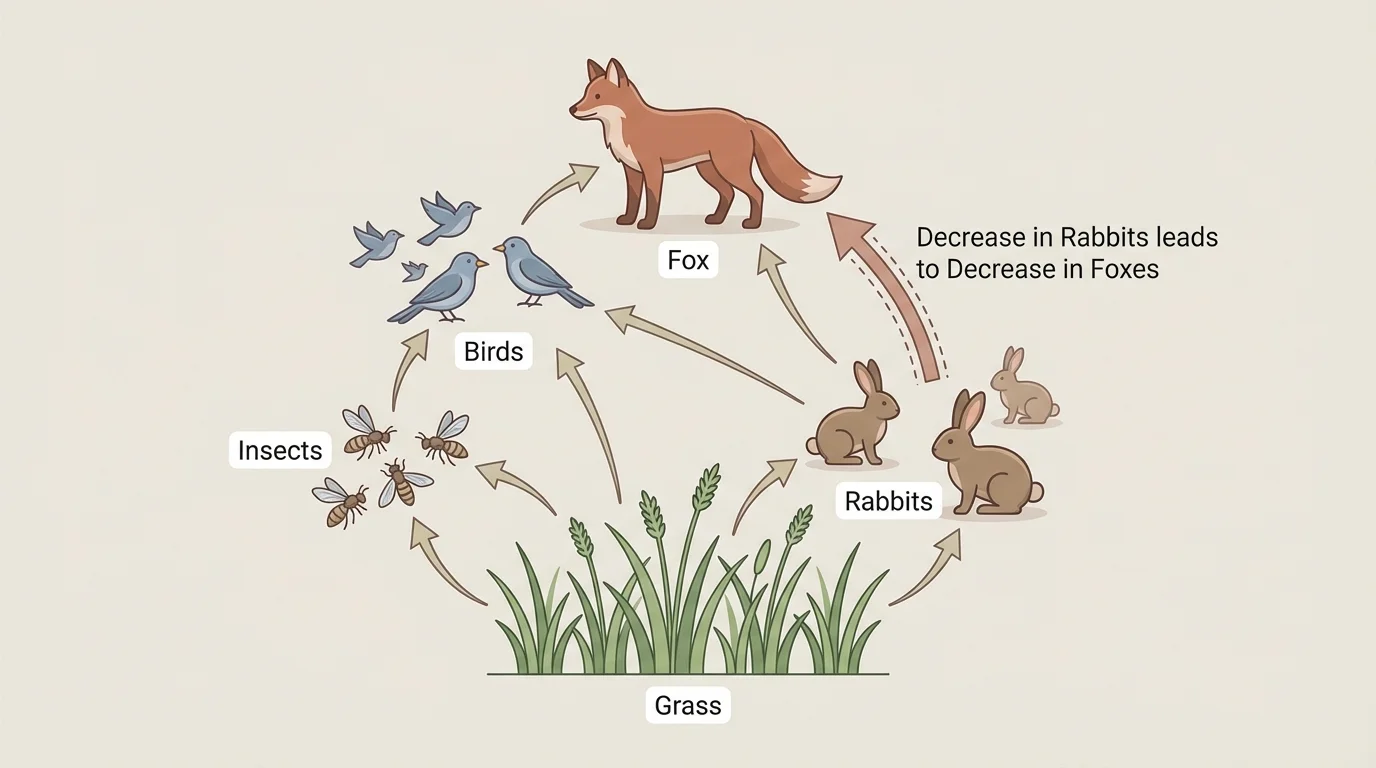
Now think about a pond where many insects die because of pollution. Fish that eat insects may decline. Birds that eat those fish may also find less food. On the other hand, some organisms that can tolerate pollution may become more common. The food web changes shape because the conditions changed.
A population is all the members of one kind of organism in one place. Populations can grow, shrink, or move. When resources are plentiful, a population may increase. When food, water, or shelter become limited, a population may decrease.
| Change in the environment | What may happen first | What may happen next |
|---|---|---|
| Less rain | Fewer plants grow | Plant-eating animals may decrease |
| Warmer water | Some fish struggle | Animals that eat those fish may have less food |
| More sunlight on forest floor | New plants grow | New insects and birds may move in |
| Pollution in water | Sensitive organisms die or leave | Food web changes |
Table 1. Examples of how one environmental change can lead to other changes in an ecosystem.
Because food webs are connected, helping one part of an ecosystem can help many other parts. Protecting clean water, for example, supports plants, fish, insects, amphibians, and birds all at once.
[Figure 5] Resilience means the ability of an ecosystem to recover after a change or disturbance. A resilient ecosystem can begin to rebuild itself. Recovery does not mean everything becomes exactly the same as before. It means life returns and the ecosystem continues functioning.
After a fire, some seeds in the soil may survive. Rain may help new grasses sprout. Insects may return first, then birds and small mammals. Later, shrubs and young trees may grow. Over time, the area may once again provide food and shelter for many organisms.
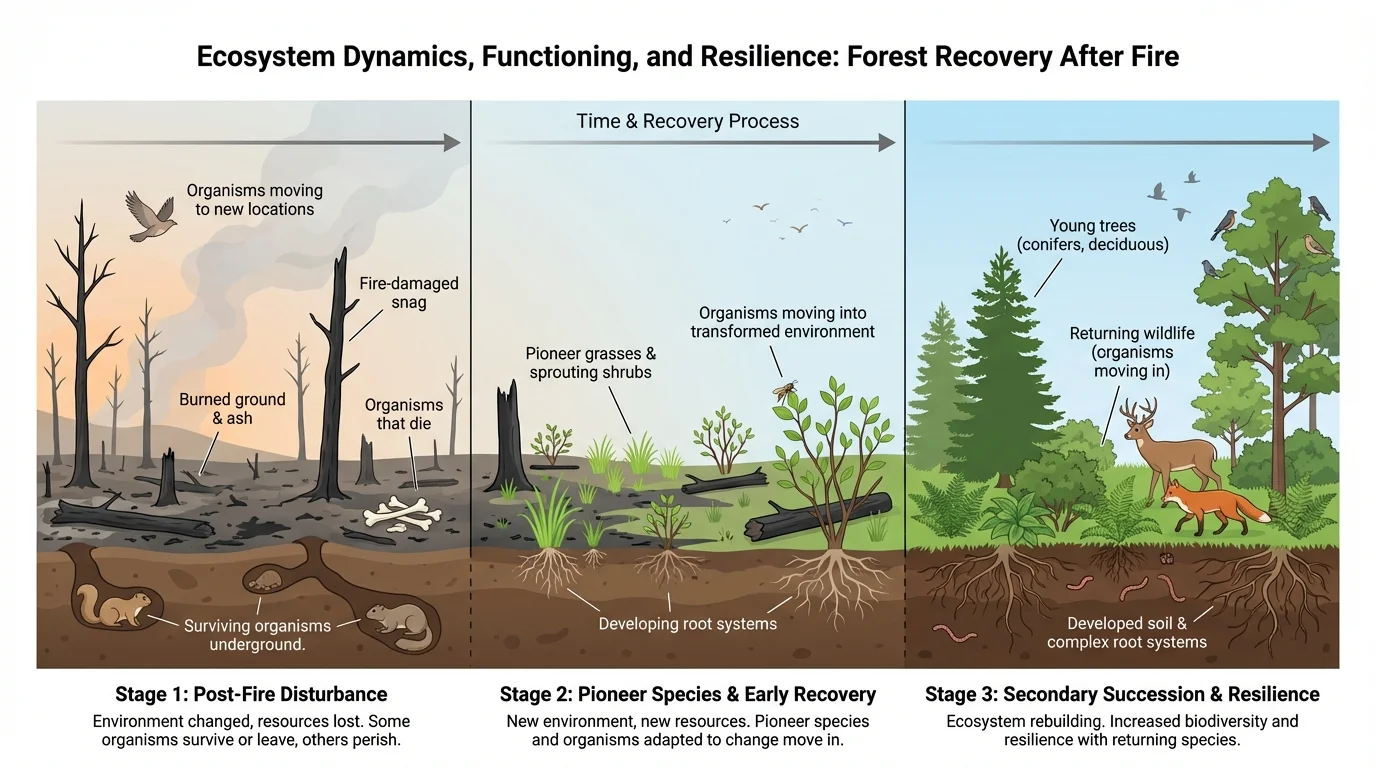
Wetlands often show resilience too. After flooding, water levels may slowly return to normal. Plants may regrow, and animals may come back if food and shelter return. In a healthy system, many parts work together to support recovery.
But resilience has limits. If a disturbance is too strong, happens too often, or removes too many resources, recovery may be difficult. A forest that is cut down and then paved over cannot recover as a forest. A polluted stream may not support fish again until the water becomes clean.
Case study: A forest after wildfire
Step 1: A wildfire burns grasses, bushes, and some trees.
Many animals leave, and the ground looks black and bare.
Step 2: Rain falls and sunlight reaches the ground.
New grasses and small plants begin growing from seeds and roots that survived.
Step 3: Insects and plant-eating animals return.
They feed on the new plants, and predators may follow.
Step 4: Over time, the habitat becomes more complex again.
Shrubs and young trees grow, creating shelter and new nesting places.
As the recovery continues, the forest in [Figure 5] reminds us that ecosystems are active systems, not frozen pictures. They can bend, change, and sometimes rebuild.
In a pond during drought, some turtles may survive by staying in wetter spots, some frogs may leave, insects that like muddy edges may become more common, and fish may die if the water becomes too warm or shallow. This is a clear example of different organisms responding in different ways to the same change.
In a city park, seasonal changes affect birds and insects. In spring, flowers bloom and pollinators arrive. In summer, trees provide shade and food. In autumn, some birds migrate. In winter, only certain plants and animals remain active. Even a small park is part of a changing ecosystem.
On a rocky shore by the ocean, storms may wash away seaweed and small animals. Some organisms cling tightly and survive. Others are swept away. New organisms may later settle there. Shore ecosystems are often resilient, but very strong or repeated storms can cause larger changes.
Some plants grow especially well after a fire because the heat helps open their seed cones or clears away taller plants that once blocked sunlight.
Farmers and gardeners also notice ecosystem dynamics. If one insect population grows too large, plants may be damaged. If ladybugs arrive and eat those insects, the balance changes again. Understanding these relationships helps people care for crops without harming the whole system.
People are part of ecosystems too. Our choices affect water, soil, air, plants, and animals. Protecting habitats helps organisms have the resources they need. Planting native plants can provide food and shelter for local animals. Keeping ponds and streams clean helps many populations at once.
Saving water, reducing litter, and protecting forests and wetlands can make ecosystems stronger. When habitats stay healthy, they are often better able to handle natural changes like storms, heat, or dry weather. Healthy ecosystems support biodiversity, which means having many different kinds of living things.
When many kinds of organisms live in one place, the ecosystem often has more ways to keep functioning after change. If one plant species struggles, another may still provide food. If one animal leaves, another may help fill a similar role. Diversity can support resilience.
"Everything in nature is connected."
— A key idea in ecology
Understanding ecosystem dynamics helps us notice these connections. A place may look ordinary at first glance, but every habitat is full of relationships, changes, and responses. The living world is always adjusting to changing conditions.
