A soccer ball flies across a field, a lamp lights up a room, music shakes a window, and sunlight warms a sidewalk. These may seem like very different events, but they all have something in common: energy is moving from one place to another. Energy is part of nearly everything that happens around us, from the biggest storms to the smallest buzzing phone.
In science, energy means the ability to cause change or do work. Energy can cause motion, make light, produce sound, or warm objects. We cannot usually see energy itself, but we can see what it does. If a toy car rolls, a bell rings, or a toaster heats bread, energy is at work.
Energy is the ability to cause change or do work. It can move objects, make sound, produce light, and heat materials.
Energy transfer happens when energy moves from one object or place to another.
Energy is not just one thing. It can appear in different forms, such as motion, sound, light, electricity, and heat. For this topic, an important idea is that energy can move from place to place in several ways. It can be carried by moving objects. It can travel through sound. It can travel through light. It can also move through electric currents.
When scientists talk about energy moving, they often mean that one object, material, or system gives energy to another. For example, your hand gives energy to a swing when you push it. The Sun gives energy to Earth by light. A battery gives energy to a flashlight bulb through an electric current.
Energy does not have to stay where it starts. It can travel. Sometimes it moves by direct contact, and sometimes it moves across space. This movement is called energy transfer. Understanding energy transfer helps explain how machines work, how animals hear, why lights glow, and why the ground feels warm on a sunny day.
Main idea about energy movement
Energy can be moved from place to place by moving objects or through sound, light, or electric currents. These are common ways energy travels in the world around us.
It is helpful to ask two questions whenever you study energy: Where does the energy start? and Where does it go? If a drum is hit, the energy starts with the moving drumstick and goes into the drum, then into the air as sound. If a lamp is on, energy starts at the power source and moves through electric current into the bulb, where it becomes light and heat.
A moving object can carry energy from one place to another. When that object bumps into something else, pushes it, or pulls it, some of the energy can be transferred. This is one of the easiest kinds of energy transfer to notice because you can often see the motion happen.
[Figure 1] Think about a bowling ball rolling down a lane. The moving ball has energy because it is in motion. When it crashes into the pins, some of that energy moves into the pins and makes them fly apart. A similar thing happens when one billiard ball strikes another, when a bat hits a baseball, or when your foot kicks a soccer ball.
Wind can also transfer energy by moving objects. Air that is moving pushes on leaves, flags, and kites. It can even turn the blades of a wind turbine. Flowing water transfers energy too. River water can push a waterwheel, and ocean waves can move boats up and down.
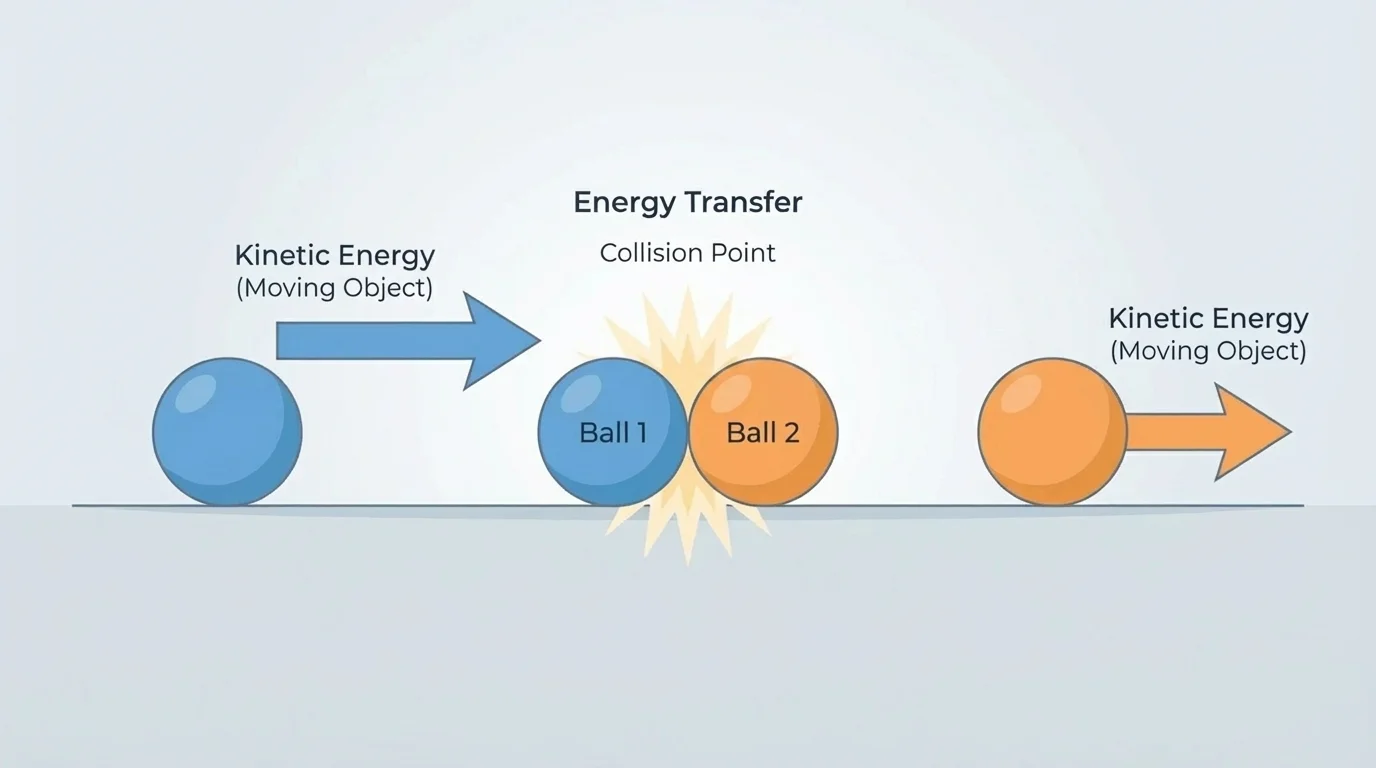
Even your own body transfers energy by moving objects. When you throw a ball, your muscles move your arm, your hand pushes the ball, and the ball carries energy through the air. When you pedal a bicycle, energy from your body moves through the pedals and chain to the wheels.
Real-world example: playground swing
Step 1: A child pulls the swing back.
Step 2: The child lets go, and the swing starts moving.
Step 3: A push from another person adds more energy to the moving swing.
The push transfers energy to the swing, causing it to move higher and faster.
Later, the same idea appears in many machines. In a fan, the motor turns the blades, and the blades transfer energy to the air. In a hammer, the moving head transfers energy to a nail. As in [Figure 1], motion can pass energy from one object to another.
Sound is another way energy moves from place to place. Sound begins when something vibrates, and those vibrations make nearby matter vibrate too. This is how energy travels through the air to your ears.
[Figure 2] If you pluck a guitar string, the string vibrates back and forth. That motion pushes on the air around it. The air particles then push on other air particles. The energy keeps moving outward as sound. When the sound reaches your ear, parts of your ear vibrate, and your brain helps you hear the sound.
A drum, a speaker, a barking dog, and a ringing school bell all transfer energy by sound. Sound needs matter to travel through, such as air, water, or solids. That is why sound can travel through a wall or through water, but it cannot travel through empty space.
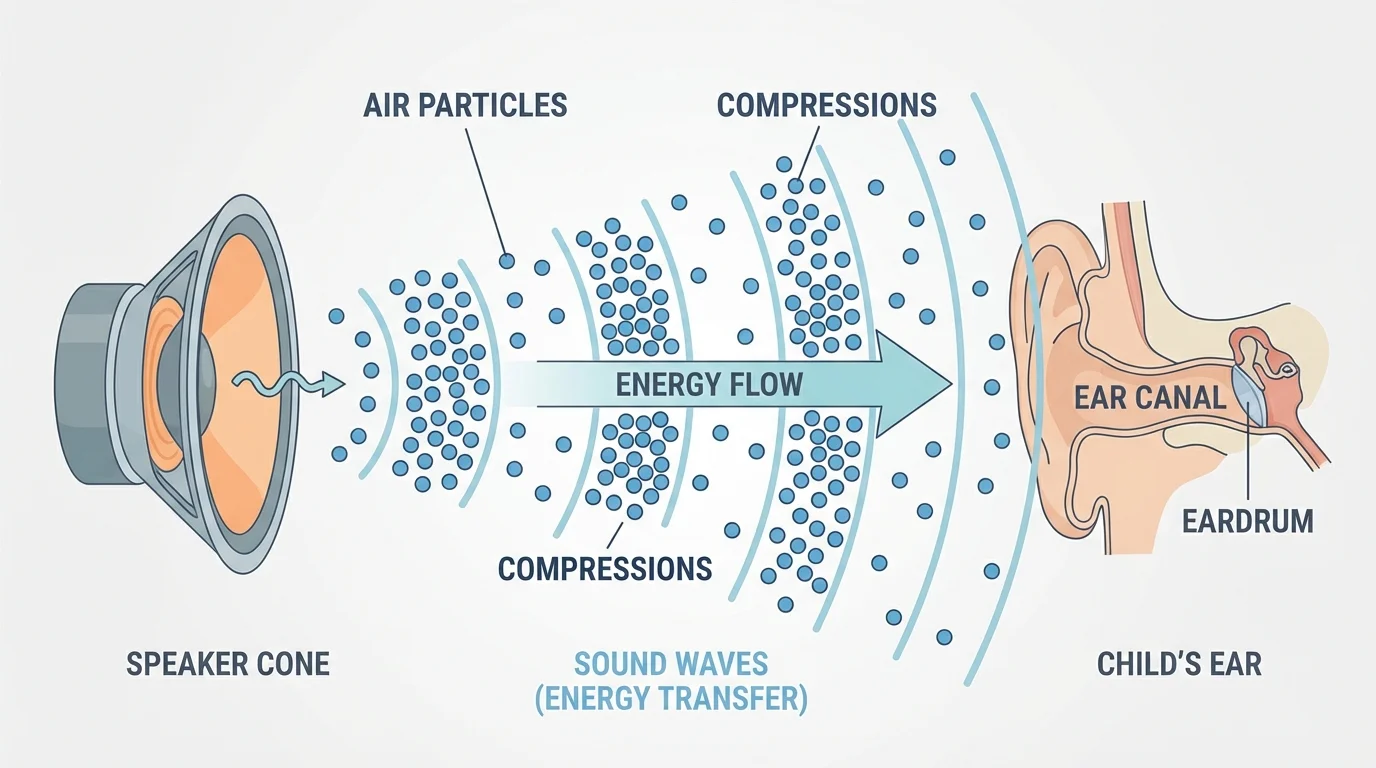
Sound can make things move a little. Very loud music can shake windows. Thunder can rattle a house. These are clues that sound carries energy. Usually the amount is small, but it is real.
Some animals use sound energy in amazing ways. Bats send out sounds and listen for echoes to find insects in the dark.
When you hear someone speaking across a room, energy has traveled from that person's vocal cords, through the air, to your ear. That path of moving energy helps explain why sound gets weaker when you are farther away. The sound energy spreads out as it travels, just as [Figure 2] shows.
Light also transfers energy from place to place. A source of light, such as the Sun, a candle flame, or a light bulb, sends out light energy. That energy can travel through space and through clear materials such as air, glass, and water.
[Figure 3] Sunlight is one of the most important examples of energy transfer by light. The Sun is very far away, yet its light reaches Earth and transfers energy here. That energy warms land, water, and air. It also helps plants make food.
Light does more than help us see. It can also heat things. If you wear a black shirt on a sunny day, it often feels warmer than a white shirt. Dark surfaces usually absorb more light energy. A sidewalk can become hot because sunlight transfers energy to it. Solar calculators and solar panels use light energy too.
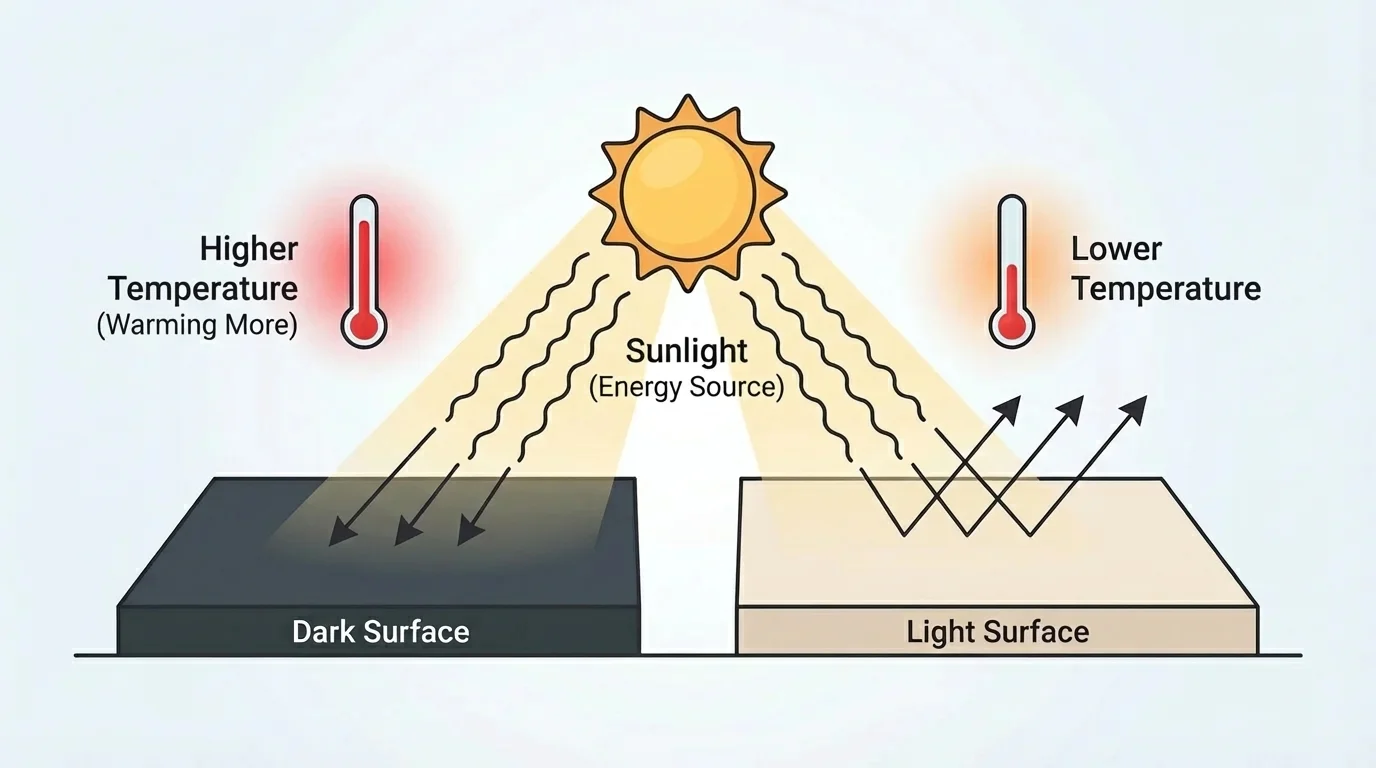
When you stand near a campfire, you may feel warmth even without touching it. Some of that energy reaches you as light and thermal radiation. A lamp works in a similar way on a smaller scale. Energy moves from the source to your eyes and to nearby objects.
Real-world example: sunlight warming a bench
Step 1: The Sun sends out light in all directions.
Step 2: Some of that light reaches a metal bench.
Step 3: The bench absorbs part of the light energy and becomes warmer.
This is energy moving from the Sun to the bench by light.
This idea remains important in many areas of science. Plants, weather, and even the warmth of beaches depend on light transferring energy. The warming of dark and light surfaces, shown in [Figure 3], helps explain why some materials heat faster than others.
An electric current is a flow of electric charge. In wires, electric current can move energy from one place to another. This is how many devices in homes and schools receive energy.
[Figure 4] Think about a flashlight. The battery stores energy. When the flashlight is switched on, electric current moves through the wires and the bulb. The bulb then changes that energy into light and some heat. In a fan, electric current delivers energy to a motor, and the motor makes the blades spin.
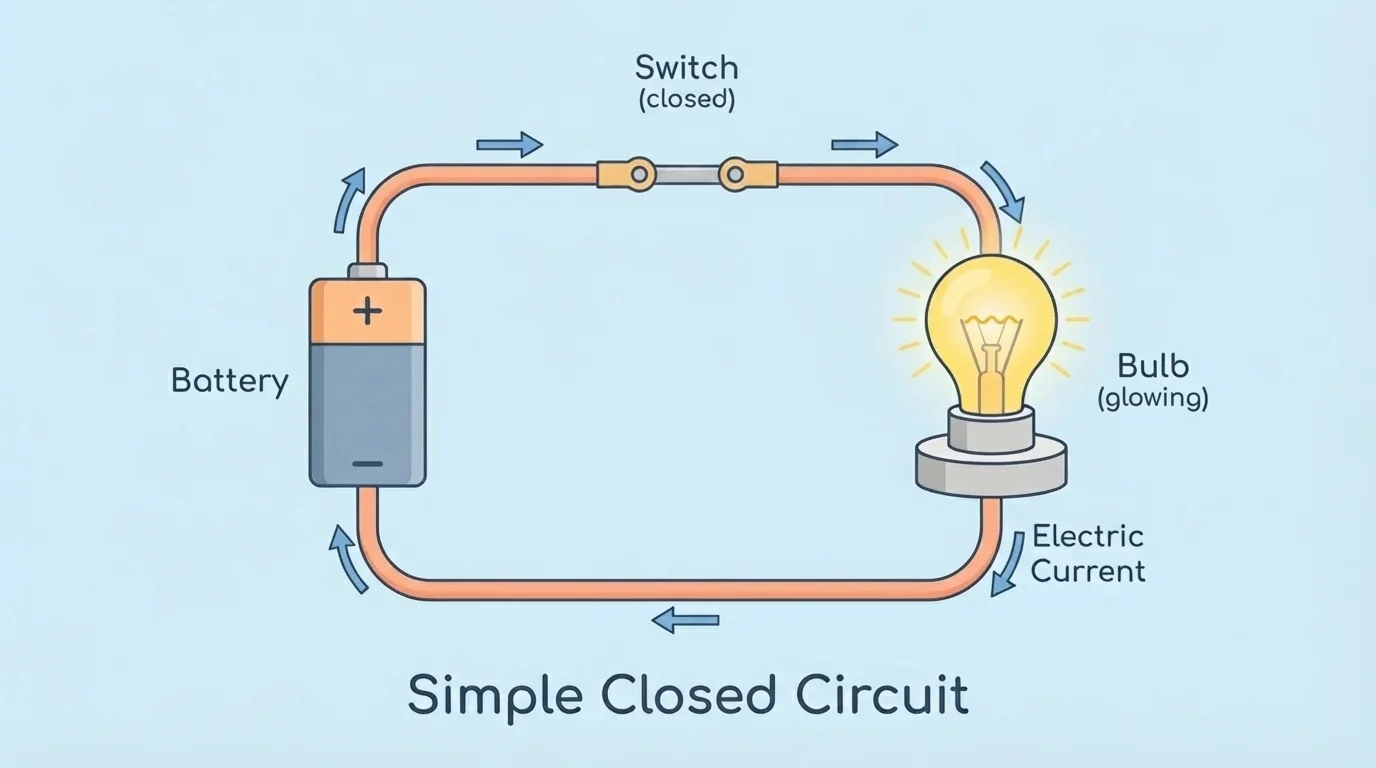
Phone chargers, refrigerators, computers, televisions, and classroom projectors all depend on electric currents to transfer energy. In each case, energy starts at a source such as a battery or a power plant and moves through wires to a device.
Electricity is especially useful because it can carry energy quickly and over long distances. Power plants can be many kilometers away from a town, yet electric current can still bring energy to homes, traffic lights, and schools. Then the devices change that energy into useful forms, such as sound, light, motion, or heat.
You may already know that a complete path is needed for many electric devices to work. In a simple circuit, the path allows electric current to move and transfer energy to the device.
The glowing bulb in [Figure 4] helps us see that electric current does not keep energy as electricity forever. The energy reaches the bulb and changes mainly into light and heat.
When energy is transferred, it often changes form. A moving baseball can transfer energy to a bat, producing sound and motion. Electric current in a lamp becomes light and heat. Light from the Sun can warm the ground. Sound can cause tiny motions in your ear.
Energy transfer and energy change
Energy can move from one place to another, and after it arrives it often changes into a different form. Scientists describe this as energy being transferred and transformed.
This is why energy is so useful. It can start in one form and end in another form that does a job. A toaster uses electric current to transfer energy, then changes it into heat that toasts bread. A radio uses electric current, then changes energy into sound. A lamp uses electric current, then changes energy into light.
Sometimes more than one thing happens at once. A running blender makes motion, sound, and some heat. A car uses energy to move, but it also produces sound and warmth. A bouncing basketball makes motion and sound at the same time.
Energy transfer is happening all around you every day. Here are a few examples from ordinary life.
| Situation | How energy moves | What happens next |
|---|---|---|
| Kicking a ball | By a moving object | The ball rolls or flies |
| Hearing a bell | Through sound | Your ear receives sound energy |
| Standing in sunlight | Through light | Your skin and clothes warm up |
| Turning on a lamp | Through electric current | The bulb gives off light and heat |
| Using a hair dryer | Through electric current and moving air | Air warms and blows |
Table 1. Examples of common ways energy moves from place to place in everyday life.
In sports, energy transfer helps explain nearly every motion. In music, sound transfer helps explain how instruments and speakers work. In weather, sunlight warms Earth and moving air transfers energy in winds. In technology, electric currents allow energy to reach devices that help us learn, communicate, and travel.
Lightning and thunder show two kinds of energy transfer in the same storm. Lightning gives off light, and thunder carries energy by sound.
Nature offers many more examples. Ocean waves transfer energy across water. Birds use energy from food to move their wings. Trees use light from the Sun to make food. A waterfall transfers energy through moving water. Looking for where energy starts and where it goes is a powerful science habit.
You can notice energy movement with careful observation. Tap one domino and watch several fall in a row. Energy moves by the motion of each domino hitting the next. Put your hand near, but not on, a lamp that has been on for a while, and you may feel warmth from transferred energy. Listen to a tuning fork or a ruler twanged over the edge of a desk and notice that vibration makes sound.
Another safe observation is to compare a sunny spot and a shady spot outside. The sunny spot often feels warmer because more light energy is reaching it. You can also watch a battery-powered toy. The battery provides energy, the current moves it, and the toy may respond with motion, sound, or light.
Scientists use observations like these to understand invisible processes. We may not see energy itself, but we can see its effects clearly.
"Energy is known by what it does."
— A simple science idea
Once you begin to notice energy transfer, many everyday events make more sense. The world is full of moving energy: balls, bells, bulbs, batteries, sunshine, songs, storms, and spinning wheels all tell the same story in different ways.
