Have you ever noticed that the teams who win games are not always the biggest or the fastest, but the ones who talk, plan, and work together the best? 💡 In many physical activities, the real challenge is not just how high you can jump or how hard you can throw. The challenge is how well you and your classmates can think, cooperate, and build a strong team while moving your bodies.
In this lesson, you will explore how problem-solving, cooperation, and team-building show up in the games, challenges, and sports you play in physical education. You will also see how your movement skills are tools that help your team succeed.
Problem-solving is what you do any time you face a challenge and have to figure out a way to overcome it. In physical activities, the "problem" is often a task with rules, limits, or obstacles that you must solve by moving your body and thinking at the same time.
For example, you might get a challenge like this: "Your group has 4 mats, but all 6 of you must cross from one side of the gym to the other without anyone touching the floor." That means you need to figure out a safe and smart way to share the mats, move them, and help each other across.
Some common problem-solving challenges in PE include:
All of these tasks require you to:
Problem-solving in physical activities is like doing a puzzle with your body. You use your brain to think of ideas, then use your movement skills to carry out those ideas. When your first idea does not work, you do not give up. Instead, you talk with your teammates, change the plan, and try again. 🎯
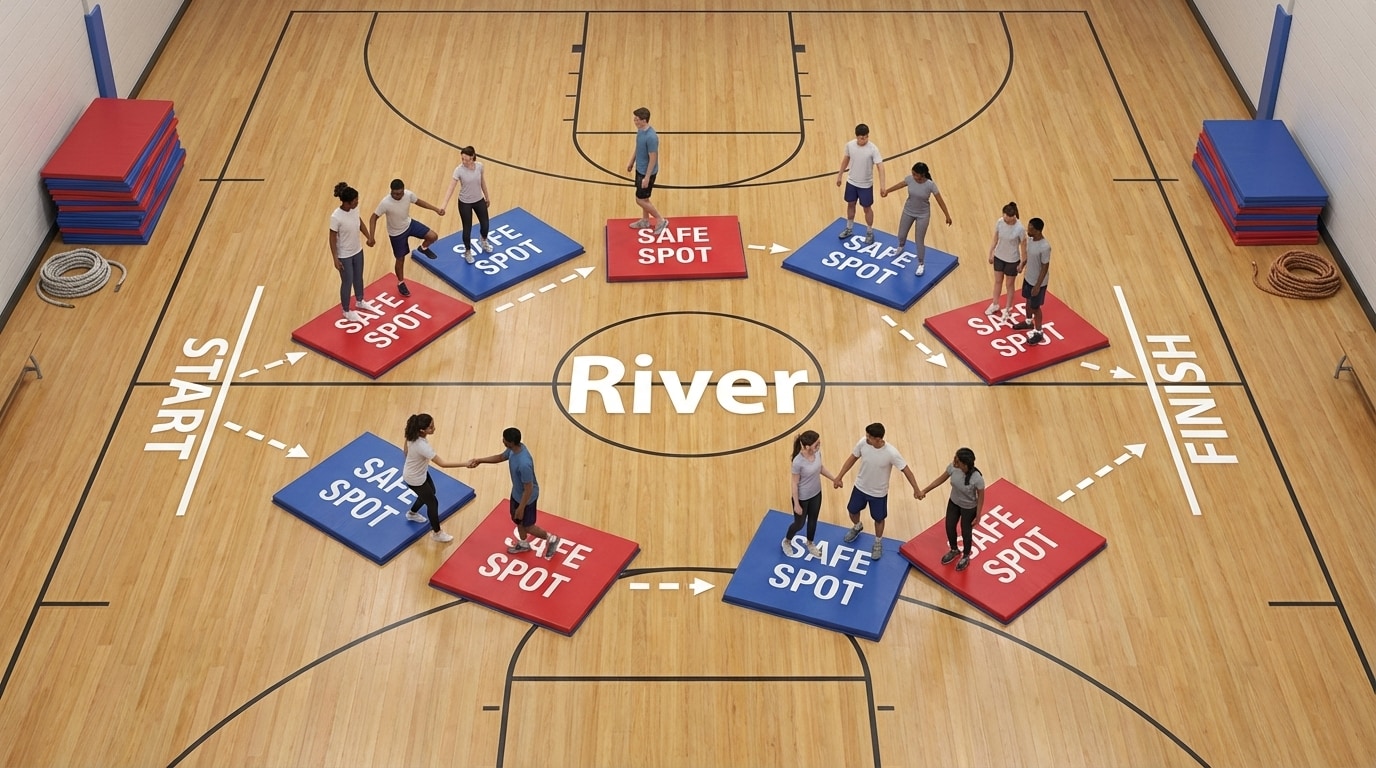
Cooperation means working together toward the same goal. Just being in the same group does not mean you are cooperating. True cooperation happens when everyone in the group is trying to help the team succeed, not just themselves.
In physical activities, cooperation might look like:
Think about a sport like soccer. If one player always tries to dribble through everyone and never passes, the team may lose the ball often. But if players cooperate by passing, communicating, and supporting each other, they can move the ball down the field as a team. The same is true for volleyball, basketball, and even relay races.
Cooperation also involves how you treat others. Helpful habits for cooperation include:
When everyone cooperates, activities become more fun, safer, and more successful for the whole group.
Team-building is about strengthening the relationships, trust, and communication inside a group. Some activities are created mainly to build the team, not to score points or win a game.
Examples of team-building activities include:
These activities help build:
Team-building is not only for sports teams. Any group that needs to work together, such as a class, a club, or a group doing a project, can benefit from it.
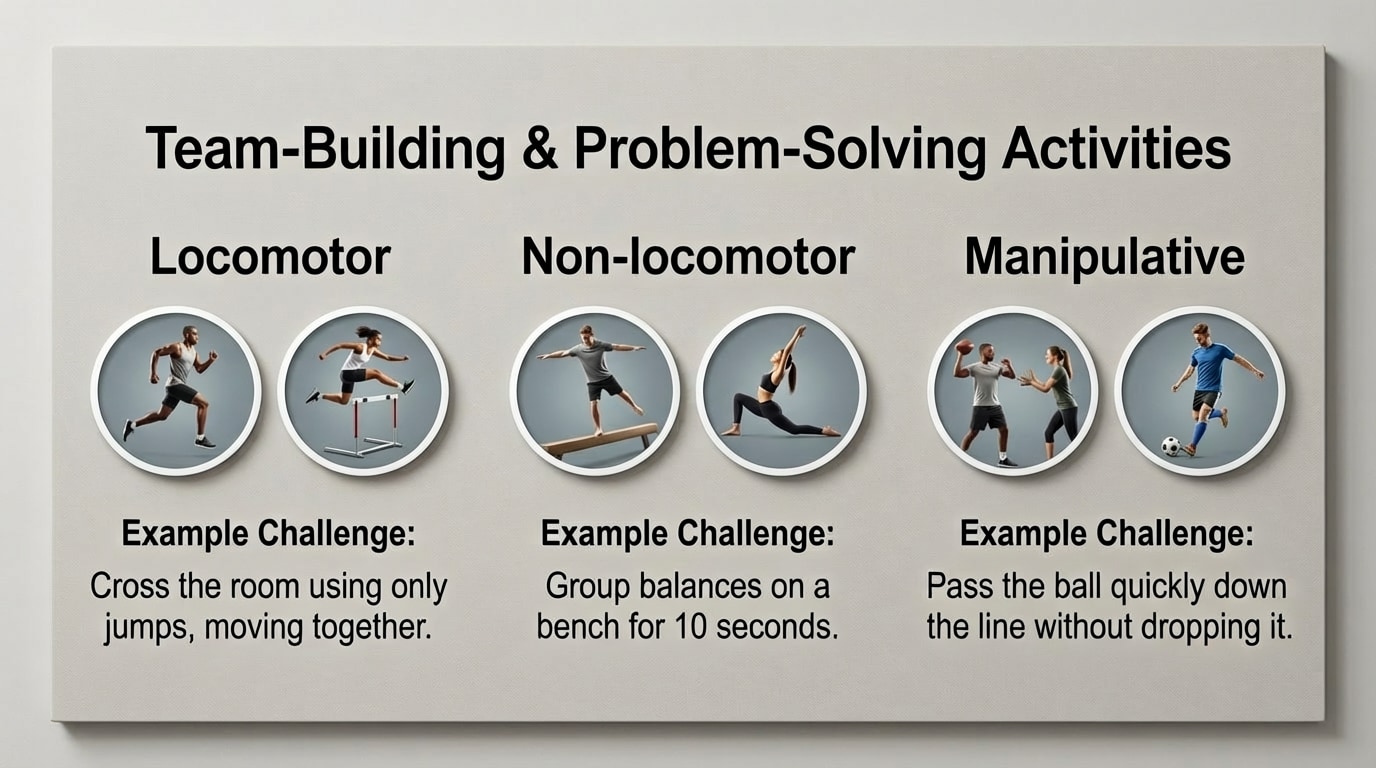
Movement competence means being able to use your body's motor skills in a controlled, effective way during physical activities. These skills are the "tools" you and your teammates use to solve problems, cooperate, and build a strong team.
There are three main types of motor skills that are important in many activities, as organized in [Figure 2]:
Here are examples of each type, and how they can help your team in problem-solving activities.
| Type of Skill | Definition | Examples | How It Helps the Team |
|---|---|---|---|
| Locomotor | Moving your body from place to place | Walking, running, hopping, sliding, skipping | Getting to spots quickly, carrying equipment, moving through obstacles |
| Non-locomotor | Controlling your body without traveling | Balancing, twisting, bending, stretching | Staying on a narrow line, forming stable shapes, supporting others |
| Manipulative | Handling and moving objects | Throwing, catching, kicking, striking, dribbling | Passing balls, moving items safely, completing tasks with equipment |
When your team faces a challenge, you often mix these skills together. For example, in a relay where you must carry a ball on a spoon across the gym:
The better your movement competence, the more choices your team has. If you can balance well, your team might choose you for a narrow-beam crossing. If you can throw accurately, you might be the person who tosses equipment across a safe gap.
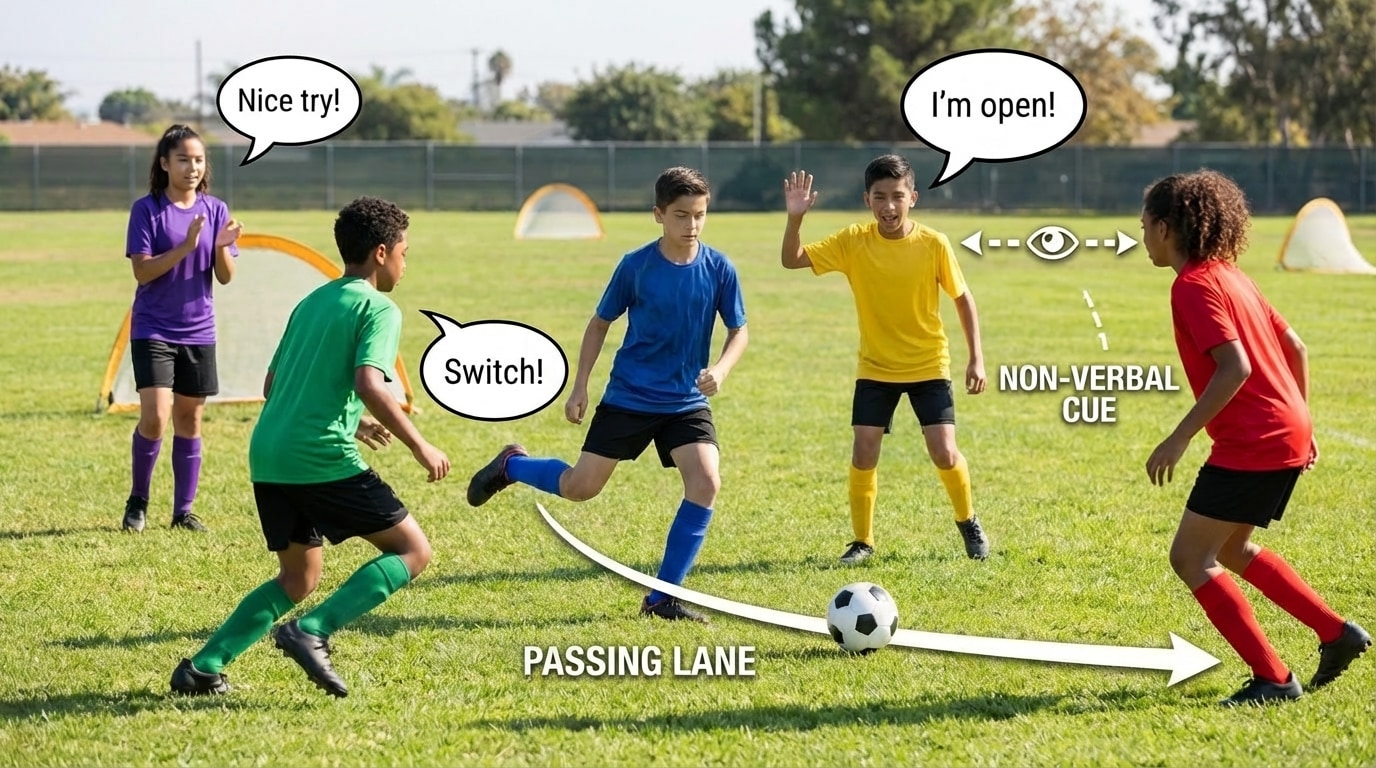
Good communication is one of the most powerful tools a team can have, as shown in [Figure 3]. It includes both the words you say and the signals you send with your body. Strong communication helps your team make plans, stay safe, and support each other.
There are two main types of communication in physical activities:
Verbal communication might include:
Non-verbal communication might include:
In fast-moving games, you often do not have time for long sentences. That is why clear signals, short phrases, and good awareness of your teammates are so important.
Good communication can prevent accidents, too. Warning a teammate that a ball is coming or telling them you are behind them when spotting can keep everyone safe.
On a strong team, not everyone has to do the same thing. Different people can take on different roles. These roles might change from one activity to another, but each one is important for problem-solving and cooperation.
Some useful roles include:
In some activities, you might also have roles like "timer," "recorder," or "navigator." What matters is that everyone understands their responsibility and respects others' roles.
Good teammates:
When roles are clear, teams can solve problems faster and with less confusion.
Working in groups is not always easy. You may face problems such as arguments, frustration, or someone feeling left out. Learning how to handle these challenges is part of team-building.
1. Disagreements about what to do
Sometimes people have different ideas about the best plan. To handle this, you can:
2. One person taking over
If one person is doing all the talking or ordering others around, others may feel ignored. To fix this, you can:
3. Teammates feeling nervous or shy
Not everyone feels comfortable leading or trying hard skills right away. You can help by:
4. Losing or failing a challenge
No team wins or solves every challenge. When your group does not succeed, you can:
Handling these common challenges with respect and calm voices makes your team stronger and more prepared for the next activity.
The skills you practice in problem-solving, cooperation, and team-building activities are not just for PE class. They are useful in many parts of your life. 🌍
At school, you use these skills when:
You need to communicate, share roles, and stay positive, just like you do in physical challenges. The same clear communication from [Figure 3] helps you share ideas in any subject.
At home, you might:
These situations need cooperation, responsibility, and sometimes creative problem-solving.
In future jobs, many workplaces use teams to complete big tasks. People often have different roles, like leader, planner, or safety checker, just like you practiced in PE. Being able to move safely, react quickly, and communicate clearly is important in jobs like firefighting, coaching, construction, nursing, and many more. Your growing movement competence, like using balance, coordination, and control of objects shown in [Figure 2], can help in sports, dance, or any physically active job.
In emergencies, problem-solving and teamwork can keep people safe. Knowing how to stay calm, give clear instructions, and work with others can make a big difference.
So every time you practice a group challenge or team sport, you are not just playing a game. You are training for real-life situations where you will need to think, move, and cooperate with others.
Here are the most important ideas to remember from this lesson. ⭐
Every time you participate in activities that require problem-solving, cooperation, and team-building, you are becoming not just a better mover, but a better teammate and a stronger member of your community. 💪
