Have you ever watched two people play the same sport and wondered how one makes everything look effortless while the other seems to struggle, even if their physical abilities are similar? The difference is often not strength or speed—it is how well players understand and apply movement principles, rules, and problem-solving strategies in real time.
The same idea applies when a parkour athlete chooses a safe route across railings or a dancer adjusts to a slippery stage. In every movement setting, your brain and your body are constantly solving problems.
This lesson explores how to use rules, principles, and problem-solving skills to perform more effectively and safely in both traditional (like basketball or track) and nontraditional (like parkour or yoga) movement settings. You will see how the same core ideas—stability, force, timing, space, and decision-making—transfer across many physical activities.
Traditional movement settings are the activities you tend to see in school athletics, professional sports, and organized competitions. Examples include basketball, soccer, volleyball, track and field, gymnastics, wrestling, swimming, and tennis. These activities usually have formal rule books, standardized equipment, and clearly defined playing areas.
Nontraditional movement settings are activities that may be less formal, more creative, or newer in popular culture. Examples include parkour and freerunning, skateboarding, ultimate Frisbee, yoga, Pilates, martial arts-based fitness, dance fitness, outdoor adventure (like hiking, bouldering, mountain biking), and even physically interactive gaming or VR training. Rules may be more flexible, self-created, or based on community norms rather than official organizations.
Even though these environments look very different, they share common movement concepts. Whether you are executing a layup, landing from a vault, holding a yoga pose, or navigating a trail, you are constantly adjusting to forces, space, time, and risk.
To apply rules and problem-solving effectively, you need a basic understanding of how movement works. Several key principles appear again and again across activities.
1. Stability, Center of Mass, and Base of Support
Stability is your ability to resist being moved or knocked over. Stability depends on your center of mass and base of support, as shown in [Figure 1]. Your center of mass is roughly the point where your body’s mass is evenly distributed (for many standing positions, around the pelvis). Your base of support is the area under and between your points of contact with the ground (for example, the polygon formed by your feet when you are standing).
You are more stable when you:
These ideas matter in traditional settings like wrestling, where you lower your stance to avoid being taken down, and in nontraditional settings like yoga, where balancing poses require aligning your center of mass over a narrow base.
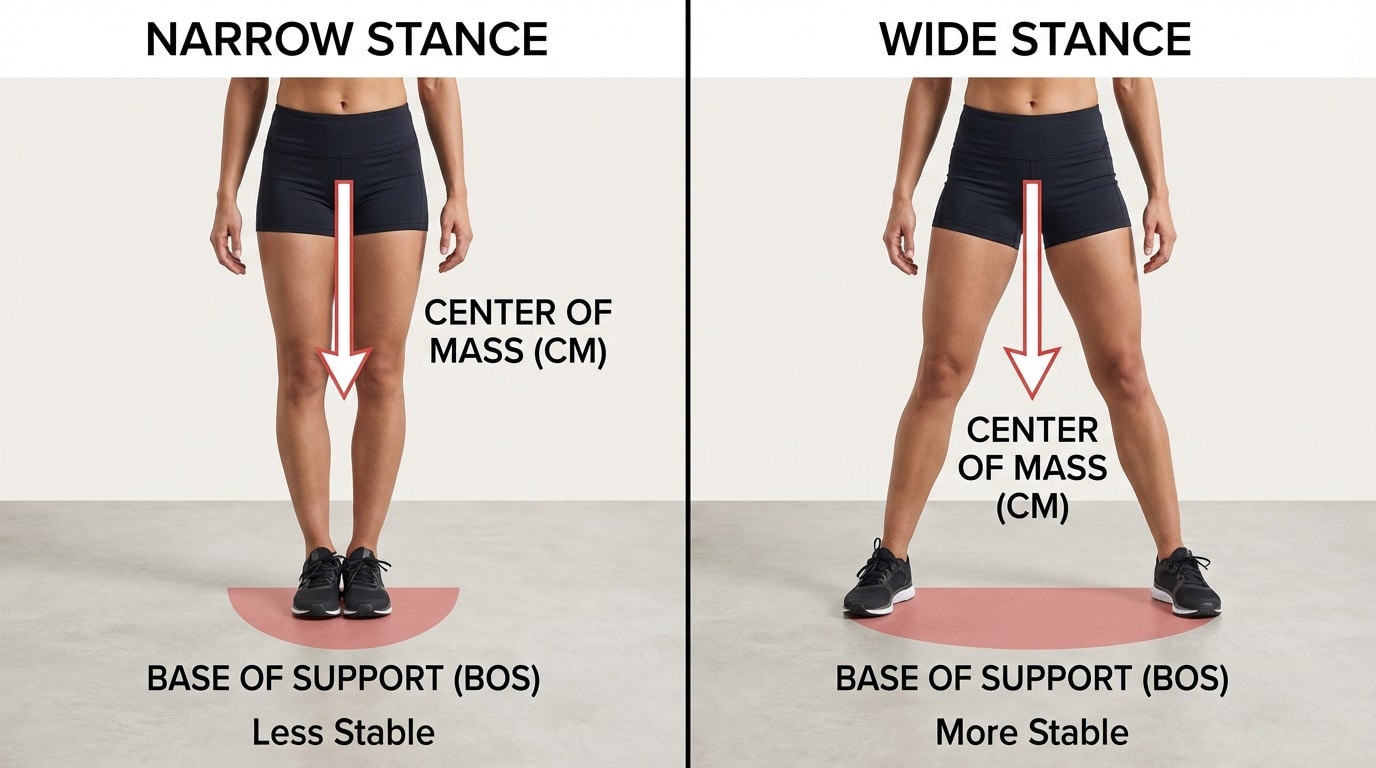
When you shift into a single-leg stance (in a soccer shot, figure skating spin, or dance move), you reduce your base of support. To avoid falling, you must either keep your center of mass above that smaller base or adjust by using momentum and timing—linking stability to dynamic movement, not just stillness.
2. Force, Impulse, and Momentum
Movement involves forces—pushes and pulls. When you apply force over a period of time, you create impulse, which changes momentum. Momentum relates to how hard it is to stop or change a moving object or body. In accessible terms: stronger and longer pushes generally create faster or farther movement, but too much force at the wrong time can throw you off balance.
Examples include:
3. Levers and Joint Position
Your bones and joints form lever systems. A lever has a fulcrum (the joint), an effort force (your muscles), and a load (what is being moved). Longer levers can generate higher speeds at the end but may be harder to control. For example, fully extending your leg in a soccer kick creates a long lever, giving you a powerful shot but also potentially more strain on the hip and knee if your technique is poor.
Understanding levers helps you:
4. Planes of Motion
Human movement is often described in three planes of motion:
Efficient movers can combine these planes smoothly. For example, a defensive basketball slide (frontal) followed by a pivot (transverse) and sprint (sagittal) uses multiple planes in quick succession.
Rules are not just about stopping you from having fun—they are usually built on movement and safety principles. When you understand the “why” behind rules, you can adapt smarter in unfamiliar situations.
1. Formal Rules in Traditional Sports
Traditional sports have written rules that define how the game is played, scored, and kept safe. Examples:
Many safety-related rules exist because of biomechanical realities. Prohibiting tackles from behind in soccer, for example, protects vulnerable parts of the body such as the ankles, knees, and spine.
2. Informal Rules and Etiquette in Nontraditional Settings
Nontraditional settings may lack official rule books but still rely on norms and safety expectations. For example:
Applying rules and norms intelligently means asking: What could go wrong here? How does the environment affect risk? What choices keep me and others safe while still allowing challenge and progress?
Every movement situation is a problem to solve. Whether facing a full-court press, figuring out how to land from a vault, or navigating a rocky trail, you can use a repeatable process.
Step 1: Analyze the Situation
Notice what is happening now:
Step 2: Identify Constraints
Constraints are the factors that limit your choices. They can be:
Step 3: Generate Options
Based on what you see, think of possible solutions. For example, in a 2-on-1 fast break, you might consider passing early, driving all the way to the basket, or pulling up for a short jumper.
Step 4: Choose and Commit
Select the option that best fits the constraints and your abilities. Then commit with confidence and proper technique. Hesitation often leads to mistakes or unsafe landings.
Step 5: Reflect and Adjust
After the play or movement, think briefly: What worked? What did not? What will you try differently next time? This reflection is where learning and long-term improvement happen.
Strategies are big-picture plans; tactics are specific actions you use in the moment. Applying movement concepts improves both.
1. Spacing and Creating Advantages
Good spacing uses the entire playing area to stretch the defense, create passing lanes, and open driving or shooting opportunities, as illustrated in a 3-on-2 fast break in basketball in [Figure 2].
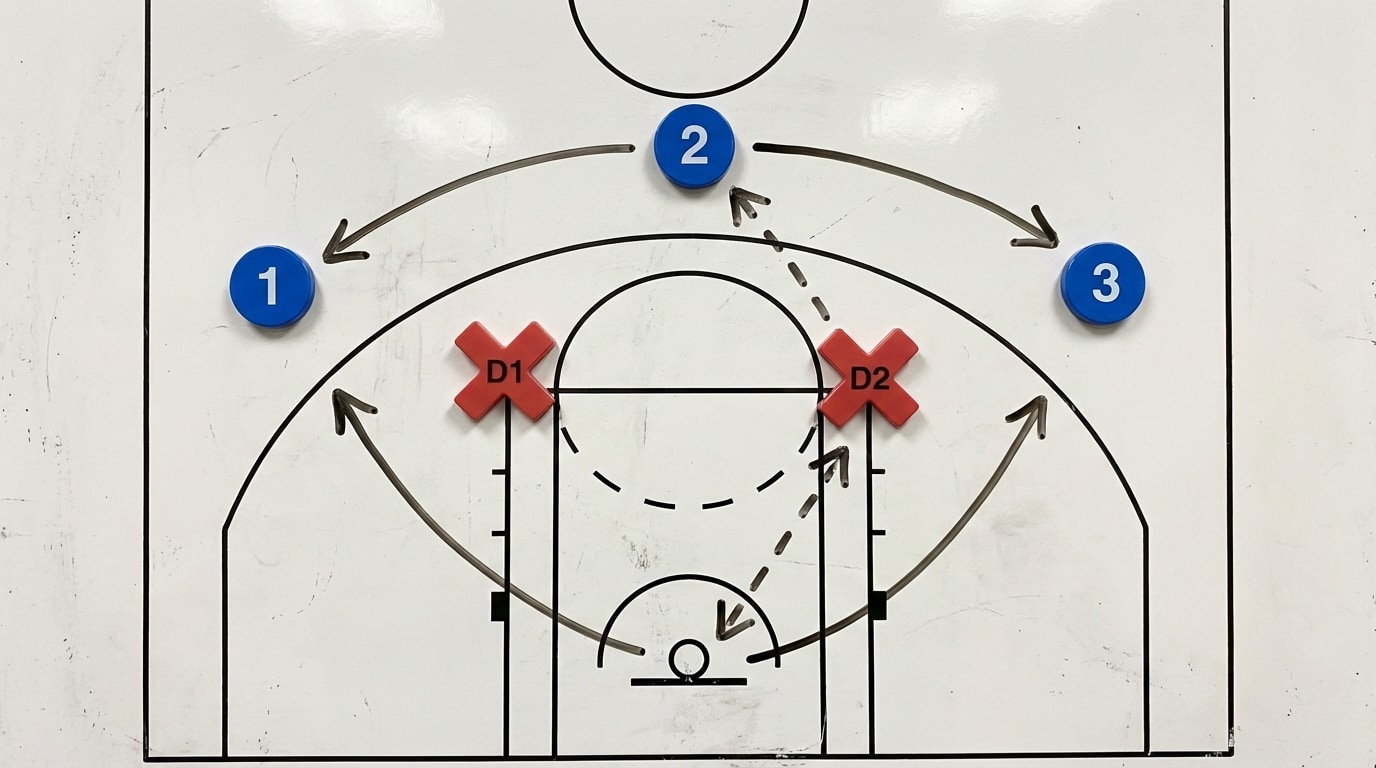
Key ideas for spacing include:
In soccer, this might look like wingers staying wide and making diagonal runs behind defenders. In volleyball, it could mean attackers running crossing routes to confuse blockers and open hitting lanes.
2. Reading Defenses and Adjusting
Problem-solving in team sports often centers on recognizing patterns. For example:
Understanding where defenders are overcommitted allows you to attack weak spots without violating rules such as charging or illegal screens.
3. Transition: Offense to Defense and Back
High-level performers excel in transitions. Examples include:
Transitions require rapid analysis of space, time, and numbers (how many attackers vs defenders) and then fast decisions to either attack aggressively or slow the game down.
Movement principles and problem-solving do not belong only to varsity sports. They are just as important—and sometimes more obviously life-critical—in nontraditional settings.
1. Parkour and Freerunning
In parkour, athletes (traceurs) move through complex environments using running, jumping, vaulting, and climbing, like those shown in [Figure 3]. Route choice and risk assessment are central. A parkour athlete evaluates multiple possible paths, considering their own ability, the surface, height, and potential consequences of a mistake.
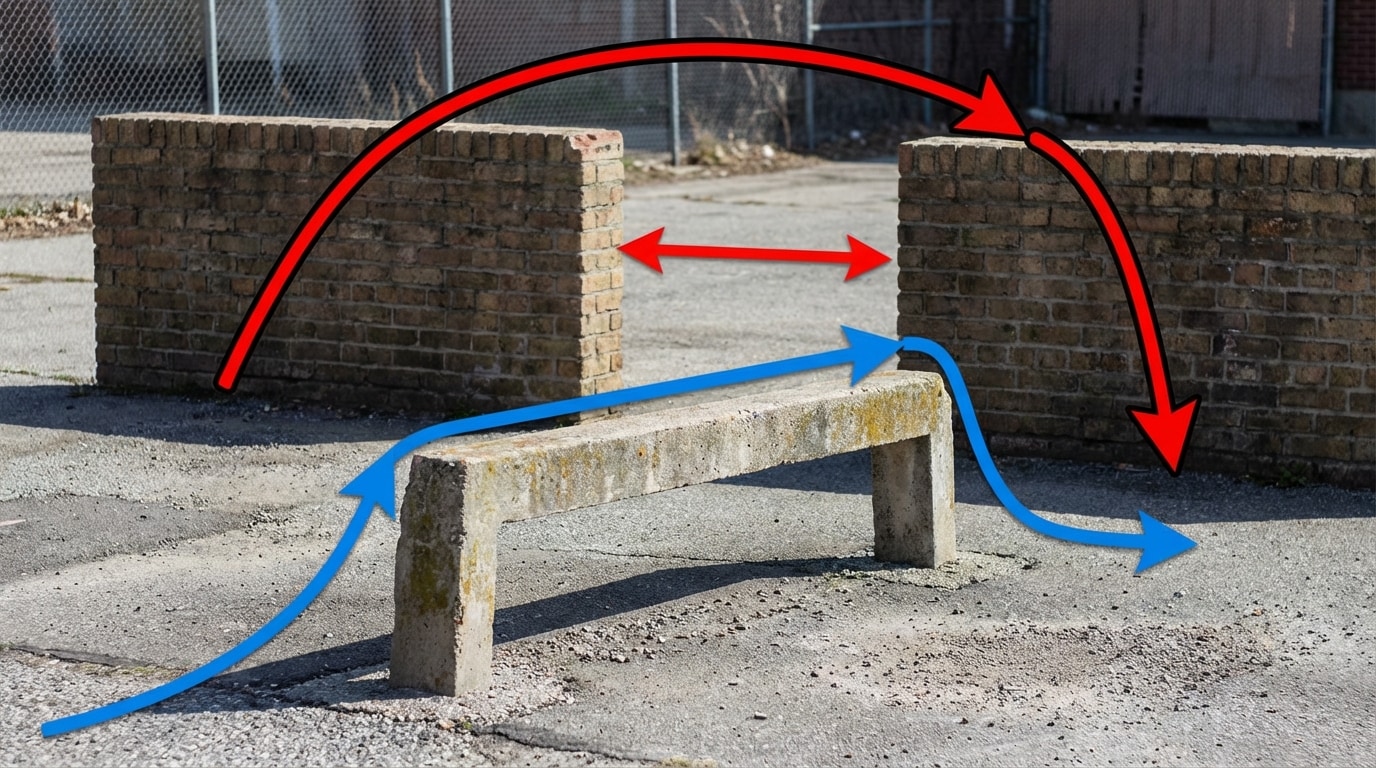
Key principles in parkour include:
2. Dance and Group Choreography
In dance, especially group performances, movement concepts show up as:
Problem-solving appears when a dancer adapts choreography to a smaller stage, a crowded backstage area, or a partner with different height or skill.
3. Yoga, Pilates, and Mind-Body Fitness
These activities emphasize alignment, control, breathing, and awareness. Movement principles such as stability, center of mass, and base of support are applied very deliberately:
Returning to the stability ideas from [Figure 1], widening your stance or lowering your center of mass makes many poses more accessible when you are learning them.
Real-world movement rarely happens in perfectly controlled gyms. Surfaces are uneven, weather changes, and space is sometimes limited. Effective movers adapt their strategies to these constraints.
1. Surface and Footwear
Running on pavement, grass, sand, or trails challenges your balance differently. On uneven ground, you might shorten your stride, lower your center of mass slightly, and focus on quick, light contacts to avoid twisting an ankle.
Footwear also changes your interaction with the ground. Cleats grip on grass but are unsafe on concrete. Minimalist shoes demand more from your foot and lower-leg muscles to stabilize each step.
2. Space and Group Size
When playing in a smaller space, such as indoor futsal compared to outdoor soccer, the game becomes quicker with more emphasis on ball control, short passes, and fast decision-making rather than long runs. In cramped environments, spacing must be finer and more deliberate to avoid collisions.
When many people share a space (like a crowded weight room or fitness class), informal rules and communication help manage risk. Calling out “behind you” when carrying equipment or choosing lifting areas that do not block pathways are examples of applying problem-solving and social awareness.
3. Weather and Visibility
Rain, wind, heat, or low light can all alter your movement choices. Wet surfaces reduce friction, increasing slip risk; strong wind can affect projectiles and balance; heat requires pacing and hydration strategies. Effective performers modify their intensity, tactics, and even equipment (like using different balls or shoes) to match conditions.
To refine your movement skills, you can pay attention to two main types of feedback:
For example:
In both traditional and nontraditional settings, you can treat each attempt like an experiment: change one variable (approach angle, speed, stance width), observe the effect, and keep or discard the change based on the outcome.
Applying movement principles is not only about personal performance; it is also about how you treat others and share space.
1. Respect and Fair Play
Understanding rules and tactics should not be used to exploit loopholes in ways that endanger others or damage the spirit of the activity. Examples include:
2. Inclusion and Adaptation
Movement settings can be made more inclusive by adapting rules, equipment, or tactics so people with different abilities and backgrounds can participate meaningfully. For instance:
In nontraditional activities like yoga or parkour, inclusion might involve offering progressions and regressions for each movement so participants can choose options that challenge them safely.
Across both traditional and nontraditional movement settings, performance and safety improve when you understand and apply core movement concepts. Stability, center of mass, and base of support influence how you control your body in stillness and motion. Force, momentum, levers, and planes of motion shape how you generate power, change direction, and move efficiently.
Rules—both formal and informal—exist because they reflect these principles and aim to balance fairness, challenge, and safety. Problem-solving in movement involves analyzing situations, recognizing constraints, generating options, choosing strategies, and learning from feedback. Tactics like effective spacing, timing, communication, and risk assessment can be transferred from sports to dance, parkour, yoga, outdoor adventure, and fitness training.
Ultimately, applying rules, principles, and problem-solving skills helps you move with greater intelligence, creativity, and responsibility—no matter what activity you choose.
