Some of the longest words in your reading are not really as mysterious as they seem. A word like disagreement may look complicated at first, but it is built from smaller parts that each carry meaning. When readers learn to notice those parts, they gain a powerful tool. Instead of stopping at every unfamiliar word, they can take it apart, think it through, and keep reading with confidence.
Good readers do not memorize every word they will ever meet. That would be impossible. Instead, they learn patterns. One of the most helpful patterns is morphology, which is the study of word parts and how those parts help build meaning. If you understand common prefixes and suffixes, you can often unlock the meaning of new words in stories, articles, science books, and social studies texts.
When you read, you probably already use clues without even thinking about it. You may notice a picture, remember a sentence you just read, or connect a word to another word you know. Word parts are another clue system. They are especially useful with longer academic words, because many of those words are built from meaningful pieces.
For example, if you know that re- can mean again, then the word replay means to play again. If you know that -less can mean without, then fearless means without fear. These clues do not just help with easy words. They also help with more sophisticated words like transportation, misbehavior, and predictable.
Prefix is a word part added to the beginning of a word to change its meaning.
Suffix is a word part added to the end of a word to change its meaning or its grammatical role in a sentence.
Root or base word is the main part of a word that carries the core meaning.
Once you start noticing these parts, you begin to see them everywhere. A strong reader looks at the whole word, then at the pieces, then at the sentence. That combination leads to more accurate understanding.
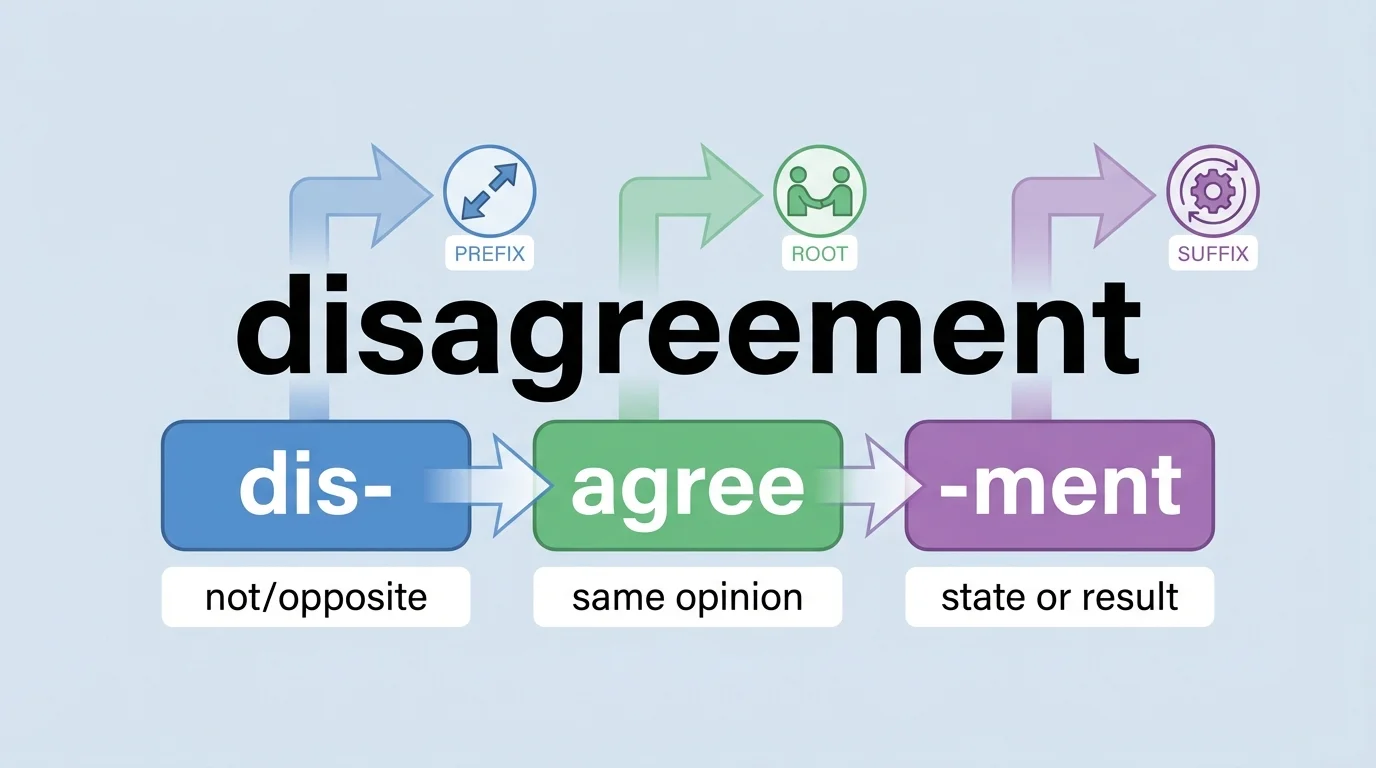
[Figure 1] shows that many complex words have three main parts: a prefix at the beginning, a root or base word in the middle, and a suffix at the end. Not every word has all three parts, but many do. Learning to spot them makes big words feel smaller and more manageable.
Take the word disagreement. The prefix dis- can mean not or opposite of. The base word agree means to share the same opinion. The suffix -ment turns the action or condition into a noun, a thing or state. So disagreement means a state of not agreeing.
Here are a few more examples. In unkindness, the prefix un- means not, the base word kind tells the main meaning, and the suffix -ness makes it a noun. In carelessly, the base word is care, the suffix -less means without, and -ly helps form an adverb. The word means in a careless way.
Sometimes there is no prefix. In joyful, the base word is joy and the suffix -ful means full of. Sometimes there is no suffix. In preview, the prefix pre- means before and the base word view means to see. The word means to see beforehand.
Prefixes are important because they often give a quick clue about direction, time, amount, or relationship, and [Figure 2] organizes several useful ones. A prefix can reverse a meaning, show location, or tell when something happens. When you recognize a prefix, you already know part of the word's message before you even finish reading it.
Here are some sophisticated prefixes that appear often in grade-level reading and beyond:
| Prefix | Meaning | Example | Meaning of the Example |
|---|---|---|---|
| pre- | before | preheat | heat before |
| re- | again, back | rebuild | build again |
| mis- | wrongly, badly | misplace | put in the wrong place |
| dis- | not, opposite of | disapprove | not approve |
| trans- | across, through | transport | carry across |
| sub- | under, below | submarine | vehicle under water |
| inter- | between, among | interact | act between or with others |
| anti- | against | antibacterial | against bacteria |
| non- | not | nonfiction | not fiction |
Table 1. Common prefixes, their meanings, and examples.
Notice how the prefix changes the meaning of the base word. The base word fiction means a made-up story. Add non-, and nonfiction means writing that is not made up. The base word stop means to halt. Add non-, and nonstop means not stopping.
Sometimes a prefix gives a clue about place or movement. In subzero, sub- suggests below, so the word means below zero. In transatlantic, trans- suggests across, so the word refers to something involving crossing the Atlantic Ocean.
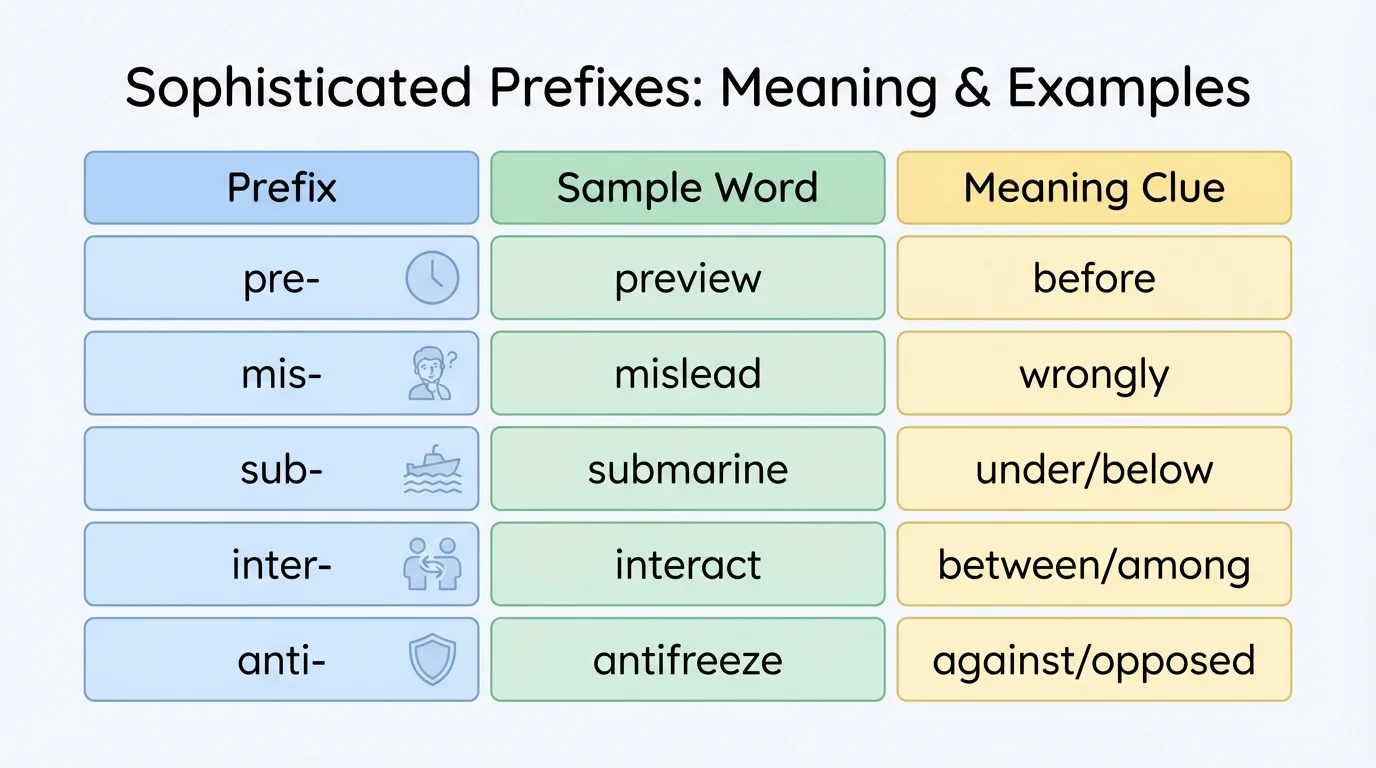
Later, when you meet a word like interdependent, you can remember from [Figure 2] that inter- often means between or among. Even if the whole word is new, that prefix starts guiding your thinking in the right direction.
Many prefixes come from Latin and Greek, which is one reason the same word parts appear in science, social studies, and English. When you learn one useful prefix, you can unlock many different words.
A prefix does not tell the whole story by itself. You still need the root and the sentence. But it gives you a strong starting point.
[Figure 3] shows how a suffix can be just as helpful as a prefix by creating related words from one base. Suffixes often tell whether a word is a noun, verb, adjective, or adverb. They can also show a condition, a person, a quality, or the ability to do something.
Look at these common suffixes:
| Suffix | Meaning or Job | Example | Meaning of the Example |
|---|---|---|---|
| -ful | full of | hopeful | full of hope |
| -less | without | hopeless | without hope |
| -able | able to be | washable | able to be washed |
| -ible | able to be | visible | able to be seen |
| -tion | act, process, result | celebration | the act or event of celebrating |
| -ment | state, action, result | enjoyment | the state of enjoying |
| -ous | full of, having | dangerous | full of danger |
| -ive | having the nature of | active | having energy or involving action |
| -ly | in a certain way | softly | in a soft way |
| -ist | a person who does or studies something | artist | a person who makes art |
Table 2. Common suffixes, their meanings or jobs, and examples.
Suffixes can completely change a word's role in a sentence. The word predict is a verb, an action. The word prediction is a noun, a thing or idea. The word predictable is an adjective, describing something that can be predicted.
Think about the base word care. Add -ful and you get careful, full of care. Add -less and you get careless, without care. One small ending creates two very different meanings.
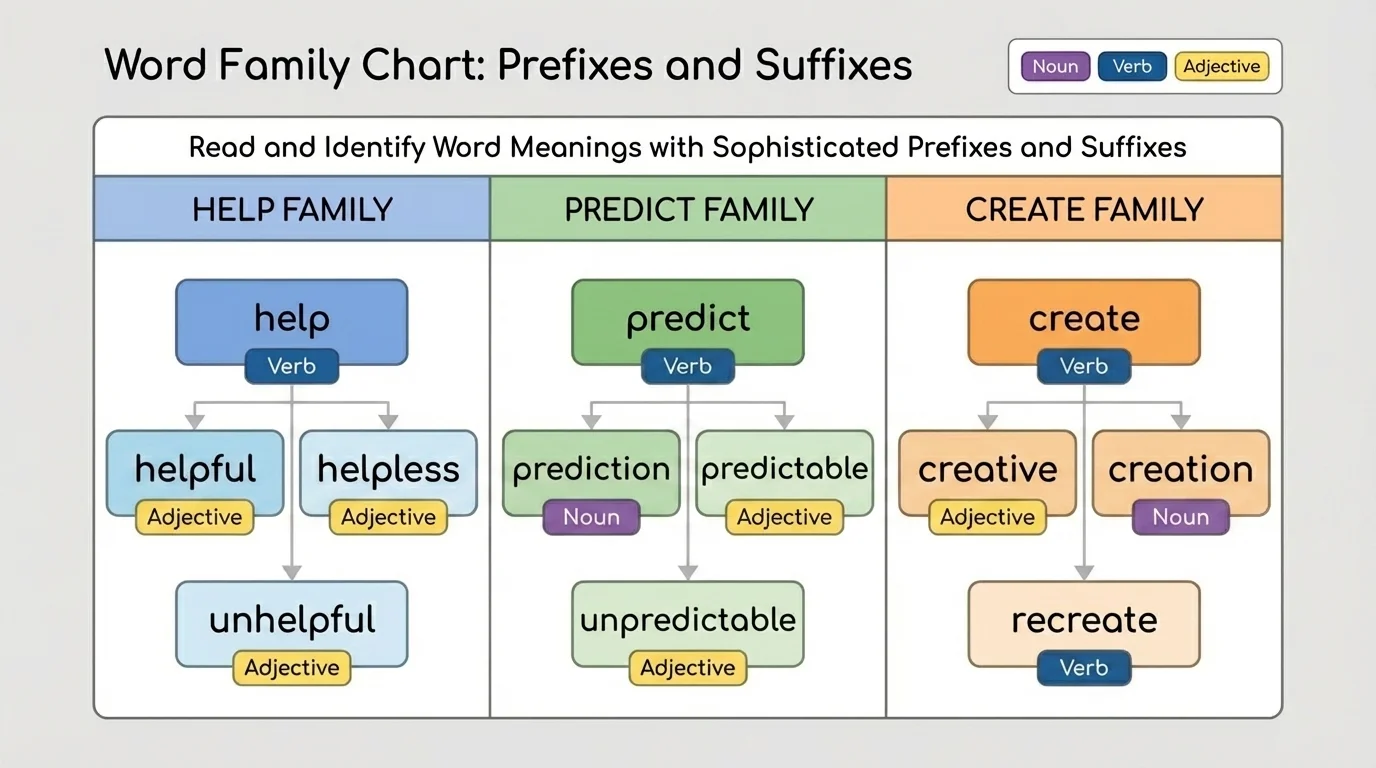
That is why readers need to pay close attention to endings. As shown earlier in [Figure 3], suffixes do more than decorate a word. They tell you what kind of word you are reading and add an important meaning clue.
How suffixes change a word's job
Words do jobs in sentences. A noun names a person, place, thing, or idea. A verb shows action or state of being. An adjective describes a noun. An adverb describes how something happens. Suffixes often help readers notice that job. For example, beauty is a noun, beautiful is an adjective, and beautifully is an adverb.
If a sentence says, "Her prediction was correct," the suffix -tion helps you know the word is probably naming a result or idea. If a sentence says, "The path was visible," the suffix -ible helps you know it means able to be seen.
Word parts are powerful, but readers should not guess from word parts alone. The smartest reading happens when you combine morphology with context clues. Context clues are hints from the words and sentences around the unknown word.
Suppose you read: "Because the glass vase was fragile, Maya carried it with both hands and moved very slowly." Even if you do not know the word fragile, the sentence suggests that it can break easily. The surrounding details help you confirm the meaning.
Now look at a word with a suffix: "The washable paint came off the table with soap and water." The suffix -able suggests able to be washed. The rest of the sentence confirms that meaning because the paint comes off easily.
Or consider a word with a prefix: "The team had to reconstruct the model after it fell apart." The prefix re- means again, and the base word construct means build. The sentence confirms that the team must build the model again.
Using morphology and context together
Read the sentence: "The children were excited for the international fair because students from many countries would share food, music, and traditions."
Step 1: Find the word parts.
The prefix inter- means between or among. The base relates to nation, or country.
Step 2: Build a possible meaning.
International likely means involving more than one nation, or between nations.
Step 3: Check the context.
The sentence mentions many countries sharing food, music, and traditions. That matches the meaning involving different nations.
The word international means involving more than one country.
Context is especially useful when a word part has more than one possible meaning. It acts like a safety check.
Not every unfamiliar word can be solved perfectly by breaking it apart. Some words have parts that look familiar but are less helpful than they seem. Strong readers stay flexible.
For example, in department, the suffix -ment still helps you notice that the word is a noun, but the whole meaning is not as easy to build from everyday word parts. In understand, the prefix under- does not really mean below in the usual way. This is why readers should use both word parts and sentence meaning.
Sometimes the spelling changes a little when suffixes are added. The word happy becomes happiness. The y changes to i, but the base meaning remains. The word decide becomes decision. The spelling shifts, yet the words are still related.
When a word seems tricky, ask yourself: What part do I know for sure? What does the sentence suggest? What related words do I recognize? That careful thinking is much better than making a wild guess.
You already know that readers use many kinds of clues. Sounding out helps with pronunciation. Context helps with meaning. Morphology adds another layer by showing how word parts contribute meaning. Skilled readers use all three together.
One useful habit is to test your guess in the sentence. If the sentence still makes sense, your guess may be correct. If it sounds wrong, go back and rethink the parts.
Words often belong to the same word family. A word family is a group of related words built from the same root or base. Learning one word can help you understand many others.
Look at the family built from act: action, active, inactive, react, and interaction. These words do not mean exactly the same thing, but they all connect to the idea of doing or acting. If you know the base, you have a helpful anchor.
Another word family grows from appear: appearance, disappear, and reappear. The base tells you the central idea. The prefixes and suffixes adjust that idea. Disappear means to no longer appear. Reappear means to appear again. Appearance names the way something looks or the act of appearing.
Word families are especially helpful in school subjects. In science, you might meet predict, prediction, and predictable. In social studies, you might see govern, government, and governor. In reading, these relationships make vocabulary grow faster.
Many academic words look challenging, but they become clearer when you slow down and examine them. Consider transportation. The prefix trans- means across, the base relates to carrying, and the suffix -tion points to an act or process. The word refers to the process of moving people or things from one place to another.
Consider miscommunication. The prefix mis- means wrongly, the base relates to sharing information, and the suffix -tion shows it is a noun. The word means communication that went wrong.
Consider subdivision. The prefix sub- means under or smaller part, the base divide means separate, and the suffix -ion forms a noun. In context, the word can mean a smaller part of something larger, such as a section of land or a part of a topic.
Breaking down academic words
Read the sentence: "The scientist made a prediction before the experiment began."
Step 1: Notice the base.
The base is related to predict, which means to say ahead of time what may happen.
Step 2: Notice the suffix.
The suffix -tion often makes a noun that names an act, process, or result.
Step 3: Put the parts together.
Prediction means the act or result of predicting.
In the sentence, prediction means an idea or statement about what will happen.
As your reading becomes more advanced, morphology becomes even more useful. Instead of avoiding long words, you learn to approach them like puzzles with clues built right inside.
[Figure 4] lays out a process you can follow when you meet an unfamiliar word. This strategy helps readers stay calm, think clearly, and make strong meaning guesses.
First, notice the whole word. Second, look for a prefix you know. Third, find the base word or root. Fourth, check for a suffix. Fifth, read the whole sentence and nearby sentences for context clues. Finally, test your meaning to see whether it fits.
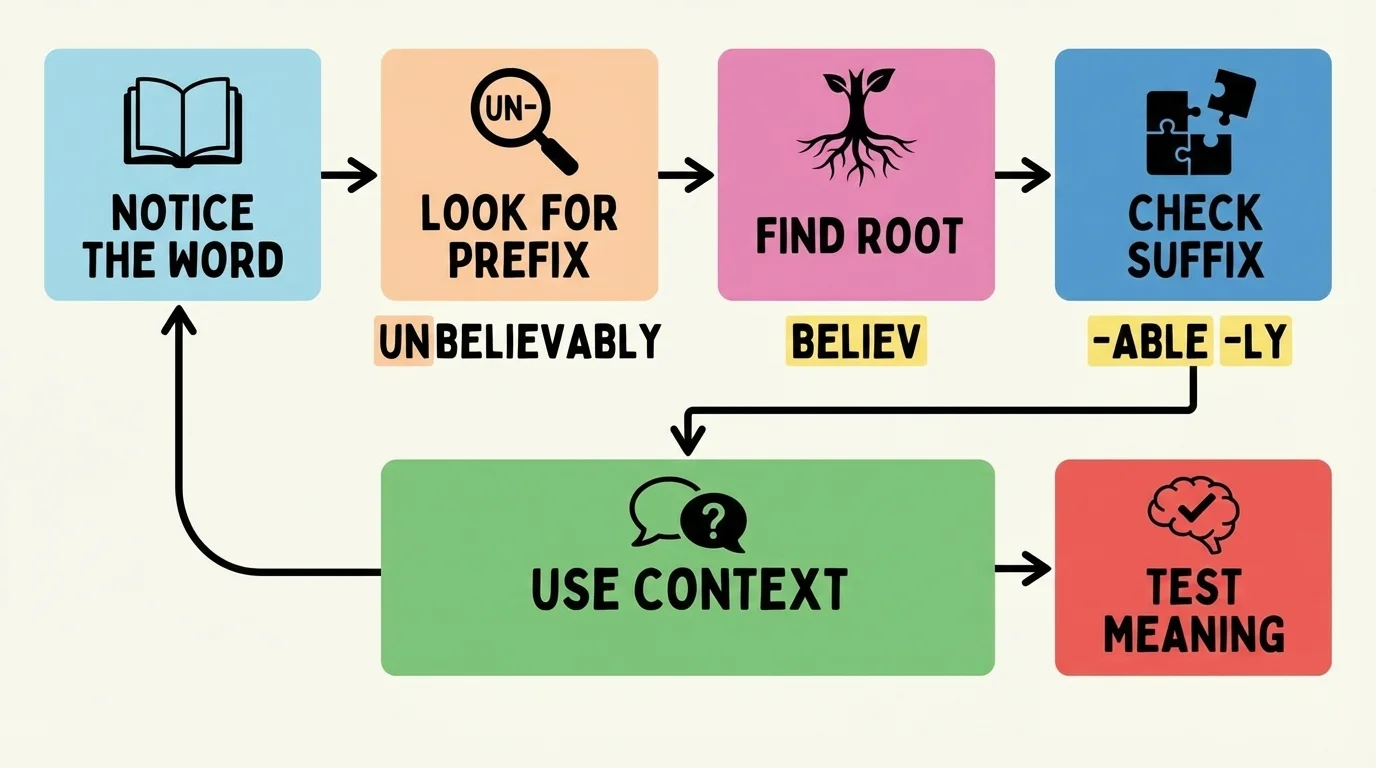
Suppose you read the word nonrenewable. You might spot non-, meaning not. You may recognize renew, meaning make new again. You may also notice -able, meaning able to be. Put together, the word suggests not able to be renewed. In a science text about fuel, that meaning fits perfectly.
Suppose you read carelessness. The base is care. The suffix -less means without, and -ness makes a noun. So the word means the state of being without care.
That same strategy works again and again. As shown in [Figure 4], readers move from noticing parts to checking context, not from guessing wildly to hoping they are right.
Applying the strategy to a new word
Read the sentence: "His irresponsible choice to leave the gate open allowed the dog to run away."
Step 1: Look for known parts.
The prefix ir- means not. The base is related to responsible.
Step 2: Build the meaning.
Irresponsible likely means not responsible.
Step 3: Check the context.
Leaving the gate open caused a problem, so the action was not careful or responsible.
The word irresponsible means not acting in a careful or dependable way.
Readers get better at this through repeated noticing. Every time you take apart a word successfully, you strengthen your understanding of many future words too.
Knowing prefixes and suffixes does more than help with single words. It helps you read more smoothly, understand texts more deeply, and learn new vocabulary in every subject. It also makes you more independent. Instead of waiting for someone else to explain a word, you can investigate it yourself.
That does not mean you will always be perfect on the first try. Even expert readers rethink meanings sometimes. The goal is not instant perfection. The goal is smart, evidence-based thinking.
Whenever you meet a long word, remember that it may be made of familiar parts. Break it apart. Look for the base. Notice the prefix and suffix. Read the sentence carefully. Then build the meaning step by step. Long words often become much less scary when you realize they are made from smaller clues you already know.
