Have you ever helped a friend with something that felt easy for you but tricky for them? 🤔 That "easy thing" might be one of your personal strengths!
A strength is something you are good at or a way you think, feel, or act that helps you. It can help you at school, at home, or with friends.
Some strengths are about what you do, like drawing or running fast. Other strengths are inside you, like staying calm, being kind, or trying again when something is hard.
Personal strengths are helpful qualities or skills that you already have and can use to learn, solve problems, and get along with others.
Your strengths are a special part of who you are. They can grow and change as you grow and learn. 🎉
To notice your strengths, you use something called self-awareness. This means paying attention to what you think, feel, and do.
When you have strong self-awareness, you can:
Self-awareness is like having a tiny flashlight inside you that helps you see your own mind and heart. When you know your strengths, you can use them to help you learn new skills.
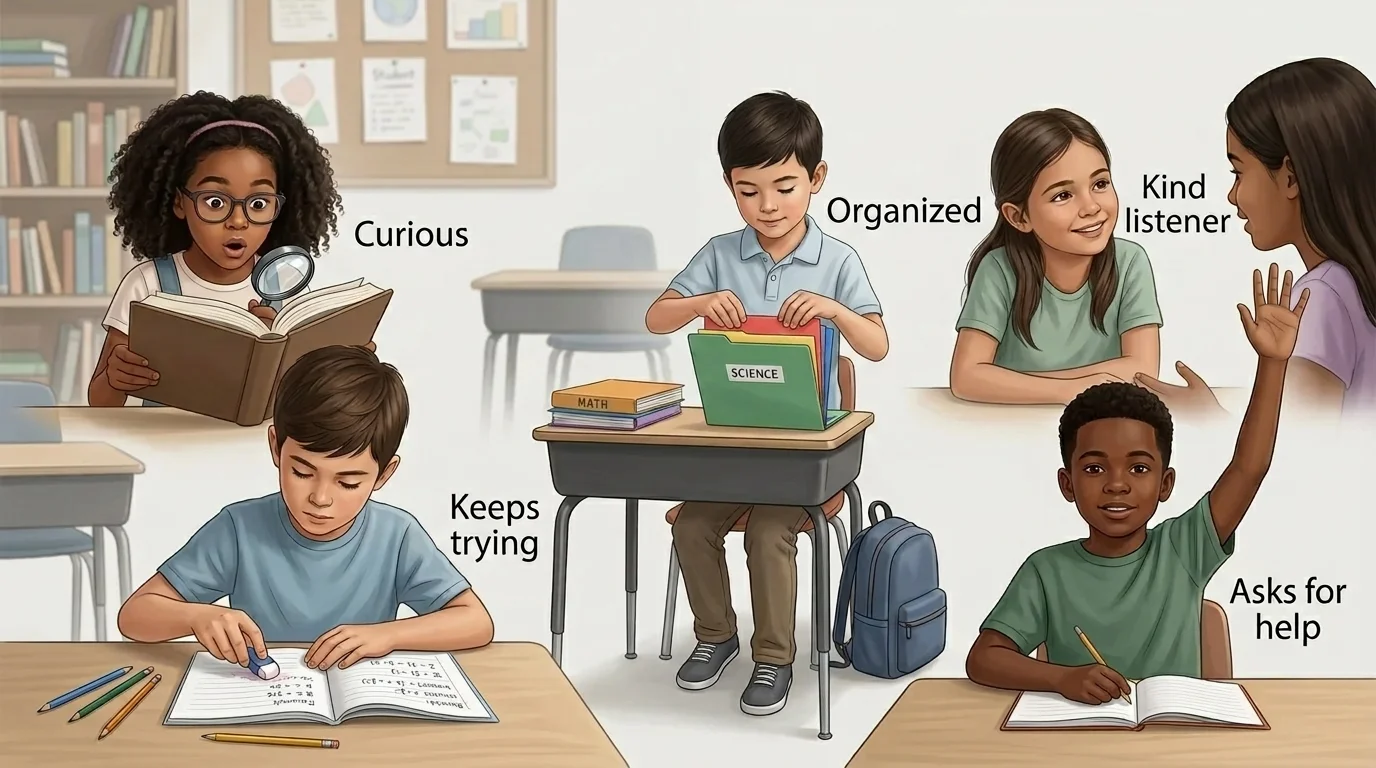
Every child has a mix of different strengths. As you look around your class, you might notice, as shown in [Figure 1], that different children shine in different ways.
Here are some important kinds of personal strengths that are very helpful for learning new things:
1. Curiosity 🔍
Curiosity is the strength of wanting to know more. Curious children like to ask "Why?" and "How?"
Curiosity helps you learn new skills because you want to explore, try, and discover. For example, if you are curious about insects, you might read books about them, watch them outside, and draw pictures. You learn a lot because you keep wondering and asking questions.
2. Persistence 💪
Persistence means you keep going even when something is tough. You don't give up right away.
When you learn to ride a bike or write a long word, you probably make mistakes at first. Persistence helps you try, try again, until your new skill feels easier.
3. Organization 📂
Organization is the strength of keeping your things and your time in order. This can mean:
When you are organized, it is easier to find what you need and to follow directions. This makes learning new skills smoother and less stressful.
4. Listening and Kindness 👂❤️
Being a good listener and kind friend are strengths too. These are sometimes called interpersonal skills. They help you get along with other people.
When you listen carefully to your teacher or a classmate, you can understand directions and learn from others. When you are kind, other people feel safe and happy to work with you. You can learn new skills together.
5. Asking for Help 🙋
Some children think asking for help is a weakness, but it is really a strong skill. When you know when to ask a grown-up or a friend for help, you are using good self-advocacy. That means you can speak up for what you need.
If you are learning a new game and do not understand the rules, asking someone to explain again helps you learn faster and feel less confused.
6. Willingness to Try New Things 🌈
Being willing to try new things is another strength. Maybe you feel a little nervous, but you still join a new club or taste a new food.
This strength helps you learn because many skills are new at first. If you are open to trying, you have more chances to discover what you like and what you are good at.
Now let's see how these strengths help when you learn something new. Think of a new skill you might learn, like tying your shoes, reading a new word, or dribbling a basketball. 🏀
Curiosity helps you want to learn more about the skill. You might wonder, "How do people make the ball bounce so smoothly?" and watch closely to figure it out.
Persistence helps you keep practicing, even when the ball rolls away or you miss a word in your book.
Organization helps you remember to bring your ball to practice, or to put your reading book back in your backpack so you can read at home.
Listening and kindness help when you work with others. You can listen to the coach's tips, or help a classmate who is learning too. You can also take turns and share.
Asking for help helps you when you feel stuck. You might say, "Can you show me one more time?" or "Can you read this word with me?"
Trying new things helps you take the first step. Instead of saying, "I can't," you say, "I'll try," and that gives you a chance to grow.
Everyone has their own mix of strengths. Your mix is part of your individuality, the things that make you you. 🌟
Here are some ways to notice your own strengths:
You can also ask a grown-up you trust, like a parent or teacher, "What strengths do you see in me?" They might tell you things you did not even notice about yourself.
Strengths are not just something you are born with. You can grow them, just like a plant grows when you water it. 🌱
Growing a strength means practicing a helpful habit over and over, even if it feels small. Over time, that habit becomes part of who you are.
For example:
At first, you might forget sometimes. That is okay. Every time you try again, you are growing your strength a little more.
Even adults are still learning about their own strengths and working to grow new ones throughout their lives.
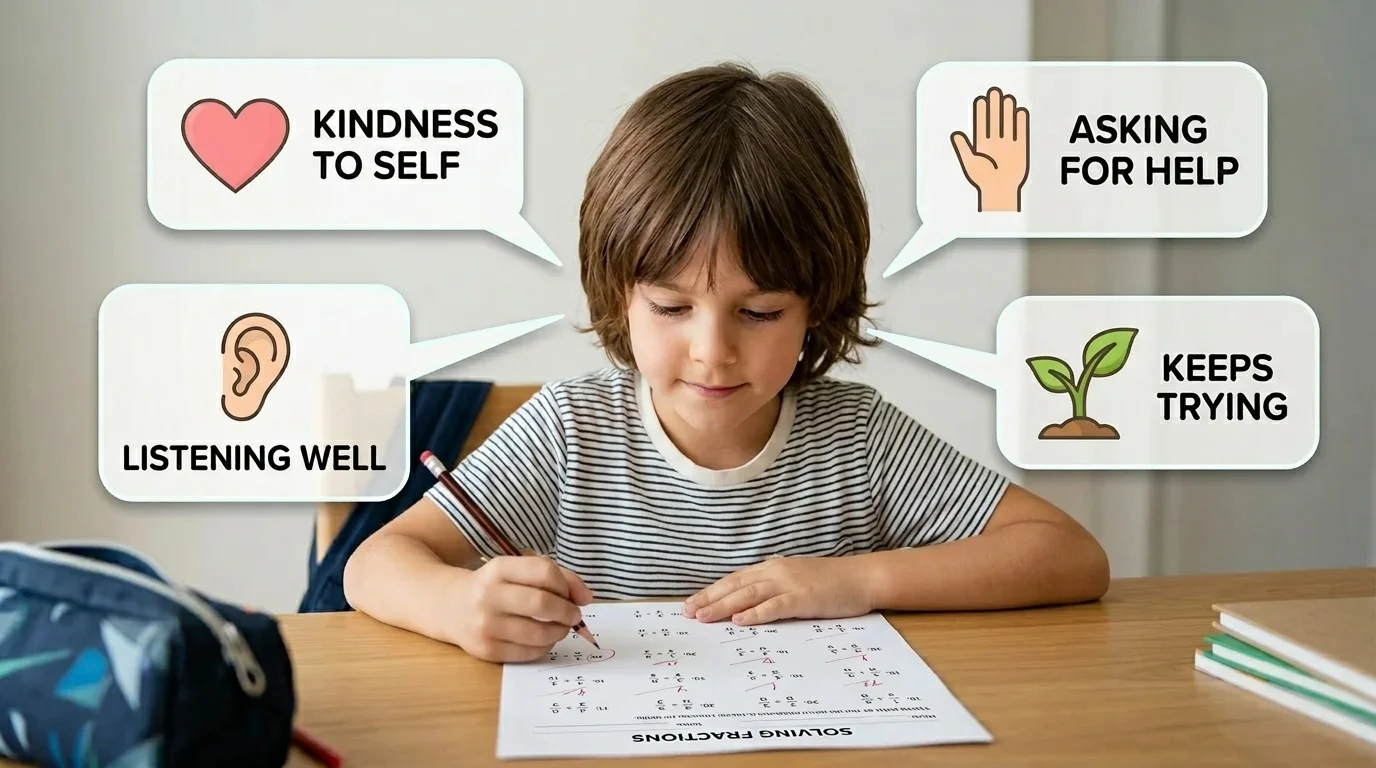
Sometimes learning feels easy, and sometimes it feels really hard. When things are hard, that is a great time to use your strengths, like you see in [Figure 2].
Imagine you are trying to learn a new math game. Maybe you feel confused and a little frustrated. Here is how your strengths can help:
Your strengths work together like a team inside you. They help you calm down, get help, and keep going.
Remember the children in [Figure 1] who each had different strengths? In a hard moment, each of them can use their own best strengths too. One might ask for help, another might organize their work, and another might keep trying until it clicks.
You are not the only person with strengths. Everyone around you has their own special mix too. When you notice and respect other people's strengths, you are showing strong interpersonal skills.
For example:
When you work on a group project, you can share jobs in a way that uses everyone's strengths. The strong reader can read the directions. The strong artist can draw the pictures. The strong organizer can help keep track of time and materials. The strong encourager can cheer for the team. 👫
When you respect other people's strengths and they respect yours, everyone can learn better together.
"We are all smart in different ways."
— A reminder about personal strengths
