Sometimes your body feels wiggly, your face smiles, or you want to cry. These are all signs of feelings inside you. Feelings can change many times in one day, especially when you are playing, sitting in a group, or doing classroom jobs.
Feelings (emotions) are what happens inside your mind and body, like being happy, sad, mad, or scared. They can show on your face, in your body, and in the way you act.
Every feeling is okay. What matters is what you do with your feeling and how you treat other people.
Our faces and bodies can show our feelings, as you see in [Figure 1]. When you are happy, you might smile, your eyes feel bright, and your body feels light. When you are sad, you might look down, your mouth turns down, and you may want a hug. When you are mad, your face might get tight, your hands might squeeze, and your body can feel hot. When you are scared, you might hold someone's hand, your eyes get big, and your tummy might feel funny. Sometimes you feel calm, like your body is soft and relaxed, and you can breathe slowly.
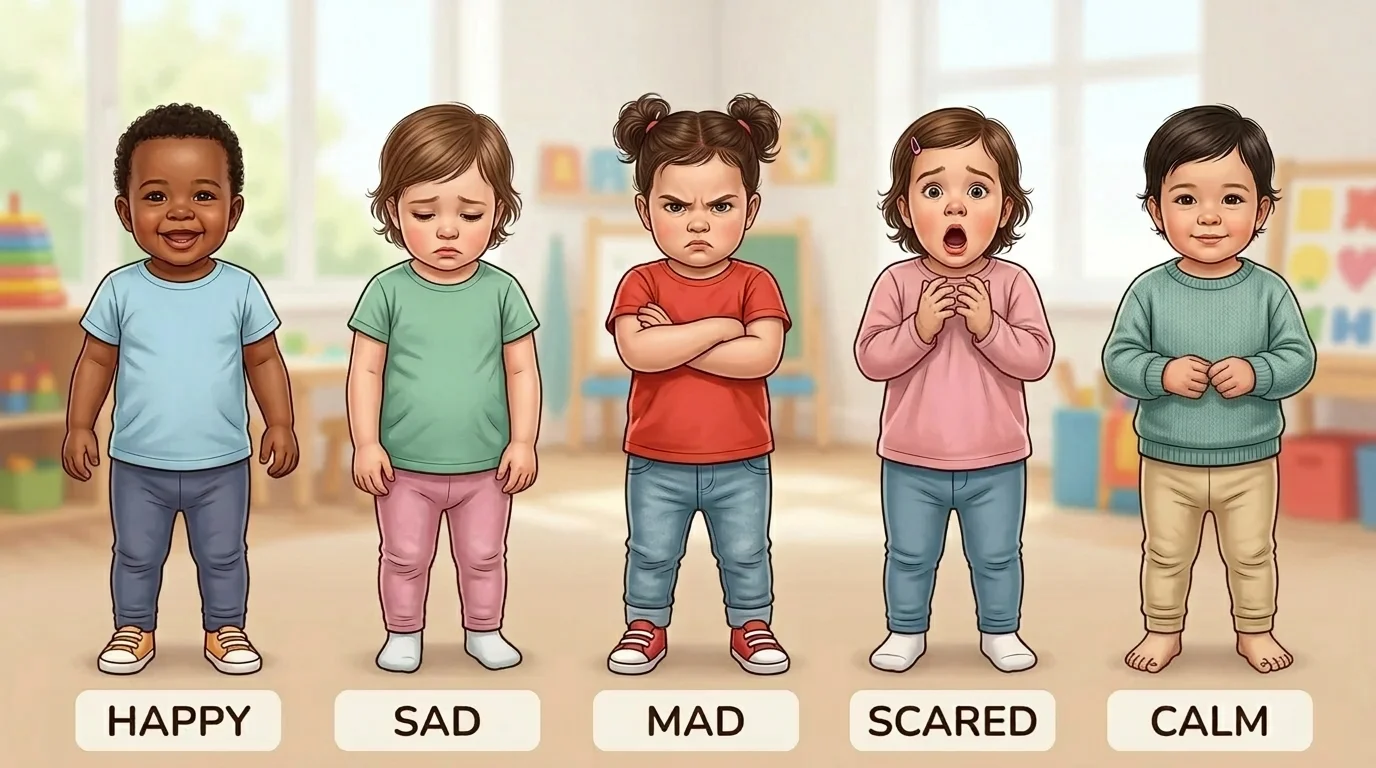
You can notice your own body clues. Ask yourself: "What does my face feel like? Are my hands tight or loose? Is my tummy wiggly or quiet?" These body clues help you tell what feeling you are having.
During play, feelings can change very fast, as you see in [Figure 2]. When a friend shares a toy with you, you may feel happy or excited. When you build a tall tower, you may feel proud. When someone knocks over your tower, you might feel mad or sad. When a friend says, "No, I don't want to play that," you might feel left out or confused.
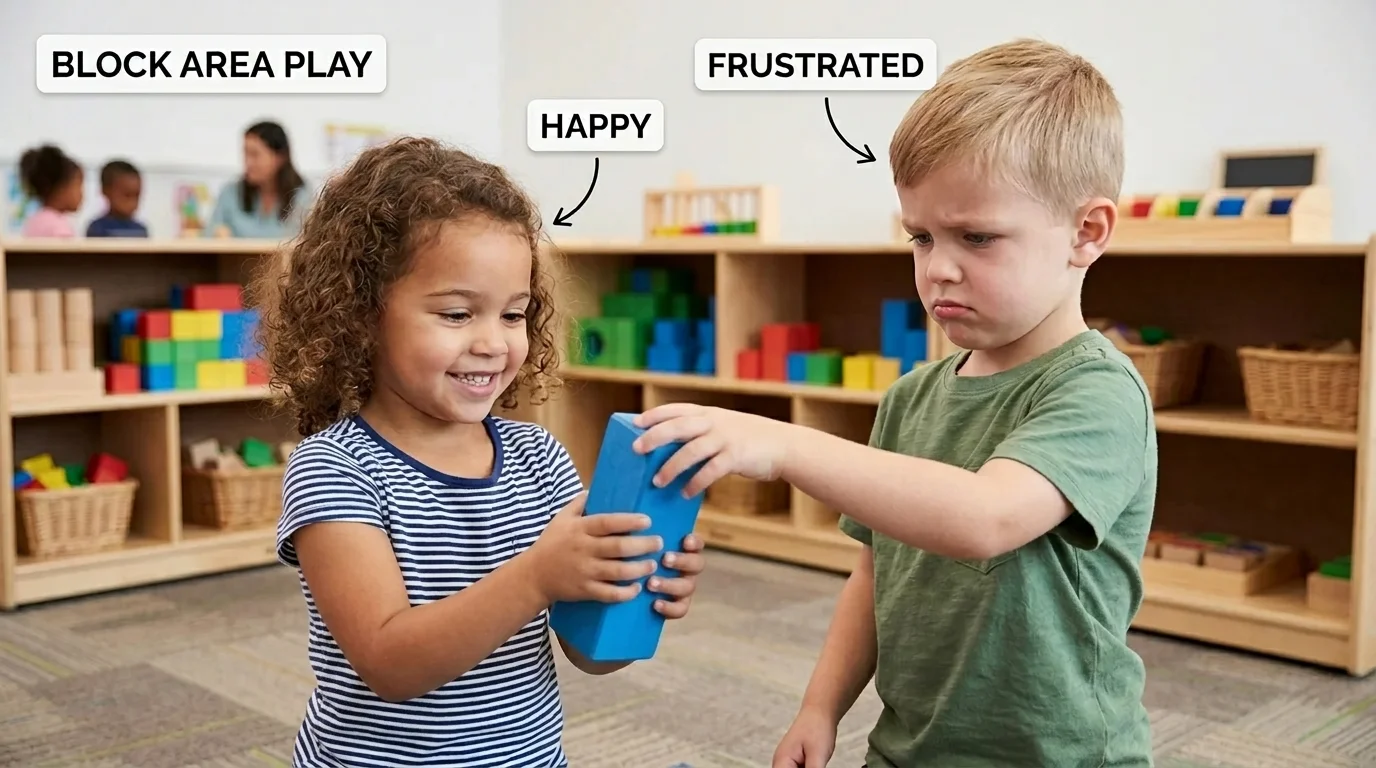
When you notice a big feeling at play time, you can pause and use your words instead of your hands. You are the boss of your body.
Play-time feeling story
Here is a little story to help you see how to notice a feeling and use words.
Step 1: You are building a block tower. A friend takes a block from your pile. Your hands get tight, and your face feels hot. That is your body saying, "I feel mad!"
Step 2: You take a breath. You keep your hands to yourself.
Step 3: You use your words and say, "I feel mad. I was using that block. Can I have it back, please?"
In this story, you noticed your feeling, kept your body safe, and used words to tell your friend how you felt.
Later, you can remember this story when you have big feelings at the sand table, the art table, or the playground.
During group time, you sit with your class and the teacher. Some children might feel excited to sing or answer a question. Others might feel shy, quiet, or even a little bored. Some bodies want to wiggle or roll, like the children in [Figure 3]. These are all normal feelings.
When you feel excited, you might wave your hand and smile. When you feel shy, you might look down or hold a toy or your shirt. When you feel bored, your body might wiggle, and you might want to talk to a friend.
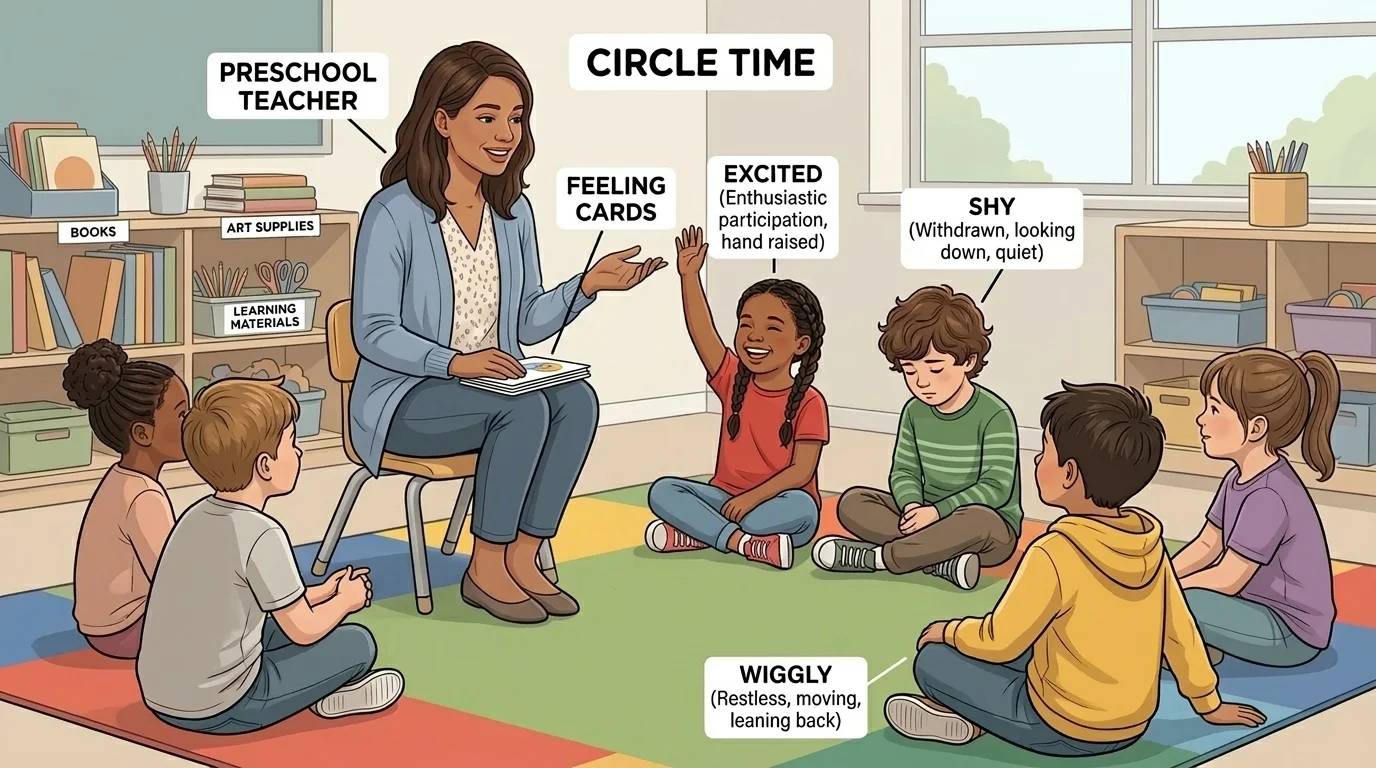
You can help yourself during group time by using gentle choices: sit on your spot, hug a stuffed animal if your teacher says it is okay, or take a quiet breath. You can think in your head, "I can try to listen," or "I can wait for my turn." These small choices help your body feel a little calmer.
You can also look around the circle and see how other children feel. This helps you be a kind friend. If someone looks nervous or shy, you can smile at them or sit quietly so they feel safe.
Every day, you line up, wash hands, clean up toys, and have snack. These are called routines. Routines can give you many different feelings.
When you line up, you might feel excited to go outside or frustrated if you have to wait. At clean-up time, you might feel grumpy because you want to keep playing, or proud when you put things in the right place. At snack time, you might feel happy if you like the food, or disappointed if you wanted something else.
When you feel upset during these times, you can try simple helpers: take a big breath, hold your own hands, or quietly tell the teacher, "I feel mad," or "I feel sad." Your feeling is always okay, and your teacher can help you.
Using gentle choices when you have big feelings
When your feelings are big, your body might want to hit, push, or throw. Gentle choices keep everyone safe. Gentle choices include keeping your hands to yourself, walking away from a problem, asking a teacher for help, or using words like "Stop, I don't like that." These choices help your feeling calm down and help other people feel safe, too.
Over time, you will get better and better at choosing gentle actions, even when your feelings are strong.
Words are powerful! When you use feeling words, other people can understand you better. You can use short sentences to tell your feeling and what happened.
Here are some helpful sentence starters:
You can fill in the rest of the sentence with your own words, like "I feel happy when my friend plays with me," or "I feel sad when my tower breaks." Later, remember the faces in [Figure 1] as you practice saying these words.
Little talking example
Here is a short talk between two friends.
Step 1: Sam's picture gets a little scribble on it. Sam's eyes get watery.
Step 2: Sam says, "I feel sad. I was still drawing."
Step 3: The friend says, "I'm sorry. I didn't know. Do you want help to fix it?"
They both used words, not hands, and they both listened. This helps their feelings feel better.
When you share your feelings with words, people around you can help, just like Sam's friend did.
Your friends have feelings too. When you look at their faces and bodies, you can guess how they might feel, just like you did at play time in [Figure 2] and at circle time in [Figure 3]. If a friend is crying, they might feel sad. If a friend is smiling and laughing, they might feel happy. If a friend is hiding behind a teacher, they might feel scared or shy.
You can show you care by:
Faces can show feelings even before we talk. Your brain can notice a smile or a frown very quickly, which helps you know when to play gently or when to give someone space.
When you notice and care about other people's feelings, you become a kind and thoughtful friend. This helps everyone in the classroom feel safe and loved.
