Have you ever felt like a superhero at school, even without a cape? Maybe you help a friend, listen carefully, or try something new. Those are your personal strengths shining!
A personal strength is something you are good at or a way you are a good person inside.
Some strengths are about actions, like picking up toys. Some strengths are about your heart, like being kind or patient.
Personal strengths are the good qualities inside you, like being kind, brave, careful, or a good helper.
Strengths are not just about being the fastest runner or the tallest in the class. They can be quiet and gentle too, like being a good listener or a good friend. 🌟
In our classroom, we have many jobs. These jobs use different strengths.
Line leader uses the strength of being brave and responsible. You go first and help the class move safely.
Door holder uses the strength of being helpful and careful. You watch for friends and make sure no one gets bumped.
Table cleaner uses the strength of being hard-working and neat. You like to make the space clean for everyone.
Caboose (the last person in line) uses the strength of being patient and watchful. You make sure no one is left behind.
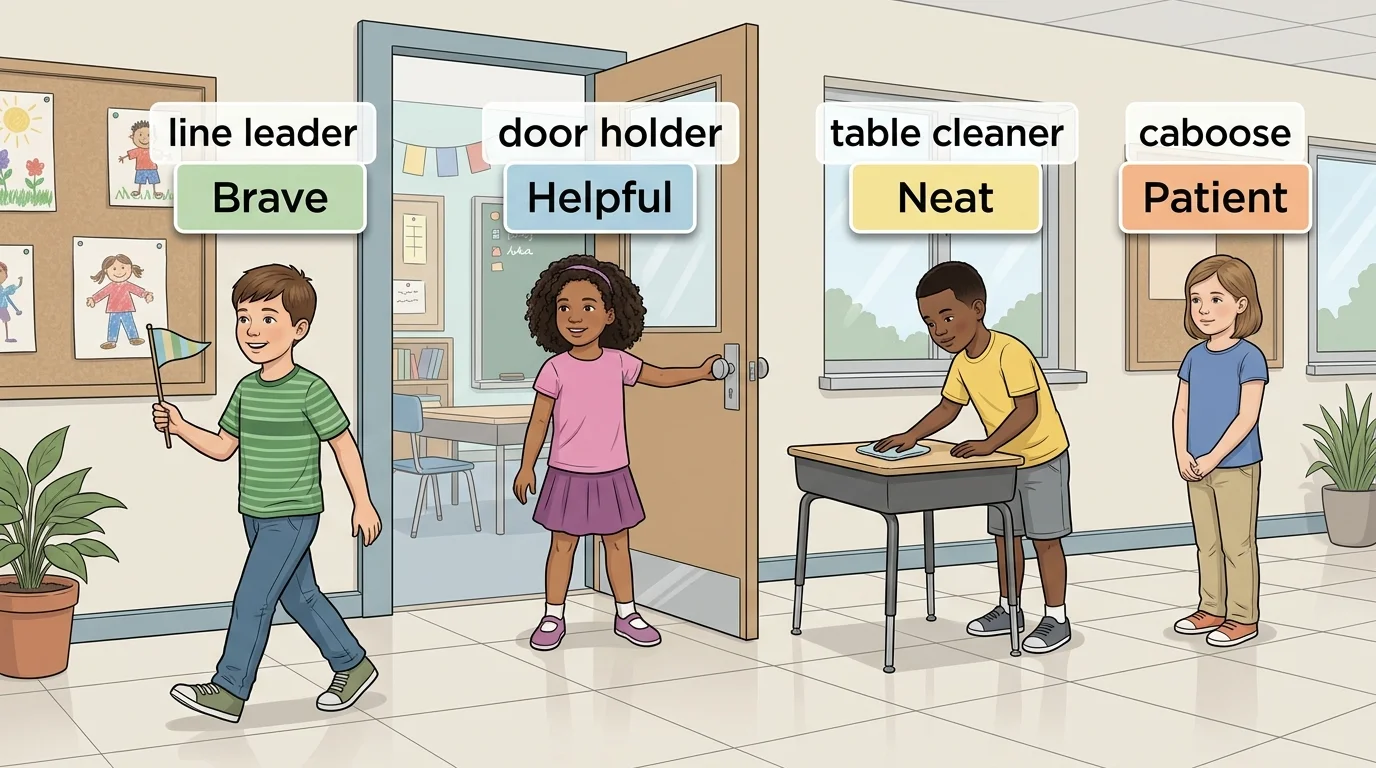
You might like one job more than another. That can be a clue to your strengths. If you love being line leader, maybe you are confident. If you love cleaning, maybe you are careful and neat.
We also show strengths when we do work at our tables, on the carpet, or in small groups. These are learning activities.
During drawing or art, some children show the strength of being creative. They think of new ideas and pictures.
During puzzle time or building with blocks, some children show the strength of being problem solvers. They keep trying different ways until the pieces fit.
During story time, some children show the strength of being a good listener. They look at the teacher, sit still, and think about the story.
During sharing time, some children show the strength of being confident. They speak clearly and tell about their picture or toy.
Strengths can look different
One friend might sit very quietly and listen carefully. Another friend might talk and share big ideas. Both friends are using strengths, just in different ways.
When you try even when something is tricky, you use the strength of being hard-working and brave. Trying again and again is a very powerful strength.
Playtime is full of opportunities to use what we call social strengths — strengths for getting along with others.
When you share toys, you use the strength of being kind and fair.
When you take turns on the slide or with a favorite toy, you use the strength of being patient.
When you invite someone to play who is alone, you use the strength of being friendly and caring.
When two friends both want the same toy and you say, "Let's use a timer" or "Let's build with it together," you use the strength of being a problem solver and a peacemaker. 💖
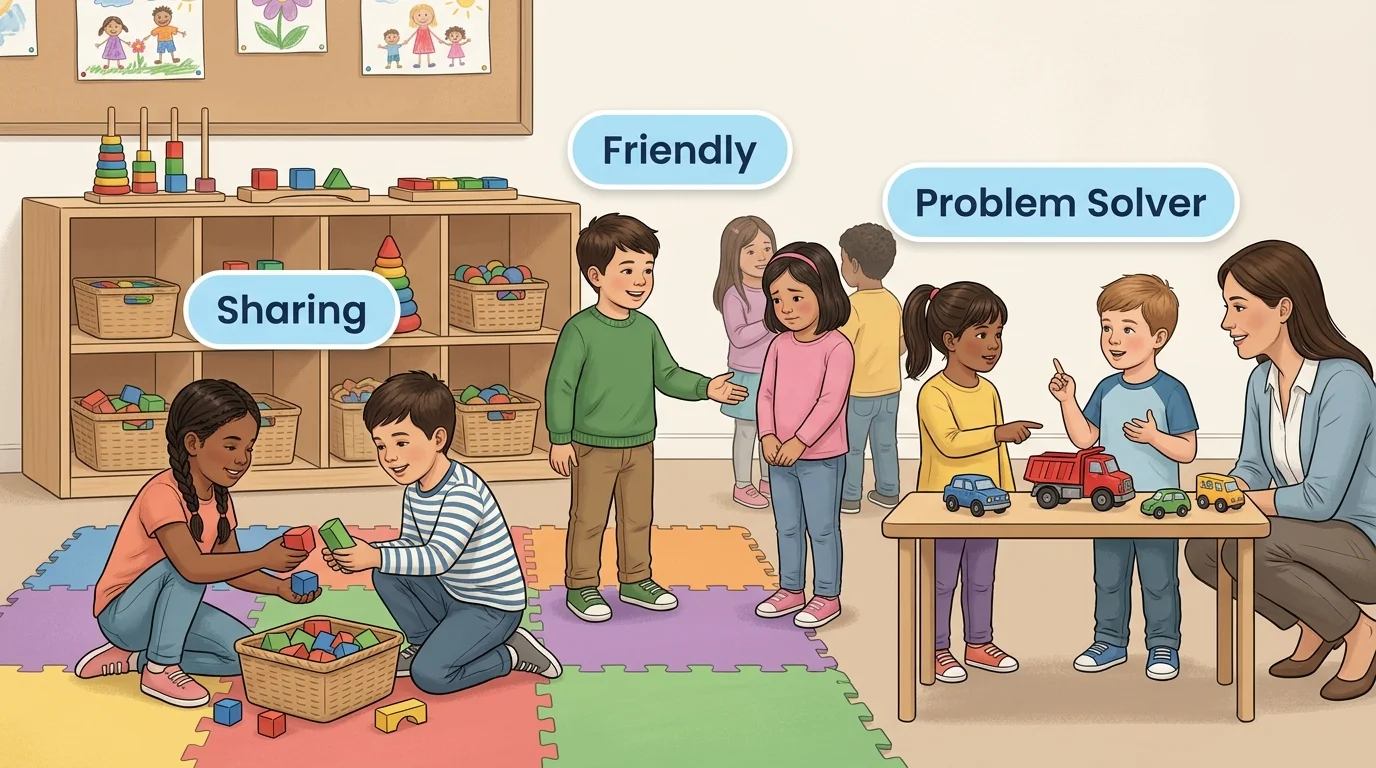
Even when you say "I feel sad" or "I don't like that," you show the strength of using your words instead of hitting or grabbing. That is a very important strength.
Sometimes strengths are big and easy to see. Sometimes they are quiet and small, like a tiny seed growing. 🌱
Here are some ways you can notice your own strengths:
You can also listen when grown-ups talk to you. When a teacher says, "You were such a good helper today," they are telling you about a strength.
When you name your strengths, it does not mean you are better than someone else. It just means you are learning about who you are.
As you remember the pictures of jobs and play from [Figure 1] and [Figure 2], you can think, "Which one looks like me?"
Every person has a different mix of strengths. That makes our classroom a strong, happy team. 🧡
Look at these three pretend children and the strengths they use:
| Name | What they like to do | Possible strength |
|---|---|---|
| Mia | Loves to draw pictures for friends | Creative, kind |
| Jay | Helps clean up toys without being asked | Helpful, responsible |
| Lina | Asks, "Are you okay?" when someone is sad | Caring, gentle |
Table 1. Examples of children and the strengths they show in class.
You have your own mix, just like Mia, Jay, and Lina. You might be a good leader, a good helper, a good listener, or a good friend — maybe many of these!
Some strengths you have now will grow even bigger as you get older, and you can also grow new strengths by trying and practicing.
When we see someone's strength, we can say, "I like how you shared" or "You were very brave." This helps everyone feel safe and strong inside. 🌈
