Have you ever felt like you are supposed to be several different people in one day? Maybe you help a younger sibling in the morning, join an online class, text a friend who needs support, and then practice a hobby where people expect you to improve. That can feel exciting, but also confusing. Middle school is often a time when your roles start changing faster, and those changes can affect how you understand yourself.
At your age, adults may start giving you more freedom, but they may also expect more responsibility. Friends may expect quicker replies, better communication, or stronger loyalty. In activities outside school, coaches, leaders, or group members may expect effort, focus, and teamwork. When all of that changes at once, your mind starts asking big questions: Who am I now? What am I good at? What do people expect from me?
These questions are normal. Growing up does not just mean getting older. It also means learning how new experiences shape your sense of self. Sometimes a new role helps you feel proud and capable. Sometimes it makes you feel unsure. Both reactions are part of personal growth.
Role means a part you play in your life, such as being a sibling, friend, teammate, helper, or group member.
Expectation means what other people or you believe should happen in that role.
Self-understanding means knowing your thoughts, feelings, strengths, needs, values, and the kind of person you are becoming.
When roles and expectations change, self-understanding can change too. You may discover new strengths, notice new worries, or realize that something people expect from you does not fit who you are.
A role is not fake or made up. It is a real part of how you live. You may be a child in your family, a member of an online gaming group, a musician, a pet caretaker, or a person others come to for advice. Each role can bring different expectations.
Some expectations are spoken clearly. A parent might say, "Please watch your brother for 15 minutes," or a club leader might ask you to log in on time. Some expectations are unspoken. A friend may expect you to laugh at the same jokes or answer messages quickly, even if no one says that out loud.
Not all expectations are fair. Not all expectations are healthy. Part of growing up is learning the difference between a reasonable expectation and pressure that pushes you too far.
As you get older, one person can hold several roles at the same time, and each one can shape your choices, as [Figure 1] illustrates. You might still be the same person, but people may now treat you as more responsible, more independent, or more mature.
For example, your family may trust you to manage your own schedule better. A community group may expect you to participate more seriously. Friends may look to you for support during arguments or stressful moments. Online, you may become more aware that what you post or say affects your reputation.
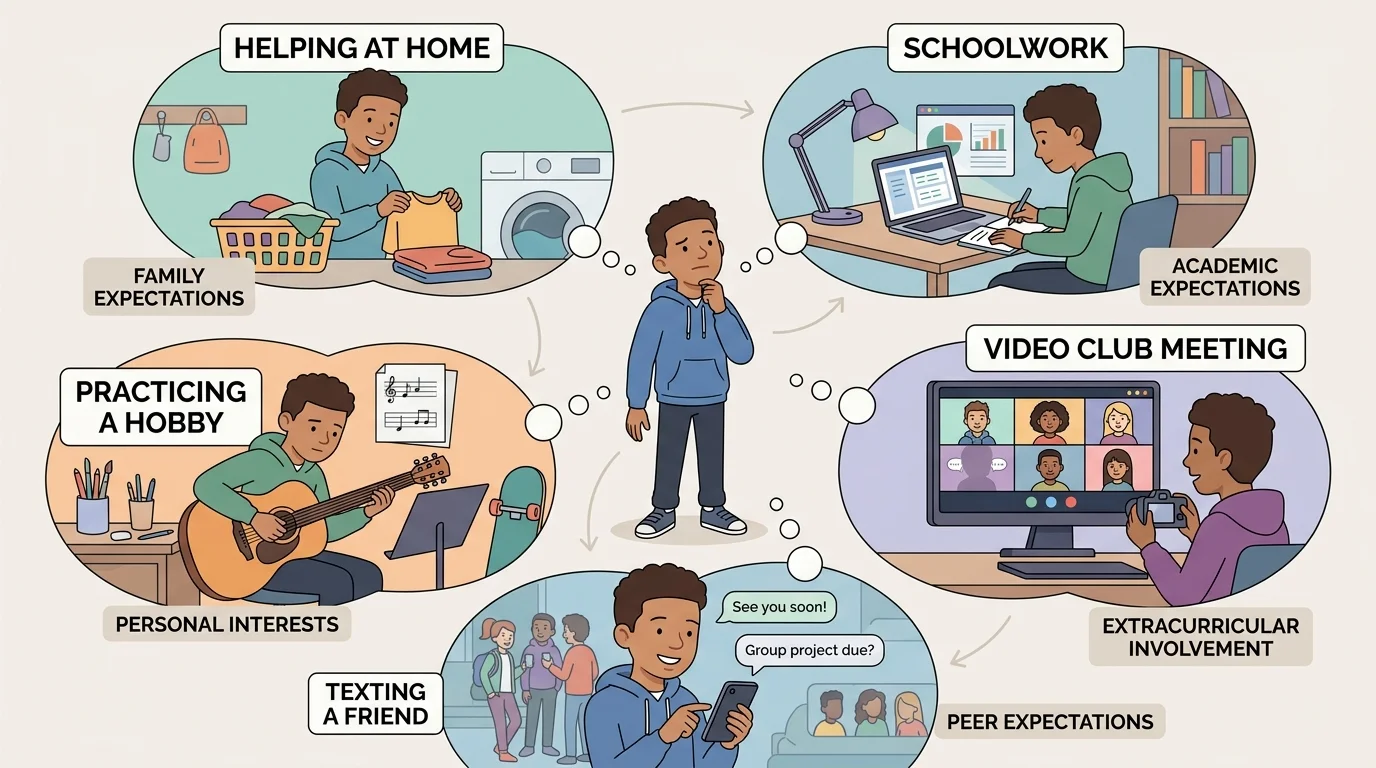
Here are some role changes many students notice:
These changes are not just about what you do. They also affect how you think about yourself. A student who used to feel carefree may now think, "People depend on me." Another may start thinking, "I have to get everything right," even when no one asked for perfection.
Your brain is still developing the skills that help with planning, decision-making, and self-control. That means it is normal to need practice when new expectations show up.
That matters because role changes can feel bigger than they look from the outside. A small new responsibility can create a big inner shift.
When your role changes, your self-image may change too. If people trust you with more responsibility, you may feel proud and capable. If expectations pile up too quickly, you may feel stressed or start doubting yourself.
This is where self-awareness becomes important. Self-awareness means paying attention to what is happening inside you instead of just reacting. It helps you notice whether a new role is helping you grow, making you feel pressured, or doing both at the same time.
Here are some common ways changing expectations can affect self-understanding:
For example, suppose you join an online art group. At first, you feel nervous because everyone seems talented. Later, you begin posting your work more often and getting helpful feedback. Over time, you start seeing yourself as a creative person. The role did not create your whole identity, but it helped reveal part of it.
On the other hand, suppose your friends expect you to always be available in a group chat. If you start feeling drained, distracted, or worried about missing messages, you may begin to think of yourself as "bad at friendships" when the real problem is an unhealthy expectation, not your worth as a person.
Self-awareness gets easier when you sort your inner clues into categories, as [Figure 2] shows. When a role changes, your mind and body often send signals before you fully understand what is wrong or right.
You can look for signals in four areas: thoughts, feelings, body signals, and actions. Thoughts might include "I have to be perfect" or "I can handle this." Feelings might include pride, worry, excitement, embarrassment, or frustration. Body signals might include a tight stomach, headache, tense shoulders, or extra energy. Actions might include avoiding messages, snapping at people, working harder, or asking good questions.
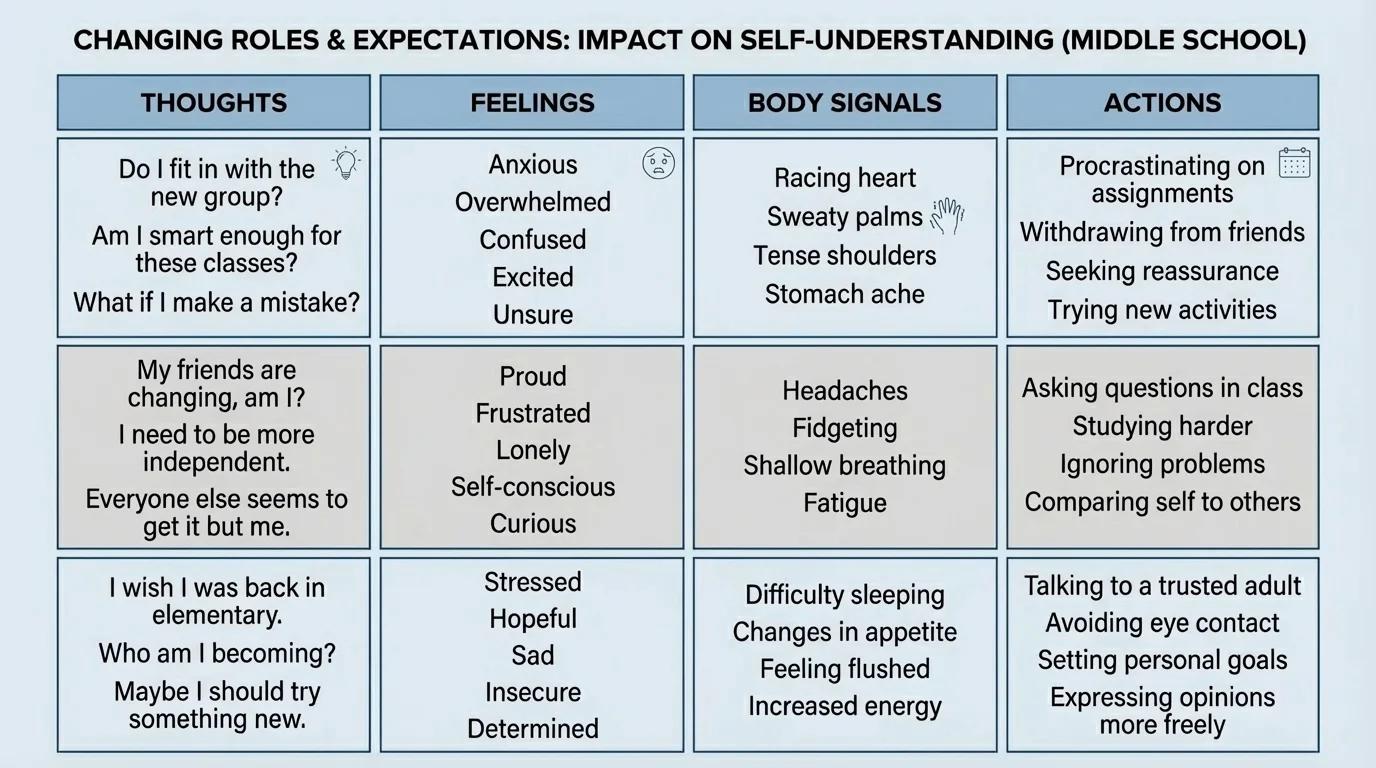
These clues matter. They help you understand whether a role fits you well, challenges you in a healthy way, or is creating stress that needs attention.
A change does not have to be huge to affect you. Maybe you become the oldest child at home for part of the day while a parent works. Maybe a friend starts leaning on you for every problem. Maybe you decide to post videos of a hobby and suddenly strangers can comment. Each situation changes what is expected of you, and your reactions tell you something important about yourself.
Real-life self-check example
You are now expected to help your younger cousin during the afternoon twice a week.
Step 1: Notice the role change.
Your role is no longer only "student" or "kid in the family." You also have a helper role.
Step 2: Name the expectations.
You may need to be patient, pay attention, and pause what you want to do for a while.
Step 3: Notice your reaction.
You might feel proud that you are trusted, but annoyed that your free time changes.
Step 4: Learn from the reaction.
You may discover that you are responsible and caring, but also that you need clearer schedules so you do not feel rushed.
This kind of check helps you understand yourself more clearly instead of just saying, "I hate this," or "I'm bad at helping."
As you continue growing, the pattern in [Figure 2] stays useful because it helps you separate what you think from what you feel, and both from what you do.
When life feels confusing, a simple routine can help you slow down and understand what is changing, as [Figure 3] explains. You do not need a complicated journal or a perfect answer. You just need a few honest questions.
Step 1: Notice the change. Ask yourself, "What is different right now?" Maybe you have more chores, more social pressure, or a new activity.
Step 2: Name the role. Ask, "What role am I playing?" Friend, helper, leader, teammate, creator, sibling, or something else.
Step 3: Identify the expectation. Ask, "What am I expected to do?" Be specific.
Step 4: Check your reaction. Ask, "How do I feel? What am I thinking? What is my body doing?"
Step 5: Decide what matters. Ask, "Is this expectation fair, healthy, and important? Does it fit my values?"
Step 6: Choose one action. You might communicate, ask for help, set a limit, make a plan, or keep trying.
Step 7: Reflect later. Ask, "What did I learn about myself from this situation?"
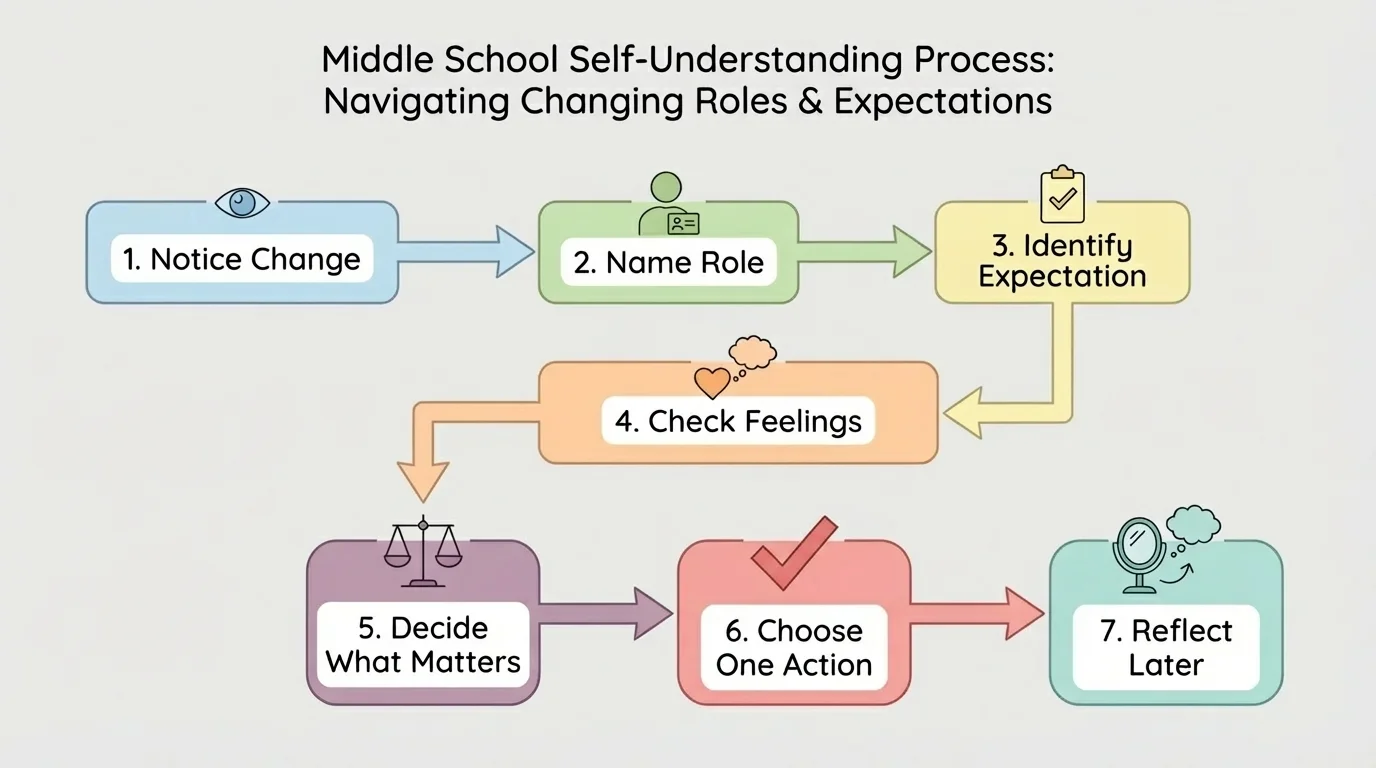
This process works well because it helps you move from confusion to clarity. Instead of feeling stuck in pressure, you begin to understand the situation and your response to it.
Growth does not mean becoming someone else. It means learning more about who you are as you handle new situations. A new role may stretch you, but it should not erase your needs, values, or personality.
For example, if you start helping run a community club chat, you may learn that you enjoy organizing people. You may also learn that you need quiet time afterward. Both things can be true.
Sometimes the problem is not the role itself. The problem is the pressure around it. Pressure can come from adults, friends, online groups, or from yourself.
Healthy expectations usually sound like this: "Do your best." "Be respectful." "Follow through." "Let me know if you need help." Unhealthy pressure often sounds like this: "Never mess up." "Always be available." "Everyone else can do it, so you should too." "If you say no, people won't like you."
Learning to tell the difference protects your well-being. It also helps you build a stronger sense of identity. If you accept every expectation without thinking, you may start acting like whatever other people want. If you reject every expectation, you may miss chances to grow. The goal is balance.
Here are practical ways to handle pressure:
A boundary can sound simple: "I want to support you, but I can't be on chat all night," or "I can help after I finish my work." Boundaries help you stay kind without losing yourself.
You are not just collecting roles. You are also learning which ones fit you and which ones do not. This is where your identity starts becoming clearer.
Identity includes what matters to you, how you treat people, what strengths you notice in yourself, and what kind of person you want to become. Roles can influence identity, but they do not completely control it.
For example, maybe people think you should be loud and outgoing in a group, but you realize you are thoughtful and calm. That does not mean you are doing the role wrong. It means you are bringing your own style to it. A quiet leader is still a leader.
This is also why individuality matters. Two students can have the same role and experience it differently. One student may love being the person who organizes plans. Another may prefer encouraging others quietly. Neither is automatically better.
"You do not have to become what pressure wants. You can become what your values guide."
One helpful question is: What part of this role feels like me, and what part feels forced? That question can help you grow with confidence instead of just copying what others expect.
Sometimes role conflict happens when two reasonable expectations pull you in different directions, as [Figure 4] shows. You may want to help your family, keep a promise to a friend, and still protect your own energy. The hard part is that all of them may matter.
For example, maybe you promised to join an online club meeting, but a family member suddenly needs your help. Or maybe your friend wants to talk late at night, but you are exhausted and need rest. These are not always easy choices.
When roles clash, try this decision guide:
This matters because repeated role conflict can affect your mood and self-image. If you often feel like you are disappointing everyone, you may begin to think poorly of yourself. But sometimes the real issue is that too many expectations are colliding at once. As the decision flow in [Figure 4] makes clear, clear thinking and communication can reduce that pressure.
Example of handling a role conflict
You are expected to join a video practice for your hobby at the same time your family needs help setting up for guests.
Step 1: Identify both roles.
You are both a committed group member and a helpful family member.
Step 2: Decide what is most urgent.
If family help is needed right away, that may come first.
Step 3: Communicate early.
Send a message to the group leader: "I will be 15 minutes late because I need to help my family first."
Step 4: Reflect afterward.
You may learn that you are dependable, but also that you need to plan ahead when possible.
That reflection builds maturity without requiring perfection.
Sometimes you will make the best choice you can and still feel frustrated. That is part of growing. Self-understanding does not mean always feeling calm. It means understanding why you feel what you feel and learning what helps.
Here are a few simple ways to practice this skill in everyday life:
Try This: pick one new or changing role in your life this week. It could be family helper, friend, club member, pet caretaker, or creator online. Notice one expectation that comes with it. Then ask yourself how that expectation affects your thoughts, feelings, and choices.
When you do this regularly, you become better at understanding yourself. You start seeing that your identity is not decided by one awkward moment, one mistake, or one outside opinion. It grows as you notice your experiences, make thoughtful choices, and learn what truly matters to you.
Your feelings are useful information, but they are not your whole identity. A hard day in one role does not define who you are.
Changing roles and expectations are a normal part of middle school life. They can feel challenging, but they also give you chances to discover your strengths, values, limits, and individuality. The more clearly you notice what is happening inside you, the more confidently you can grow into yourself.
