Have you ever sent a message you wished you could unsend just five seconds later? That tiny gap between feeling something and doing something can decide whether a problem gets solved or gets bigger. Learning to notice your emotions is important, but learning to notice your triggers is even more powerful. When you understand what sets you off, you can protect your judgment, make smarter choices, and treat people better even when you feel upset.
Emotions are not bad. Anger can warn you that something feels unfair. Sadness can show that something matters to you. Nervousness can help you prepare. But emotions can also become so strong that they push your brain into fast reactions. That is when you might snap at a sibling, assume a friend meant something rude in a text, quit a game in anger, or argue with a parent before fully listening.
This matters in daily life because relationships are built from many small moments. A respectful message, a pause before replying, or an honest apology can strengthen trust. On the other hand, one harsh comment, one public post made in anger, or one repeated pattern of overreacting can damage trust over time.
An emotional trigger is a situation, word, memory, or event that causes a strong emotional reaction very quickly. Judgment is your ability to think clearly and make a wise choice. Relationships are your connections with other people, such as family members, friends, teammates, neighbors, or people you interact with online.
A trigger is not always a huge event. Sometimes it is something small that hits a sensitive spot. For example, if being ignored really bothers you, a slow reply to your message might feel much bigger than it looks from the outside. If you are already stressed, a simple reminder to do a chore might feel like criticism.
Triggers are personal. One person may laugh off a joke, while another feels hurt or embarrassed by the same words. That does not mean one person is right and the other is wrong. It means people have different experiences, stress levels, and sensitive areas.
Many students your age share some common triggers. One is embarrassment. You might feel triggered if someone points out a mistake during a video call, comments on your voice in a recording, or brings attention to something private.
Another common trigger is feeling left out. Maybe your friends are chatting in a group without you, posting pictures from an activity you were not invited to, or making plans in a game without asking you. Being left out can quickly turn into sadness, anger, or jealousy.
Criticism is also a big one. If someone tells you that your work needs improvement, your room is messy, or your attitude is rude, your first reaction might be to defend yourself instead of listening. Even helpful advice can sting when you are tired or already upset.
Other common triggers include unfairness, teasing, being blamed for something you did not do, losing a game, being interrupted, feeling pressured to hurry, hunger, lack of sleep, and misunderstandings in texts where you cannot hear a person's tone.
Your body can react to a trigger before your mind fully explains what is happening. That is why you may feel hot, shaky, or tense before you even put your feelings into words.
Online communication can make triggers stronger. When you cannot see facial expressions or hear tone, your brain may fill in the blanks. A short message like "ok" can feel angry, rude, dismissive, or completely normal depending on your mood and assumptions.
An emotional trigger often follows a quick chain, as [Figure 1] shows: something happens, your body reacts, your thoughts speed up, and then you feel an urge to act. This can happen in seconds. That is why it can feel like your reaction "just happened," even though there was a process in between.
You might notice body clues such as a tight chest, clenched jaw, watery eyes, shaky hands, a faster heartbeat, a hot face, or a knotted stomach. These clues are useful. They are early warning signs that your feelings are getting strong.
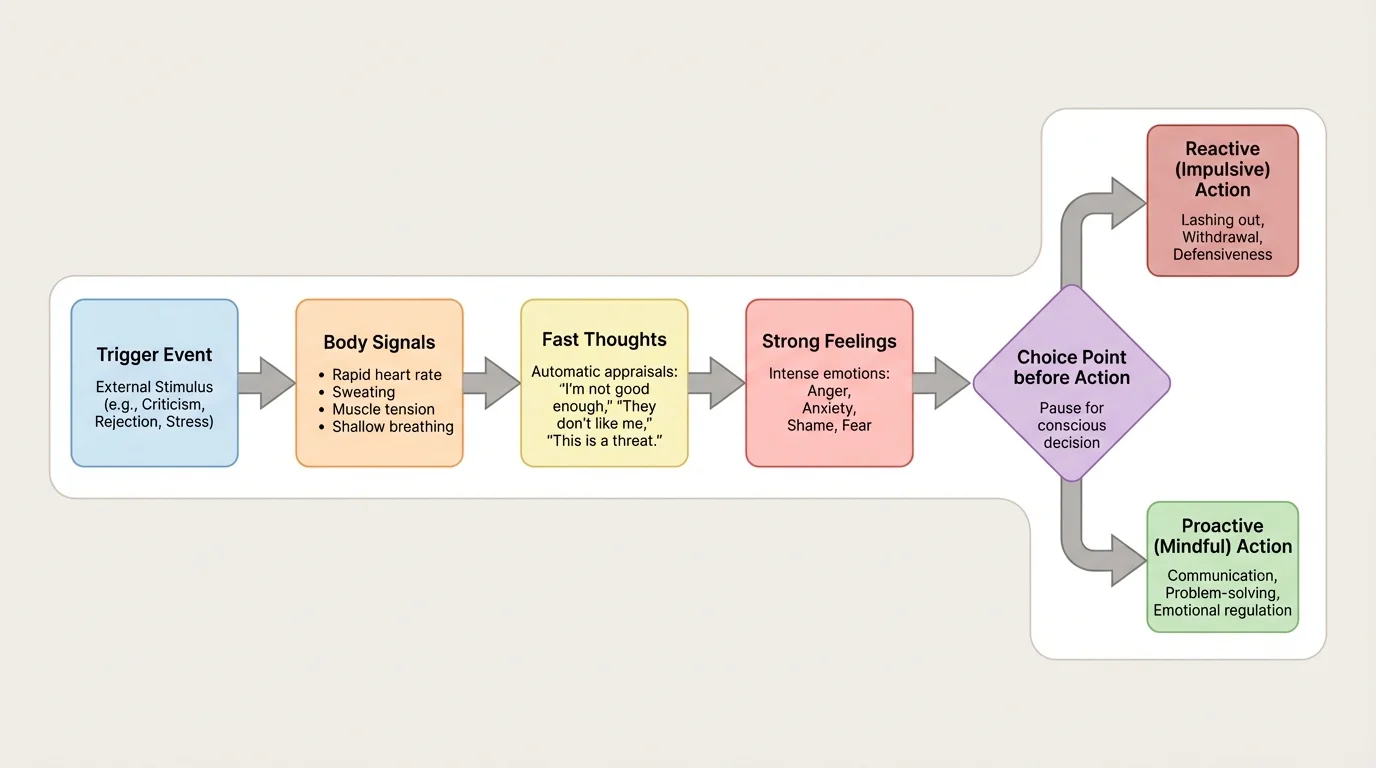
Your thoughts may also change when you are triggered. You may jump to conclusions, expect the worst, or think in extreme ways such as "They never listen" or "Nobody likes me." These thoughts can feel true in the moment, even when they are incomplete or inaccurate.
The important skill is noticing the pattern early. If you catch the body signs and fast thoughts soon enough, you have a better chance of making a thoughtful choice instead of an impulsive one.
Judgment gets weaker when strong feelings take over. You may stop checking facts, forget other people's viewpoints, and focus only on defending yourself or escaping the uncomfortable feeling.
For example, suppose your friend does not reply for two hours. If you are calm, you might think, "They are probably busy." If you are triggered, you might think, "They are ignoring me on purpose." That belief can lead you to send an angry message, even though you do not actually know what happened.
Triggers can also lead to impulse decisions. You might post something rude, quit a team activity, block a friend, lie to avoid trouble, or refuse to talk. These choices may bring short-term relief, but they often create bigger problems later.
Strong feeling does not always mean true story. Emotions give you information, but they do not always give you the full picture. A wise response comes from using both feeling and thinking together.
That is why checking facts matters. Ask yourself: What do I know for sure? What am I guessing? What else could be true? Those questions slow down the rush and protect your decision-making.
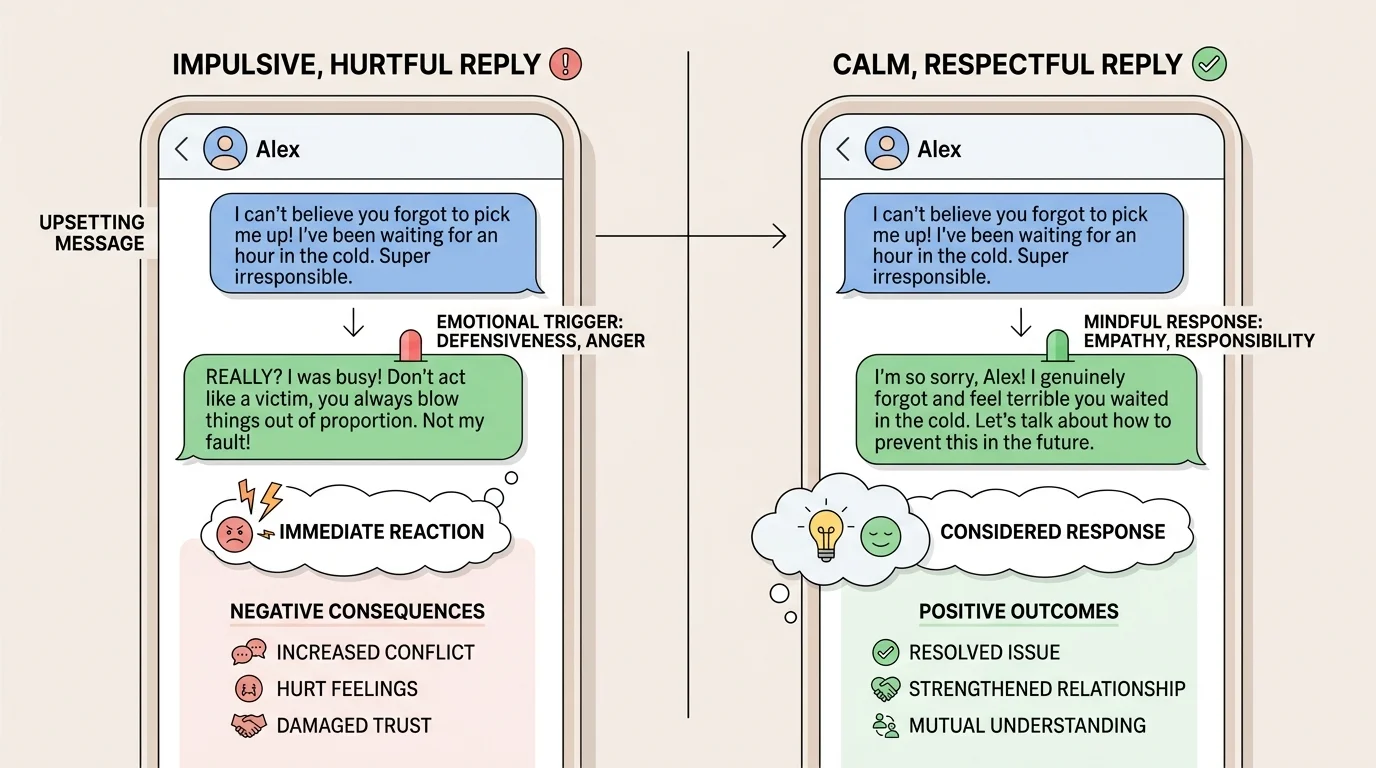
[Figure 2] Triggers can change the way you speak, text, listen, and react. Tone matters a lot in relationships, and the same upsetting moment can lead to either a hurtful reaction or a respectful response. When you are triggered, you might interrupt, accuse, mock, shut down, or become extra defensive.
Even if you are upset for a good reason, the way you express it affects whether the other person listens. If you attack someone with words like "You always do this," they will probably focus on defending themselves instead of hearing your real concern.
Triggers can also cause problems in the opposite direction: silence. Some people do not lash out. Instead, they stop answering, hide their feelings, or avoid the issue. That may seem calmer, but if the problem never gets discussed, the relationship can still weaken.
Trust grows when people feel safe with each other. That does not mean you never get upset. It means people can believe that when problems happen, you will handle them honestly and respectfully. A calm response protects both your message and the relationship.
You do not need to be perfect. You need a repeatable plan. One helpful method is a short pause plan, and [Figure 3] lays out the steps in order. This plan helps you create space between the trigger and your response.
Step 1: Notice. Pay attention to body clues and sudden urges. Ask, "Am I getting triggered?"
Step 2: Name the feeling. Be specific. Are you angry, embarrassed, disappointed, jealous, worried, or hurt? Naming the feeling makes it easier to handle.
Step 3: Pause your action. Put the phone down, step away from the keyboard, take a drink of water, or count slowly to ten. If needed, take a longer break.
Step 4: Check the facts. What actually happened? What are you assuming? Is there another explanation?
Step 5: Choose a response. Decide what will help the situation, not just what will release your emotion for one second.
Step 6: Repair if needed. If you already reacted badly, apologize clearly and try again.
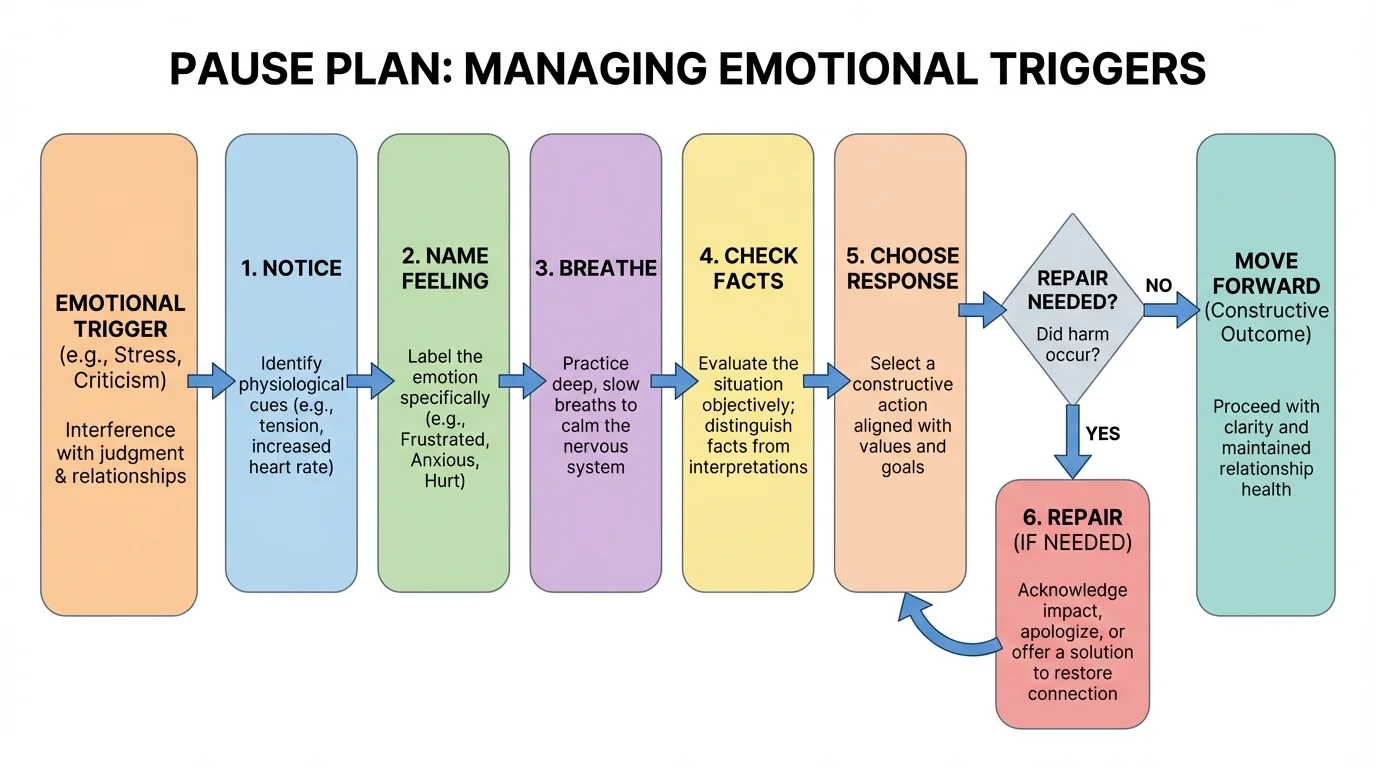
This plan does not remove feelings. It gives you control over what you do with them. Later, when emotions rise again, the same steps still work. The trigger chain becomes easier to interrupt when you practice the pause plan regularly.
Using the pause plan in a texting problem
A friend replies to your message with only, "Fine." You feel hurt and angry.
Step 1: Notice the trigger
You feel your stomach tighten and want to text, "Wow, rude."
Step 2: Name the feeling
You tell yourself, "I feel hurt and annoyed. I think they might be mad."
Step 3: Check facts
You realize you do not actually know their tone. They might be busy, tired, or distracted.
Step 4: Choose a response
You send, "Hey, just checking in. You seem short. Is everything okay?"
Step 5: Repair if needed
If you already sent something snappy, you can say, "Sorry, I reacted too fast."
This response keeps your dignity and gives the friendship a better chance to stay strong.
A pause is not weakness. It is self-control. The strongest response is often the one that is calm enough to be useful.
Suppose a parent reminds you for the third time to finish a task. Your trigger might be feeling controlled or feeling like no one trusts you. If you yell, the argument grows. If you say, "I'm frustrated because I feel rushed. I'll do it in ten minutes," you communicate the feeling without attacking the person.
Suppose you lose in an online game and a teammate blames you in chat. Your trigger might be embarrassment or unfairness. A fast reaction might be insulting them back. A stronger response might be muting the chat, taking a break, and deciding whether it is worth responding at all.
Suppose a friend posts photos from an event you were not part of. Your trigger might be rejection. Before deciding they dislike you, pause. Sometimes people forget to invite others. Sometimes plans were small. Sometimes there is a reason that has nothing to do with you. If the friendship matters, ask respectfully instead of accusing.
Suppose someone gives you advice about your project and you hear it as an insult. Criticism can sting, especially when you worked hard. But not all criticism is rejection. Some feedback is useful information. Try separating the message from the feeling.
"Feelings are real, but they are not always instructions."
That idea can help in almost every relationship. You can fully respect your feelings while still deciding not to let them run the whole situation.
Resilience is your ability to recover, adapt, and keep going when life feels stressful or upsetting. It does not mean you never struggle. It means you build skills that help you bounce back.
One of the best ways to lower trigger intensity is to take care of basic needs. Hunger, tiredness, stress, and too much screen time can make reactions stronger. Sleeping enough, moving your body, eating regularly, and taking breaks can make emotional control easier.
Another useful habit is reflection. After a conflict, ask yourself: What triggered me? What did I feel in my body? What story did I tell myself? What helped, and what made it worse? This is not about blaming yourself. It is about learning your patterns.
You can also prepare for common triggers before they happen. If group chats often upset you, decide in advance not to answer right away when you feel heated. If sibling arguments are common, agree on a cool-down plan. If criticism is hard for you, practice one sentence like, "I need a minute, but I want to hear your point."
Self-management is not the same as hiding emotions. It means handling emotions in a way that protects your goals, values, and relationships.
The more you practice, the faster you recognize what is happening. Over time, your reactions can become less explosive and more thoughtful. That is real growth.
Some triggers are too strong to handle alone, and that is okay. You should reach out to a trusted adult if your emotions feel overwhelming often, if conflicts keep repeating and getting worse, if someone is bullying or threatening you, or if you feel like you might hurt yourself or someone else.
Trusted adults can include a parent, guardian, relative, coach, counselor, club leader, or another safe adult in your community. Asking for help is not being dramatic. It is using support wisely.
You can also ask for help if your triggers connect to grief, big family changes, past painful experiences, or intense anxiety. Sometimes strong reactions come from deeper stress, and support can help you understand what is really going on.
