Some of the most impressive things people do are never done alone. A community garden, a live-streamed gaming tournament, a fundraiser for an animal shelter, a shared study project, or a neighborhood cleanup all depend on people working together well. When teamwork is strong, a hard project starts to feel possible. When teamwork is weak, even a simple job can turn into missed messages, hurt feelings, and unfinished work.
If you learn how to work well with others now, you develop a skill that matters everywhere: at home, in clubs, on sports teams, in online groups, in volunteer work, and later in jobs. Teamwork is not just "being nice." It means planning, communicating, following through, solving problems, and helping a group stay focused when things get messy.
Complex projects usually fail for very ordinary reasons: nobody is clear about the goal, one person does almost everything, people stop replying, or disagreements get ignored until they explode. Good teamwork prevents these problems early. It gives everyone a fair chance to contribute and makes the final result stronger.
Think about two students planning an online awareness campaign about reducing litter in their neighborhood. In one version, they both assume the other person is making the posts, contacting local groups, and designing the flyer. The deadline arrives, and almost nothing is ready. In the better version, they divide the work clearly, set dates, check in twice a week, and help each other when one person gets stuck. Same idea, very different result.
Teamwork is working with other people toward a shared goal by combining effort, communication, and responsibility.
Shared goal means the group agrees on what success looks like.
Accountability means each person can be trusted to do their part and be honest about progress.
Strong teamwork also helps you build trust. People remember who shows up, who stays calm, who helps solve problems, and who blames others. Your habits in group work become part of your reputation.
In real life, strong teams are not teams with zero problems. They are teams that know how to respond when problems appear. A strong team has a clear goal, clearly defined roles, steady communication, realistic deadlines, and a way to handle conflict. It also has members who show initiative, which means they notice what needs to be done and take helpful action without waiting to be pushed.
You also need collaboration. Collaboration is more than dividing work. It means people build ideas together, ask for input, and improve the final result as a group. For example, if one person creates a poster, another may improve the wording, a third may check the facts, and a fourth may help share it online. The final product becomes better than what one person could do alone.
Many employers say that teamwork and communication are just as important as technical skill. A person may be talented, but if they cannot work with others, they can slow down the whole group.
Another key part is accountability. If you say you will complete a task by Thursday, the team should not have to chase you on Friday, Saturday, and Sunday. Reliable people make groups calmer and more effective.
When a project feels overwhelming, the problem is often not the size of the project. The problem is that the group has not broken it into clear steps. As [Figure 1] shows, a big goal becomes manageable when your team turns it into smaller tasks, deadlines, and check-ins. Instead of saying, "Let's help the community," say, "We will organize a one-day park cleanup with 12 volunteers, collect supplies, promote it online, and finish by the second Saturday of the month."
Once the goal is specific, list the tasks. For a cleanup project, tasks might include creating a sign-up form, contacting a local park office, gathering gloves and trash bags, designing a digital flyer, posting reminders, and tracking who is bringing supplies. Each task needs an owner and a due date.
A simple planning method is to ask four questions: What are we doing? Who is doing each part? When is each part due? How will we check progress? If your team can answer all four, you already avoid many common failures.
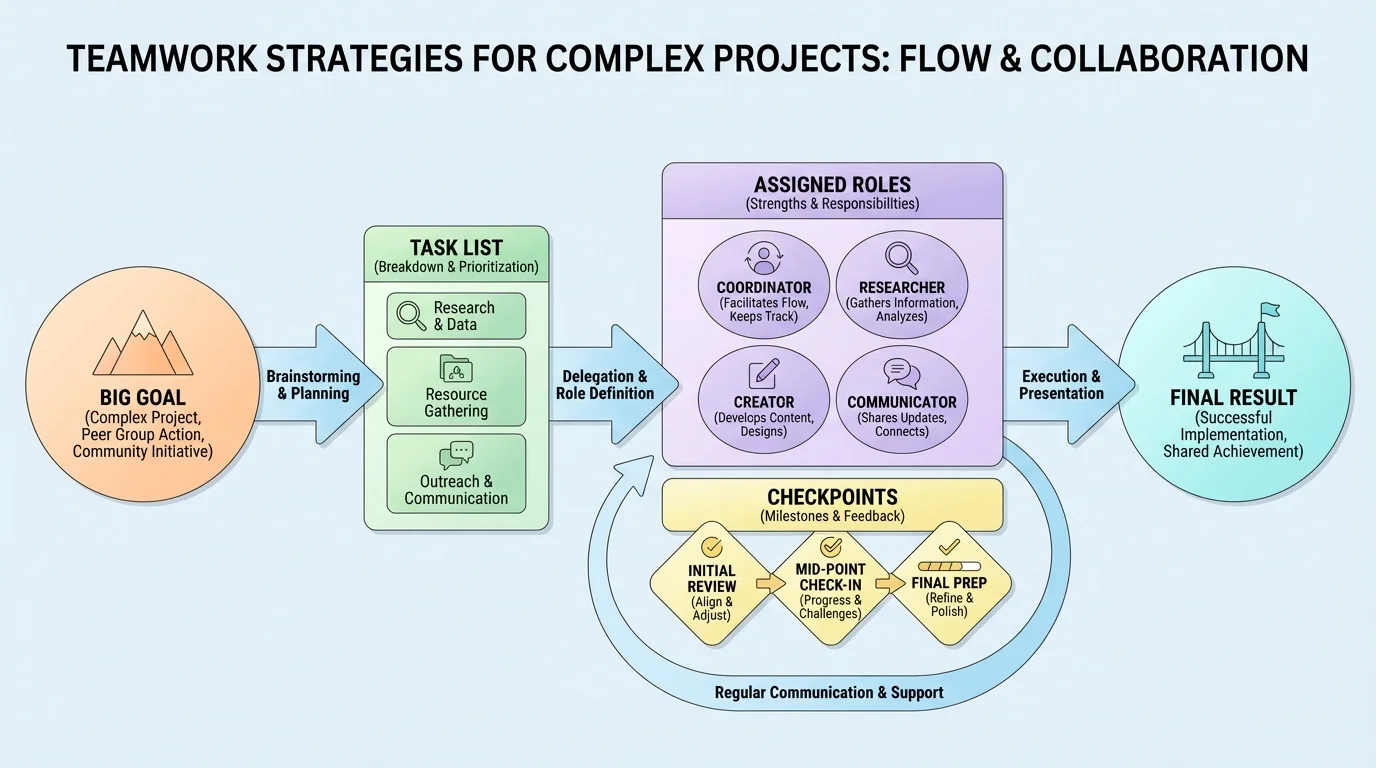
Use a shared system. That might be a group chat, a shared document, a task board, or a calendar app. The tool does not have to be fancy. It just needs to be used consistently. A team that keeps plans only in people's heads usually forgets something important.
Set short checkpoints before the final deadline. If the final event is in two weeks, do not wait until the night before to ask whether everything is ready. A good checkpoint might be: by day 3 the flyer is drafted, by day 5 volunteer sign-up opens, by day 7 supplies are confirmed, and by day 10 reminder posts go live. That way, if something slips, you still have time to fix it.
Planning a group project step by step
Suppose you and three others want to create an online campaign encouraging neighbors to donate winter clothing.
Step 1: Define success clearly.
Your group goal could be: collect at least 50 usable clothing items in two weeks and deliver them to a local shelter.
Step 2: Break the project into jobs.
Jobs may include contacting the shelter, making social posts, creating a drop-off plan, and sending reminders.
Step 3: Assign owners and deadlines.
Each task gets one main owner, even if other people help. This prevents the "I thought someone else was doing it" problem.
Step 4: Choose check-in times.
For example, meet online every three days for a short update and problem-solving session.
This kind of planning turns a vague idea into real action.
Later, when your team is under pressure, the planning structure in [Figure 1] still matters because it gives the group a path back to focus.
[Figure 2] shows that balanced teams need different kinds of contributions. One person may be organized, another creative, another good at speaking with adults, and another careful about details. A smart team uses these differences instead of pretending everyone works the same way.
This is where delegation matters. Delegation means assigning tasks on purpose, based on ability, time, and responsibility. It is not dumping boring work on one person. It is matching tasks to strengths while keeping the workload fair.
Here are some common roles in a project team:
| Role | Main strength | Example tasks |
|---|---|---|
| Organizer | Keeps track of plans | Sets deadlines, updates checklist, schedules calls |
| Researcher | Finds accurate information | Checks facts, contacts organizations, gathers details |
| Designer | Makes content clear and appealing | Creates flyers, slides, or posts |
| Communicator | Handles outreach respectfully | Sends emails, writes captions, talks with partners |
| Checker | Notices mistakes and gaps | Reviews details, confirms supplies, checks deadlines |
Table 1. Common team roles, their strengths, and examples of responsibilities.
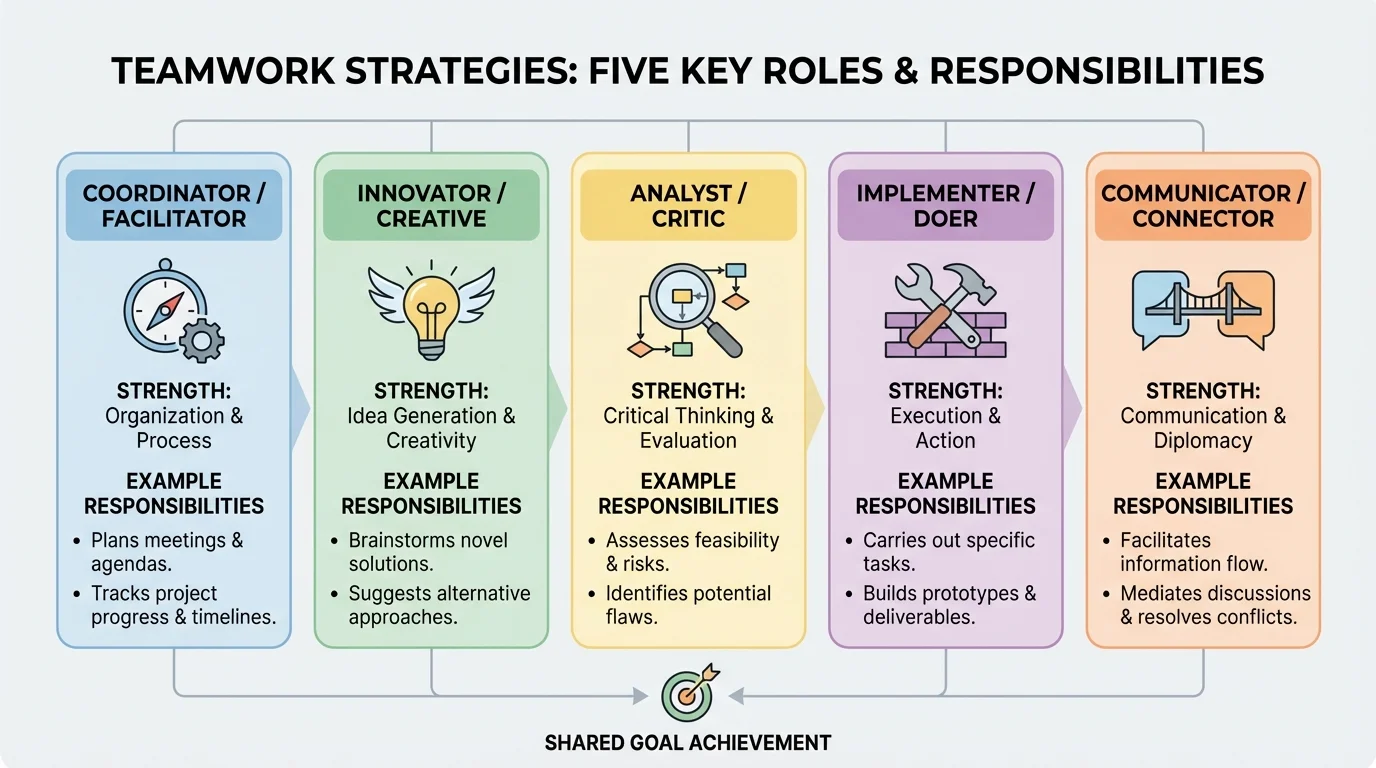
These roles do not have to be official titles, and one person may do more than one role in a small team. What matters is clarity. Hidden expectations create stress. Clear roles build confidence.
Roles should also be flexible. If your designer suddenly has a family responsibility and cannot finish on time, someone else may need to step in. Good teams care about the mission more than protecting titles.
Fair does not always mean equal
In teamwork, fairness means the workload fits each person's time, strengths, and responsibilities. One person may handle more outreach while another handles more planning. The important question is whether the division makes sense and is agreed upon openly.
When you understand roles clearly, you avoid resentment. You also make it easier to ask for help without shame because everyone knows what each person is trying to handle.
A team can have a great plan and still fail if communication is weak. Good communication means people know what is happening, what is expected, and what needs attention now. In online teamwork, this matters even more because you do not automatically see each other every day.
Keep messages clear and useful. Instead of saying, "We need to work on the project soon," say, "Can you finish the volunteer sign-up form by Wednesday at 6:00 p.m. so I can post the link that night?" Clear messages reduce confusion and stress.
Good team communication usually includes these habits:
Respect matters too. Short messages can sound rude if they are too blunt. You do not need to sound overly formal, but simple habits help: greet people, thank them, and avoid blaming language. "I noticed the form is not posted yet. What do you need to finish it?" works better than "You still haven't done it."
"Clear is kind."
— A useful teamwork principle
If your group has meetings or video calls, keep them short and focused. Start by naming the goal, review what is done, identify what is stuck, assign next steps, and end with deadlines. A 15-minute useful meeting is better than a 45-minute unfocused one.
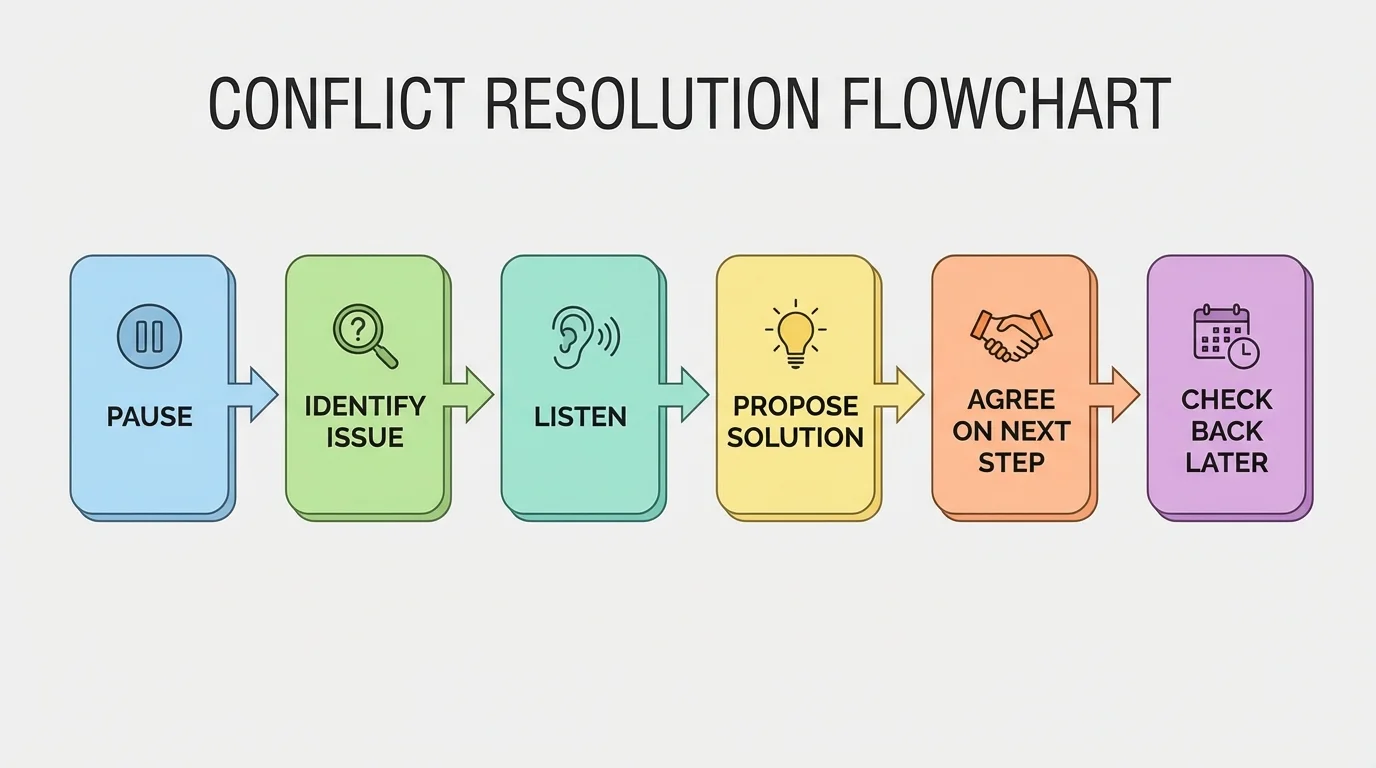
Conflict does not automatically mean a team is failing. It usually means people care, feel pressure, or see the problem differently. The real question is whether the team has a process for dealing with conflict, as [Figure 3] shows through a simple step-by-step approach. Without a process, small problems turn personal very quickly.
Common conflicts include uneven effort, missed deadlines, misunderstanding tone in messages, disagreement about decisions, and one person dominating the group. These problems are normal. Ignoring them is what makes them dangerous.
Here is a practical way to respond. First, pause before reacting. If you reply while angry, you may create a bigger issue than the original problem. Next, name the issue clearly and calmly. Then listen to the other person's side. After that, suggest a fix and agree on a next step. Finally, check back later to see whether the solution worked.
Use "I" statements when possible. For example: "I'm worried because the supply list is still incomplete, and we need it today." That keeps the focus on the problem, not on attacking the person.
Some situations need stronger boundaries. If someone repeatedly refuses to do their part, disappears without explanation, or treats others disrespectfully, the team may need to reassign tasks, reduce that person's role, or involve a trusted adult or community leader if the project is serious. Teamwork does not mean accepting harmful behavior.
Conflict example
Your group is creating digital flyers for a food drive. One teammate keeps changing the design without telling anyone, and another teammate gets upset.
Step 1: Pause and identify the real issue.
The real issue is not just the design. It is that decisions are being made without group agreement.
Step 2: Say the concern clearly.
"We need one final version, and it is hard to stay organized when edits happen without letting the team know."
Step 3: Agree on a process.
The team decides that one person edits the design, but all major changes are posted in the group chat first.
The conflict becomes a system problem to solve, not a personal fight to win.
Later, if another disagreement appears, the same structure in [Figure 3] helps the group stay calm and solution-focused.
Not all teamwork happens in a formal project. You also use teamwork in friend groups, youth organizations, gaming communities, neighborhood activities, and shared creative work online. The same principles still apply: clear goals, respectful communication, fair effort, and accountability.
For example, suppose you and friends run a small online art account or video channel. One person edits, one posts, one answers messages, and one tracks ideas. If one person constantly misses upload dates but still wants control over every decision, tension builds fast. A quick team agreement can help: who decides what, what deadlines matter, and how to speak up when something is not working.
Online spaces bring extra challenges. Tone is easier to misread. People may delay responding. Group members may live in different places or have different schedules. Because of this, it helps to write expectations down. Even a short message like "Let's reply within 24 hours and tell the group if a task will be late" can prevent confusion.
Good digital citizenship still matters during teamwork. Protect private information, be respectful in chats and comments, and think before posting anything connected to the group's name or mission.
Peer pressure can also affect teamwork. Sometimes a group wants to joke around, avoid hard work, or leave one person carrying the project. Real leadership means helping the group do what is right, even when that is less fun in the moment.
Community action works best when a team connects a real need to a practical plan, as [Figure 4] illustrates. Community action means people work together to improve something beyond themselves, such as safety, cleanliness, kindness, access, or awareness. You do not need to be an adult to contribute. You do need planning, respect, and follow-through.
A good community action project starts with a real need. Maybe your neighborhood park has litter. Maybe an animal rescue needs donated blankets. Maybe a local pantry needs help collecting canned food. Maybe younger kids in your area need a homework-help group online. The need should be specific enough that your team can do something practical about it.
Next, think about partners. Could you contact a library, shelter, recreation center, apartment office, local volunteer group, or neighborhood association? Partnerships make projects more effective because you are not starting from zero. They may give advice, share your message, or help with supplies.
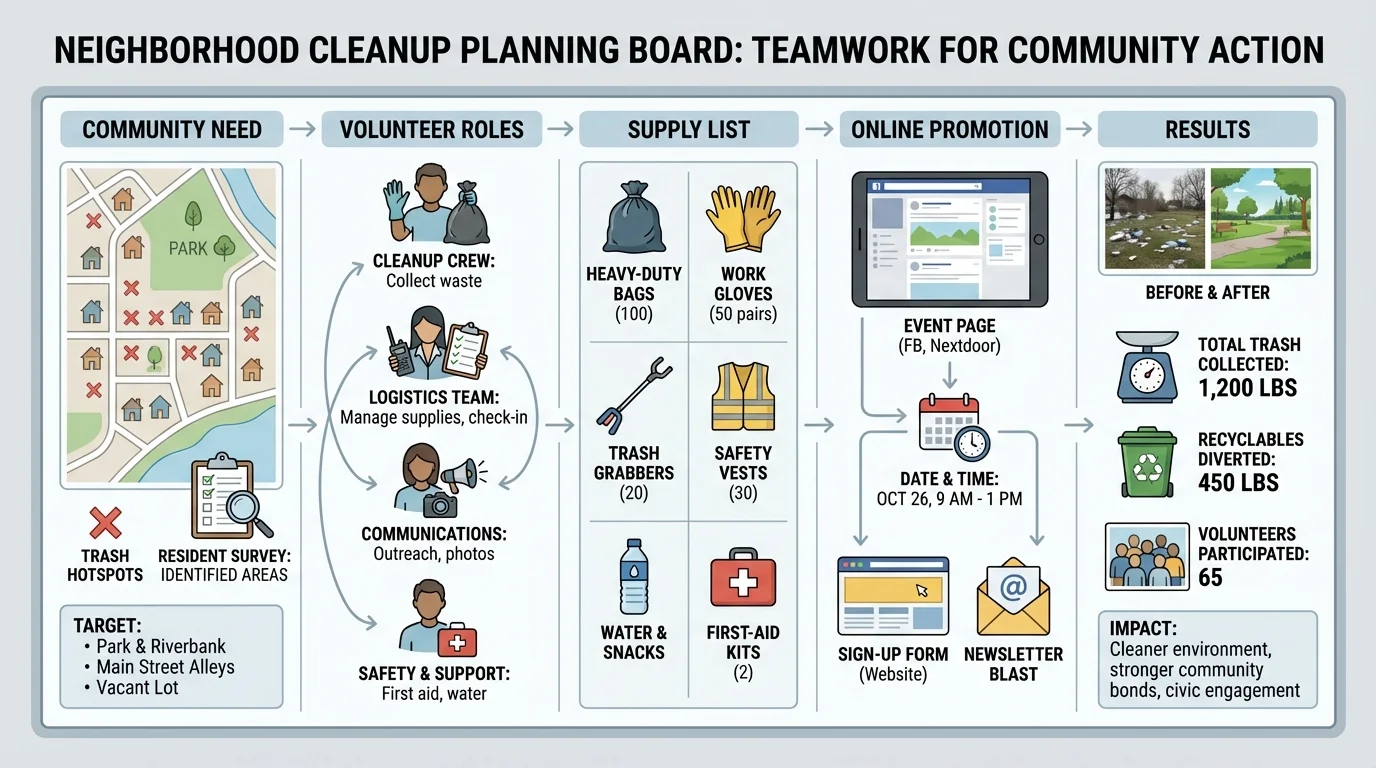
For example, a team organizing a park cleanup might divide work like this: one person gets permission, one gathers supplies, one creates digital promotion, one manages volunteer sign-up, and one documents results with before-and-after photos. That structure helps everyone contribute in a visible way.
Community projects also need safety and respect. Do not promise things your group cannot deliver. Do not collect donations without adult guidance when needed. Do not enter unsafe spaces or share private addresses publicly. Helping your community should be thoughtful, not reckless.
Small local actions often have a bigger impact than people expect. A project that helps 20 neighbors directly can matter more than a flashy post that reaches hundreds but changes nothing.
When your team is deciding what project to do, the planning path in [Figure 4] keeps you grounded in real needs, realistic tasks, and measurable impact.
Some students think leadership means being the boss. In healthy teamwork, leadership is often quieter than that. It means noticing what the group needs and helping it happen. Maybe you create the checklist, send the reminder, volunteer for a difficult task, or calm people down when stress rises. That is leadership through action.
At the same time, there is a difference between initiative and control. If you make every decision, interrupt others, or redo their work without asking, the group may stop contributing. People support what they help create. Good leaders make space for others.
Try this mindset: step up when needed, step back when needed. If the team has no plan, step up and suggest one. If someone else has expertise, step back and let them lead that part. Flexible leadership makes teams stronger.
Healthy initiative
Healthy initiative means taking useful action that supports the shared goal while respecting other people's roles and ideas. It is different from controlling behavior, which usually lowers trust and motivation.
One useful question to ask yourself is: "Am I helping the group move forward, or am I trying to control the group?" That question can keep your leadership productive and respectful.
Strong teams do not just finish a project and disappear. They pause to reflect. Reflection helps you improve for the next challenge. Ask simple questions: What went well? What slowed us down? Which messages were clear? Which roles worked? What should we change next time?
This is where feedback becomes valuable. Feedback is useful information that helps someone improve. Good feedback is specific, respectful, and focused on behavior, not personal attacks. "The reminder posts worked well because they were clear and on time" is useful. "You were bad at communication" is not.
It also helps to notice progress, not just mistakes. If your team handled a disagreement better than last time, that is growth. If you finished a project on time because you set checkpoints, that is proof your system works.
Finishing strong also means doing the final responsibilities: thanking helpers, delivering donations, sharing results honestly, returning borrowed supplies, and closing communication respectfully. A good ending strengthens trust for future teamwork.
Simple team reflection after a project
Step 1: Name one success.
"Our volunteer sign-up filled quickly because the post was shared in several community groups."
Step 2: Name one challenge.
"We waited too long to confirm who was bringing supplies."
Step 3: Choose one improvement.
"Next time, we will confirm supplies three days earlier and keep one backup volunteer."
Reflection is not about blame. It is about getting smarter as a team.
Every project you complete teaches you something about responsibility, leadership, and cooperation. The more you practice these habits, the more ready you become for bigger challenges in school, work, and community life.
