Have you ever sat down for learning, but your body wanted to wiggle, your mouth wanted to talk, or your feelings felt too big? That happens to everyone. The good news is that you can do small things to help your body and brain get ready again. When you practice calming and focusing routines, you can listen better, follow directions better, and feel more ready to try.
Your body gives you clues. Maybe your heart feels fast, your hands feel busy, or your voice gets loud. Maybe you feel sad, mad, worried, or silly. Calming means helping your body feel safer and quieter. Focusing means helping your mind pay attention to what you are doing right now.
When you are calm and focused, learning feels easier. You can hear your teacher on a video lesson, look at the right thing on the screen, and remember what to do next. When you are not calm, you might click the wrong thing, miss directions, or want to give up fast. That does not mean you are bad at learning. It means your body needs a reset.
Routine means something you do the same way again and again. A routine helps you know what comes next.
[Figure 1] Routines are helpful because they are simple. You do not have to make a big plan. You just remember a few easy steps and use them when you need them.
A good routine is short and easy to remember. You can use this one before a lesson, after a mistake, or when your feelings start getting big.
Step 1: Stop your body. Freeze your feet. Make your hands quiet. Step 2: Take a slow breath. Put a hand on your belly if that helps. Breathe in slowly, then breathe out slowly. Step 3: Relax your body. Drop your shoulders. Unclench your jaw. Step 4: Look and listen. Find the person, screen, or job that needs your attention.
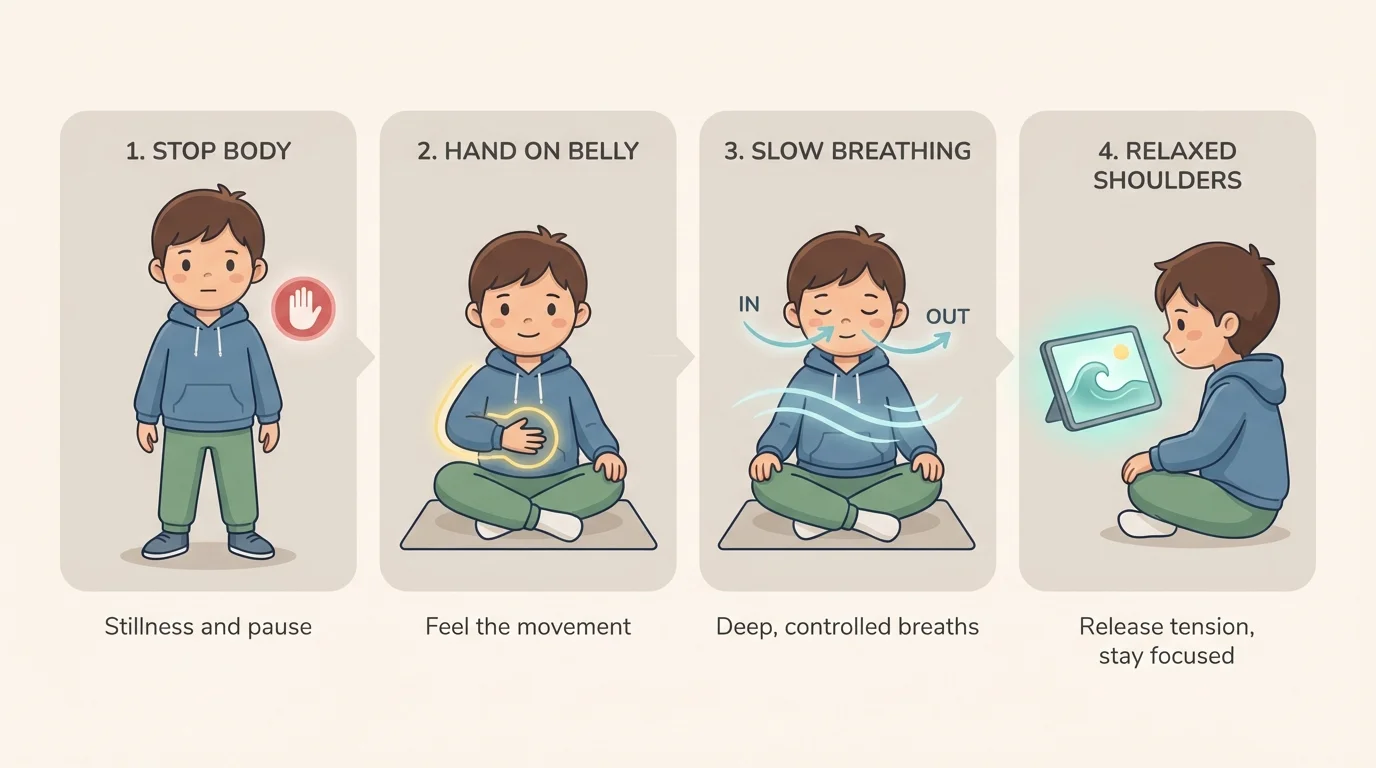
You do not need to do this just one time. You can take a few slow breaths. You can whisper to yourself, I can get calm or I am ready to try again. Quiet words can help your body settle.
Real-life example
You are doing an online reading activity. A word feels tricky, and you want to cry.
Step 1: Stop your hands so you do not bang the table or click quickly.
Step 2: Take a slow breath in and a slow breath out.
Step 3: Say, I need help or I can try one more time.
Now your body is calmer, and you are more ready to keep going.
[Figure 2] Sometimes calming down means using your senses too. You might squeeze a pillow, get a drink of water, or sit quietly for a moment with an adult nearby. These are safe ways to help your body feel steady again.
Getting ready to learn is not only about feelings. It is also about what your body is doing. A simple focus routine helps you know how to start and what a ready-to-learn body can look like at home.
Try this ready routine: body ready, sit safely and keep your feet still; eyes ready, look at the screen, book, or person speaking; ears ready, listen for directions; hands ready, keep hands quiet unless you are using them for the job.
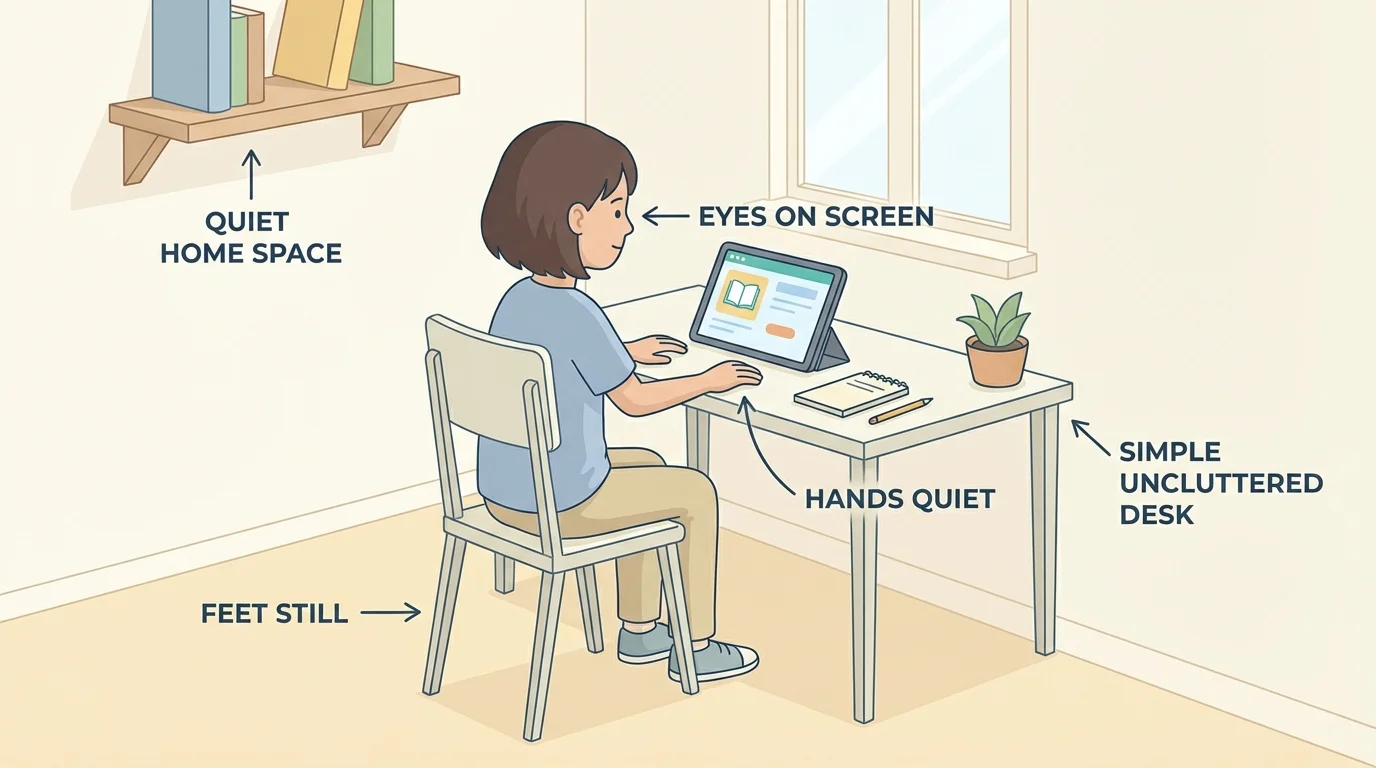
You can also make your learning space help you focus. Put away toys you are not using. Keep only the things you need nearby. If a sound is bothering you, ask a grown-up for help. A calm space can help a calm mind.
Slow breathing can help your body feel safer and steadier. When your body feels steady, it is easier to listen, think, and begin.
If your mind wanders away, that is okay. You can bring it back. Look again. Listen again. Put your hands back on the job. As we saw in [Figure 2], even small body choices can help you pay attention.
You can use calming and focusing routines many times during the day. Use them before an online lesson starts, after active play when your body is still fast, during a hard task when you feel frustrated, and before listening to a story or directions at home.
Here are some moments when a routine helps: before turning on your camera for a class meeting, after losing a game, when your sibling is distracting you, when you have to wait, or when you made a mistake and feel upset. In all of these moments, your body may need a reset before you can do your next job well.
| When it happens | What you can do |
|---|---|
| Before a video lesson | Take a breath, sit safely, look at the screen |
| After feeling mad | Stop body, breathe, ask for help |
| After play time | Slow your body, get a drink, sit down |
| During a hard task | Say, I can try again, then do one small step |
Table 1. Everyday times to use calming and focusing routines at home.
When you practice often, the routine gets easier. At first, a grown-up may remind you. Later, you may remember on your own. That is called building a habit.
Being calm does not mean you never have strong feelings. Everyone has them. Being calm means you know some safe ways to help yourself. If the feeling is still too strong, ask an adult for help right away.
You can say, I need a break, I feel frustrated, or Please help me calm down. Those are strong words. They help adults know what you need.
Practice makes routines stronger
When you use the same calming and focusing steps again and again, your body learns them. Then it becomes easier to remember what to do when you feel upset, busy, or distracted.
The calm-down steps in [Figure 1] are helpful because they are simple enough to use anywhere at home. You might use them at your desk, on the couch before a reading task, or beside a grown-up when you need support. Small steps can make a big difference.
You do not have to be perfect. You are learning how to notice your feelings, settle your body, and come back to the job. Every time you stop, breathe, and try again, you are growing stronger inside.
