Have you ever felt happy because someone said, "Come play with me"? That small moment can make a big difference. When people use fairness and kindness, everyone feels safer, calmer, and more ready to join in.
Being welcome means feeling like you belong. You matter. Your ideas matter too. At home, in a club, on a video call, or at the playground, people feel good when they are included instead of left out.
Fairness means treating people in a way that is right and caring. Kindness means using helpful, gentle actions and words. Welcome means helping someone feel included and wanted.
A fair and kind person notices other people. That person sees if someone is waiting, feeling shy, or needing help. This is called empathy. Empathy helps you think, "How would I feel?"
When people feel welcome, they are more likely to smile, talk, try new things, and be themselves. When people do not feel welcome, they may feel sad, lonely, or quiet. Your words and actions can help make a space feel warm and friendly.
For example, if a child joins your neighborhood game and no one talks to them, they may want to leave. But if you say, "Hi, you can play too," that child may feel brave and happy. One kind sentence can open the door.
Very small acts of kindness can change a person's whole day. A smile, a wave, or making room for someone can help them feel safe enough to join.
Fairness and kindness help community grow. A community is a group of people who care for one another. Your family, a sports team, a library group, or an online class meeting can all be communities.
Fairness means making sure people get a turn and are treated with care, as shown in [Figure 1]. Fair does not always mean everyone gets the exact same thing. Sometimes one person needs more help, more time, or a different turn so things feel right for everyone.
If two children want the same crayons, fairness may mean taking turns. If one child is still learning how to wait, fairness may also mean an adult helps with the turns. Fairness helps everyone know, "I will get my chance too."
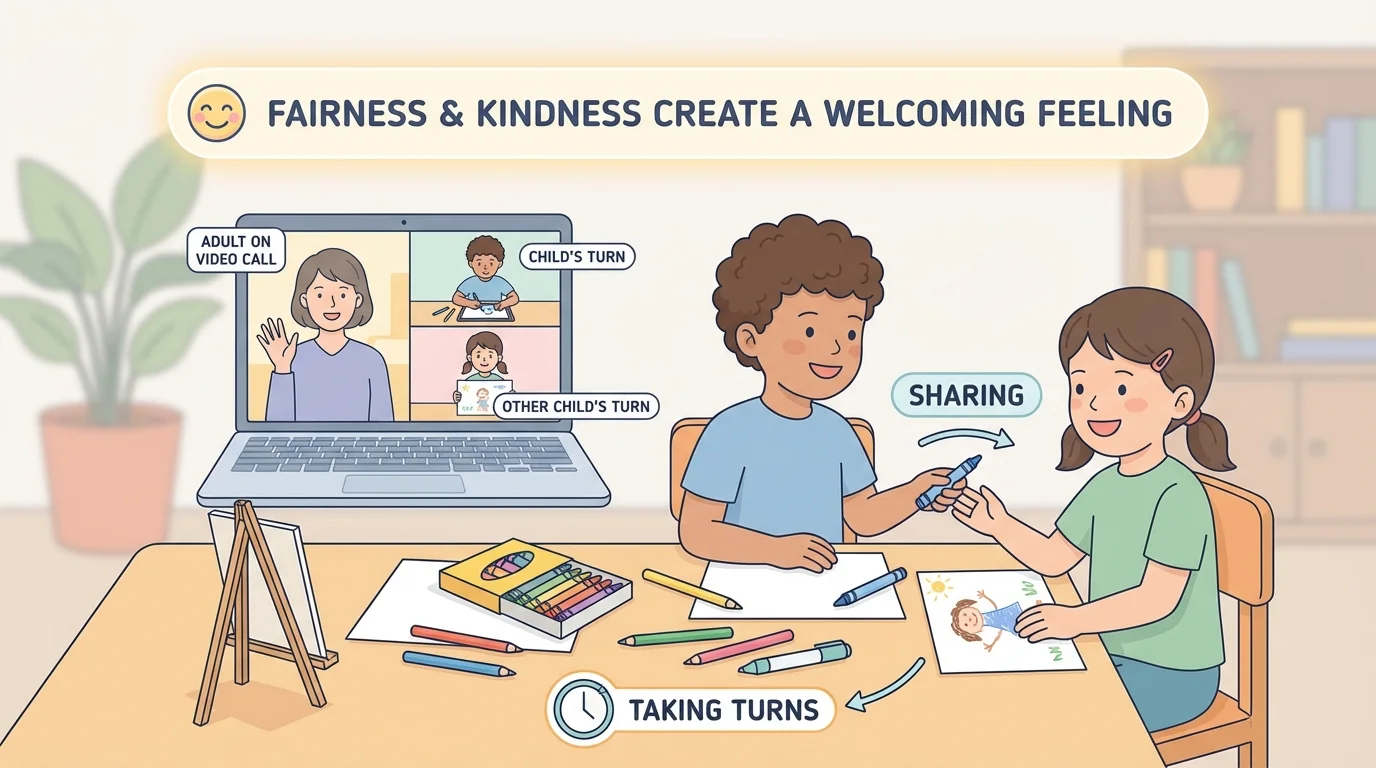
You can practice fairness by waiting, sharing, listening, and following simple rules. Fairness also means not grabbing, not cutting in line, and not always choosing for yourself first.
Sometimes fairness means letting each person have a voice. If your family is choosing a game, each person can share an idea. If your club is deciding what to do next, you can listen before speaking again. This helps everyone feel respected.
Example: Fair turns at home
Step 1: Notice the problem.
Two children both want the same toy.
Step 2: Use fair words.
Say, "Let's take turns."
Step 3: Follow the plan.
One child uses the toy first, then the other child gets a turn.
Now both children know they matter.
Later, when you think about fair turns again, [Figure 1] reminds you that sharing is not only about objects. It is also about time, attention, and chances to join.
Kindness can be seen in simple actions: saying hello, helping pick something up, waiting for someone, or using a gentle voice. Kindness is not only about big acts of help. It is often small acts of help done with care.
Kindness also means noticing feelings. If someone looks nervous on a video call, you can smile and say, "You can go when you're ready." If a younger child cannot open a snack, you can ask, "Do you want help?"
Fairness and kindness work together. Fairness helps people trust that rules and turns make sense. Kindness helps people feel cared for while those rules happen. When both are present, more people feel safe to join in.
It is possible to be fair without sounding kind, and it is possible to sound kind without being fair. The best choice is both. For example, saying "Wait your turn" in a calm, gentle voice is both fair and kind.
[Figure 2] shows a simple step-by-step way to help someone feel welcome. You do not need fancy words. You just need to notice, greet, invite, and check in.
Step 1: Look around. Is someone alone, quiet, or unsure?
Step 2: Say hello. You can say, "Hi," "Want to join?" or "You can sit here."
Step 3: Make space. Move over, share materials, or pause so they can talk.
Step 4: Keep being kind. Ask, "Are you okay?" or "Do you want help?"
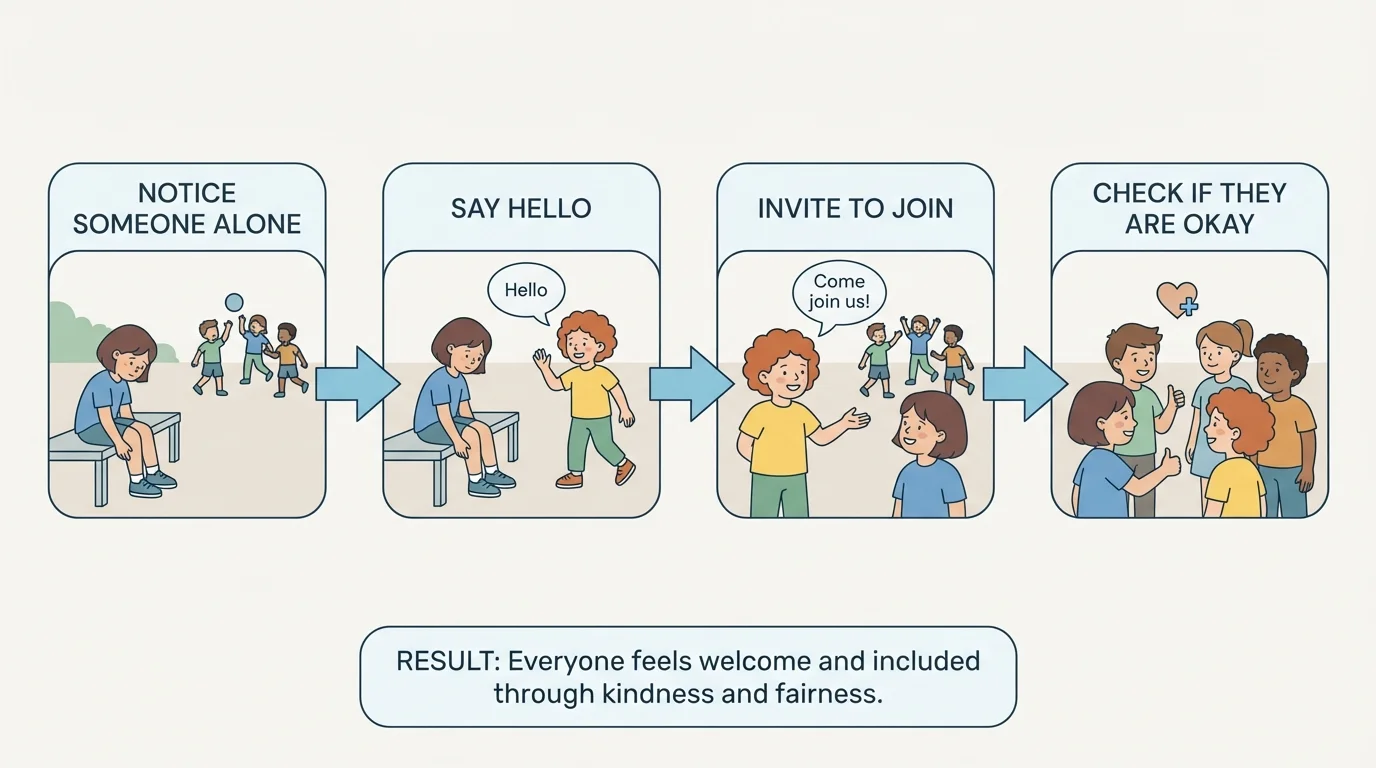
These steps work in many places. On a video call, you might wave and say the person's name. At the park, you might ask if they want to play. In an art class, you might share supplies or show where things go.
If you are the new person, you can help too. You can say, "Hi, can I join?" Being brave and kind to yourself matters. Welcoming goes both ways.
Example: Welcoming someone on a video call
Step 1: Notice.
A child joins late and looks quiet.
Step 2: Greet.
You say, "Hi, we're glad you're here."
Step 3: Include.
You tell them what the group is doing and invite them to answer next.
This helps the child feel less worried and more ready to join.
Later, when you want to remember how welcoming works, [Figure 2] shows that the first move is simply noticing someone who may need connection.
[Figure 3] shows one way to handle unfair moments with calm and care. Sometimes someone cuts in front, says something mean, or does not let another person join. When that happens, you may feel upset. You can still make a strong and caring choice. Being upset is okay. Hurting back is not the best answer.
First, stop your body. Take a breath. Next, use words like, "I was still using that," "I want a turn too," or "That was not kind." If you need help, tell a trusted adult. Asking for help is a smart choice.
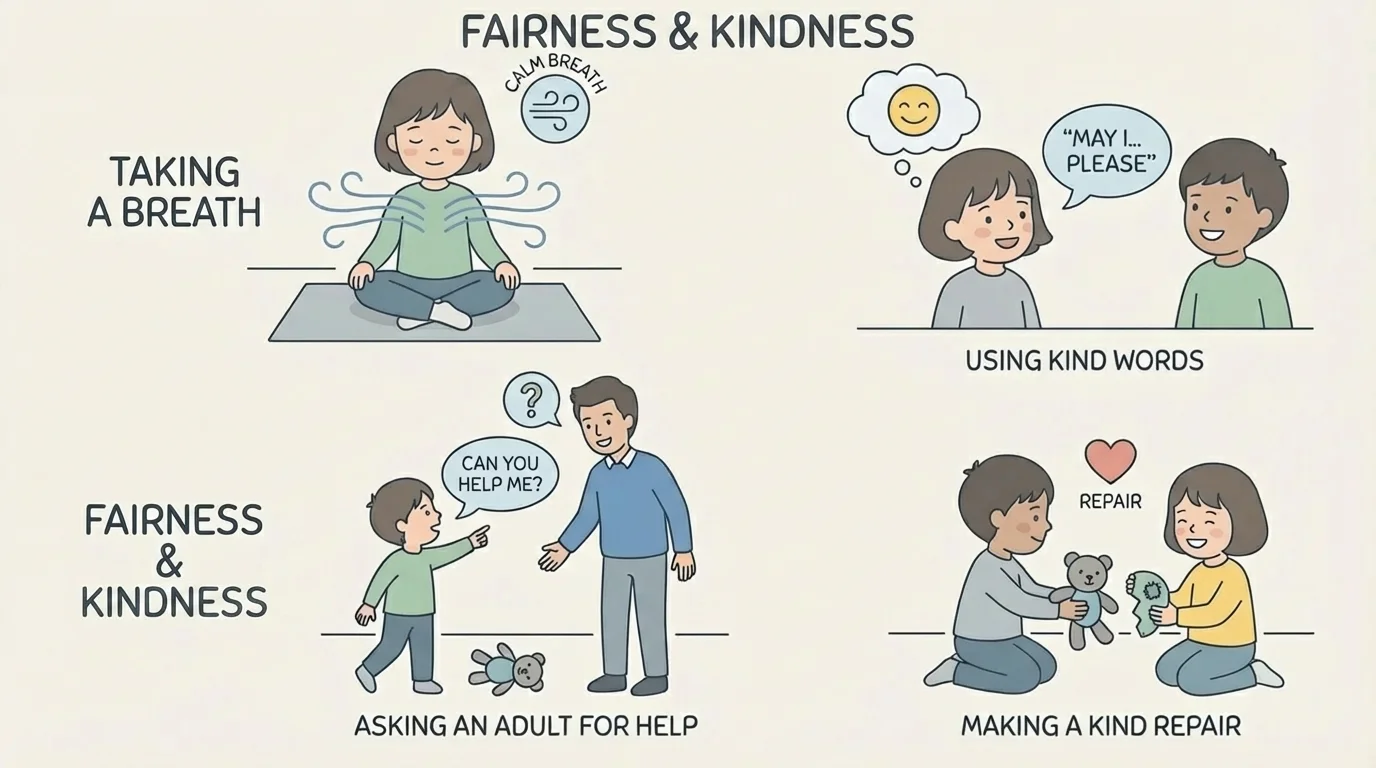
If you were the one who made things unfair, you can repair it. Repair means trying to make it better. You can say, "I'm sorry," give the turn back, invite the person in, or ask, "How can I help?" That helps rebuild respect.
You already know how to use calm words and ask for help. Those same skills help when something feels unfair. Calm bodies and kind words make problem-solving easier.
Thinking back to [Figure 3], notice that solving a problem starts with calming down. After that, it is easier to speak clearly and fix what happened.
You can practice fairness and kindness every day. At home, you can share space, wait for a turn, and use gentle hands. With siblings or friends, you can listen to everyone's idea. In a community class, you can let others speak and cheer for them too.
At a playground or team practice, fairness means following rules and letting everyone have a chance. Kindness means encouraging others, helping someone who fell, or inviting a shy child into the game.
Online, fairness means not talking over others and not leaving people out of group chats on purpose. Kindness online means using friendly words, being patient, and remembering there is a real person on the screen.
"Be kind. Be fair. Make room for others."
Every time you choose fairness and kindness, you help build a place where more people feel welcome. That is a strong way to care for others and for yourself.
