A small problem can get bigger very fast when someone uses a mean voice, grabs, or stands too close. But a small problem can also get smaller when you use calm words and safe body language. That is an important life skill. You can use it at home, on a playdate, in a program at the park, or during an online call.
When you are upset, your words and your body both send a message. If your words are kind but your face looks angry and your hands are rough, the other person may still feel worried. Respect means showing, with your voice and body, that you want to solve the problem without hurting feelings or bodies.
A social problem is a small problem between people. Maybe two children want the same toy. Maybe someone talks while you are talking. Maybe a person on a video call will not take turns. These things happen every day.
Respectful words are kind, clear words that help people understand what you need. Body language is what your face, hands, and body show without many words.
Respect helps because it makes people feel safer. When people feel safer, they can listen better. Then the problem is easier to fix. Respectful problem solving does not mean you always get your way. It means you try to solve the problem without yelling, hitting, or being rude.
You do not need fancy words. Short, clear words work best. You can say, "Please stop." You can say, "I am using that." You can say, "Can I have a turn next?" You can say, "I don't like that." You can say, "Let's take turns."
A good rule is this: say what happened, say what you need, and say it calmly. For example: "You took my crayon. I need it back, please." Or: "I am talking now. You can talk next." These words are strong, not rude.
Helpful words you can use
Step 1: Start with a calm opener.
Try "Please," "Excuse me," or the person's name.
Step 2: Say the problem in simple words.
"I was using that."
Step 3: Say what you want to happen.
"Please give it back," or "Can I have a turn next?"
Step 4: End with a calm choice.
"Let's share," or "Let's ask a grown-up."
Some words make problems worse. Mean names, shouting, and "You always..." can make the other person feel attacked. When that happens, they may shout back instead of listening.
As [Figure 1] shows, your body language matters just as much as the words you use. Respectful body language looks calm and safe. It can mean gentle hands, feet on the floor, a relaxed face, and giving the other person a little space.
You can look toward the person you are talking to. You can keep your hands to yourself. You can use a quiet, steady voice. You do not need to smile if you are upset, but you can keep your face calm. That helps others know you are trying to solve the problem.
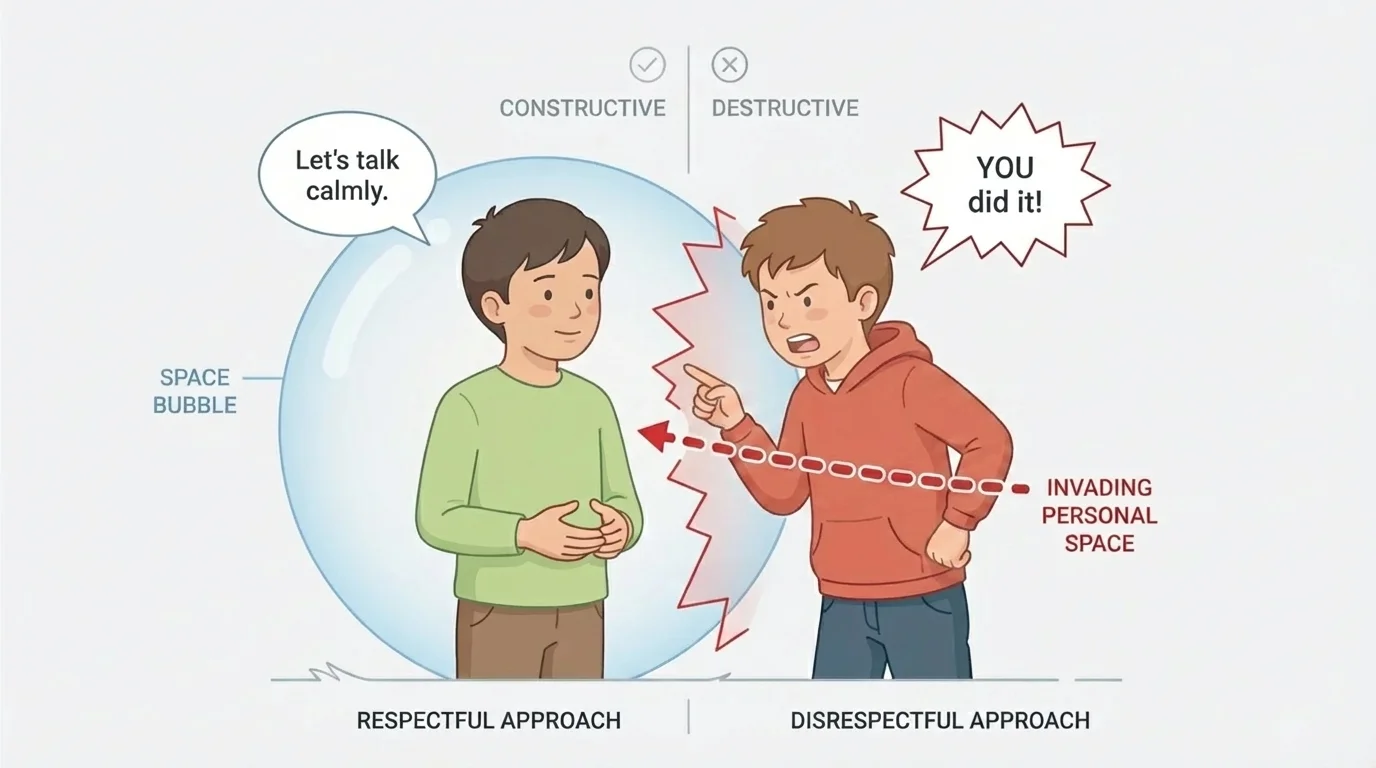
Body language that is respectful does not include pushing, grabbing, pointing in someone's face, rolling eyes, or getting too close. Those actions can feel scary or rude, even if no one says a mean word.
Sometimes your body shows your feelings before your mouth does. If your fists are tight or your face feels hot, that is your clue to pause. Take one slow breath. Relax your hands. Then speak.
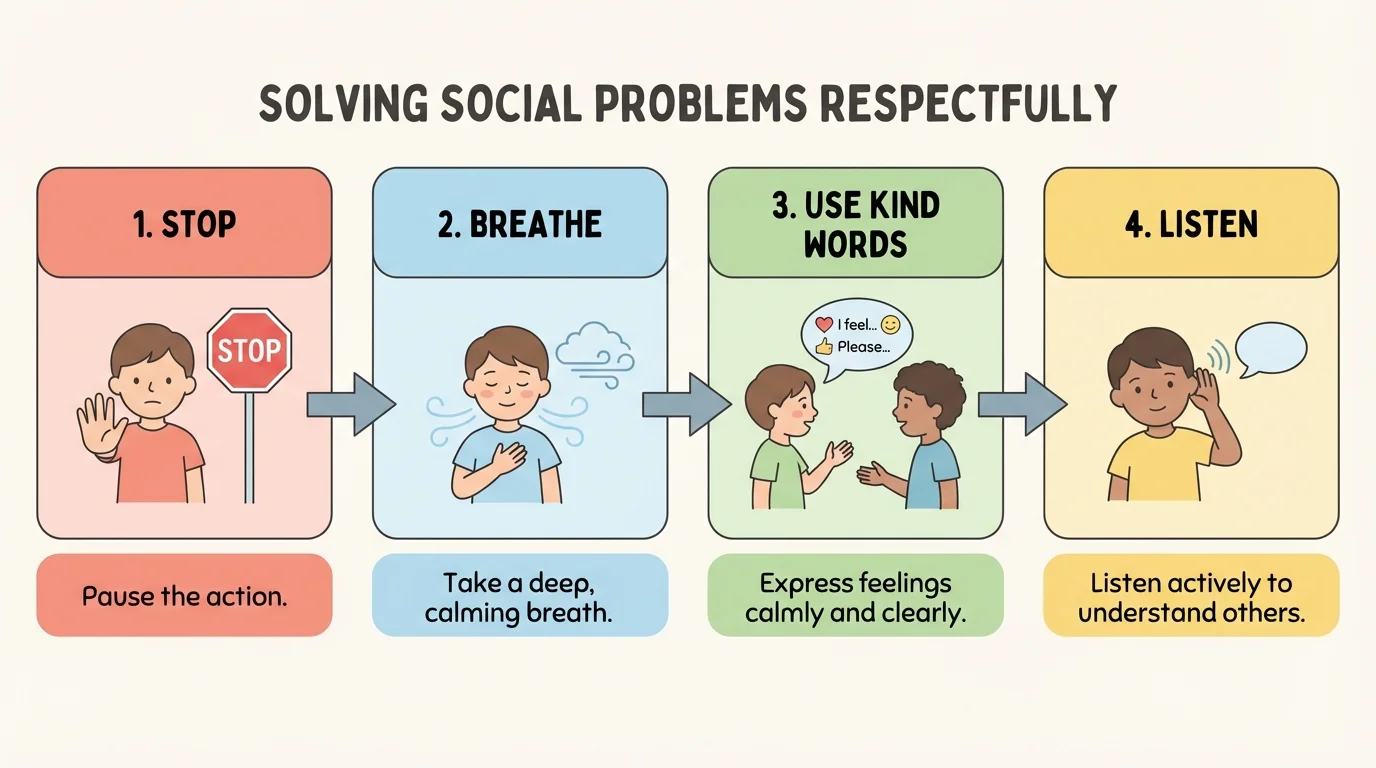
As [Figure 2] shows, when a problem starts, a solution is easier if you follow the same steps each time. A simple plan you can remember is: stop, breathe, use kind words, listen.
Stop. Keep your body safe. No grabbing, hitting, or yelling.
Breathe. Take a slow breath in and out. This helps your body calm down.
Use kind words. Say the problem and what you need. "Please stop." "I want a turn." "I don't like that."
Listen. Let the other person talk. Maybe they did not know they hurt your feelings. Maybe there is a way to share, wait, or take turns.
If the problem is still not fixed, you can repeat your calm words one more time. Then ask a trusted grown-up for help. Repeating the same respectful message is better than getting louder and louder.
Calm first, then talk
When your body is calm, your brain can choose better words. That is why stopping and breathing come before talking. Calm words are easier for other people to hear and answer.
Later, when you are solving another problem, the same plan still works, just as we saw in [Figure 2]. You do not need a new trick for every problem. One simple plan can help in many places.
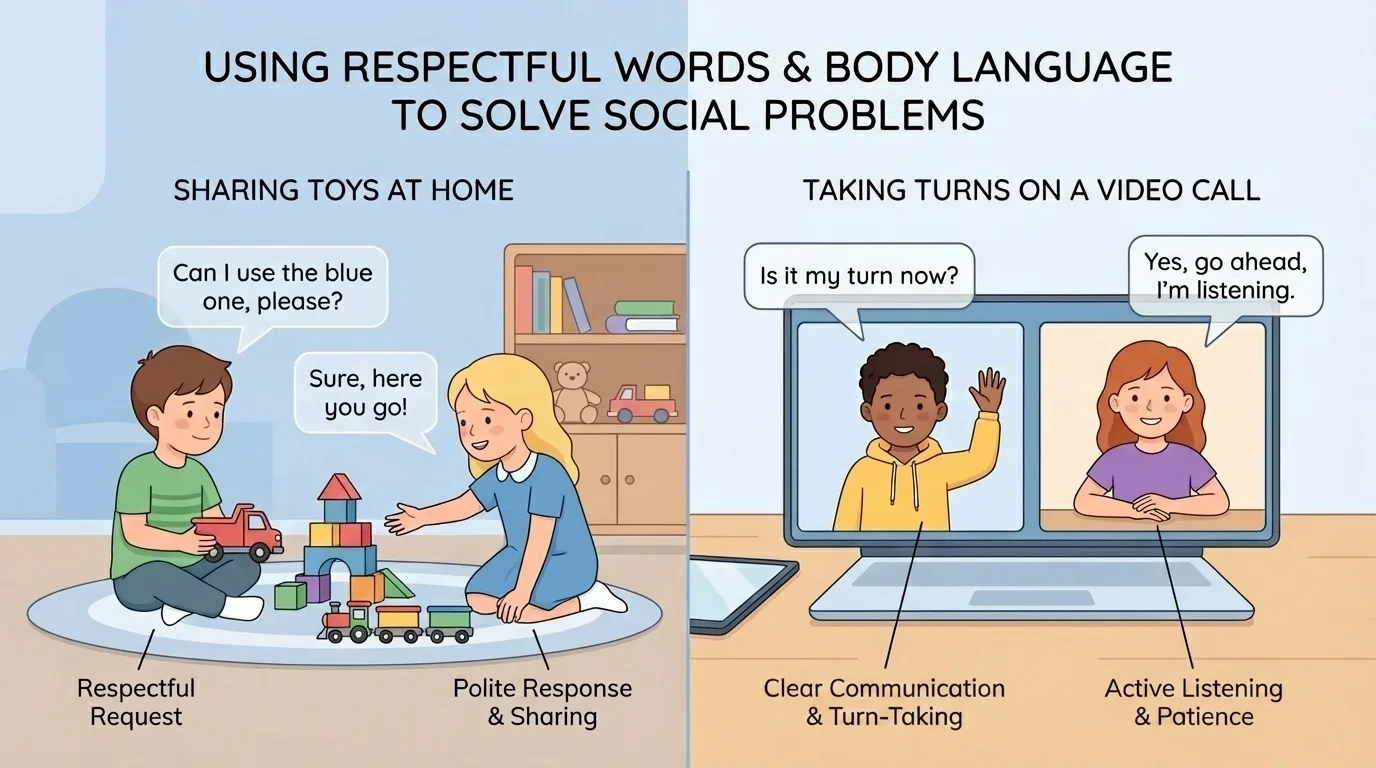
As [Figure 3] shows, you can use these skills in many real situations. Two common examples are sharing at home and taking turns on a video call. The problem may look different, but the respectful words and safe body language are very similar.
At home, maybe your brother or sister picks up the blocks you were using. You can stay nearby without touching, keep your hands gentle, and say, "I am still using those. Can I have them back, please?" If they still want blocks, you can say, "You can have some when I am done," or "Let's split them."
On a video call, maybe two children talk at the same time. You can stop, breathe, and say, "I want to share too." Then wait for your turn. If another child keeps interrupting, you can say, "Please let me finish." Your face can stay calm, and your voice can stay soft.
At a park class or club, maybe someone stands too close in line. You can take one step back and say, "I need more space, please." That is respectful and clear. You are not being mean. You are taking care of yourself kindly.
Children and adults often understand feelings from faces and voices before they understand all the words. A calm face and gentle hands can help a hard conversation go better.
If a friend says, "No, I don't want to share right now," you can still respond respectfully. Respect is also hearing "no," waiting, or choosing something else to do. Solving a problem sometimes means taking turns, not winning right away.
Some problems are too big to solve by yourself. Get a trusted grown-up if someone is hurting you, scaring you, calling you cruel names again and again, breaking important rules, or will not stop after you use respectful words. Safety comes first.
You can say, "I used my calm words, but I still need help." That tells the grown-up that you tried a good first step. Asking for help is smart. It is not tattling when someone is unsafe or will not stop.
"Use kind words, gentle hands, and a calm voice."
The more you practice respectful words and body language, the easier they become. Soon, your calm voice, gentle hands, and clear words can help you solve many everyday problems before they grow bigger.
