Have you ever moved fast and then thought, "Uh-oh"? Maybe you grabbed a toy, clicked something on a screen, or reached for a snack that was too hot. A tiny pause can make a big difference. Before you act, you can ask a few simple questions. Those questions help you slow down and decide what to do next.
When you stop and think, you are using decision skills. A decision is a choice you make. Good choices can help keep you safe, kind, and calm. Fast choices without thinking can lead to spills, hurt feelings, or danger.
Sometimes a problem feels big because it happens fast. Your block tower falls. The tablet makes a loud sound. The dog takes your sock. Your body may want to act right away. But a small pause helps your brain notice what is really going on.
A pause does not have to be long. It can be just one breath. Then you can look, listen, and think. This helps you solve the problem instead of making it bigger.
Problem means something is wrong, tricky, or needs fixing. Choice means what you decide to do. Safe means it helps protect your body and feelings.
When you pause, you give yourself time to be careful. That is important at home, outside, with pets, and online.
These easy questions, shown in [Figure 1], can help when something feels confusing or upsetting. You do not need big words. Short questions work well.
Question 1: What is happening? Look at the problem. Is the water spilling? Is the toy stuck? Did you click the wrong button?
Question 2: What could happen next? This helps you think ahead. Could someone get hurt? Could something break? Could the problem get smaller if you wait?
Question 3: Who can help? Sometimes you can do it. Sometimes a parent, caregiver, or other trusted grown-up should help.
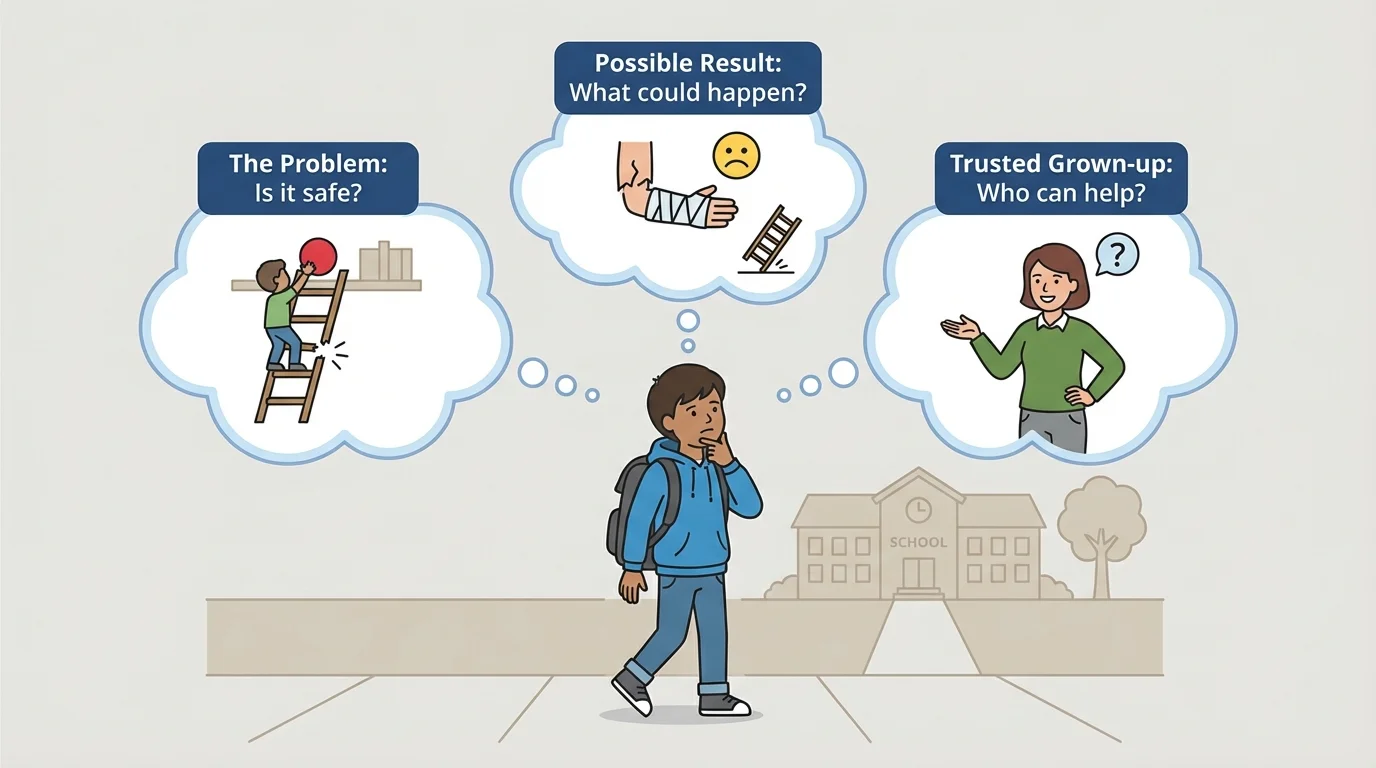
These questions are a simple problem-solving tool. Problem-solving means finding a way to fix or handle something. You do not have to know the answer right away. You just have to start thinking.
If your juice tips over, ask: What is happening? The juice is on the table. What could happen next? It could drip to the floor and make someone slip. Who can help? You can get a towel, or ask a grown-up if you need help cleaning.
If you are upset because someone else is using a toy, ask: What is happening? I want the toy, but it is not my turn. What could happen next? If I grab, someone may cry. Who can help? I can use words or ask a grown-up to help us take turns.
If you want to tap a bright button on a screen, ask: What is happening? A pop-up is on the screen. What could happen next? A video, ad, or message may open. Who can help? Ask a grown-up before clicking. That is a smart online safety choice.
Real-life example: a hot bowl
You see food on the counter and want to pick up the bowl.
Step 1: Stop.
Keep your hands back for a moment.
Step 2: Ask what is happening.
The bowl may be hot.
Step 3: Ask what could happen next.
Your hand could get hurt.
Step 4: Ask who can help.
A trusted grown-up can check if it is safe.
This small thinking step helps protect you.
You can use the same idea with pets too. If a cat is hiding or a dog is eating, pause first. A pet may not want to be touched right then. Thinking before acting shows care.
A good plan, as shown in [Figure 2], is easy to remember: stop, ask, choose, act. This works for many little problems during the day.
Stop: Freeze your body for a moment. Ask: Use your three simple questions. Choose: Pick the safest and kindest idea. Act: Do that idea.
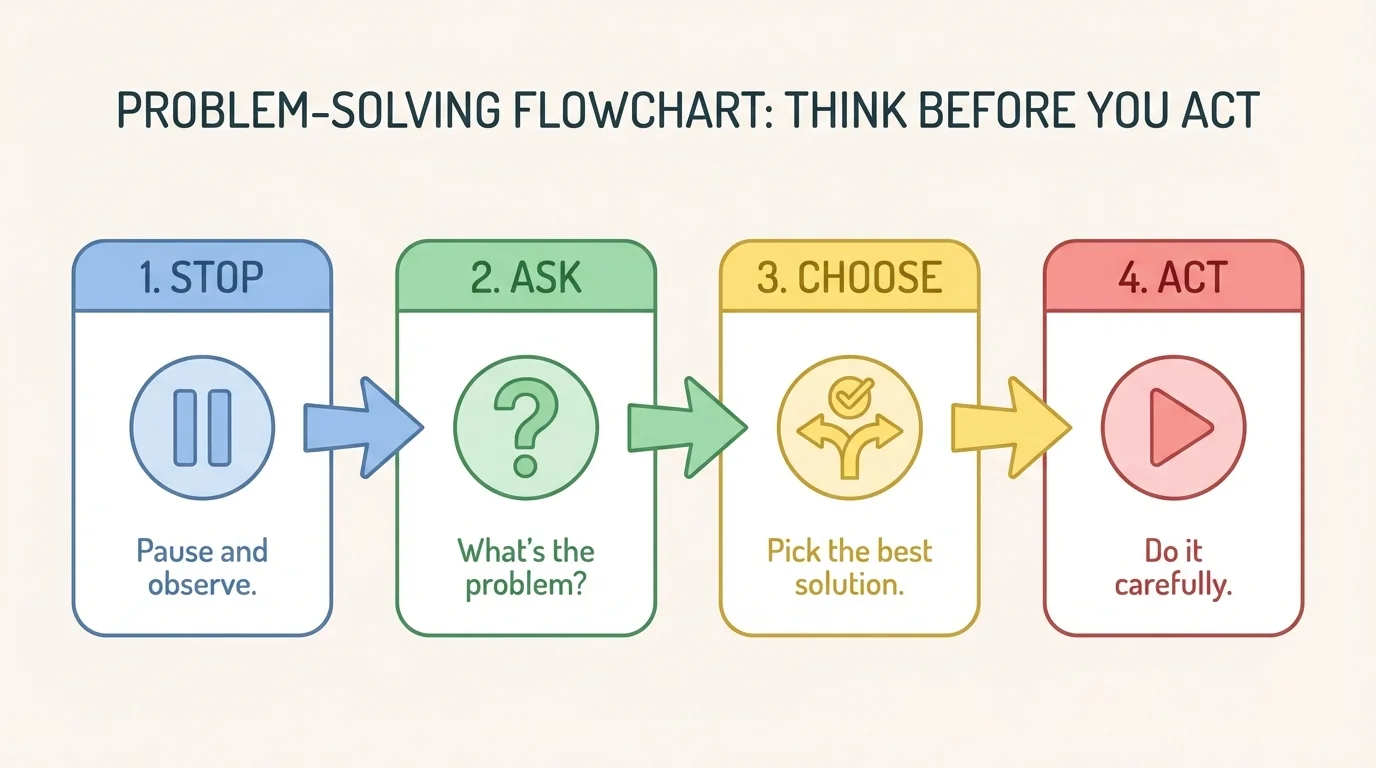
If your first choice does not work, you can stop and ask again. That does not mean you failed. It means you are thinking carefully. The flowchart reminds you that good choices can happen one step at a time.
Thinking ahead helps because actions have results. When you ask what could happen next, you are looking ahead before your body moves. This can help you avoid danger, protect other people's feelings, and take care of things around you.
Thinking ahead is useful when you feel excited, mad, or in a hurry. Big feelings can make it hard to pause, but that is when the questions help most.
Some problems are too big to handle by yourself. If there is blood, fire, a stranger online, medicine, a sharp object, a lost pet outside, or something that feels scary, get a trusted grown-up right away. You do not need to solve every problem alone.
A trusted grown-up is an adult who helps keep you safe. This might be a parent, caregiver, or another safe adult your family knows. Asking for help is a strong choice.
Your brain gets better at making careful choices each time you practice pausing and asking simple questions. Small habits can grow into strong life skills.
Sometimes the best answer is, "I need help now." That is still good thinking. You noticed the problem and chose safety.
When one small problem happens today, try using the three questions before you move. You can whisper them softly in your head. What is happening? What could happen next? Who can help?
You do not have to be perfect. Even one little pause is helpful. The more you practice, the easier it becomes to make calm, safe, and kind choices.
