Your body is always talking to you. It does not use words, but it gives clues. Sometimes your eyes feel heavy. Sometimes your legs want to wiggle. Sometimes your mouth feels dry. Sometimes something hurts. These clues help you know what to do next.
When you learn to listen to your body, you can feel better faster. The example in [Figure 1] helps show that different feelings can mean different needs. Listening to your body can help you play, learn online, rest, and stay safe.
You can notice clues from your body in many ways. You may yawn, rub your eyes, feel thirsty, get fussy, feel too hot, or feel pain. These are signs. A sign is your body's way of saying, "Please notice me."
Sometimes one clue is enough. Sometimes you notice many clues together. A dry mouth and warm face may mean you need a drink. Heavy eyes and lots of yawns may mean you need rest. Wiggly legs after sitting may mean you need movement.
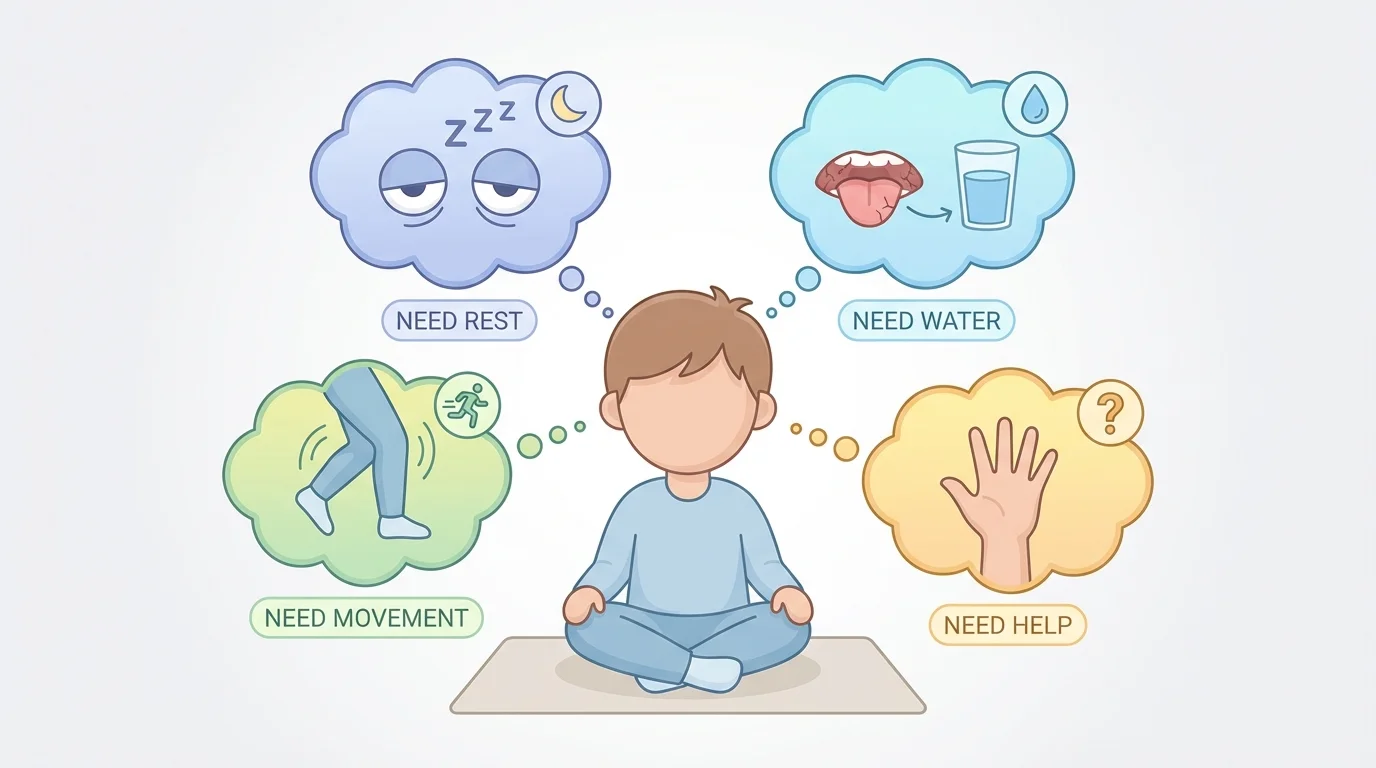
Rest means time to relax or sleep so your body can get energy back.
Movement means using your body by walking, stretching, dancing, or playing.
Water helps your body stay cool and work well.
Help means telling a trusted adult when something feels wrong, hurts, or feels unsafe.
No one feels exactly the same all the time. Your clues may look a little different from someone else's clues. What matters is noticing how you feel.
Your body often asks for rest in quiet ways. As [Figure 2] shows, clues for rest can include yawning, droopy eyes, rubbing your face, moving slowly, or feeling extra grumpy. You might stop having fun because you are too tired.
Rest can mean going to sleep at night, taking quiet time, sitting with a book, lying down, or taking a break from noise and screens. If your body feels tired, a calm choice helps more than trying to push through.
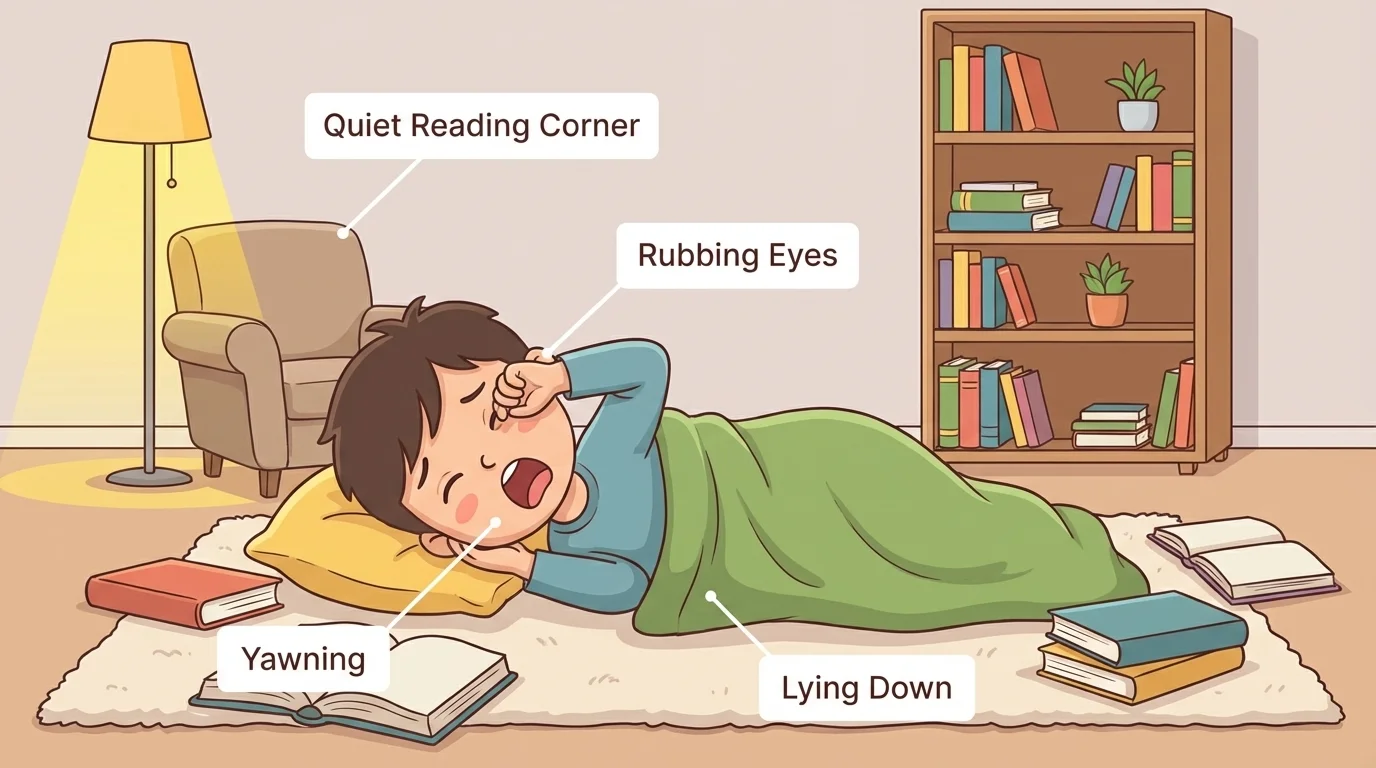
You may need rest when you have had a busy day, woke up very early, or feel sick. If you keep going when your body is very tired, you may cry more easily, stumble, or have trouble paying attention during your online lesson.
Example: noticing rest time
Step 1: Notice the clues.
You are rubbing your eyes and yawning while watching your lesson.
Step 2: Name the need.
Your body may need rest or a quiet break.
Step 3: Tell a grown-up.
Say, "I feel tired. Can I have a quiet break?"
Rest is not being lazy. Rest is a smart way to care for your body.
Sometimes your body does not need sleep. It needs to move. You may feel wiggly, bouncy, stiff, or full of energy. After sitting for a long time, your body may want to stretch, stand, walk, dance, or jump in a safe place.
Movement helps your muscles and joints feel better. It can help your brain focus too. After a short dance break or stretch, you may feel ready to listen again.
Safe movement at home can be simple: reach up high, touch your toes, march in place, walk with a grown-up, toss a soft ball, or do animal walks. If you are indoors, make sure the space is safe and an adult says it is okay.
Move, then notice
After a little movement, stop and check your body again. Are you calmer? Can you sit more comfortably? This helps you learn which body clue means "I need to move."
If you ignore your need for movement, your body may feel more restless. You may wiggle so much that it is hard to enjoy a story or finish a task. A quick safe movement break can help.
Your body needs water every day. A dry mouth, sticky lips, feeling hot, or feeling tired after play can mean it is time to drink. Water is especially important after running, playing outside, or being in warm weather.
A simple habit is to drink water with meals, after active play, and when a grown-up offers it. If you wait until you feel very thirsty, your body may already be asking strongly for a drink.
Water helps your body work well. When you drink enough, you may feel better, cooler, and more ready to play. Keep a water bottle or cup nearby when allowed, especially during your home learning time.
Your body is made of a lot of water, so drinking \(H_2O\) helps many parts of you do their jobs.
If you have had a lot of play, your face is warm, and your mouth feels dry, pause and drink some water. Then check how you feel.
Some body clues mean you should not wait. The safety examples in [Figure 3] show that big pain, trouble breathing, heavy bleeding, a bad fall, or feeling very sick are times to get a trusted adult right away. You do not need to solve big problems by yourself.
You also need help if you feel scared, dizzy, very hot, very cold, or if something hurts a lot. If you are not sure, it is always okay to tell an adult. Asking for help is brave.
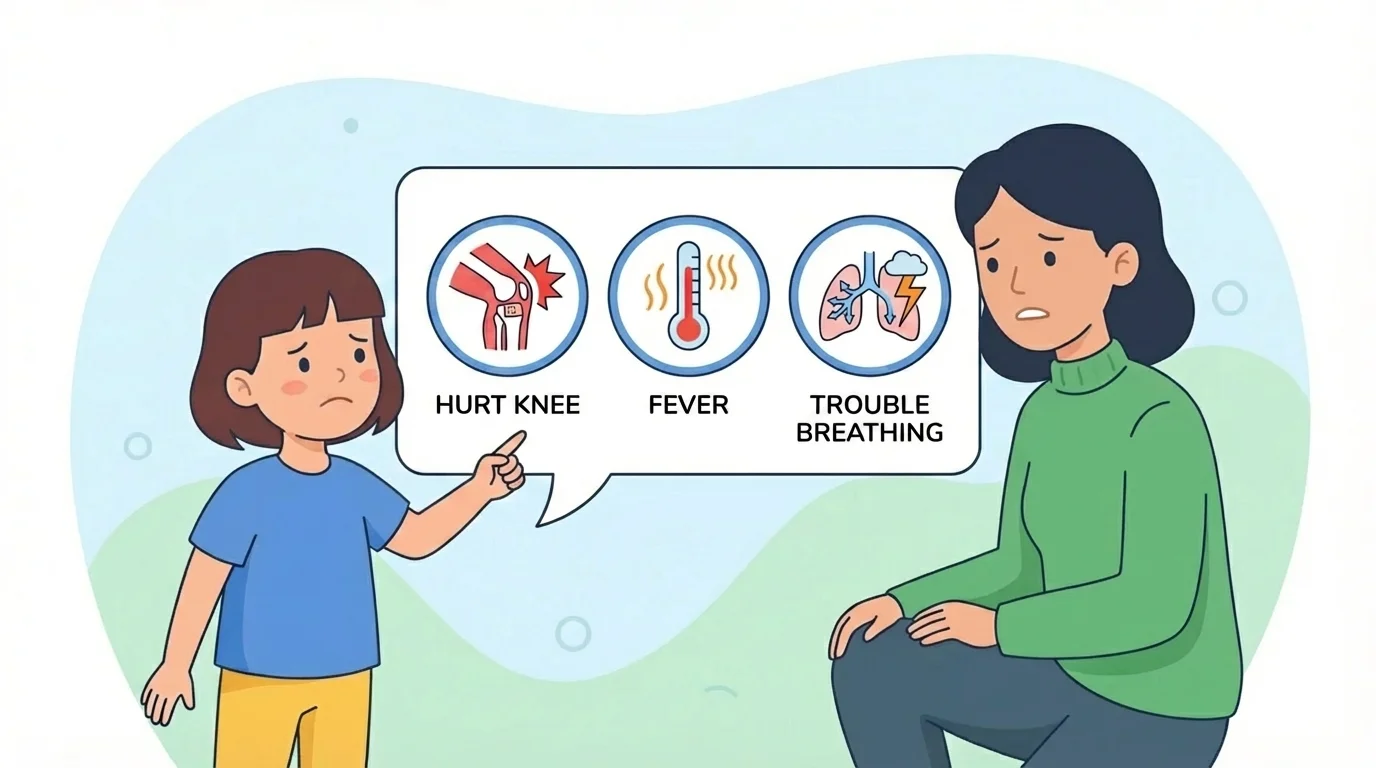
A trusted adult can be a parent, grandparent, caregiver, babysitter, coach, or another safe grown-up your family says you can go to. If you are on a video lesson and suddenly feel very bad, tell the grown-up with you at home right away.
Example: when to get help fast
Step 1: Stop what you are doing.
Your knee is bleeding a lot, or you cannot catch your breath well.
Step 2: Go to a trusted adult right away.
Use a strong voice: "I need help now."
Step 3: Stay with the adult.
Let them help your body get safe care.
Later, when you think about body clues again, remember the body signs from [Figure 1]. Some clues are small, like needing a stretch. Some clues are big, like strong pain. Learning the difference helps keep you safe.
Here is an easy body check you can do:
Step 1: Stop for a moment.
Step 2: Ask, "What does my body feel like?"
Step 3: Choose one: "Do I need rest, movement, water, or help?"
Step 4: Tell a trusted adult if you need help making the choice.
This check-in works in the morning, after play, during home learning, before bedtime, or anytime your body feels different.
You are doing an art project at home. Your eyes feel droopy and you yawn two times. That is a clue for rest.
You have been sitting for a while during a story on your tablet. Your feet kick and your body squirms. That is a clue for movement.
You come inside after running outside. Your face is warm and your mouth feels dry. That is a clue for water.
You fall and hit your head, or your chest feels tight and breathing feels hard. That is a clue for help right away, just like the urgent body signs in [Figure 3].
"Listening to your body helps you take care of yourself."
The more you practice noticing body clues, the easier it gets. You do not have to be perfect. You just have to pause, notice, and choose the safe next step.
