Have you ever looked for your crayons or headphones and they were nowhere to be found? A small routine can prevent a big problem. When you take care of your things, your books stay neat, your supplies last longer, and your learning space feels calm and ready.
At home, you use many things every day. Some things are your belongings, like your pencil box, favorite book, or tablet case. Some things are for everyone, like glue, scissors, pillows, game pieces, or art supplies. Learning how to care for both kinds of things helps you be responsible and kind.
Belongings are the things that belong to you. Shared materials are things used by more than one person. A routine is something you do the same way again and again.
When you use routines, you do not have to guess what comes next. Your body and brain learn the steps. That makes clean-up faster and easier.
Taking care of things means using them gently, keeping them clean, and putting them where they belong. This matters because items that are cared for can be used again tomorrow. Items that are tossed, stepped on, or left on the floor can get dirty, bent, lost, or broken.
If you leave markers open, they dry out. If you drop a tablet, it may crack. If you put puzzle pieces back in the box, the puzzle is ready next time. Good care helps you, and it helps everyone in your home too.
Many little problems at home start with one small forgotten step, like not putting on a cap, not closing a box, or not returning an item to its spot.
That is why simple habits are powerful. Small careful actions every day make a big difference over time.
Every item needs a home. A storage spot is the place where something goes when you are not using it, as shown in [Figure 1]. When each thing has a special place, you can find it easily and put it back quickly.
You might have one tray for pencils, one shelf for books, one basket for toys, and one safe place for your device and charger. Trash goes in the trash bin. Dirty cloths go in the laundry. Papers you still need go in a folder. This helps you organize your things by keeping them in order.
A good storage spot is easy to reach and easy to remember. If your crayons always go in the same box, you know where to look. If your headphones always hang on the same hook, they are less likely to get stepped on or tangled.
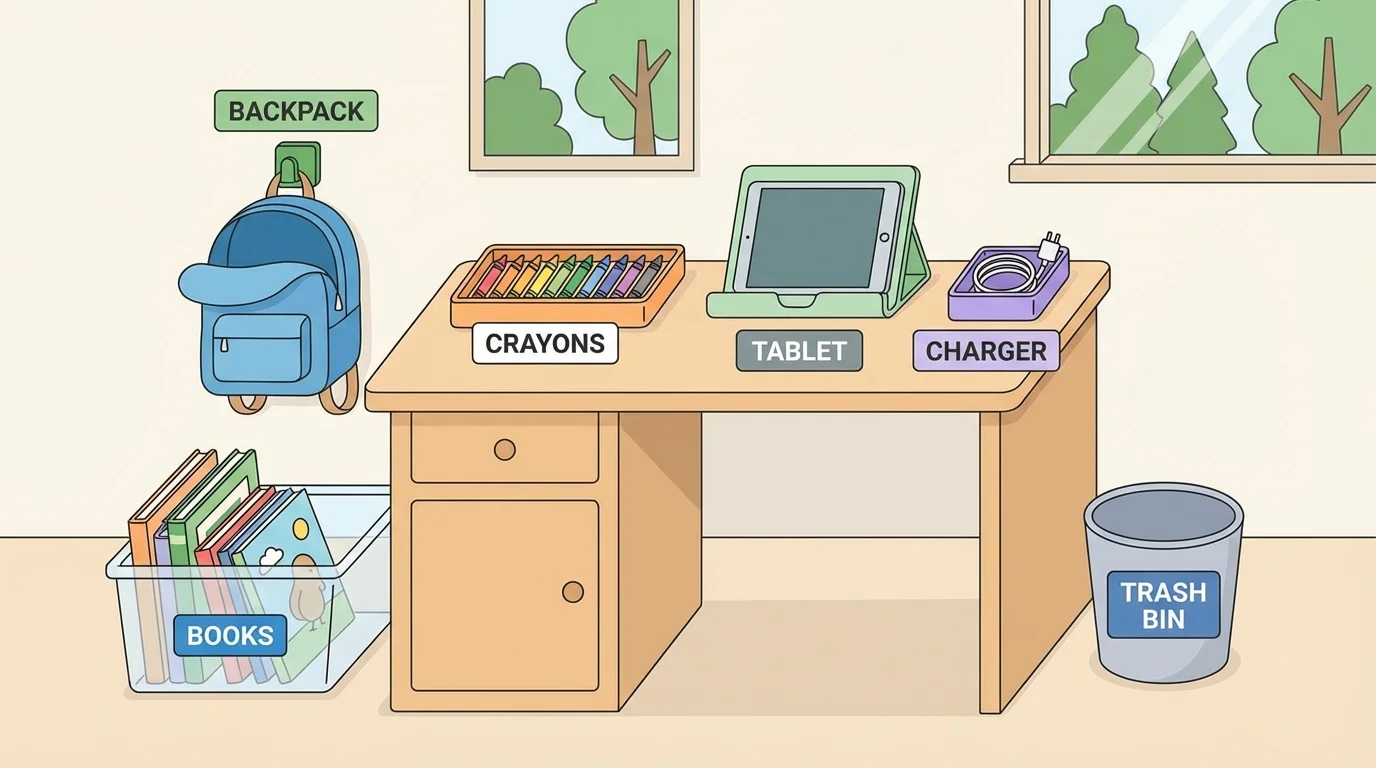
You can make your space simple. You do not need lots of containers. You just need a few clear places: use it, put it back, and keep it neat.
Example: Finding a home for your things
Step 1: Pick one item, like your crayons.
Step 2: Choose one place where they will always go, like a blue box.
Step 3: After using them, put every crayon back in that same box.
Step 4: Next time, check the blue box first.
This routine helps you find your crayons fast and keeps them from rolling away.
Later, when your space starts to feel messy, think back to [Figure 1]. The picture shows that a calm room is not about having fewer things. It is about each thing going back to its home.
A simple routine can happen in three parts: get ready, use carefully, and put away. These steps work well for online learning and for play time too.
Before learning time: Bring only what you need. You might get your notebook, pencil, device, and water bottle. Put them on your table gently. Keep food and sticky hands away from books and devices unless an adult says it is snack time.
During learning time: Use materials gently. Turn pages carefully. Draw on paper, not the table. Hold scissors the safe way. Keep chargers and cords untangled. Put caps back on markers when you are done using one color.
After learning time: Put pencils in the cup, papers in the folder, books on the shelf, and devices in their safe place. Throw away trash. Wipe small crumbs or dust. Push in your chair if you use one. Then your space is ready for next time.
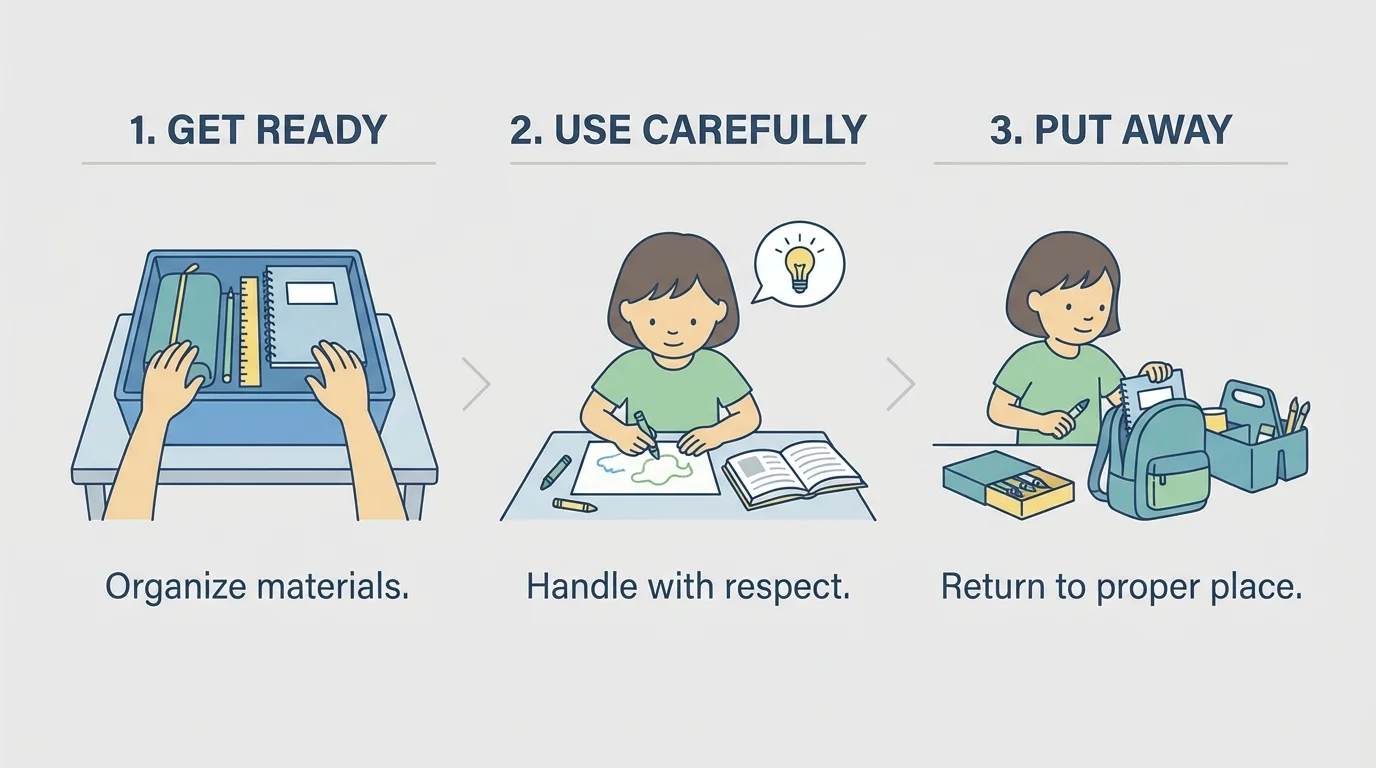
If you forget a step, do not worry. Just go back and fix it. Routines get stronger with practice. Soon your hands start doing the steps almost by themselves.
Why routines help
Routines make caring for belongings easier because you do the same helpful actions every day. When the steps stay the same, you are more likely to remember them. That means fewer lost items, fewer messes, and less stress.
You can even say the steps quietly to yourself: Get it. Use it gently. Put it back. That short sentence can help you remember what to do.
Some things in your home are not just for you. Shared materials belong to everyone or are used by more than one person. This means you need to be extra careful, because another person may need that item later.
Before using a shared item, ask first if needed. Then use clean hands. Keep pieces together. Do not press too hard, slam, throw, or scribble on something that is not yours. When you are done, return it to the same place so the next person can find it.
If you borrow glue, close the lid. If you use family scissors, put them back on the supply shelf. If you use blocks with a brother or sister, return all the pieces to the bin. If a game has cards, count with your eyes and make sure all the cards go back in the box.
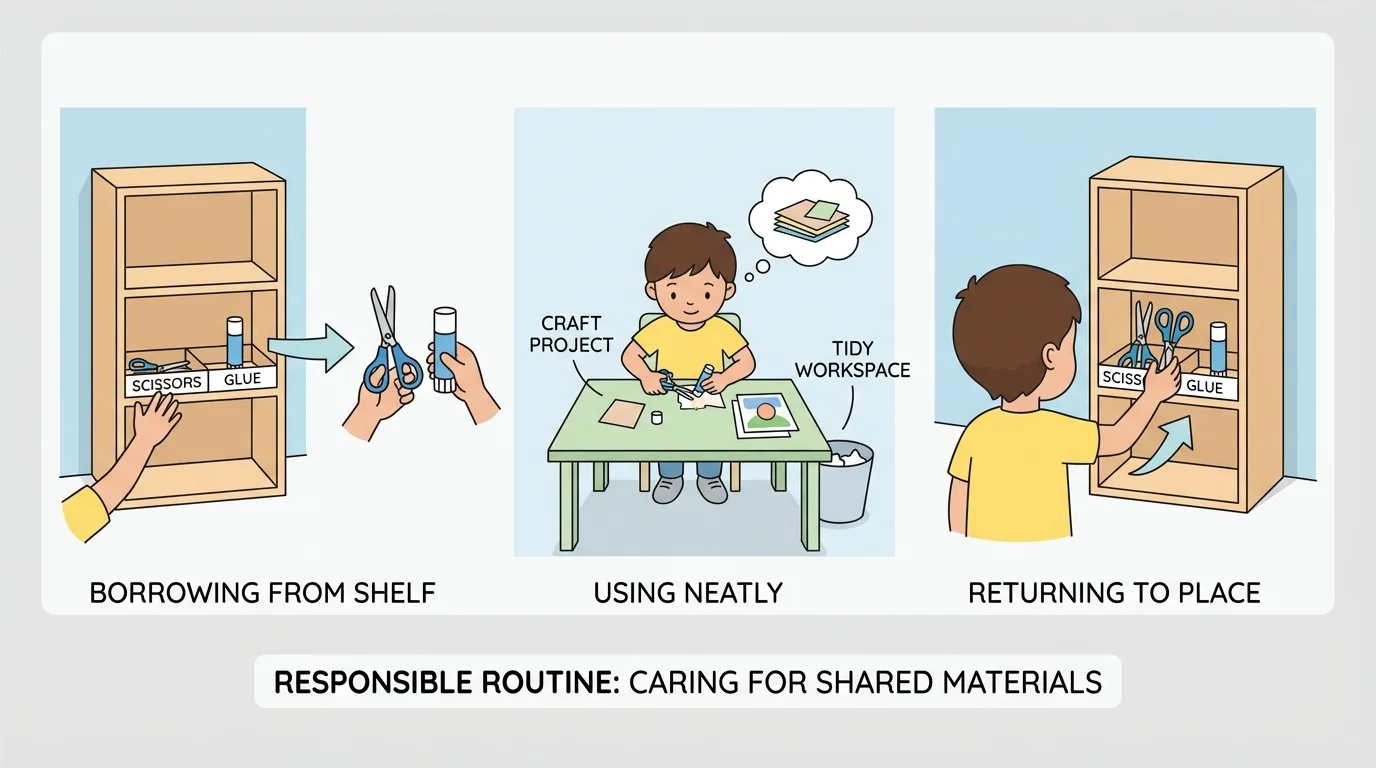
Being careful with shared items shows respect. It says, "I know this matters to other people too." That is an important life skill.
Example: Borrow, use, return
Step 1: Ask, "May I use the glue?"
Step 2: Use the glue on paper and keep the table clean.
Step 3: Close the glue tightly.
Step 4: Put the glue back on the shelf.
This helps the glue stay ready for the next person.
When you remember the actions in [Figure 3], you can see the whole job: take it carefully, use it carefully, and return it carefully.
Mistakes happen. Juice spills. Papers slide off the table. Crayons break. Chargers get twisted. Caring for belongings also means fixing small problems when you can.
For a small spill, tell an adult and help wipe it up right away. For mixed-up supplies, sort them back into the right containers. For a tangled cord, go slowly and use gentle hands. For a broken item, do not hide it. Tell an adult the truth so they can help.
It is also okay to say, "I cannot fix this by myself." Being responsible does not mean doing everything alone. It means noticing the problem and getting help.
You already know how to clean up toys after play. The same idea works for learning tools and home supplies: finish, check the area, and put things back where they belong.
If something is lost, stop and think: Where did you use it last? Did you check its storage spot? Did it slide under a book or table? Looking calmly works better than rushing.
Habits grow when you repeat them. Try doing the same clean-up steps each day after online learning, art time, or play time. The more often you do it, the easier it becomes.
You can use a tiny check-in: Did I close it? Did I clean it? Did I return it? These quick questions help you take care of your things without needing a long list.
Adults trust children who care for belongings and shared materials. That trust can lead to more independence. When people know you use things gently and put them back, they feel comfortable letting you help with more jobs at home.
"Use it with care. Put it back with care."
Every day is a new chance to practice. You do not have to be perfect. You just need to keep trying the routine and making careful choices.
