Have you ever looked for a favorite crayon or toy and could not find it anywhere? That happens a lot in messy spaces. When you put things back where they belong, your home or learning area becomes easier to use. Being neat is not about making everything perfect. It is about helping yourself and the people around you.
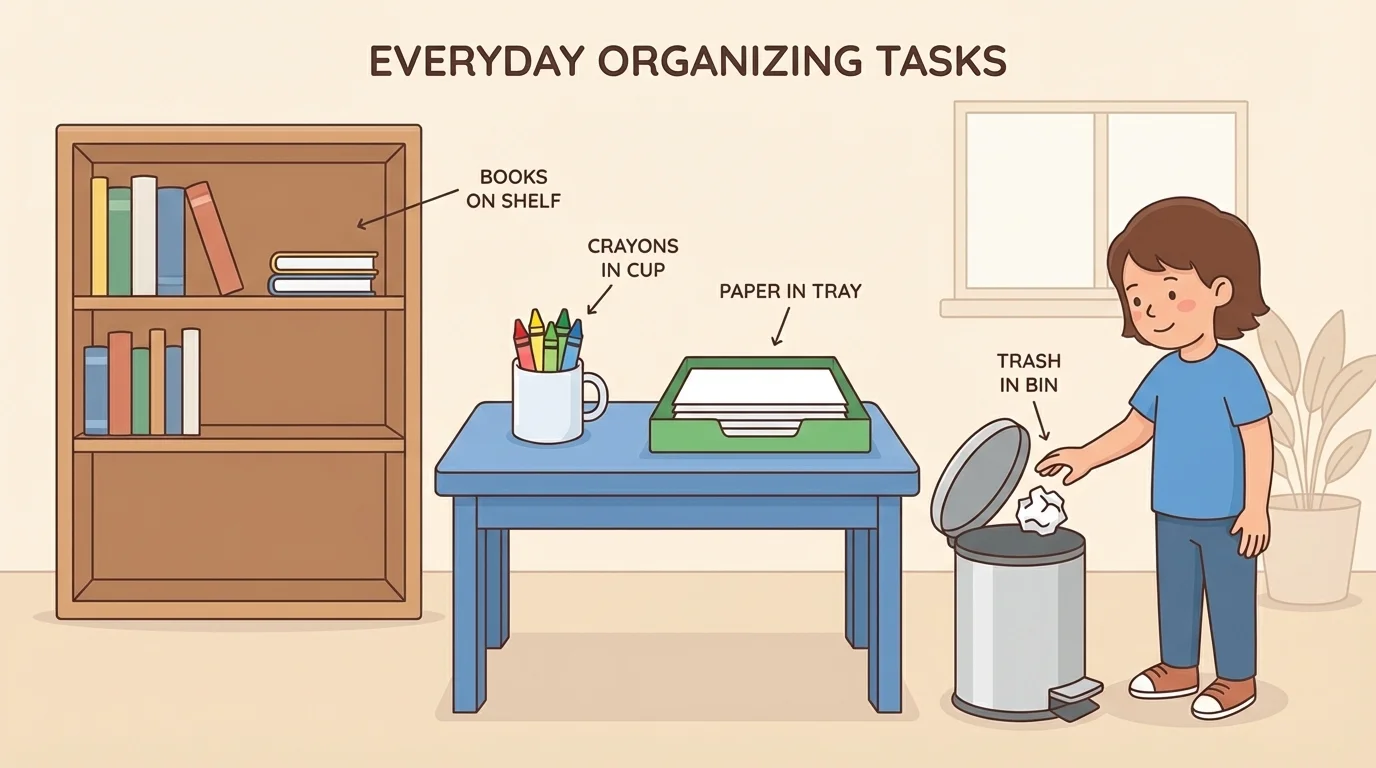
An organized space is a place where things have a home. Books go on a shelf. Toys go in a bin. Markers go in a cup. Paper goes in a folder or tray. Shoes go by the door or in a special spot. When items go back to the same place, you know where to find them next time.
Being organized also means keeping the floor, table, and seat ready to use. If your learning table is covered with old papers, snack wrappers, and scattered pencils, it is hard to start your next activity. A clear space helps your body and brain feel ready.
Organized means neat and in the right place. Supplies are the things you use, like crayons, pencils, paper, and scissors. A routine is something you do in the same order again and again.
You do not need to do one giant cleanup all at once. Small jobs every day help a lot.
Some small tasks make a big difference, as [Figure 1] shows in a neat home learning space. You can put crayons back in their cup, return books to the shelf, stack paper in one spot, and throw trash into the bin. These little jobs help your space stay ready for the next thing you want to do.
You can also put toys back into baskets, fold a small blanket, place shoes where they belong, and hang up a coat or backpack. If you spill a little water or drop snack crumbs, tell a grown-up and help wipe it up. Cleaning small messes quickly keeps the space nice.
Another helpful job is checking for things left out. Look at the table. Look on the floor. Look under the chair. Sometimes one missing block or pencil is hiding there. Putting it away finishes the job.
After-art cleanup
Step 1: Put caps back on markers.
Step 2: Put markers and crayons in their container.
Step 3: Stack papers in one pile.
Step 4: Throw scraps in the trash.
Step 5: Wipe the table if it is messy.
Now the space is ready for your next activity.
These jobs may seem small, but they help every day. When you do them often, they become part of your routine.
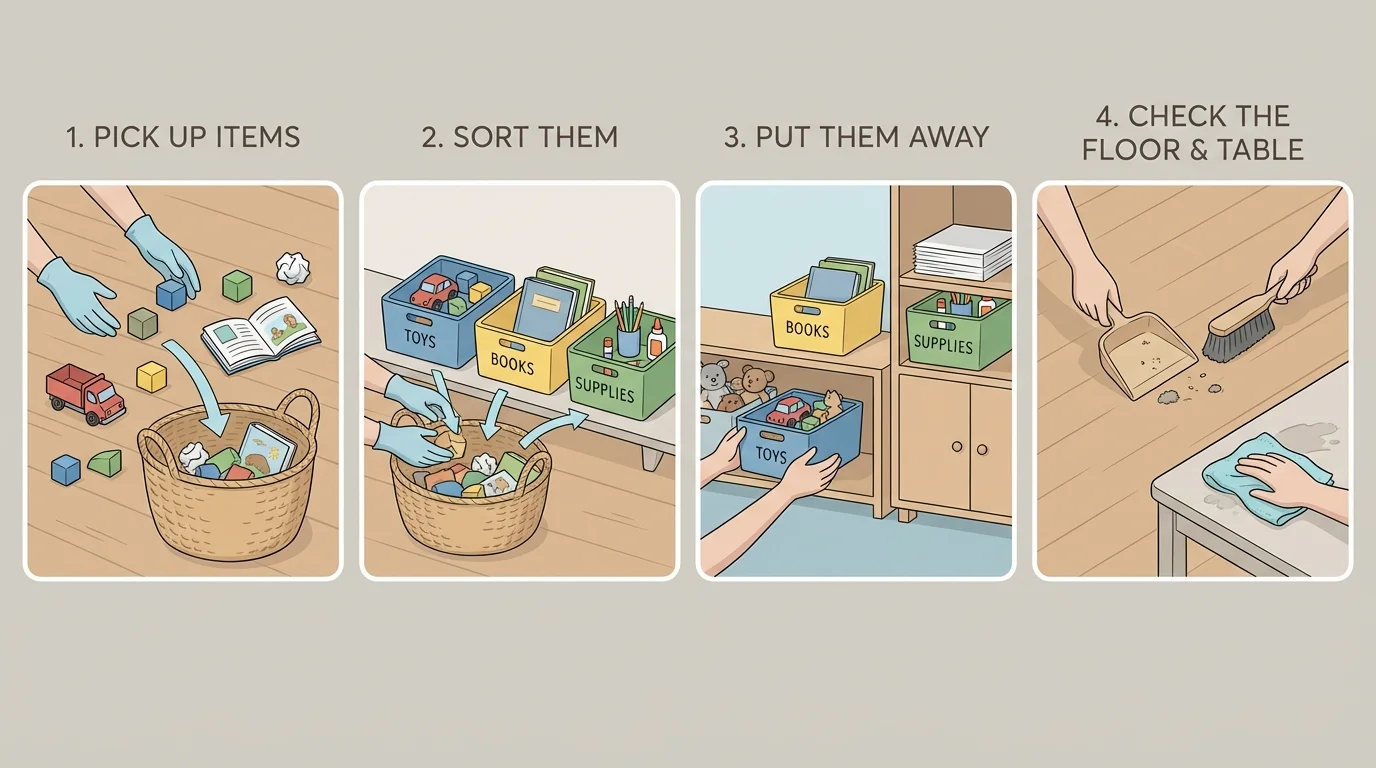
Cleaning up is easier when you do it in order. The simple routine in [Figure 2] helps you know what to do first, next, and last. You do not have to guess. You can follow the same steps after playtime, reading time, or online learning time.
Step 1: Stop and look around. What is out of place?
Step 2: Pick up items one kind at a time. First toys, then books, then art tools.
Step 3: Put each item back in its special place.
Step 4: Check the floor and table. If they are clear, you are done.
If a job feels too big, do just one part first. Put away only the blocks. Then put away only the books. Small steps make big jobs easier.
You can even say the steps softly to yourself: pick up, put back, check. That little routine helps many children remember what to do.
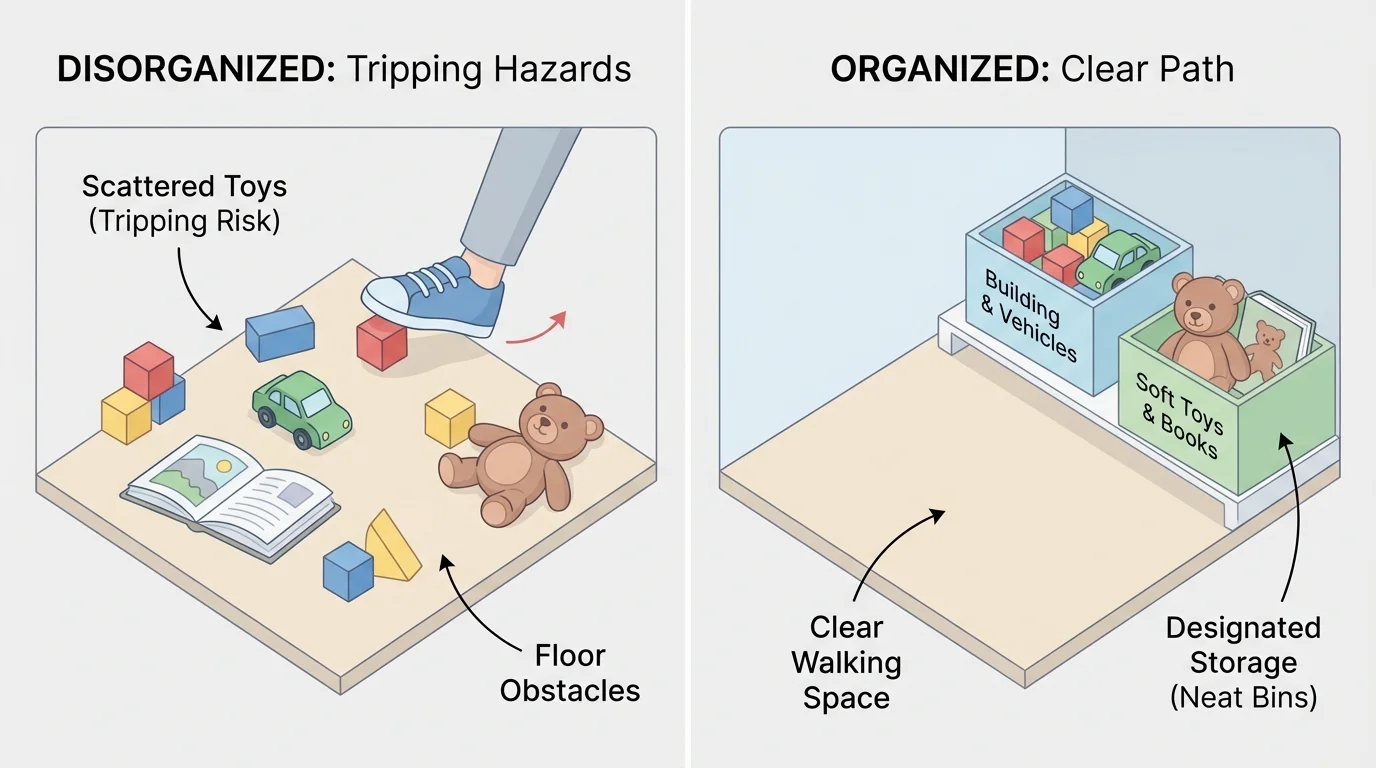
Neat spaces help you in real ways, and [Figure 3] shows why a tidy room is easier and safer to use. When the floor is clear, you are less likely to trip. When your supplies are in one place, you can find them quickly. When trash goes in the bin, the room feels fresher and cleaner.
An organized room can also help your feelings. A messy area can feel busy and hard to use. A neat area can feel calm. When you know where your things are, you can start learning, reading, building, or drawing sooner.
Being helpful matters too. When you put things away, you help your family care for the home. If you share a table, shelf, or play area, your cleanup helps everyone use it. That is a kind and responsible choice.
Many cleanups take only a few minutes when you do them every day. Small jobs now can stop a big messy pile from growing later.
You can remember the safe-space idea from [Figure 3] when you notice toys, shoes, or papers on the floor. Putting them away helps create more room to walk and play.
Pick one small place to keep neat today. It might be your bookshelf, your art table, or the spot where you keep your shoes. Start with just one place so the job feels easy.
Then try these simple actions:
If you forget sometimes, that is okay. Organization is a habit. Habits get stronger when you practice them again and again.
"A place for everything, and everything in its place."
When you use this idea, your room becomes easier to enjoy. You spend less time searching and more time doing what you want to do.
