Your feelings can change many times in one day. You might feel happy when a game starts, sad when it ends, or frustrated when something does not work. Learning to notice feelings helps you understand yourself and helps adults know how to support you.
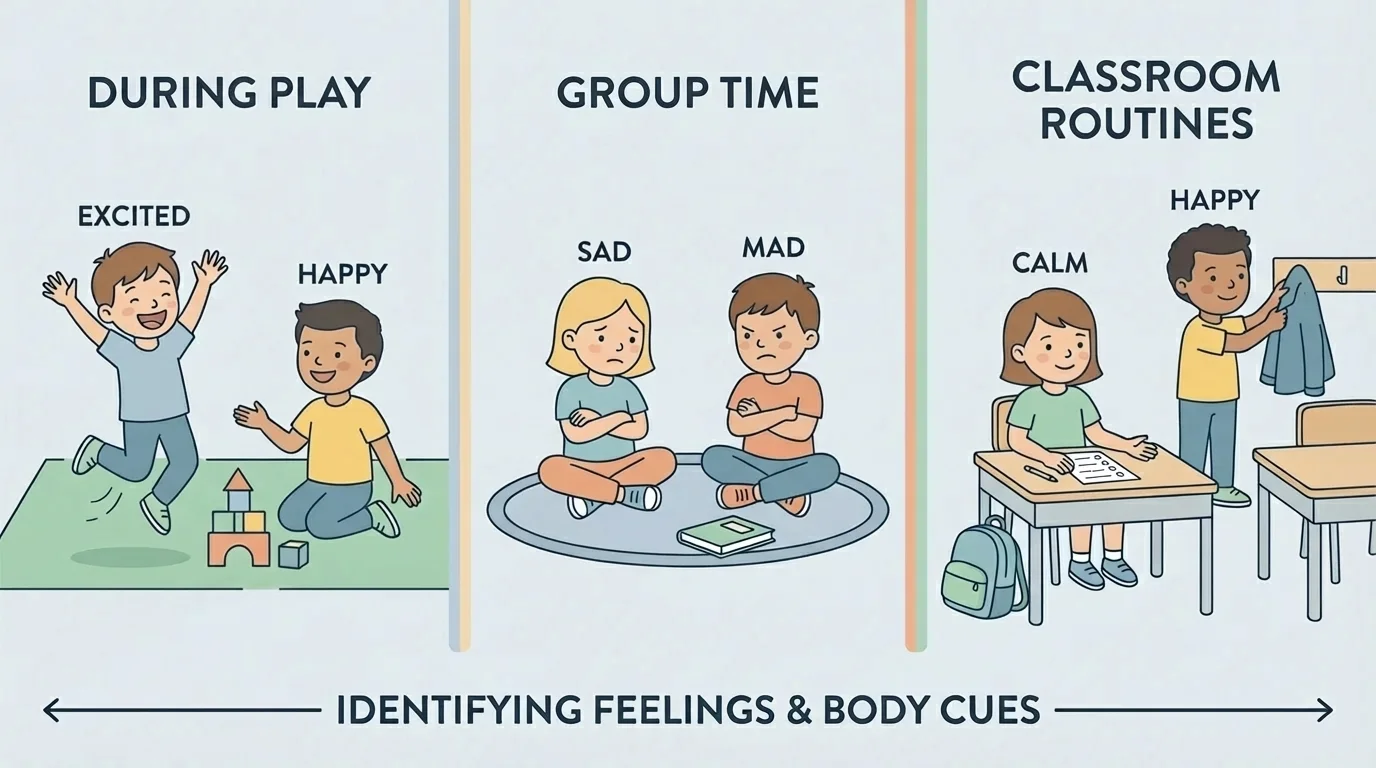
A feeling is how you feel inside. You can often notice a feeling by looking at your face, your body, and your voice, as [Figure 1] shows. A smile may mean happy. A frown may mean sad or upset. Tight hands may mean mad. A wiggly body may mean excited.
Some common feelings are happy, sad, mad, excited, scared, and calm. All feelings are okay. Feelings are not bad. What matters is what you do when you feel them.
Feeling words help you tell how you feel. When you say, "I feel sad," or "I feel excited," you are naming your feeling.
When you know your feeling, it is easier to choose what to do next. You can take a breath, use words, get help, or take a break.
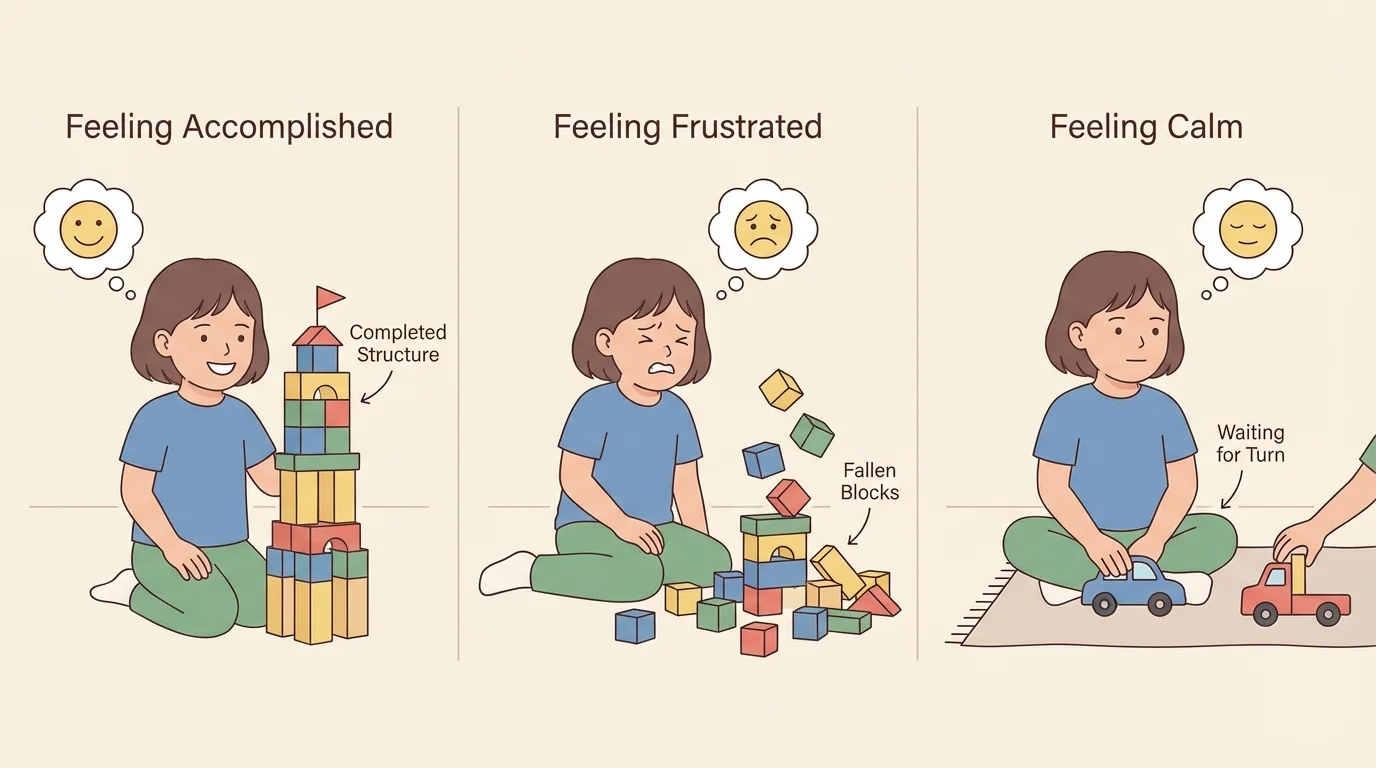
Play can bring many feelings, and [Figure 2] illustrates some of them. You may feel happy when you build a tall tower, proud when you finish a puzzle, or excited when you start a new game. You may feel frustrated when blocks fall down or when you have to wait for a turn.
You can also feel shy if you are playing with someone new on a video call or at a community activity. You might feel sad when playtime is over. These feelings are normal. Many children feel them.
Try using simple feeling words during play: "I feel happy." "I feel mad." "I feel sad." "I need help." "My turn, please." Simple words can help a lot.
A play-time moment
You build a block tower. It falls down.
Step 1: Stop your body.
Keep your hands safe and still.
Step 2: Name the feeling.
Say, "I feel frustrated."
Step 3: Choose what to do.
Take a breath, ask for help, or try again.
This helps your body feel more ready to play again.
When play goes well, you may notice the same clues from [Figure 1]: a big smile, relaxed shoulders, and a bright voice. When play feels hard, your body may get tight or loud. Your body gives you clues.
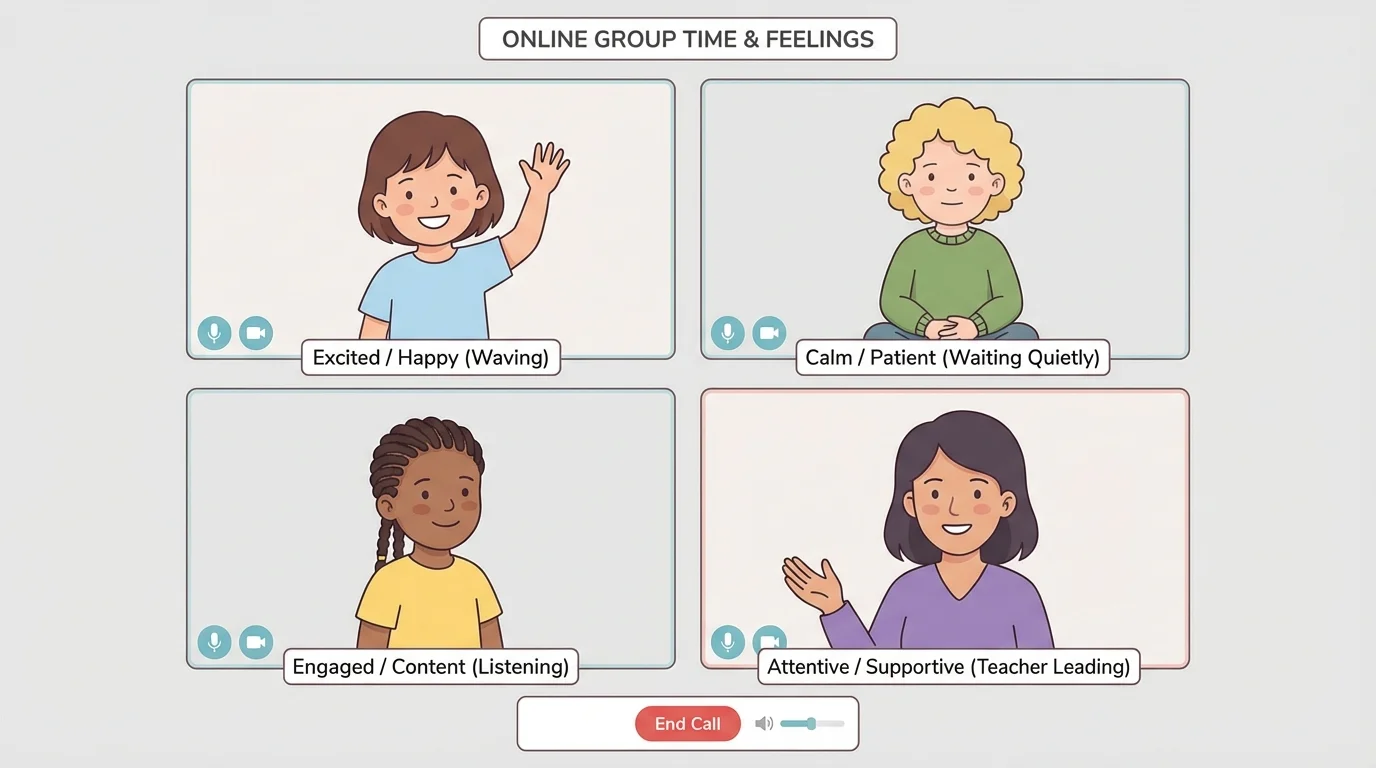
Group time can happen on a video call with a teacher or other children. During online group time, you might feel excited to wave hello, shy when it is your turn to talk, or impatient when you are waiting, as [Figure 3] shows.
You may also feel proud when you share an idea. You may feel confused if you do not know what to do yet. You may feel calm when you listen to a song or story.
It helps to notice what your body is doing. Is your body still or wiggly? Is your voice quiet or loud? Are you smiling, hiding, or looking away? These are clues about feelings.
Waiting is part of group time
Waiting can feel hard. You may want to talk right away. When you wait, you can put your hands in your lap, take a slow breath, and listen for your name. Waiting helps everyone have a turn.
If group time feels hard, you can say, "I feel shy," or "I need help." A trusted adult can help you join in. As in [Figure 2], the same feeling can happen in different places. Feeling frustrated can happen during play or group time.
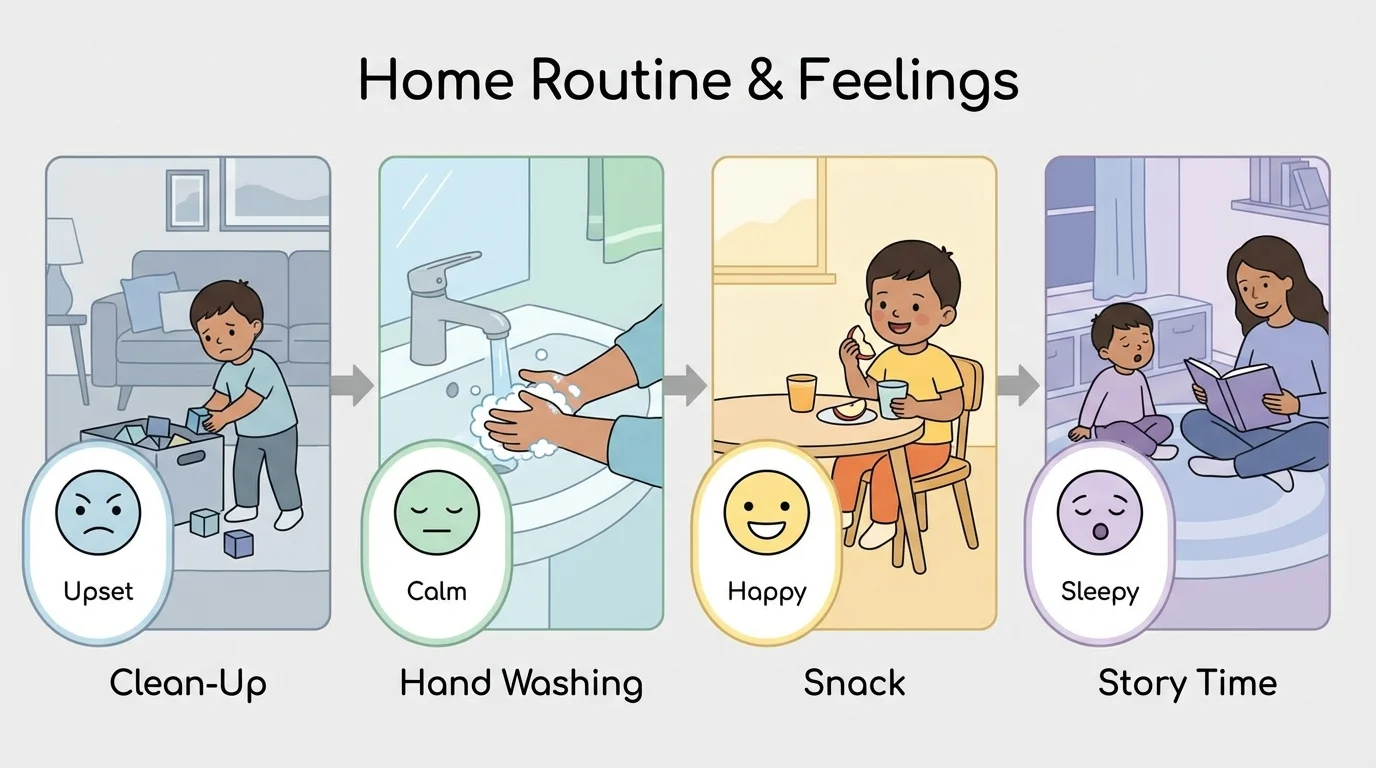
A routine is something you do again and again, like clean-up, washing hands, snack time, or sitting for a story. Feelings can change during routines, and [Figure 4] shows how one part of a routine can feel different from the next.
You may feel calm when you know what happens next. You may feel upset when it is time to stop playing and clean up. You may feel proud when you remember the steps by yourself. You may feel tired near the end of the day.
Routines help because they make the day feel safe and steady. When you know the order, your body can get ready. That can help big feelings feel smaller.
| Part of the day | A feeling you might have | Words you can say |
|---|---|---|
| Clean-up time | Sad or frustrated | "I want more time." |
| Hand washing | Calm | "I am ready." |
| Snack time | Happy | "I feel good." |
| Story time | Calm or sleepy | "I am listening." |
Table 1. Everyday routine moments, possible feelings, and simple words to use.
When you feel upset in a routine, try to remember the next step. That helps your body move forward. The routine chart in [Figure 4] makes this easy to see.
You do not need to make a feeling disappear right away. First, notice it. Then choose a safe action. This is called self-awareness. It means knowing what is happening inside you.
Step 1: Stop. Keep your body safe.
Step 2: Name the feeling. Say, "I feel mad," or "I feel sad."
Step 3: Take a slow breath.
Step 4: Use words. Say, "Help please," "My turn please," or "I need a break."
Step 5: Try again when your body feels ready.
Children learn feelings best when they hear feeling words many times in real life. The more you practice naming feelings, the easier it becomes.
When you use feeling words, other people can understand you better. That can lead to faster help, calmer play, and kinder moments. If you hit, yell, or throw instead, people may not know what you need.
You can practice with a parent, caregiver, or teacher. They might ask, "How do you feel?" You can point to your face, use a feeling word, or say a short sentence. A few words are enough.
Calm does not always mean quiet. Calm means your body feels more ready and safe. After a big feeling, you may need a hug, a drink of water, a breath, or a short rest.
"Name it to tame it."
— A simple reminder for talking about feelings
Try This: When play stops, when group time starts, or when a routine changes, pause and ask yourself, "How do I feel?" Then say one feeling word out loud.
