Have you ever seen someone get very quiet all of a sudden? A friend might stop talking, turn away, or look upset. That is a clue. When you notice clues, you can choose a kind thing to do. Sometimes a person needs a hug or gentle words. Sometimes they need help. Sometimes they need a little space.
You can learn to notice clues in a person's face, body, and voice, as [Figure 1] shows. A face with tears may mean someone is sad. A loud voice may mean someone is upset. A child who turns away may want quiet. A child who smiles may feel happy and ready to play.
Clues can happen during a video call, while playing at home, or at the park. Someone might say, "No!" very loudly. Someone might hide their face. Someone might stop playing. These clues help you think, "What does this person need right now?"
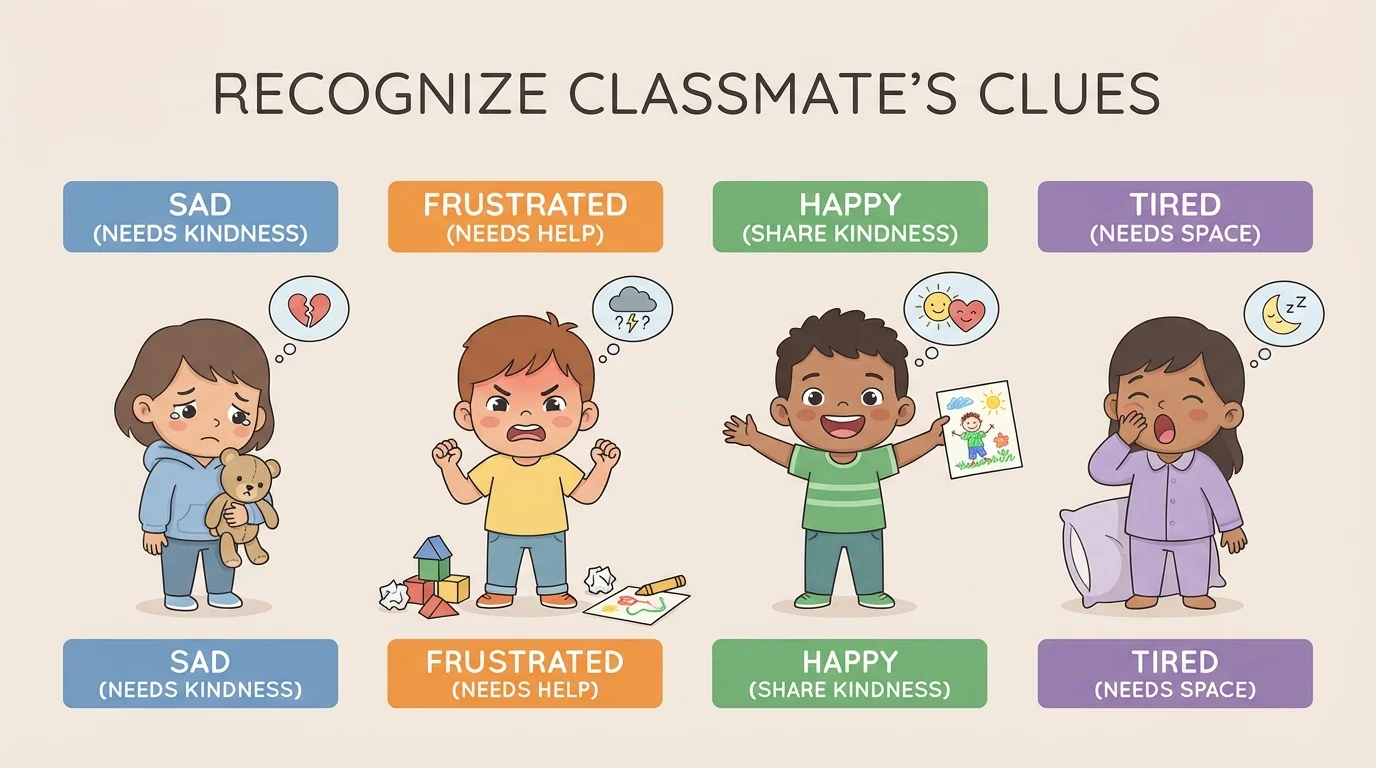
Kindness means doing or saying something gentle and caring. Help means doing something useful for someone who wants it. Space means giving a person room and quiet time when they do not want closeness right now.
Your job is not to guess perfectly every time. Your job is to look, listen, and be gentle. That is called empathy. Empathy means trying to understand how someone else may feel.
Kindness can be small. You can use a soft voice. You can wave on a video call. You can say, "Are you okay?" You can wait your turn. You can give a toy back. You can smile. Small kind actions can help another person feel safe.
When someone seems sad or left out, kindness might sound like this: "You can play with me." When someone is frustrated, kindness might sound like this: "It's okay. You can try again." When someone is quiet, kindness might be sitting nearby without talking too much.
Example: noticing and being kind
Step 1: You see your cousin on a video call. They are not smiling and they look down.
Step 2: You use a gentle voice and say, "Hi. I'm happy to see you."
Step 3: You wait. If they want to talk, you listen. If not, you stay calm.
This is kind because you notice a feeling and respond gently.
Kindness does not mean grabbing, crowding, or talking too much. Even when you want to help, a person may not want lots of words. Looking back at the clues in [Figure 1], you can see that some faces and body positions ask for calm, not excitement.
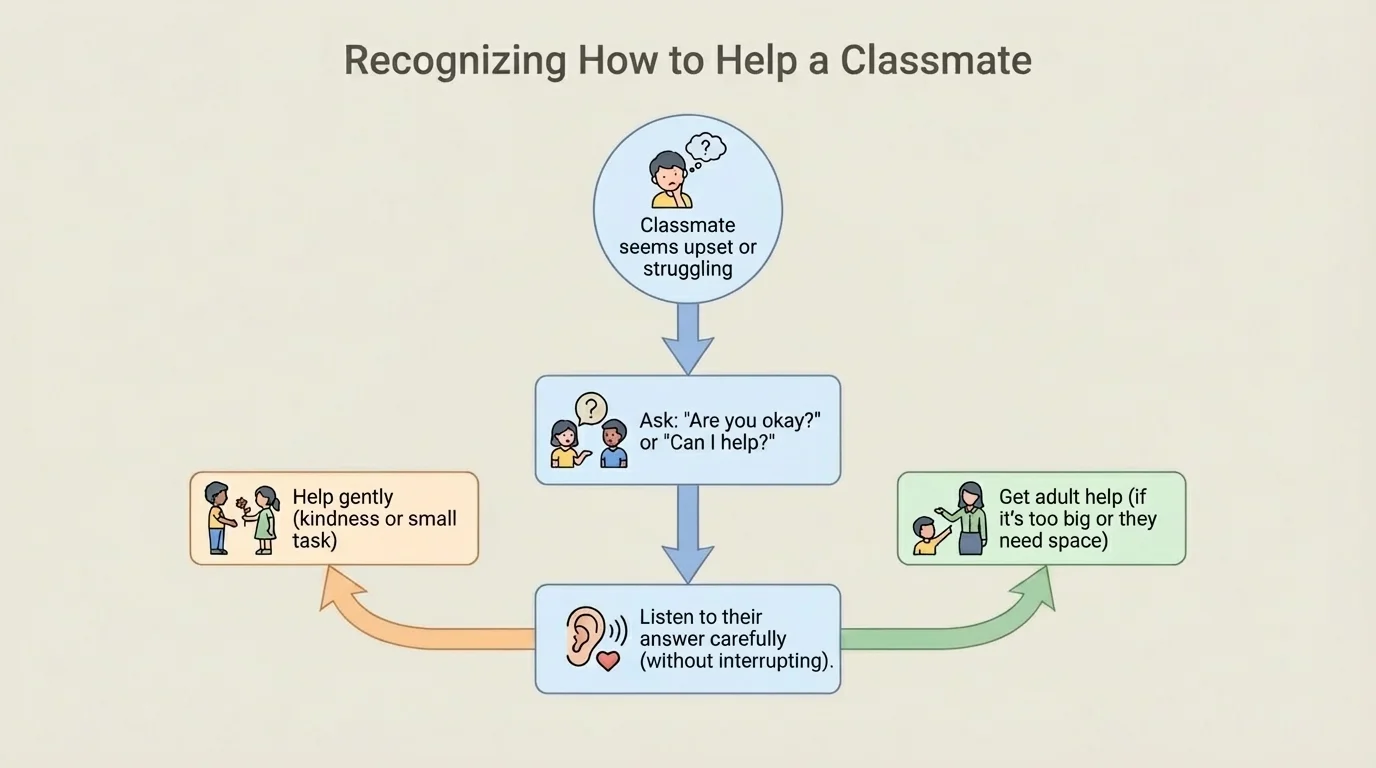
Sometimes a person does not need space. Sometimes they need help, and [Figure 2] shows a simple way to decide what to do. If someone cannot open a snack, cannot find a button on a game, or is struggling to clean up, you can ask first.
Try these words: "Do you want help?" That is important. Ask first. Some people like help. Some people want to try by themselves.
If they say yes, help gently. If they say no, you can smile and let them keep trying. If they are very upset or unsafe, get a trusted grown-up right away.
Ask first, then act
Offering help works best when you check what the other person wants. Asking first shows respect. It tells the other person, "I care about you, and I will listen to your answer."
Try This: Practice one short help sentence: "Do you want help?" Use it at home when someone is building, drawing, or cleaning up.
Sometimes the kindest choice is space, as [Figure 3] illustrates. Space means you do not stand too close, touch too much, or keep talking. A person may need space if they cover their ears, cry, turn away, hide, or say, "No."
Space helps feelings and bodies calm down. A child may need a quiet corner, a stuffed animal, a drink of water, or a grown-up nearby. Giving space does not mean being unkind. It means noticing what helps the other person feel better.
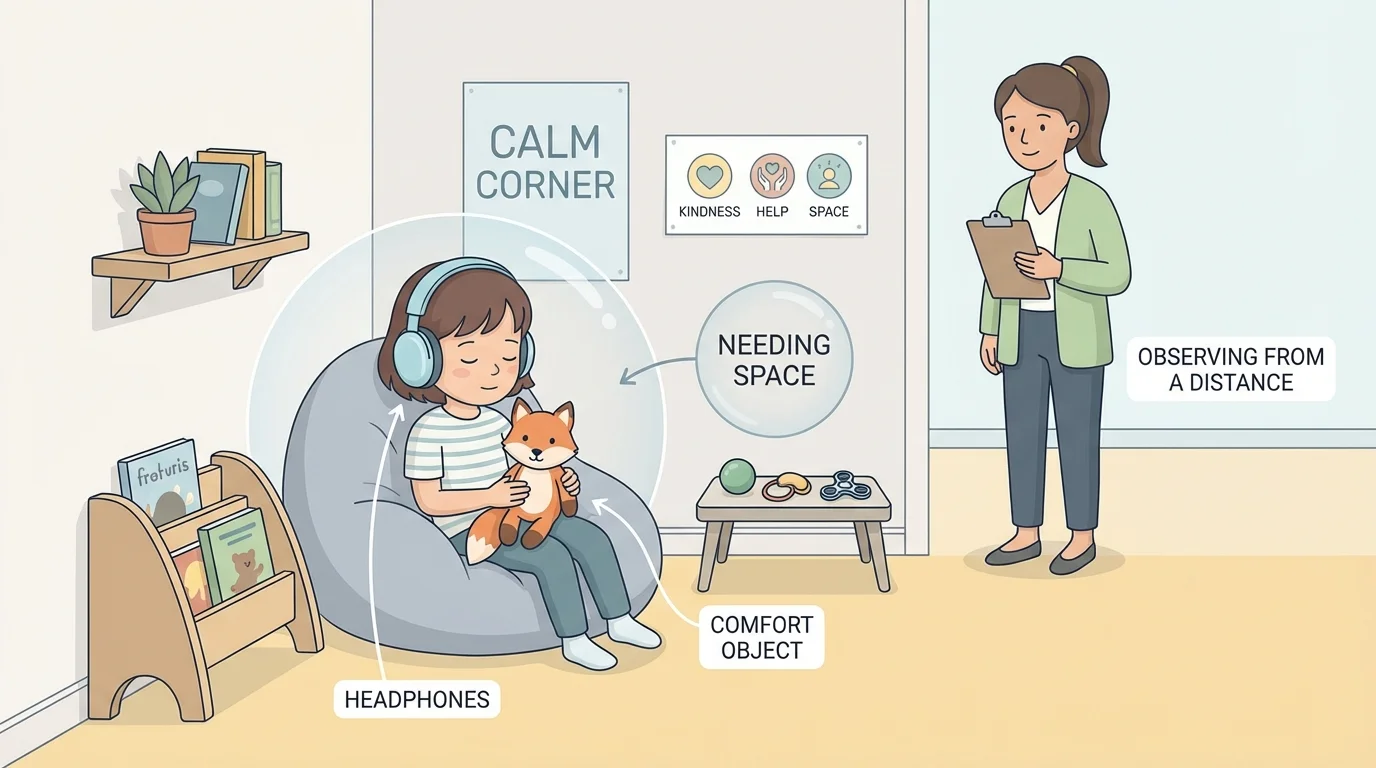
You can give space by taking one step back, keeping your hands to yourself, and using a quiet voice. You can say, "I'll give you space." Then you wait. Later, you can check again.
Example: giving space
Step 1: Your friend in a play group turns away and covers their ears.
Step 2: You stop talking and move back a little.
Step 3: You say, "I'll give you space," and let a grown-up help if needed.
This is caring because you noticed that closeness was not helpful right then.
Sometimes children think, "If I keep asking, I am being nice." But if a person keeps turning away, more talking may not help. The calm scene in [Figure 3] reminds us that quiet and room can be the kind choice.
You do not need big sentences. Short, gentle words work well. Here are some good choices.
A soft voice matters too. Even kind words can feel too big if they are shouted. Your face, hands, and voice all send a message.
Young children often show feelings with their bodies before they can explain them with words. That is why watching for body clues is such an important caring skill.
When you are online, clues may look a little different. A person may turn off their camera, stop answering, or make a frustrated face. You can still be kind by saying hello gently, waiting, or asking if they want help, just like the steps in [Figure 2] show.
Sometimes you may feel unsure. That is okay. You can slow down. Look. Listen. Ask gently. If the person is very upset, hurt, or unsafe, tell a trusted adult right away.
It also helps to remember that different people want different things. One child may want a hug. Another child may not want to be touched. One child may want help right away. Another may want to try alone first. Being caring means noticing the person, not just doing what you would want.
"Kind words can be short and easy to speak, but their echoes are truly endless."
— Mother Teresa
Try This: The next time someone looks upset, pause before you act. Ask yourself, "Do they need kindness, help, or space?" Then choose one gentle action.
