What happens when everyone talks at the same time? It gets noisy, confusing, and hard to understand. But when you listen, wait, and use kind words, people can hear you and feel happy talking with you. These are big skills for online class, playdates, family games, and group activities in your community.
When you listen, other people know you care. When you take turns, everyone gets a chance. When you use kind words, conversations feel safe and friendly. These skills help you make friends, work with others, and enjoy learning together, even when you are at home on a screen.
Listening means paying attention to what someone says. Turn-taking means waiting and then having your own chance. Kind words are polite, gentle words that help people feel respected.
If you do not listen, you might miss directions. If you do not wait for your turn, someone else may feel sad or frustrated. If you use unkind words, someone's feelings can get hurt. Small words and small actions can make a big difference.
Video call listening means paying attention with your eyes, ears, and body, as [Figure 1] shows. You can look at the screen, keep your mouth quiet when someone else is talking, and keep your body calm. Your teacher or group leader can tell that you are ready.
You can also show listening by nodding, smiling, or raising your hand. If a grown-up says, "Please get your crayons," listening helps you know what to do next. If another child says, "I want the red one next," listening helps you understand their words and feelings.
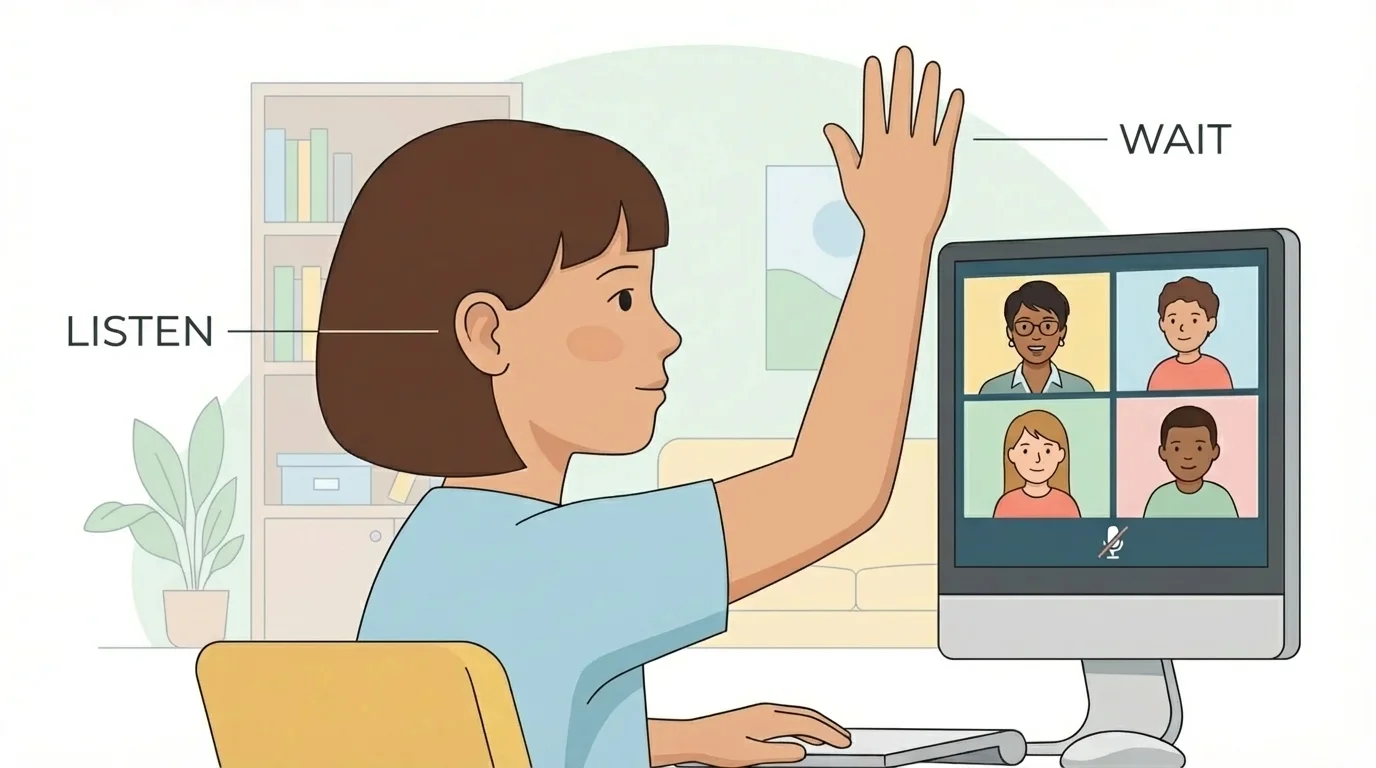
A good listener does not need to be perfect. Sometimes you may wiggle or feel excited. That is okay. You can try again by taking a breath, looking back, and listening for the next words.
Turn-taking helps conversations feel fair, and [Figure 2] illustrates how one person talks while the other waits. In online class, this may mean waiting until the teacher calls your name. At home, it may mean waiting while your brother, sister, or friend speaks first.
You can use simple turn-taking words such as "My turn, please," "Your turn," or "I can wait." If you want to speak, you can raise your hand or put one finger on your chest to remind yourself, "Wait." Then, when it is your turn, you can talk.
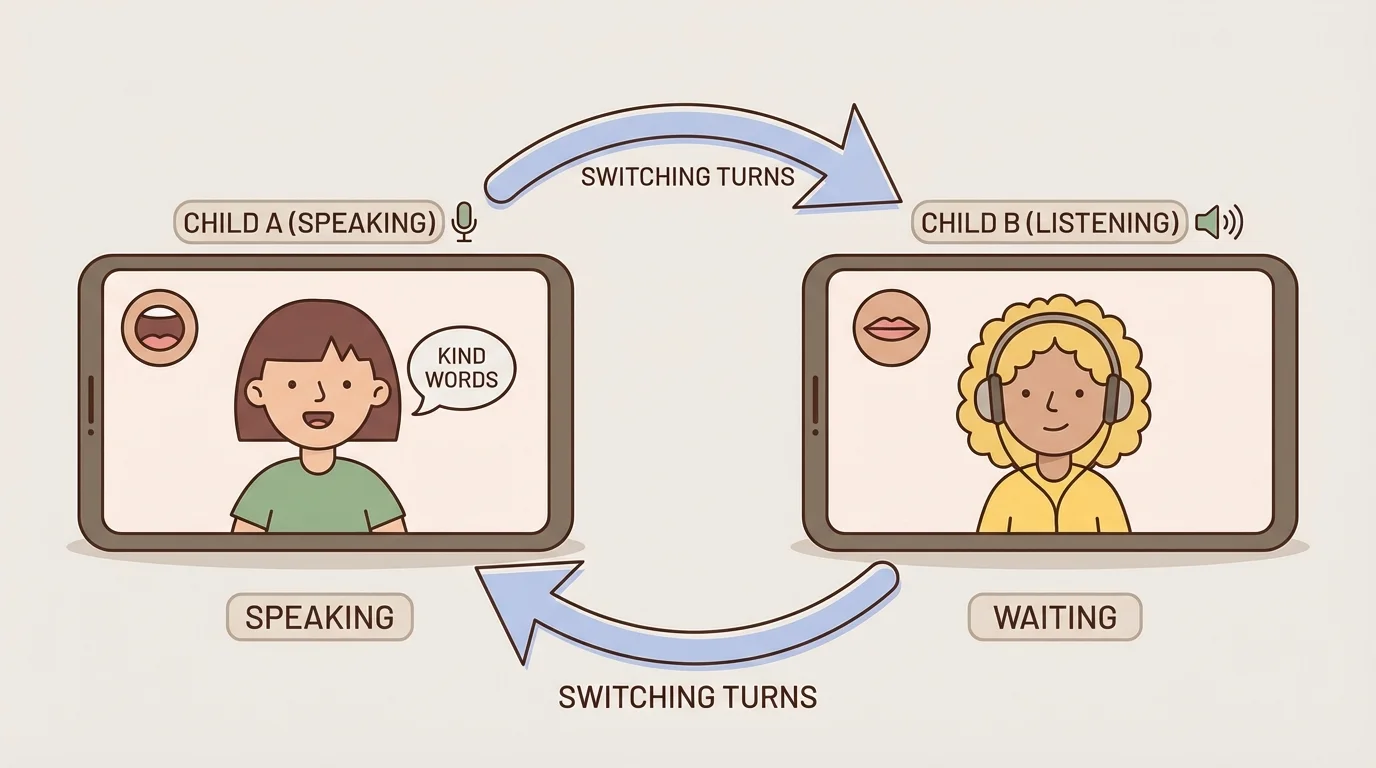
Waiting can feel hard when you have something exciting to say. If you talk over someone, they may stop talking or feel unheard. If you wait, they can finish, and then they can listen to you too. That is how sharing works in conversations.
Example: what to do when you want to talk right away
Step 1: Stop your mouth.
Step 2: Take one slow breath.
Step 3: Raise your hand or keep your idea in your mind.
Step 4: Talk when it is your turn.
Later, when you join another group activity, the same idea still works. One person speaks, one person waits, and then the turn changes.
Kind words help people feel welcome, and [Figure 3] shows some easy phrases you can use every day. You can say "please," "thank you," "good job," "can you help me?" and "you can go first." These words are small, but they are powerful.
Kind words are helpful when you want something, when you answer a question, and even when there is a problem. Instead of saying "Move," you can say "Can I have a turn, please?" Instead of saying "That's bad," you can say "Let's try again."
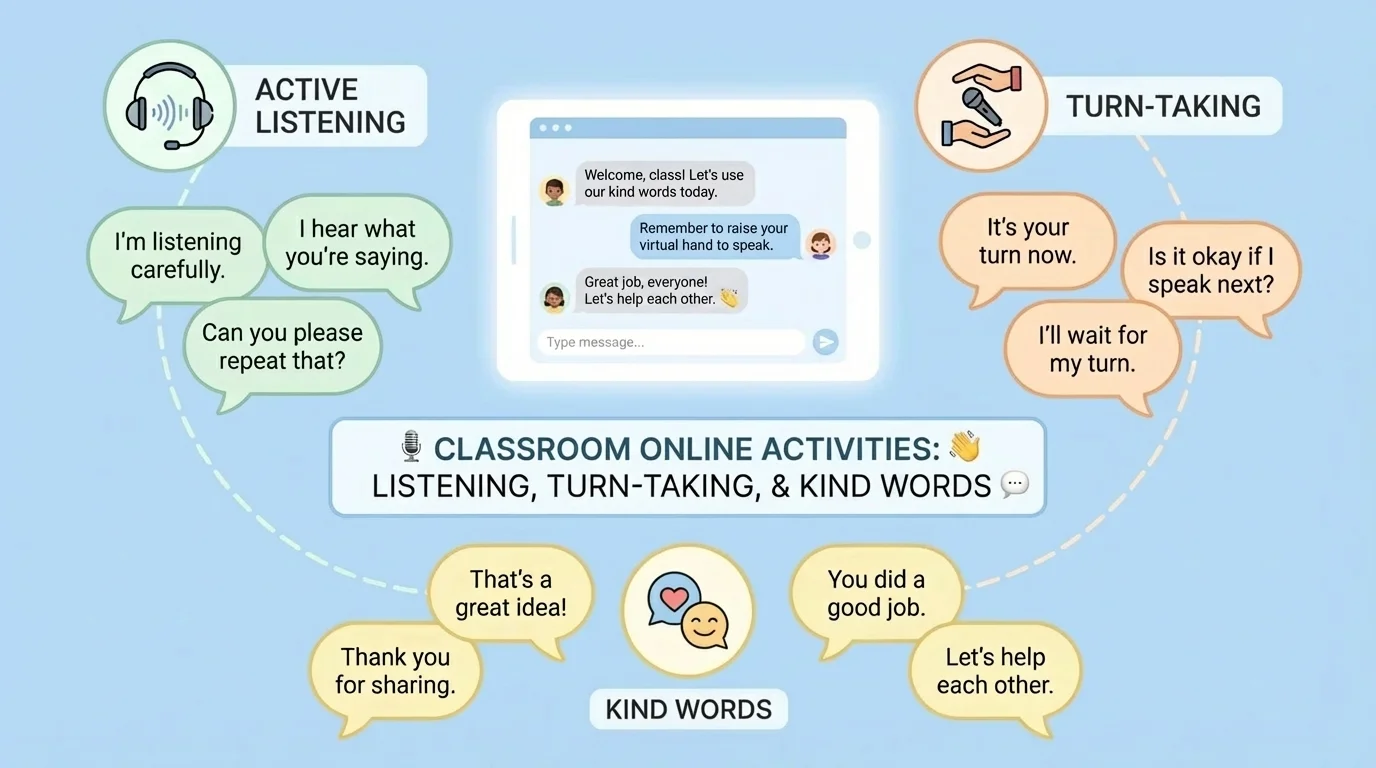
When someone makes a mistake, kind words matter even more. You can say, "It's okay," "You can try again," or "I can help." That makes the other person feel safe. It also shows that you are caring.
People often remember how your words made them feel. A calm, kind voice can help a hard moment become easier.
If you forget and use a rough voice, you can fix it. You can say, "Sorry," and then try kind words again. That is part of learning.
Sometimes listening and waiting are tricky because you are excited, tired, or upset. Your body may want to talk right away. Your feelings may feel big. That happens to many children.
A simple calm-down step can help. Put your hand on your tummy, take one slow breath, and count quietly to three. Then listen again or wait again. You can also squeeze your hands together, sit on your spot, or ask for help with a gentle voice.
Stopping and trying again is an important communication skill. You do not have to get it right the first time. If you interrupt, you can stop, say "Sorry," and let the other person finish. If you forget kind words, you can choose better words next.
That is how people grow. Learning social skills means practicing them many times in real life.
You can use these skills during online story time, music class, family meals, board games, library groups, and playtime with neighbors or cousins. Listening helps you hear the rules. Turn-taking helps everyone join in. Kind words help everyone feel included.
For example, if your teacher says, "Show me your toy after Sam is done," you can wait. If your cousin is talking on a video chat, you can listen first. If a friend wants the same game piece, you can say, "You can have the next turn." Those choices make activities smoother and happier.
"Kind words, quiet listening, and patient waiting help everyone shine."
Try This: Today, pick one easy phrase to use again and again: "please," "thank you," or "your turn." One small habit can help you become a strong listener and a kind talker.
When you look closely, the same skills from [Figure 1] and [Figure 3] work in many places: eyes paying attention, a quiet mouth while others talk, and friendly words when it is time to speak.
