[Figure 1] Sometimes your heart, tummy, or face tells you something before words do. You might feel scared, sad, confused, or mad. When that happens, you do not have to fix it by yourself. You can ask an adult you trust for help.
Something can feel unsafe or unfair when it makes you feel bad or uncomfortable inside. Maybe someone is being too rough. Maybe someone says mean words. Maybe a person online asks you to keep a secret, show something private, or stay on a call when you want to leave.
Your body can give you clues. You might want to hide, cry, freeze, or move away. Your tummy might feel funny. Your face might get hot. These clues matter. They tell you, "I need help."
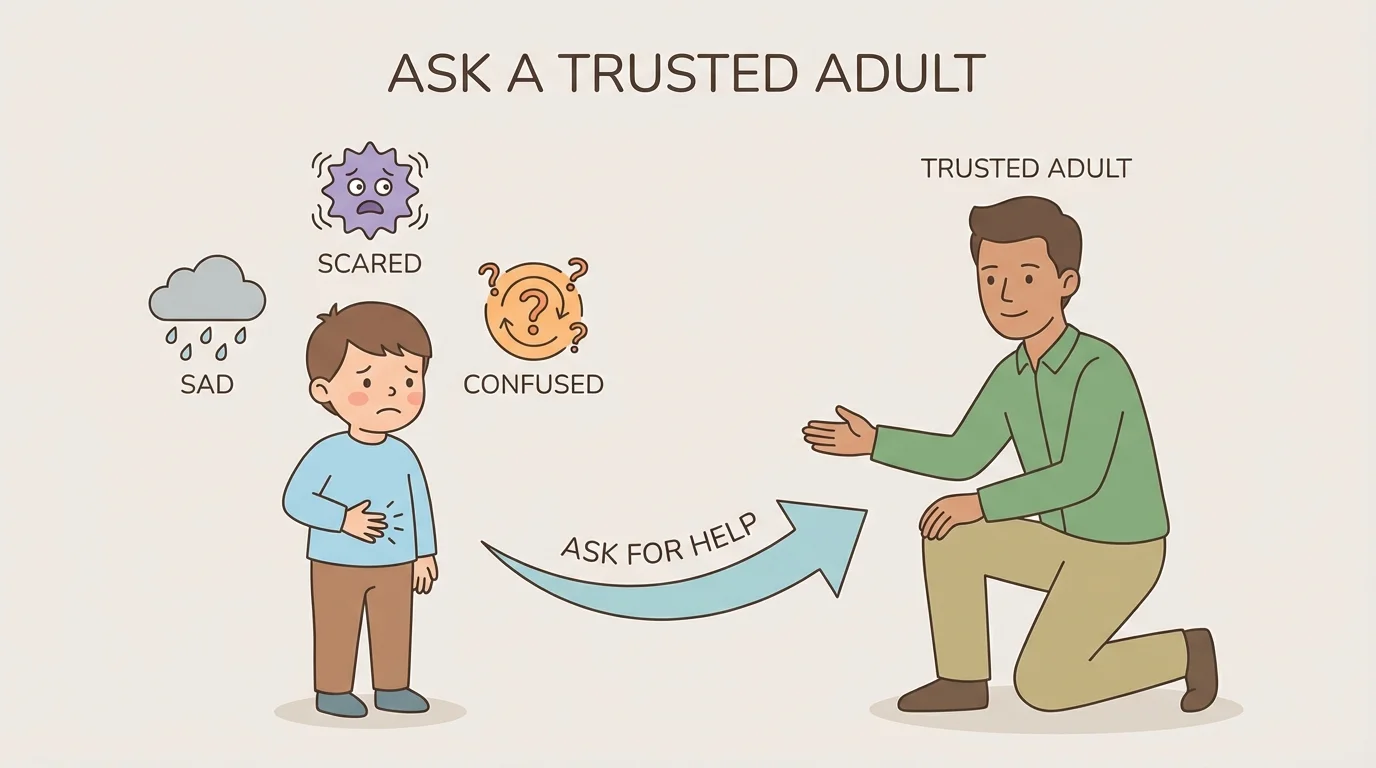
Unfair means something is not kind or not right. If someone always grabs your toy, will not let you have a turn, blames you for something you did not do, or leaves you out on purpose, that is unfair. If someone is hurting you, scaring you, or breaking a safety rule, that is unsafe.
Trusted adult means a grown-up who listens, helps keep you safe, and takes your worries seriously.
You do not need to be completely sure before you tell. If something feels wrong, you can still ask for help. Grown-ups help figure things out.
A trusted adult may be your parent, grandparent, caregiver, babysitter, coach, group leader, neighbor your family knows well, or another safe grown-up your family says you can go to. In online learning, it is usually someone at home first.
A trusted adult listens carefully. They believe you. They help you move away from the problem. They do not tell you to keep unsafe secrets. If the first adult does not help right away, tell another trusted adult.
It helps to know your helpers before you need them. You can learn the names of a few adults who keep you safe.
You do not need fancy words. Short words are enough. You can say:
If you feel scared, you can use the same words again and again. You can point. You can cry. You can hold a grown-up's hand. All of those are ways to ask for help.
"If it feels wrong, tell a grown-up right away."
You never have to keep a secret about someone hurting you, scaring you, or being unfair. Safe adults want you to tell.
[Figure 2] When a problem happens, you can follow a simple safety plan. The steps are easy to remember: stop, move away, tell, and keep telling.
Stop: You can say, "No," or "Stop."
Move away: Go to your parent, caregiver, or another safe grown-up.
Tell: Say what happened in simple words.
Keep telling: If one grown-up is busy or does not understand, tell another trusted adult.
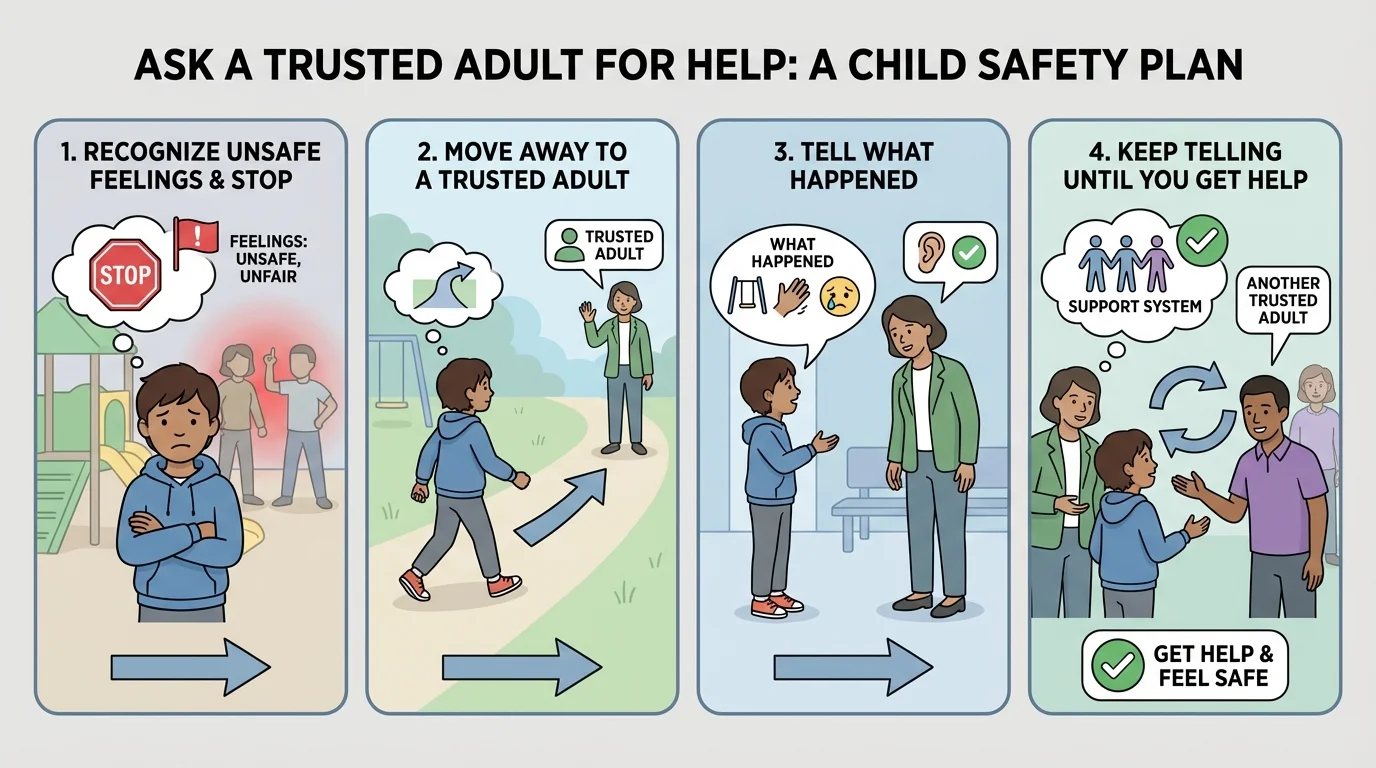
You do not have to stay in a scary, mean, or unfair situation. Moving closer to a safe adult is a smart choice. Leaving a video call, putting down a device, or walking to your caregiver can help keep you safe.
How it can sound
Step 1: Say a clear stop word.
"No." or "Stop."
Step 2: Go to a helper.
Walk to your parent, grandparent, or caregiver.
Step 3: Tell what happened.
"He pushed me." "She would not let me leave." "That person on the screen asked me for something private."
Step 4: Keep telling if needed.
Tell another trusted adult until someone helps.
That is being brave. Brave does not mean doing everything alone. Brave means getting help when you need it.
[Figure 3] Different situations can need the same safe choice. Whether you are at home, on a video call, at the park, or at an activity, you can ask a trusted adult for help.
If a child on a video call says mean things or tells you to do something that makes you uncomfortable, you can leave the call and tell your caregiver right away. This is a good time to use the words, "I do not feel safe."
If someone at a playgroup grabs every toy and laughs when you are sad, that is unfair. You can go to the adult in charge and say, "I need help. I am not getting a turn."
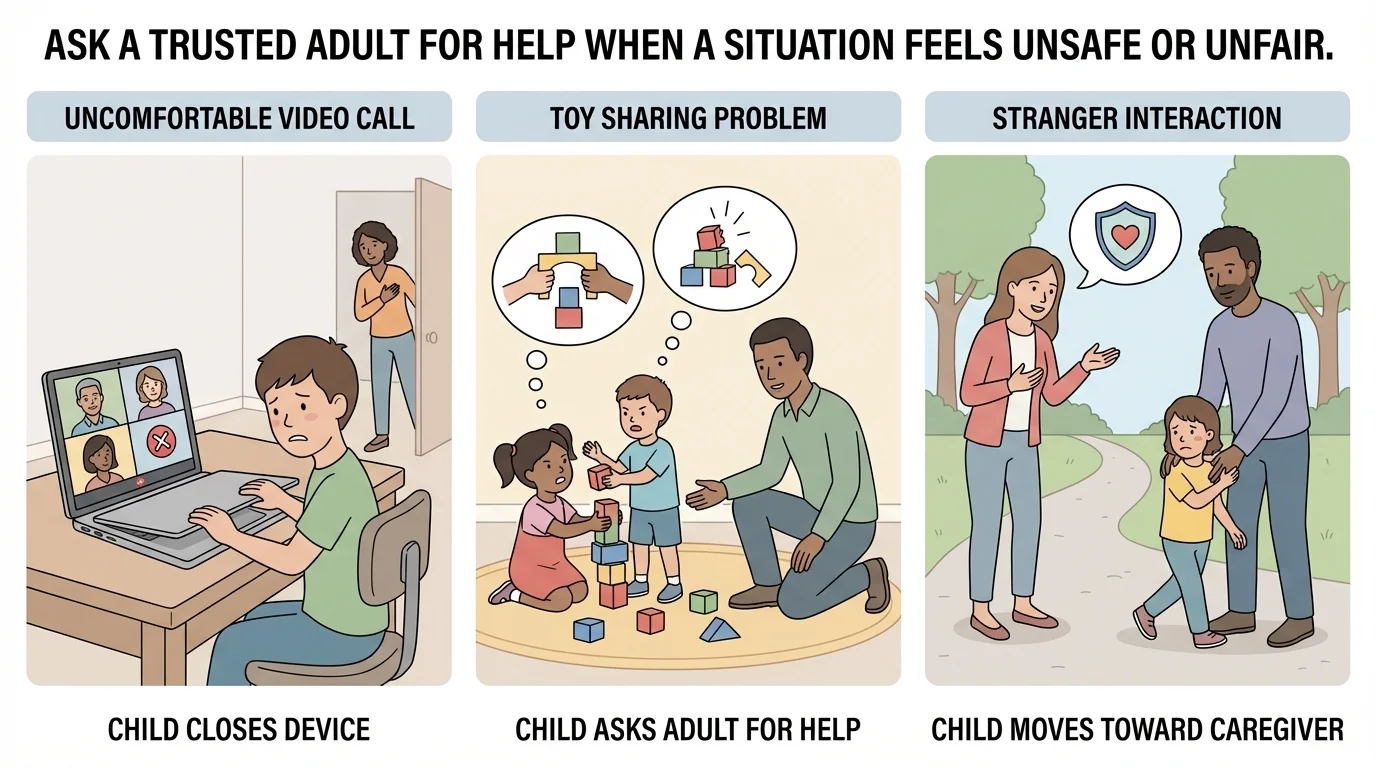
If a person you do not know asks you to come with them, take something, or go somewhere, move to your caregiver immediately. You do not need to answer many questions. Go to your safe adult fast.
If someone says, "Do not tell," that is an extra clue to tell right away. Safe adults do not ask little kids to keep hurtful or scary secrets. This matches the warning signs we noticed earlier in [Figure 1].
Young children can learn safety words best when they are short and used often. Simple phrases like "I need help" are powerful because they are easy to remember under stress.
Even if the problem seems small, telling is still okay. Small problems can grow bigger if no adult knows about them.
Sometimes children worry, "Will I get someone in trouble?" Asking for help is not tattling when someone is being unsafe, unfair, hurtful, or scary. Tattling tries to get someone in trouble for a tiny problem. Telling asks for safety and help.
If someone is hurt, scared, left out in a mean way, or treated unfairly, tell a trusted adult. If someone breaks a safety rule, tell. If someone online asks for private pictures, personal information, or secrets, tell right away.
Using your safety plan from [Figure 2] helps you remember what to do even when you feel upset. Stop, move away, tell, and keep telling.
You deserve to feel safe, listened to, and treated fairly. There are grown-ups who want to help you.
