Have you ever started playing with blocks, then crayons, then a book, all in just a few minutes? Your brain loves new things. But your brain can also get stronger when you stay with one little job for a short time. That helps you finish, clean up, and feel proud.
Staying with a task means you keep doing one task for a little while before you jump to something else. For a young child, that might mean putting in a few puzzle pieces, listening to one short story, or putting toys in the bin before starting a new game.
You do not have to stay a long time. A short time is enough. Maybe you finish one tiny part. Maybe you stay until the song ends. Maybe you keep going until the page is colored. Little bits of focus help your brain learn, "I can do this."
Stay with a task means keeping your body and mind on one small activity until a short goal is done.
Short goal means a tiny finish line, like "put in 3 puzzle pieces" or "put all blocks in the box."
When you stay with one thing, you are using a big brain skill called focus. Focus helps you listen, work, and finish. It grows little by little.
Staying with a task helps daily life go more smoothly. When you finish a tiny job, there is less mess, less frustration, and more time for the next fun thing. If you stop every few seconds, toys stay everywhere and jobs feel harder.
This also helps during home learning. You may watch a short video lesson, listen to a grown-up, or do a small activity on your screen. If you can stay for a little while, you understand more and need fewer reminders.
Your brain gets stronger with small practice. Even staying with an activity for one more minute than before is a real success.
Good staying-with-it habits also help with feelings. When something is a little tricky, you learn that you do not have to quit right away. You can try, pause, and try again.
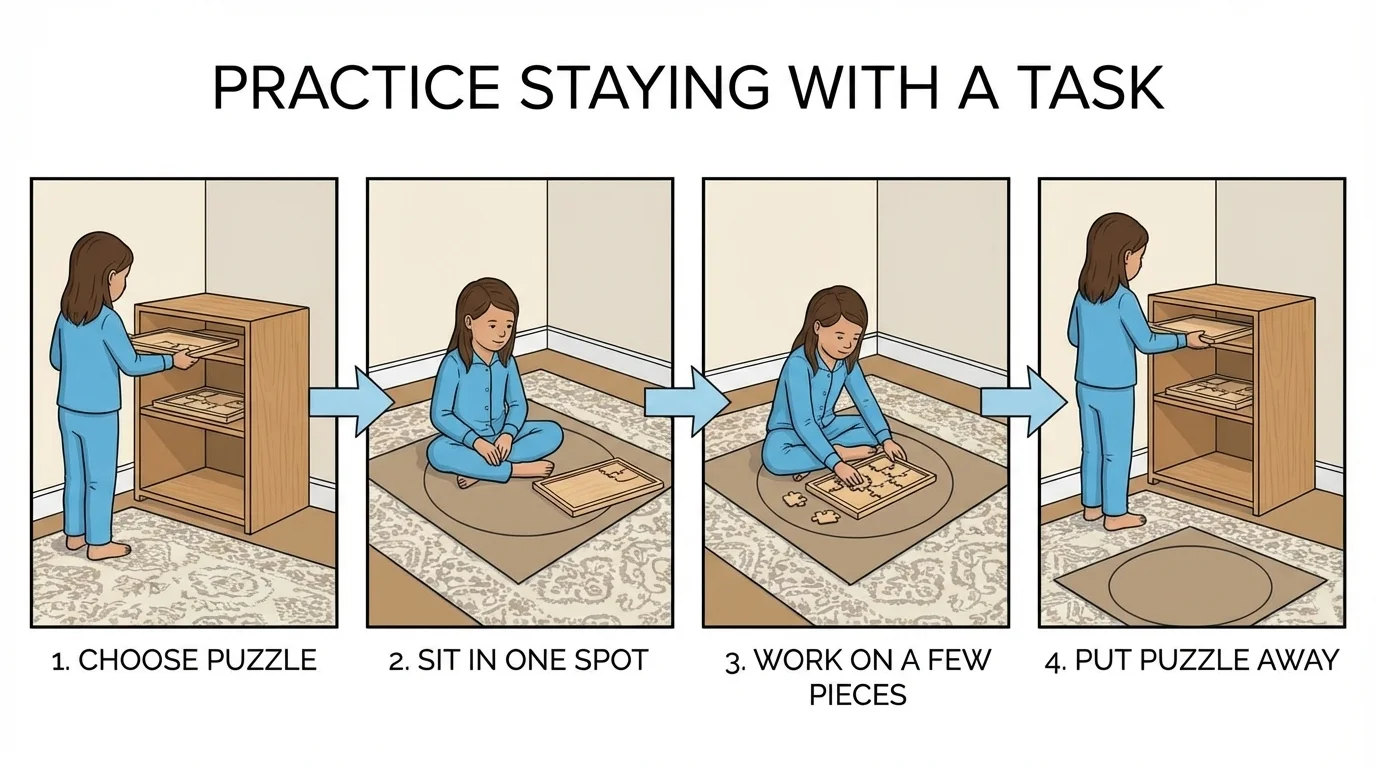
A simple routine, as shown in [Figure 1], can help you stay with one activity. First, pick one thing. Next, sit or stand in one spot. Then let your hands keep working. Last, stop when your tiny goal is done.
You can say the steps out loud: "One thing. Stay here. Keep going. All done." Short words are easy for young children to remember.
Your body can help your brain. Keep your hands on the job. Keep your eyes looking at the job. Keep your feet in one place if you can. If your body starts wandering, your attention often wanders too.
Tiny goals make big jobs feel safe. Young children do better when the finish line is very small. "Clean your room" feels huge. "Put the cars in the basket" feels doable. A tiny goal helps you begin and keep going.
A grown-up can help by giving one clear direction at a time. Too many directions can make your brain feel busy. One small step is best.
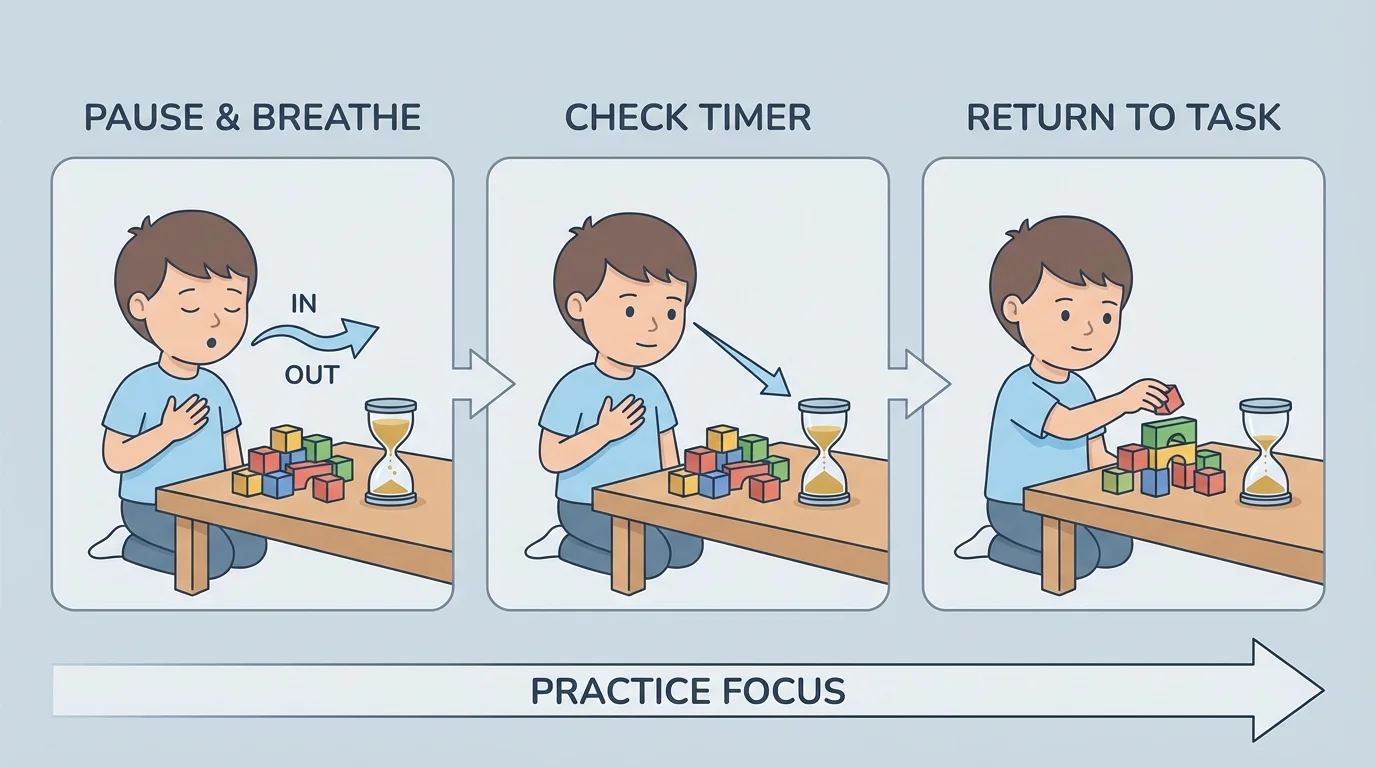
Sometimes your attention moves away fast. That is okay. When you feel like switching, use a calm pause, as [Figure 2] shows. Stop your body, take one slow breath, and look back at your job.
Then choose one helper: ask for help, use a short timer, or say, "I do one more part." A tiny timer or a short song can help you know that the task will not go on forever.
If the task feels too hard, make it smaller. Instead of "finish the whole puzzle," try "find one corner piece." Instead of "clean all the toys," try "pick up the red toys first."
If your body is tired or wiggly, take a quick reset and come back. Stretch your arms, squeeze your hands, or get a sip of water with a grown-up's help. Then return to the same task before starting a new one. That return is important.
Real-life example: putting toys away
Step 1: Choose one small goal.
Say, "Cars in the bin first."
Step 2: Keep working a short time.
Put cars in until the bin has the cars you used.
Step 3: Then switch.
When the car job is done, you may choose the next toy or the next activity.
This teaches your brain to finish a little bit before moving on.
The same idea from [Figure 2] works during online learning too. If you want to leave your seat in the middle of a short video, pause your body, breathe once, and stay until that short part is over.
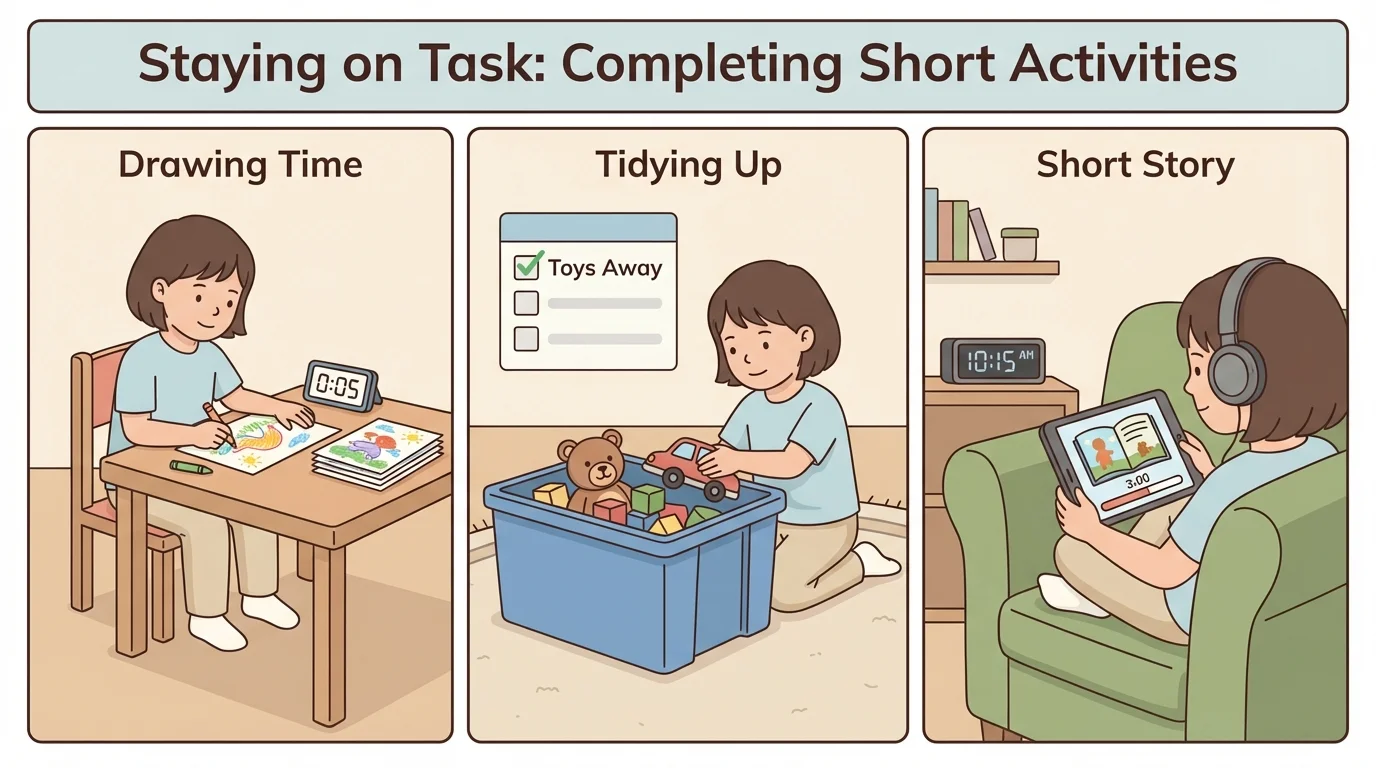
Short daily examples, like the ones in [Figure 3], help this skill grow. You can stay with a drawing until one color area is filled. You can stay with snack cleanup until the cup is on the counter. You can stay with a story until the page is finished.
At home, this may look like finishing three block towers before leaving the rug. During online school time, it may look like listening to a teacher on a screen for a short activity before getting a toy.
When adults know your tiny goal, they can help you succeed. They might say, "First put the crayons in the box, then we go to the next thing." That makes the order clear.
As you can see again in [Figure 1], the order matters: choose, stay, finish, then switch. Switching after the small finish line feels much better than stopping in the middle.
"First this, then that."
— A simple rule for staying with a task
When this skill is hard, that does not mean you are bad at it. It means you are still learning. Every time you stay a little longer, your brain gets practice.
You grow this skill with short practice, not long hard practice. One small success today helps you do a little more tomorrow. A grown-up may notice and say, "You stayed with your puzzle until three pieces were done." That kind of praise tells you exactly what went well.
It also helps to know what happens when the skill is not used. If you switch too fast, many things stay unfinished. You may lose pieces, leave messes, or feel upset because nothing gets done. When you stay with one small task, your day feels calmer.
You do not need to be perfect. The goal is not "never switch." The goal is "stay a short time, finish a tiny part, then switch."
Over time, a short task can become a little longer. First one minute. Later two. Then one whole simple activity. Growth happens step by step.
