Your body is always talking to you. It tells you, "I am hungry," "I am sleepy," or "I need help." Learning to listen to your body helps you stay safe, feel good, and grow strong.
Your body gives you clues. A growly tummy can mean you are hungry. Heavy eyes can mean you are tired. Tears, pain, or a scared feeling can mean you need comfort or help. These clues are called body signals.
Safe choice means doing something that helps protect your body and feelings. A safe choice keeps you away from danger and helps you feel well.
When you notice body signals, you can do something helpful. If you are thirsty, drink water. If you are tired, rest. If something hurts, tell a trusted adult right away. Listening early can stop small problems from becoming bigger ones.
Your body likes to move, and moving is healthy. Running, walking, dancing, stretching, and climbing can be fun. [Figure 1] shows some safe movement choices. You stay safer when you look where you are going, keep your feet on the floor or ground, and stop when a trusted adult says "stop."
Some places are for gentle movement. Inside your home, walking is often safer than running. Furniture is for sitting, not for jumping from high places. Outside, it is safer to stay near a trusted adult and use play equipment the right way.
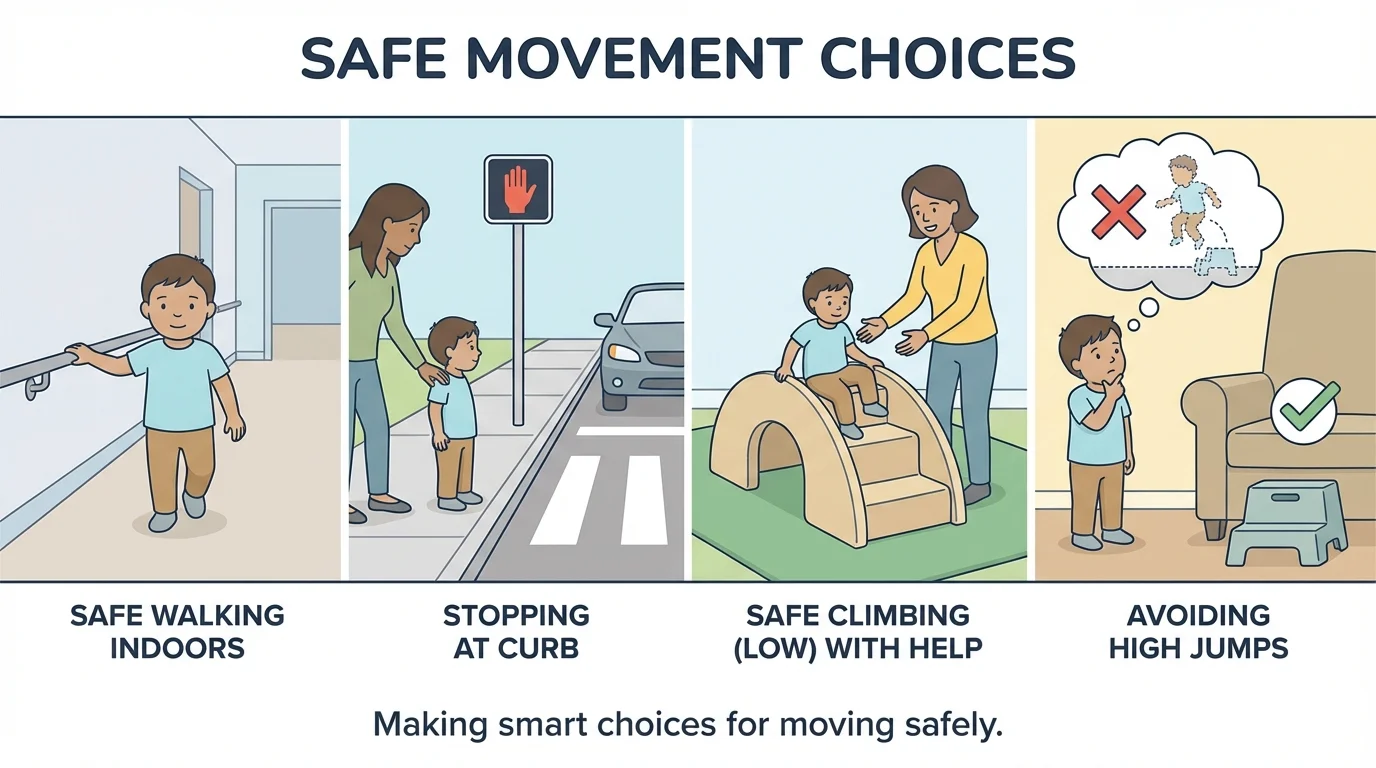
If the floor is wet, if toys are in the way, or if something is too high, slow down. Safe movement means using your eyes, ears, and body together. When you move safely, you are less likely to fall or get hurt.
Safe moving choices
Step 1: Stop and look.
See if the space is clear.
Step 2: Move your body carefully.
Walk, hold on, or sit down if needed.
Step 3: Ask for help.
If something feels too high, too fast, or too hard, call a grown-up.
Later, when you think about climbing or running, remember the safe choices shown in [Figure 1]. Safe movement is not about never having fun. It is about having fun without getting hurt.
Rest helps your body and brain feel better. Sleep at night and quiet time during the day help you grow, learn, and calm down. When you do not get enough rest, you may feel cranky, silly, or wiggly in a hard-to-control way.
Safe rest means lying down or sitting in a calm place when your body is tired. A soft blanket, a quiet book, or slow breathing can help. If you feel too tired to play safely, it is smart to stop and rest.
Young children often need both active play and quiet rest. Your body works best when it gets time for both.
Rest is a safe choice because tired bodies can trip, fall, or melt down more easily. When you rest, you get ready to move and play again later.
Food gives your body energy, and drinks help your body work well. Good choices can include fruits, vegetables, milk, yogurt, eggs, beans, grains, and water. [Figure 2] shows some simple safe food and drink choices.
A safe food choice means eating food a trusted adult gives you and asking before you taste something new or unknown. It is not safe to eat things you find on the floor, outside, or in a container you do not know. Water is usually the best drink when you are thirsty.
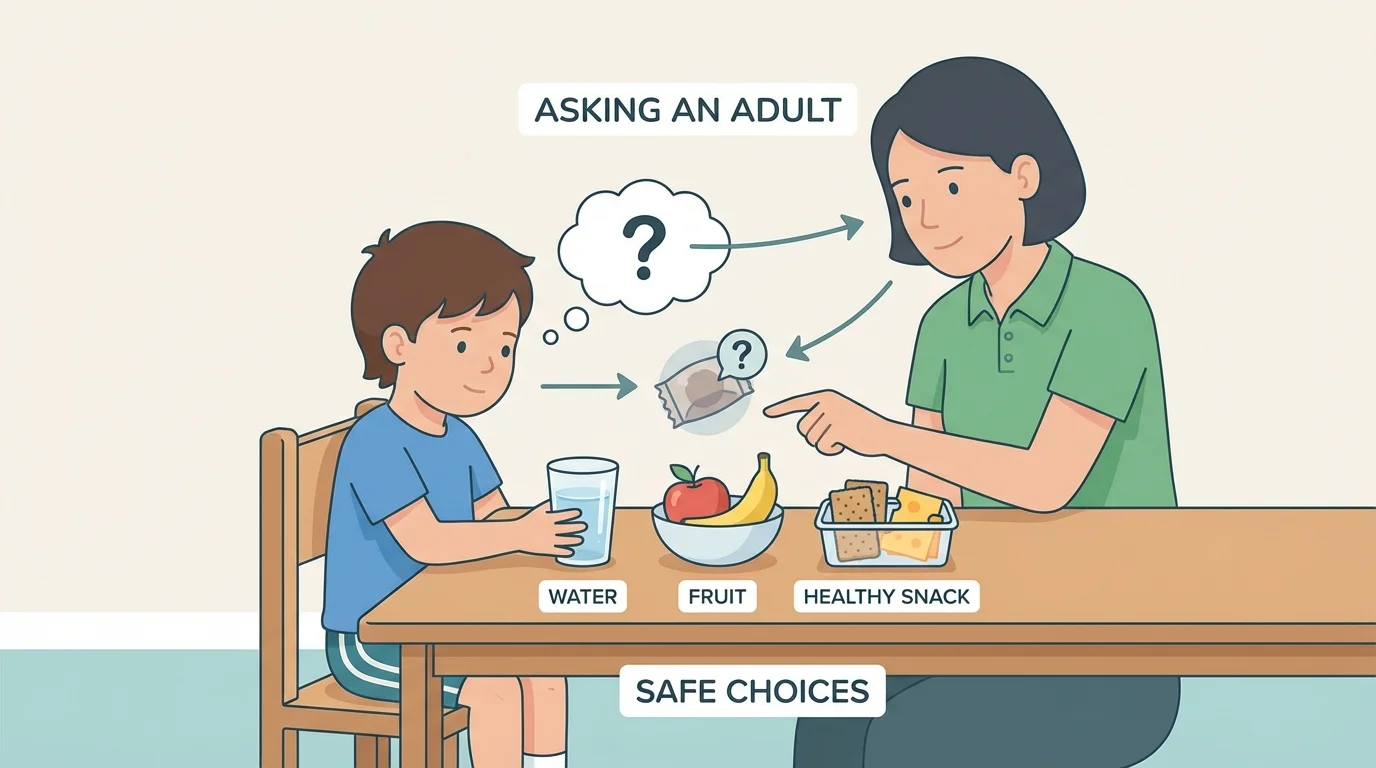
If food is too hot, wait. If a piece is too big, ask for help. If you have a tummy ache or something tastes wrong, stop eating and tell a grown-up. Safe food choices help your body feel strong instead of sick.
| Body feeling | Safe choice |
|---|---|
| Hungry | Ask for a healthy snack or meal |
| Thirsty | Drink water |
| Food looks strange | Ask a trusted adult first |
| Food is too hot | Wait and check again |
Table 1. Safe choices for common food and drink situations.
When you look again at the choices in [Figure 2], you can see that safe eating is not only about what tastes good. It is also about checking, waiting, and asking first.
Everybody needs help sometimes. Knowing how to ask is a big safe skill. [Figure 3] shows examples of a trusted adult. A trusted adult is a grown-up who takes care of you and helps keep you safe, like a parent, grandparent, caregiver, or another adult your family says is safe.
You can ask for help when you are hurt, lost, scared, too tired, too hot, too cold, hungry, or worried. You can also ask for help if someone tells you to keep a secret that makes you feel bad or confused. Safe adults listen and help.
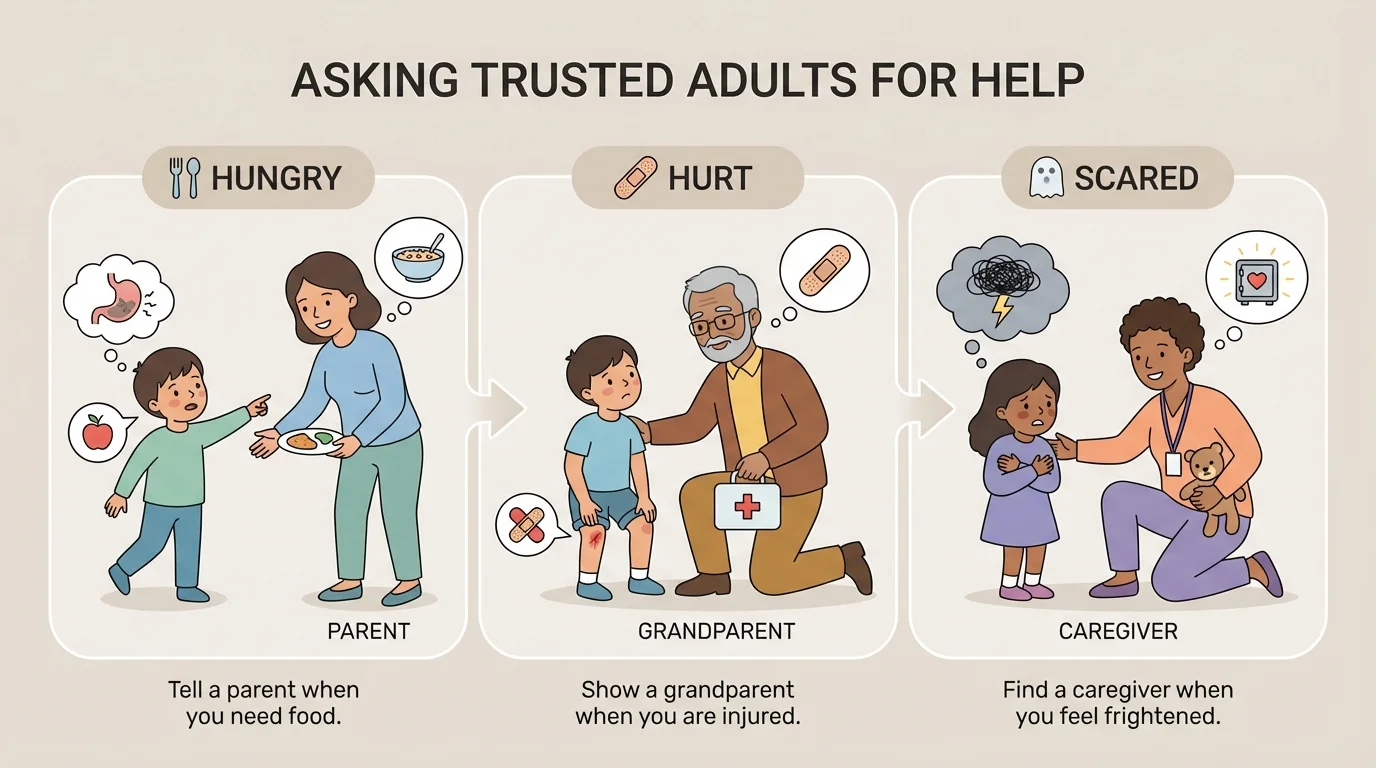
You do not need big words. You can say, "Help, please." "I am hurt." "I am scared." "I need water." "I need to rest." These are important help words.
How asking for help keeps you safe
When a problem feels too big for you, a trusted adult can make a plan, comfort you, and protect you. Asking early is a strong choice, not a baby choice.
Think about [Figure 3] again. The child stays safer because the child goes to a trusted adult instead of staying quiet. Telling the truth about what you feel helps adults know what you need.
When you are not sure what to do, try this simple plan: stop, look, feel, and ask. Stop your body. Look at what is around you. Feel what your body is telling you. Ask a trusted adult if you need help.
For example, if you want to climb something high, stop and look first. If it feels too high or wobbly, ask for help. If you are playing and suddenly feel sleepy, stop and rest. If you are given a drink and do not know what it is, ask before sipping.
"Safe choices help your body feel strong, calm, and cared for."
Every day gives you chances to practice. You can move carefully, rest when tired, eat and drink safely, and speak up when you need help. These choices help protect your body and feelings.
