Have you ever wanted to go first right away? Many young children feel that way. But when you take turns, share jobs, and help, group time feels calmer, kinder, and more fun. These are big leadership skills for little learners. You can use them during a video call, while drawing with family, during a game, or when cleaning up toys.
Sometimes you do things by yourself. Sometimes you do things with other people. Working together is called teamwork. Teamwork means people do something together and help each other.
Take turns means one person goes, then another person goes. Share roles means each person has a small job. Help means doing something kind to make the group activity easier.
When everyone tries to do the same thing at the same time, people may feel upset. When people wait, share, and help, everyone gets a chance. That helps your group feel safe and happy.
Taking turns means you wait, watch, and then go when it is your time, as shown in [Figure 1]. You might wait to talk on a video call, wait to choose a song, or wait to place a block in a tower.
You can use simple words when you are waiting. You can say, My turn next, please. You can say, You go, then me. You can say, I am waiting. These words help other people know what you need.
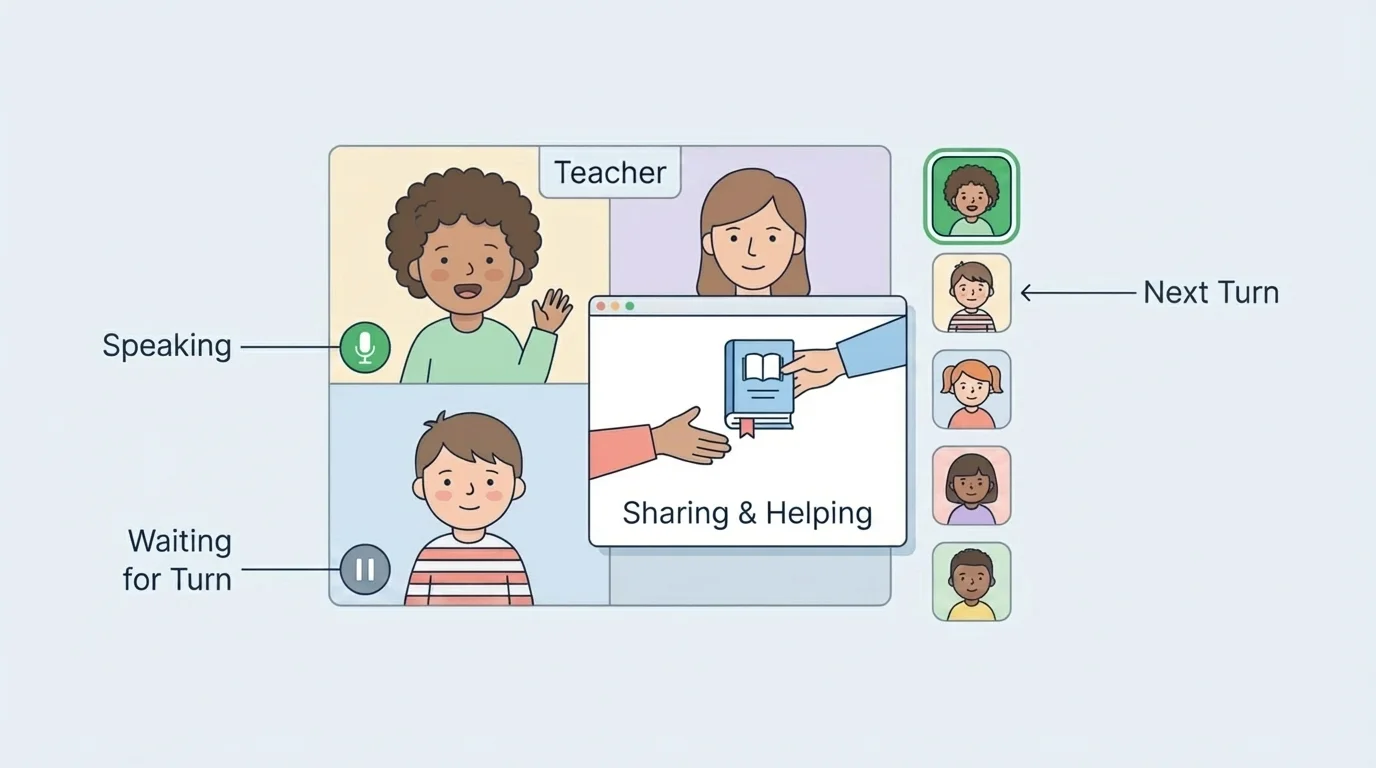
Waiting can be hard. Your body may want to move fast. Your mouth may want to talk now. That is okay. You are still learning. You can take a deep breath, hold your hands together, or count slowly while you wait.
If someone forgets to take turns, you do not need to yell. You can use kind words. Say, My turn now, please or Let's take turns. That is a calm and strong way to speak.
In a group, each person can have a role, as shown in [Figure 2]. A role is a little job. Small jobs help everyone know what to do.
One child may be the picker who chooses the color. One child may be the helper who passes paper. One child may be the speaker who tells the idea. One child may be the cleaner who puts things away. When roles are shared, everyone belongs.
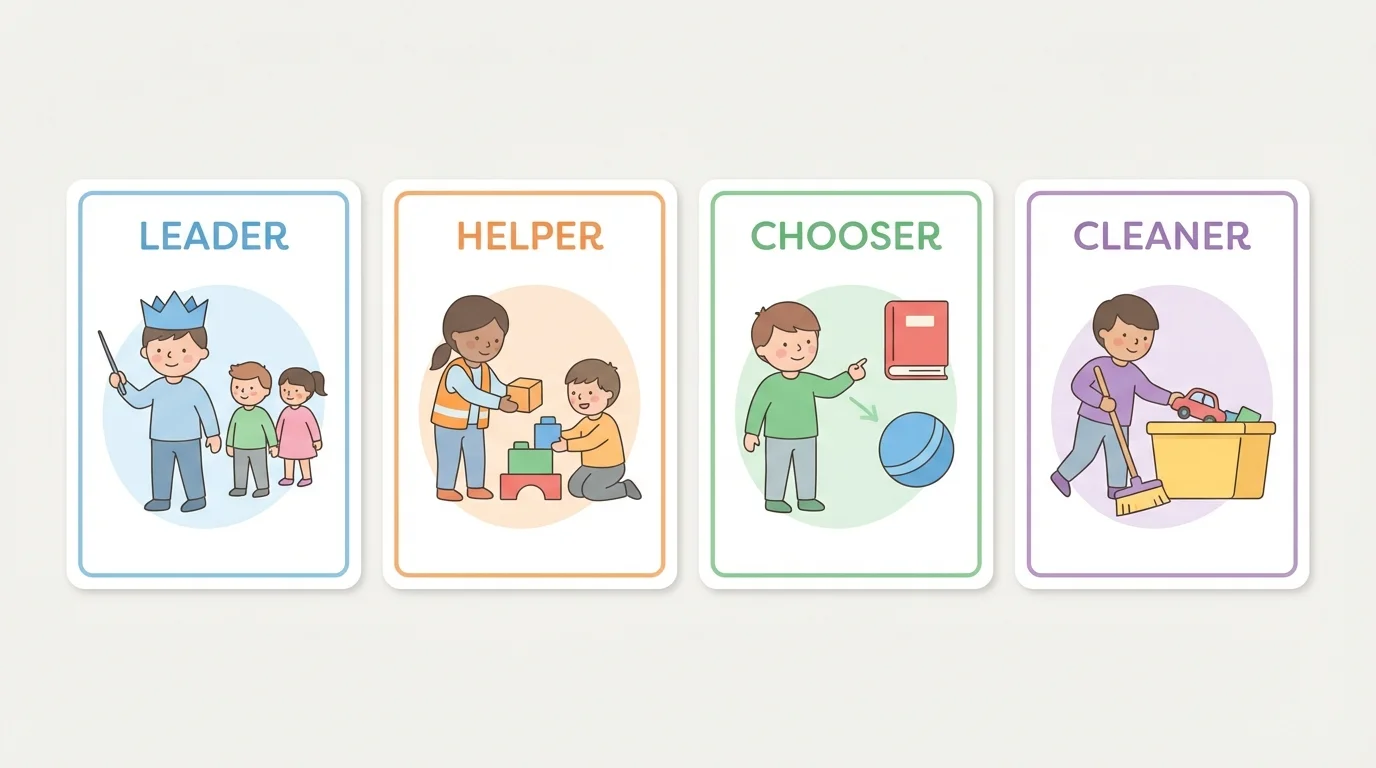
Sometimes you may want the same job every time. But good group members can try different jobs. If you were the chooser before, maybe now you can be the helper. Trying new jobs builds responsibility. Responsibility means you do your part.
Example: Family art time
Step 1: Pick the jobs.
One person gets crayons. One person gives paper. One person draws first.
Step 2: Do your own job.
If your job is giving paper, you give paper before starting your own drawing.
Step 3: Change jobs later.
After a little while, another person can try a new job.
Now everyone has a turn and a way to help.
When each person has a job, the group often finishes more calmly. That is one way even a very young child can show initiative. Initiative means noticing what needs to be done and starting to help.
Helping is not grabbing. Helping is kind and gentle, as [Figure 3] shows. You can help by picking up dropped crayons, holding the book, or showing where something goes.
It is good to ask first. Say, Can I help? or Do you want help? If the other person says yes, help gently. If the other person says no, that is okay too.
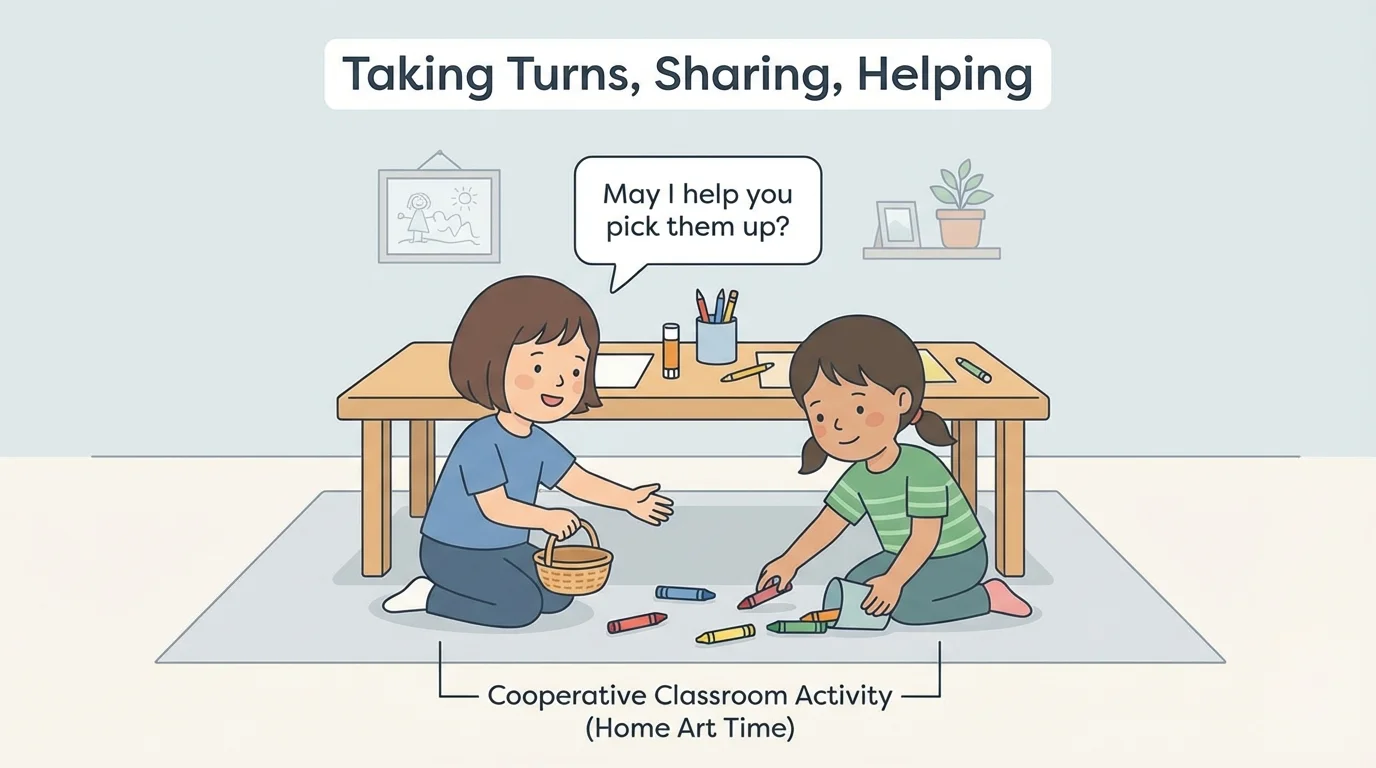
You can also help the whole group. You might mute your microphone when there is background noise. You might bring the glue. You might put toys back in the basket. These small actions make a big difference.
Young children learn group skills a little at a time. Each kind turn, each shared job, and each helping action helps your brain practice being part of a community.
Later, when you work with more people, the same skills still matter. The calm waiting in [Figure 1] and the shared jobs in [Figure 2] help people listen, finish tasks, and feel included.
Sometimes waiting feels hard because you are excited, tired, or frustrated. Big feelings can happen during play, online group time, or cleanup. What matters is what you do next.
Try these simple steps. First, stop your hands. Next, take one slow breath. Then say, I want a turn or Help me wait. Asking for help is a smart choice.
If you make a mistake, you can try again. You can say, Sorry. You can give the item back. You can wait for the next turn. Learning group skills takes practice.
"Kind hands, kind words, kind turns."
Kindness and patience help a group stay together. When people push, grab, or shout, the activity can stop. When people wait, share jobs, and help, the activity can keep going.
You can practice these skills in many places at home and in your community. During a video call, wait until someone finishes talking. During a board game, let each person go in order. During snack prep, carry napkins or take a turn stirring after someone else. During cleanup, put away one kind of toy.
Here are some helpful words you can use every day:
| Situation | Helpful words |
|---|---|
| Waiting to speak | My turn next, please. |
| Sharing a job | I can help. |
| Asking to join | Can I have a turn? |
| Offering help | Do you want help? |
| Fixing a mistake | Sorry. You go first. |
Table 1. Simple words preschoolers can use to take turns, share roles, and help kindly.
These skills help you become someone other people trust. A good leader is not the loudest person. A good leader can wait, share, notice others, and help the group.
