Who helps you stay safe every day? Many people do. Some are at home. Some are in your neighborhood. Some help you when you learn online. Safe days happen when caring people help and when you follow simple rules.
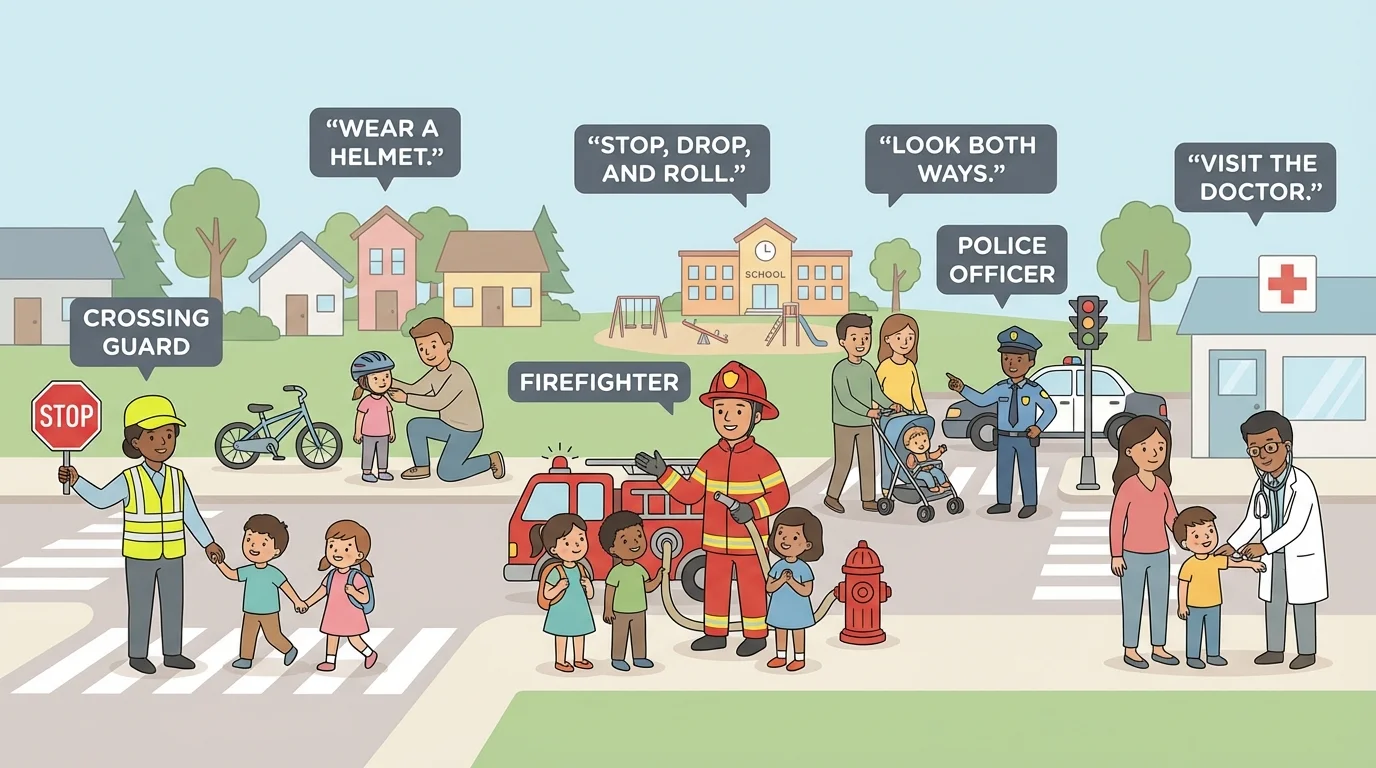
A helper is a person who helps others. Grown-ups at home help you. Doctors help when you are sick. Firefighters help in emergencies. Police officers help keep people safe. Crossing guards help people cross streets. These safety helpers are easy to spot in daily life, as [Figure 1] shows.
You also have trusted adults. A trusted adult is a grown-up who listens, helps, and keeps you safe. This may be a parent, grandparent, caregiver, or an online teacher.
Safe means protected from harm. Rule means something you do to help people stay safe and kind. Community means the people and places around you, like your home, park, store, and neighborhood.
When you know who helps you, you know who to go to. If you feel scared, hurt, lost, or confused, tell a trusted adult right away. Good safety choices help problems get smaller faster.
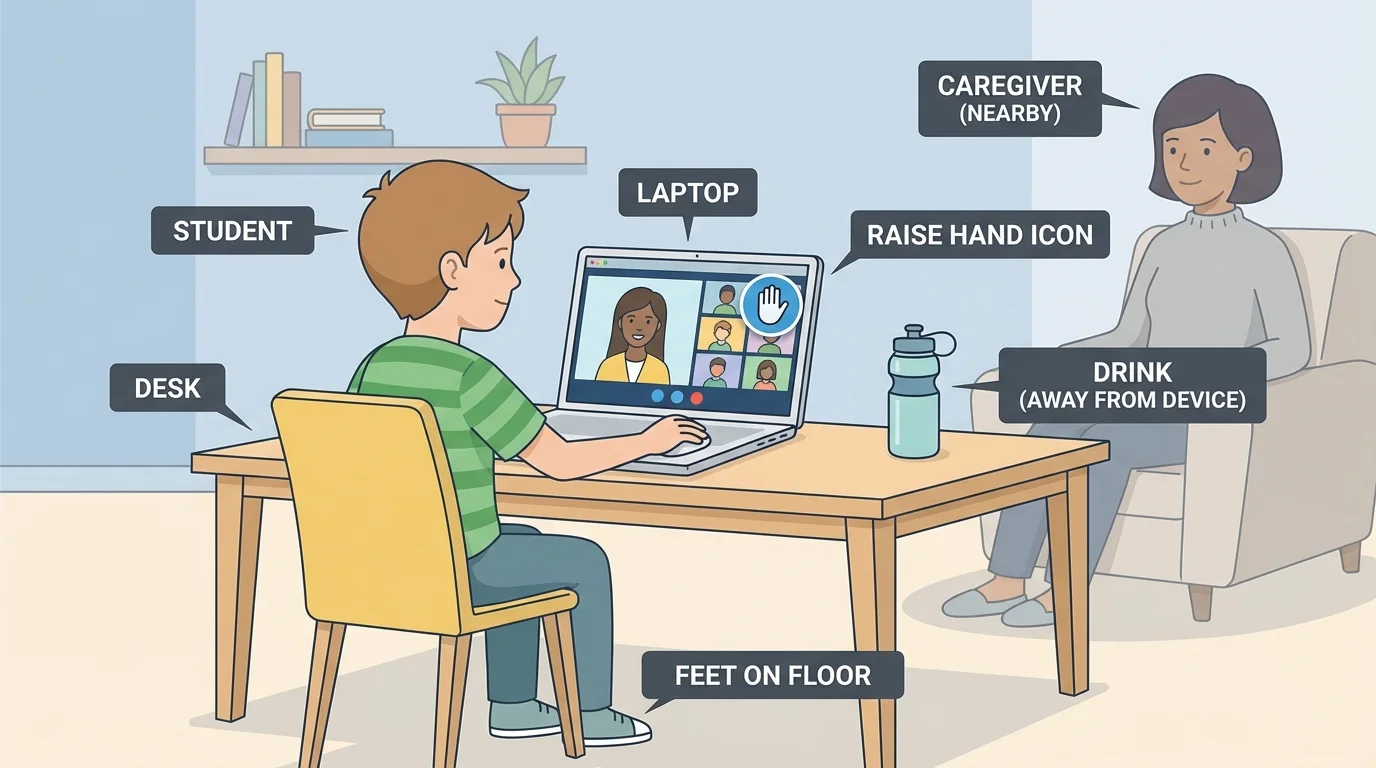
Your online learning space needs simple rules too. [Figure 2] shows a safe learning space. Sit on your chair, keep your feet down, keep drinks away from the device, and use gentle hands with the computer or tablet.
Another classroom rule is to use kind words. Wait for your turn. Listen when someone else is talking. If you need help, say, "Help, please," or raise your hand on the screen. These rules help everyone learn and feel calm.
It is also smart to stay near your grown-up or let them know where you are during learning time. Do not click unfamiliar buttons or talk online with people you do not know. Ask first.
A safe choice during online class
Step 1: Your tablet stops working.
Step 2: Stay calm and keep hands gentle.
Step 3: Call for a trusted adult.
Step 4: Wait for help instead of pressing lots of buttons.
This keeps you, your device, and your class time safer.
When rules are followed, learning feels smoother. When rules are not followed, someone may fall, spill, break something, or feel upset. Small safe habits make a big difference.
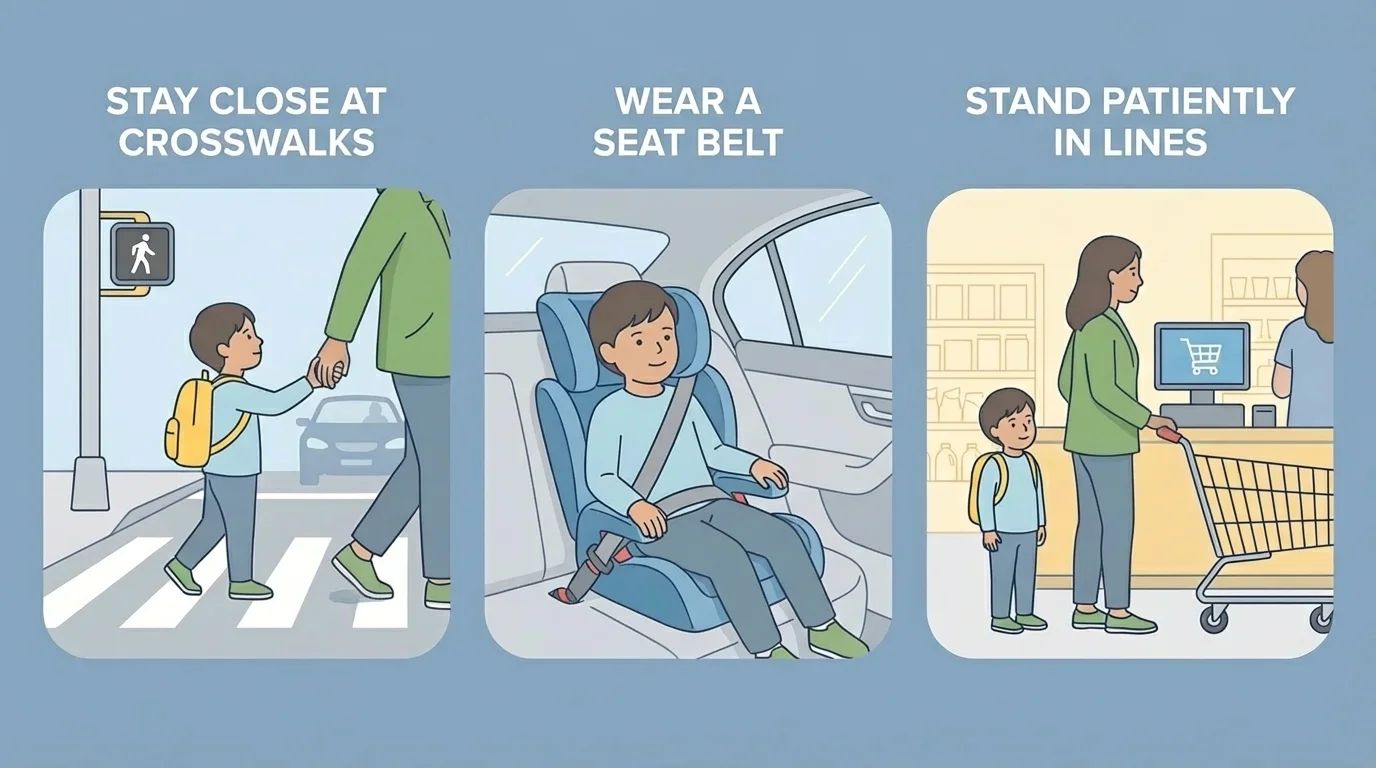
You use safety rules outside your home too. In the community, [Figure 3] shows important rules: hold a grown-up's hand near streets, stop at the curb, look both ways, and stay close in busy places.
In a car, sit in your seat and wear your seat belt. In a store, walk instead of run. At a park, wait your turn and use playground equipment the safe way. If a sign says "Stop" or "Do Not Enter," follow it. Signs and rules help protect everyone.
If you get separated from your grown-up, stay where you are if it is safe and tell a helper. Look for a worker with a name tag or a police officer. Use a strong voice and say your grown-up's name if you know it.
Many safety rules are the same in different places: stay close, listen, use calm hands and feet, and ask for help when you need it.
As you saw earlier in [Figure 1], helpers work in many places. Some help in emergencies, and some help with everyday safety. Knowing who they are helps you act quickly.
Sometimes you need help right away. You do not have to solve every problem by yourself. Safe people ask for help.
Step 1: Stop. Step 2: Take a breath. Step 3: Find a trusted adult or helper. Step 4: Use clear words like, "I need help," "I am lost," or "I do not feel safe."
If something online feels strange, scary, or confusing, do not answer it by yourself. Show a grown-up. If you spill something near your device, move back and get help. If someone is hurt, tell an adult immediately.
Rules are for care, not just control. Rules help people know what to do. They protect bodies, feelings, and spaces. When everyone follows simple safety rules, there are fewer accidents and more chances to learn, play, and enjoy the day.
Sometimes a rule may feel small, like walking instead of running indoors. But small rules can prevent big problems. Calm feet help stop falls. Kind words help stop hurt feelings. Asking first helps stop unsafe choices.
You can practice safety every day. Put toys away so no one trips. Sit safely during online lessons. Keep hands to yourself. Listen to your grown-up. Stay close in parking lots. Wear your seat belt every ride.
As shown in [Figure 2], a safe learning space is neat and calm. As shown in [Figure 3], safe community choices help you stay with the people who care for you. These are important parts of being responsible.
Try This: Today, choose one safe rule to remember all day, like "I will ask for help," or "I will use walking feet." One rule becomes a strong habit when you practice it many times.
"Safe choices help everyone."
